Drip Irrigation Challenges with Drippers in Basil Cultivation: Practical Solutions
Why does coriander require precise drip irrigation?
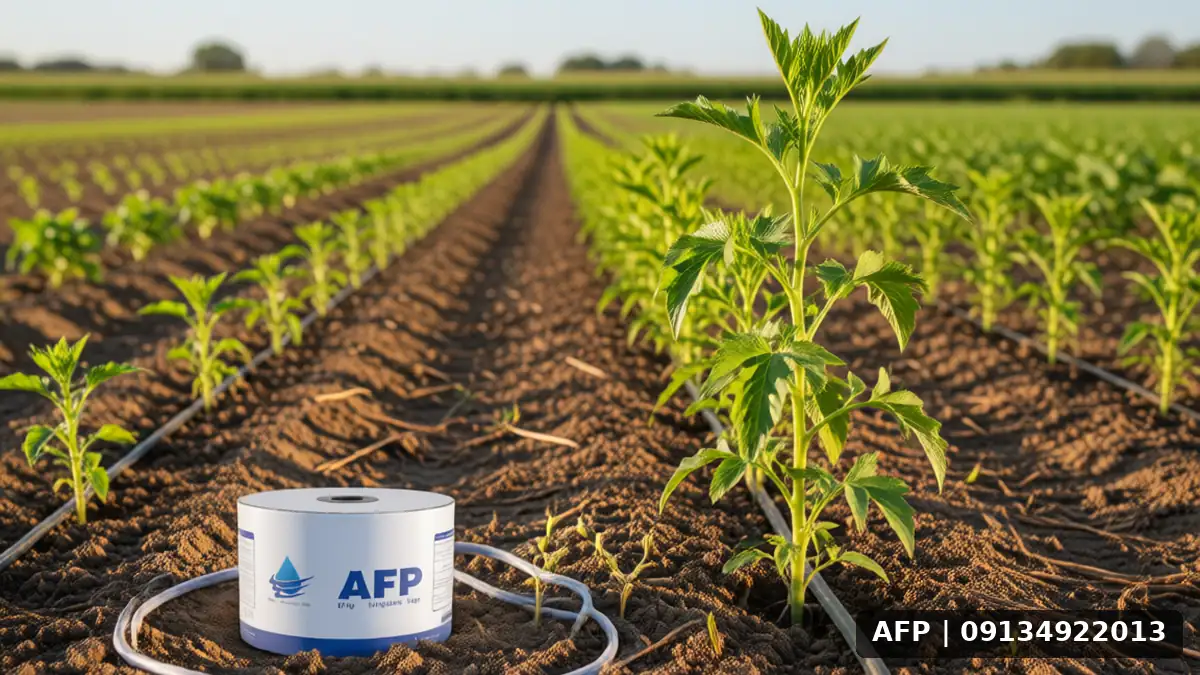
Coriander cultivation, as one of the high-demand medicinal and aromatic plants, shows high sensitivity to soil moisture regimes. While traditional irrigation methods such as flood irrigation and artificial rain remain common in many geographical regions of Iran, Drip irrigation with emitters due to its high precision in water and fertilizer distribution, it is considered a vital tool for modern producers. Coriander has a shallow but extensive root system and prefers a moderate water requirement. This is where the main challenges arise; because an incorrect emitter or wrong settings can lead to root waterlogging or surface dryness, both of which negatively affect aroma, taste, and stem extension. The goal of this section is to gain a deeper understanding of the dynamics between coriander’s water requirements and emitter mechanisms to lay the foundation for solving subsequent problems.
Analysis of technical and climatic challenges in using drip irrigation
One of the biggest challenges of drip irrigation for greenhouse and field crops is the sensitivity of drippers to water hardness and sediment. Fennel is generally grown in areas with softer water, but even in these regions, the accumulation of sludge or calcium deposits at specific intervals can clog the flow path in drippers. Another challenge is temperature variation; fennel grows faster in hot weather and its water demand increases, while static drippers may lack the ability to adapt to these rapid fluctuations. This mismatch leads to water stress in the plant, symptoms of which can be observed as leaf wilting and reduced flower size. Additionally, ground slope is a major factor in uniform water distribution; on a steep slope, higher pressure is applied to downstream drippers, causing increased discharge and over-irrigation, while upstream drippers suffer from relative under-irrigation. This phenomenon doubles the challenge of equalizing moisture along the fennel row.
Practical solutions for overcoming drip irrigation challenges
To resolve the above issues, the implementation of several practical techniques is essential. The top priority is the use of appropriate filtration; installing disc or screen filters with suitable permeability before water enters the drip lines minimizes sediment and clogging. Dripper flow rates must be calibrated based on the precise water requirements of fennel at each growth stage.
- Line pressure monitoring: Use a manometer at the beginning of the line to ensure that pressure is constant at all points along the line. Pressure fluctuations can cause dripper failure.
- Periodic line flushing: During off-peak hours, flush the line at a high flow rate and use auxiliary outlets to remove sediment from the drippers.
- Slope optimization: Where possible, install drip lines so that the natural ground slope has minimal impact on system pressure, or use a pressure regulator.
Additionally, managing cumin fertigation is another challenge; mixing certain chemical fertilizers can cause sedimentation and block drip emitters. Therefore, separating fertilizer tanks and properly mixing them before entering the system is essential. These measures not only extend the lifespan of the emitters but also increase production yield due to better nutrient absorption by cumin roots.
Impact of appropriate emitter selection on crop yield
Choosing the correct emitter model is a critical step in successful cumin cultivation. Self-compensating emitters are the best choice for cumin fields with slopes because they provide a constant flow rate across all elevations. The challenge here lies in distinguishing between low-flow emitters (e.g., 2 liters per hour) and higher-flow ones. For fast-growing cumin, continuous use of high-flow emitters may cause plant lodging. Conversely, low flow rates with higher frequency create better balance. Studies show that combining cumin drip irrigation with foliar feeding methods can resolve issues caused by moisture fluctuations in different field areas. Those involved in intercropping may be interested in studying Rosemary yield per hectare because the climatic similarities and water requirements of these two aromatic plants create common analyses.
Frequently Asked Questions About Drip Irrigation Using Drippers
The following section provides answers to several key farmer questions regarding common challenges:
If some drippers in the cilantro row are not working, how do we determine whether the issue is due to sediment or physical damage?
First, check the line pressure. If the pressure is sufficient and the dripper is intact, there is likely internal sediment, which can be resolved by backflushing or using mild acids. If the dripper is physically broken, replacement is the only solution.
Does using drippers in cilantro farms interfere with other cropping systems, such as broadcast seeding?
In specific cases where cilantro is intercropped with other plants, care must be taken to ensure dripper water reaches the cilantro roots directly and not to neighboring plants that may be sensitive to the application. Studying melon seed rates per hectare can improve your understanding of planting density and spacing for drip irrigation, as both topics relate to precise root zone management.
What is the best time of year to install and set up drippers for cilantro?
Installation should be completed before the start of the cilantro planting season to allow sufficient time for pressure testing and initial line flushing. Delayed installation can cause early plant stress and reduce the germination percentage of cilantro seeds.
Summary: From Challenge to Opportunity in Water Management
Proper implementation of drip irrigation with emitters in dill cultivation is a process that requires a combination of climatic knowledge, hydraulics, and root zone management. Challenges such as clogging, pressure non-uniformity, and incorrect flow rate settings, though sometimes frustrating, are manageable and solvable by adhering to the points mentioned in this section. Investing in high-quality emitters and adequate filtration systems not only reduces the risk of crop loss but also enables precise planning for farm yield. Ultimately, familiarity with precise cultivation parameters, as indicated in specialized guides regarding agricultural talayeh hose guide helps the farmer view all components of the irrigation system as an integrated whole and prevent hidden leaks that undermine emitter performance. Relying on field data and continuous monitoring, dill can be supplied to the market with optimal water consumption and superior quality.
Related Articles: spring barley yield per hectare tajik farmers, yield of dryland barley per hectare tips increase production