Smart Irrigation in Melon Cultivation: A Comprehensive and Operational Guide
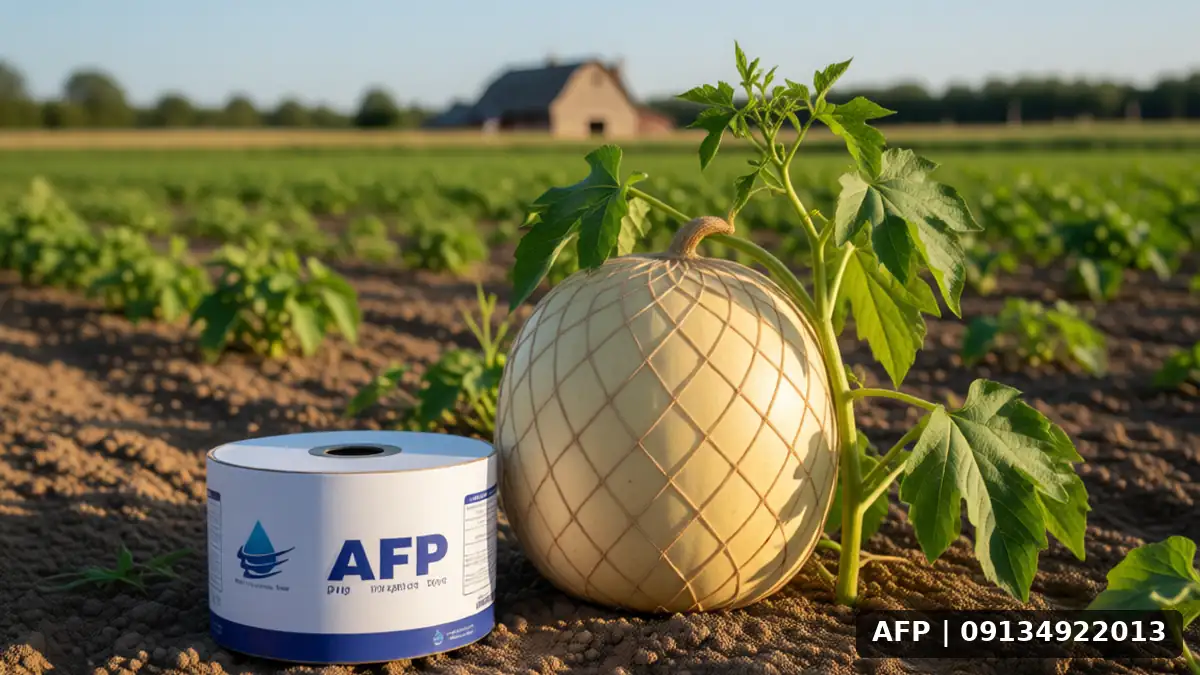
Smart Watermelon Irrigation: An Introduction to Precise Water Management
The water-stress-sensitive nature of watermelon makes it an ideal candidate for implementing smart irrigation systems. This crop requires uniform moisture distribution at the root zone and prevention of waterlogging—challenges that conventional methods fail to fully address. Smart Watermelon Irrigation It means more than just installing automation; it is a combination of selecting appropriate components, flow rate calculations, and proper pipe laying that leads to reduced operational costs. Below, we examine this with a focus on tape and drip systems. To better understand various irrigation contexts and select the method suitable for your farm conditions, you can refer to Modern Irrigation Methods for Agricultural Lands This article will help you gain a broader perspective on available technologies and select the best option for your specific farm conditions.
Operational Differences Between Tape and Drip Irrigation in Watermelon Cultivation
Both methods are practical for melon cultivation, but they interact differently with the plant’s root system. Tape drip irrigation creates a moist strip 20 to 30 centimeters away from the plant, encouraging roots to extend laterally and downward. This helps reduce surface evaporation in high-temperature conditions. Conversely, point drip irrigation delivers moisture directly to the root zone, which is more suitable for hot seasons with high evaporation rates. The choice between the two typically depends on the soil type and field scale. Sandy soil performs better with tape drip, as it prevents water from percolating too rapidly to deeper depths. Silt soil is better suited for point drip. To maximize tape drip efficiency and prevent issues, carefully review tips for extending the operational life of tape drip systems. This guide helps prevent premature component wear and reduces frequent replacement costs.
- Tape drip: Lower water consumption and higher operational speed, but requires uniform soil for even water distribution. Additionally, managing tapes is more complex in larger fields.
- Point drip: Higher precision and the ability to inject fertilizer (fertigation), but involves higher initial costs and requires more advanced filtration. This method is also more suitable for row-crop cultivation.
- Smart irrigation: Uses soil moisture sensors and smart controllers that adjust system on/off timing based on real-time data. This approach requires continuous monitoring.
Techniques for calculating flow rate and irrigation duration
The biggest mistake in smart farming is using fixed scheduling for all growth stages. Melon requires more moisture during the vine growth phase than during fruit production. A smart system must adjust irrigation formulas using meteorological data and soil moisture sensors. The appropriate drip flow rate is usually between 4 and 8 liters per hour. If the flow rate exceeds the soil’s absorption capacity, water will bypass the root zone and be wasted. Additionally, a drip spacing of 30 centimeters is recommended for dense planting, and 40 centimeters for denser planting. To better understand performance comparisons with other crops grown in the same orchards, you can look at the yield of clementine per hectare, as they have a similar water consumption pattern. These comparisons help farmers optimize available water resources and prevent the risk of lower yields due to water shortage.
Practical strategies for increasing efficiency
To ensure your system is truly smart and not just automatic, you must adhere to the following:
- Uniformity of filtration control: The tape line, due to its smaller orifice, is more sensitive to sediment and contamination. Clean the sand and disc filters every 4 hours. Clogged drippers can result in asymmetric crop growth.
- Pressure monitoring at the end of the line: Pressure drop along the hose causes plants at the end of the field to receive less water. The pump must be adjusted so that the end-line pressure is at least 30% of the start-line pressure. This inconsistency can be corrected by adjusting the pump or increasing the pipe diameter.
- Moisture Sensor Variability: Resistive (Ohmic) sensors lose accuracy over time. Select capacitive sensors. These sensors have a longer service life and require less calibration.
- Use of Subsurface Irrigation: If you have an existing pipeline, installing a subsurface line at a depth of 15 cm prevents evaporation. This method is Subsurface irrigation described. This technique is very cost-effective for arid regions with high radiation.
Frequently Asked Questions (FAQ)
Is smart irrigation cost-effective for a 1-hectare melon field?
Yes. The cost of a simple automation system with an automatic pump and a moisture sensor typically pays for itself within two operating seasons because water, electricity, and labor costs are reduced by eliminating unnecessary cycles. In the long term, this investment helps maintain crop quality and increase its commercial value.
How can I prevent leaks in the drip line?
Keep the drip line straight and avoid direct high pressure (e.g., a pump connected directly to the line). Using a pressure regulator is essential. Also, inspect connections regularly and replace the line if it becomes kinked.
Can drip line and drip emitters be used together?
Yes, for mixed crops. Use drip emitters to keep more water in the main planting hole and a drip line beneath it to cover lateral root zones. This combination is recommended for complex farms.
What is the appropriate drip line density for melons?
Typically, a spacing of 1 to 1.5 meters per row for 2 to 3 plants. If plant density is very high, use a closer spacing of 1 meter. This spacing must be adjusted based on the planting pattern and farm conditions.
Summary: A Step Toward Sustainable Agriculture
Smart melon irrigation is an investment in future yield and reduced water waste. By relying on precise data and selecting suitable industrial components, you can elevate crop uniformity. The golden rule is that ‘smart’ means ‘responding to conditions,’ not just ‘turning on and off.’ Use online tools and record daily moisture reports. To learn more details on water calculations for related crops, you can read the article rainfed barley yield hectare dry regions iraq as a comparative sustainability study. By starting with a simple drip line system as the base and gradually adding automation, you will be ready for several-fold efficiency in upcoming seasons. This incremental approach allows farmers to move toward precision agriculture without significant financial pressure.
Related Articles: Irrigated Barley Seed Rate per Hectare + Influencing Factors