Flood Irrigation in Millet Cultivation: Comparison with Drip and Subsurface Tuber
Introduction to the importance of selecting an irrigation system for safflower cultivation
As one of the important oilseed crops in the country, safflower requires precise water resource management. The choice of irrigation method can directly affect yield, seed quality, and production costs. In this section, we examine the key differences between conventional furrow irrigation and modern methods such as drip and strip tipping. Many farmers still use the furrow method because it is simple to install, but becoming familiar with strip tipping and drip methods can change their perspective.
For a better understanding, it is necessary to know that each of these systems operates differently based on soil type, field slope, and crop bed. If your field has a gentle slope and light soil, furrow irrigation may be a suitable option; however, for heavy soils or steep slopes, other methods are prioritized.
Furrow irrigation: Mechanism and general characteristics
Furrow irrigation, or Furrow Irrigation, is the oldest and most common irrigation method in many Iranian farms. In this method, water is directed from a main pipe into soil layers and moves along the furrows through gravity and water pressure. This method does not require complex equipment and only needs a main channel or pipe to transport water.
Economically, the initial installation cost of furrow irrigation is very low. Without the need for filters, controller valves, or drip emitters, it minimizes initial investment. On the other hand, water efficiency in this method is generally estimated between 50 and 70 percent, as a portion of the water is lost due to evaporation, deep percolation, and terrain irregularities.
Advantages and disadvantages of furrow irrigation in safflower farms
- Low installation and maintenance cost: Requires minimal technical equipment.
- Operational simplicity: The system does not require high technical expertise for water pumping.
- Contamination potential: The absence of suitable filters can lead to clogging when combined with soluble fertilizers.
- Uneven water distribution: The tail-end sections of furrows typically receive less water, which can affect the uniformity of barley growth.
In barley fields, the uniformity of soil moisture directly affects harvest timing and seed quality. Uneven water supply in furrow irrigation can cause parts of the field to dry out earlier than others, making final crop management difficult.
Comparison with drip tape and drip systems
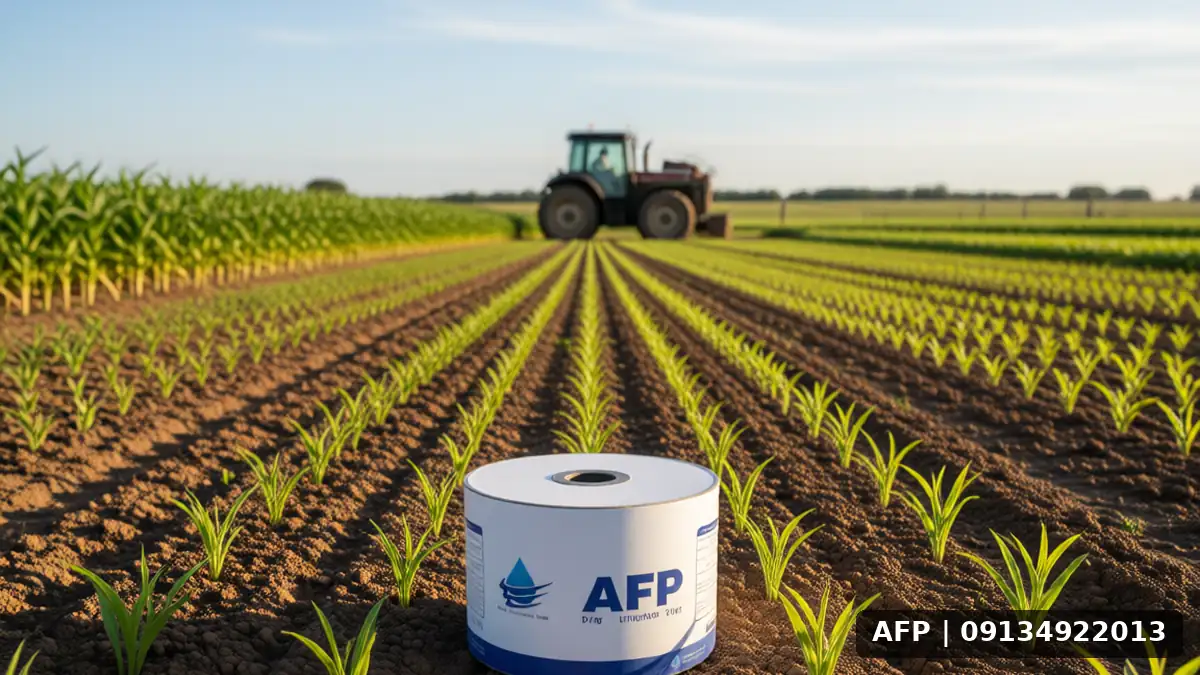
The drip tape (Drip Tape) system is one of the most advanced precision irrigation methods. It delivers water drop-by-drop or as a low-pressure flow through hoses with small holes directly to the plant roots. Unlike furrow irrigation, this system does not wet the entire soil surface but only keeps the planting bed moist.
To choose between drip tape and drip systems, it is necessary to understand their subtle differences. Although both use the same pressurized irrigation principle, their physical structure differs. In this context, studying the carrot seed rate per hectare shows how precision systems can affect vegetable yields. The same principles apply to barley, although barley is a grain and carrot is a root crop.
Tape drip systems are typically designed for shorter service lives (one to two years) and are less expensive than permanent drip systems. In wheat cultivation, which generally has a growth cycle of 90 to 120 days, using a single-use tape system can be a more economical option. In contrast, drip systems are suitable for multi-year crops or permanent orchards, of which wheat is not part, unless it is grown as a multi-year crop under specific conditions, which is rare.
One important reason to choose tape drip over flood irrigation is reduced water consumption. Field data shows that water savings of up to 30 to 40 percent compared to flood irrigation are possible with tape systems. This saving is a determining factor in yield under drought conditions and limited water resources.
Technical and performance analysis of systems in different soils
The impact of soil type on irrigation system performance should not be overlooked. In clayey and heavy soils, surface permeability is low. Under these conditions, flood irrigation causes surface puddling, reducing oxygen supply to the roots, which can lead to root rot in wheat. The tape drip system, operating at low pressure, allows water to slowly permeate the soil structure and prevents surface waterlogging.
In sandy soils, permeability is high, and water quickly moves to deeper layers. In such fields, flood irrigation requires high water volumes and frequent intervals, making it difficult to manage. Drip or tape systems with precise flow rate control can perform better in sandy soils, but they require appropriate emitters.
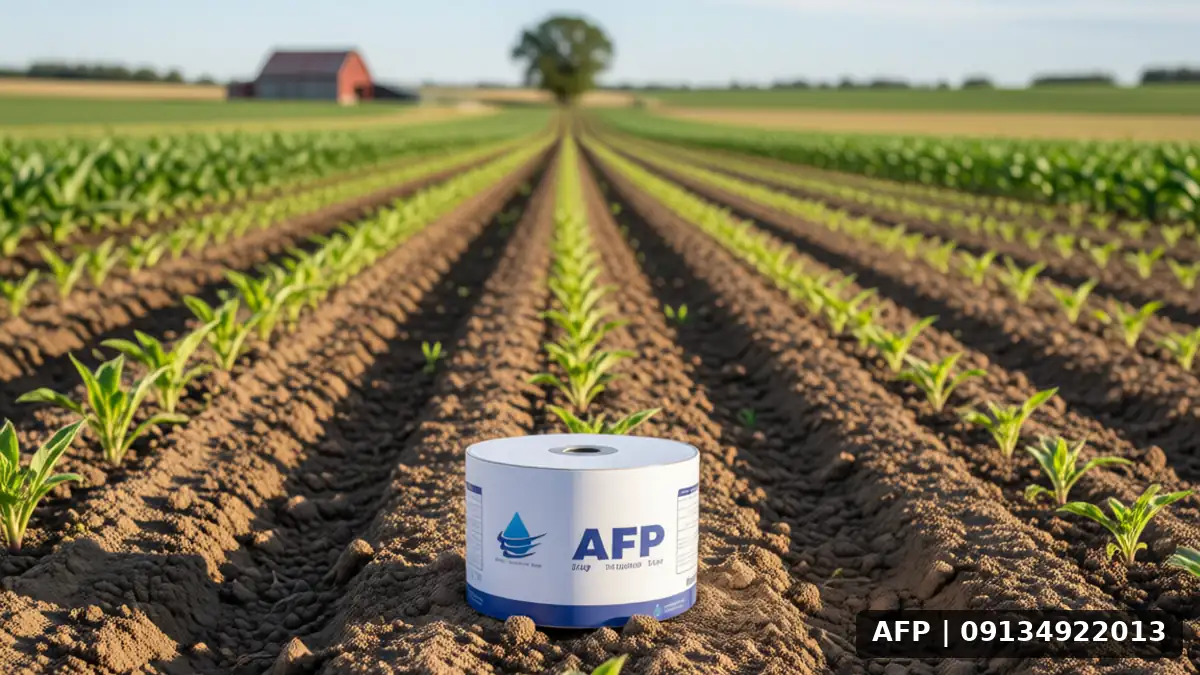
It is important to conduct a soil permeability test before selecting a system. If your field has a slope of more than 3%, flood irrigation can lead to soil erosion. In such cases, the use of pressurized systems is necessary. Additionally, understanding the relationship between… Drip irrigation for greenhouses and open fields, showing subtle differences such as the need for stronger filtration in greenhouses, although the principle of flow control remains the same in both systems.
Practical tips for farmers: cost, maintenance, and yield
When making the final comparison, hidden costs must be considered. Although drip lines may appear cheaper, they require a more robust pumping system, a hydrocyclone or screen filter, and a pressurized water source. If your farm does not have direct access to a well or naturally pressurized water, the cost of installing a pump and motor can multiply the purchase price of the drip lines. In contrast, gravity flow irrigation can operate without a pump using natural gravity on suitable slopes.
- Assess water access: Is the well water pressure sufficient for a precision system?
- Terrain slope analysis: Slopes of less than 1–2% are ideal for gravity flow.
- Soil type: Due to low permeability, clay soils are sometimes better suited for gravity flow irrigation (under specific conditions).
- Labor cost: More precise systems require less human intervention during irrigation.
- Fertigation: Drip and ribbon tape systems enable fertigation, increasing efficiency.
Using fertigation via ribbon tape offers another major benefit. This method ensures better nutrient uptake for wheat and prevents fertilizer loss due to runoff washing. In this regard, knowing the seed rate of rye per hectare and the nutritional needs of the grain crops can serve as a good guide for determining the concentration of soluble fertilizers.
Frequently Asked Questions (FAQ)
Is runoff irrigation justifiable for small wheat farms?
Yes, if the field area is small (under 5 hectares), a suitable slope exists, and access to water under higher pressure is unavailable, runoff irrigation remains an acceptable option, although its water efficiency is low.
What is the main difference between ribbon tape and drip irrigation for wheat?
Drip tape is typically designed for annual and single-use crops and is more cost-effective. Drip lines are more durable and better suited for perennial crops. For wheat, drip tape is more economical in terms of total cost of ownership.
Can precision systems be used for wheat?
Yes, precision systems are not only feasible but are recommended to enhance wheat yield efficiency in water-scarce regions. It is essential to pay attention to selecting the appropriate furrow width and pipe spacing.
What is the maintenance cost of a drip tape system?
Maintenance costs are low because drip tape is typically collected and discarded after the end of the cropping season. It does not require annual repair and maintenance like a drip line system. Additionally, a study regarding barley yield per hectare indicates how significant the management of hidden costs is to final efficiency.
Summary and Final Recommendations
Choosing between drip irrigation and drip tape for alfalfa is a strategic decision. If your farm conditions include a suitable slope, medium soil permeability, and limited initial investment, drip irrigation can still be a viable option with proper management. However, if you are seeking maximum water efficiency, increased crop yield, and the ability to apply liquid fertilizers, we strongly recommend transitioning to a drip tape system.
Considering the current costs of alfalfa production, investing in a precision system—though more expensive in the short term—easily recovers the cost in the long run through water savings and increased yields. We always recommend consulting with an irrigation specialist and conducting local tests before purchasing equipment.
Related Articles: Carrot seed rate D8AFD8B1 per hectare