Tipe Strip Spacing in Onion Cultivation: Recommended Standards
Introduction: The Importance of Drip Tape Spacing in Onion Cultivation
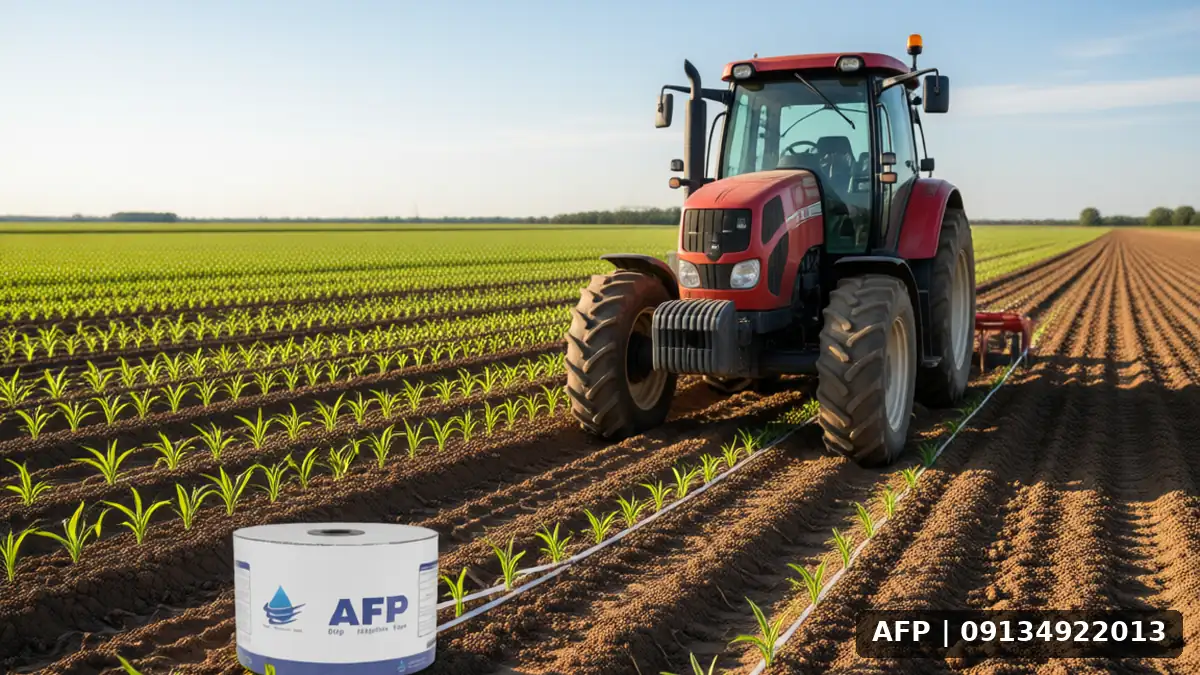
In drip irrigation systems, particularly when using drip tape, determining the appropriate spacing between rows is one of the most critical decisions that directly affects the quality and quantity of the onion crop. Onions are vegetables sensitive to water stress and with early-rooting systems that require proper drainage and uniform moisture distribution. [[IMAGE_1]]
Drip tape spacing for onions should not be determined solely by habit or mental estimation; it must be calculated based on the cultivar type, bed thickness, and soil water-holding capacity. If row spacing is too wide, sufficient moisture will not reach the roots; if it is too narrow, the risk of rot and fungal diseases increases. Below, we examine the recommended standards and key points for correctly implementing this system in onion farms.
Impact of Row Arrangement on Onion Yield
Common Patterns in Onion Planting
In modern agriculture, there are two main patterns for onion arrangement: single-row and multi-row planting. In the drip tape system, the single-row pattern is generally used because it allows for better access to the plant and more precise irrigation control. The spacing between rows varies depending on the cultivar (blue, white, or golden onion), but the general physical principles remain the same. To better understand the general principles of row arrangement, consult the guide for Row Spacing Standards in Sugar Beet which can provide a correct perspective on the impact of planting geometry on yield, as both crops have similar requirements regarding space and water management.
Relationship between tape spacing and evaporation rate
One of the main problems with large spacings is increased evaporation from the soil surface. When drip tape spacing in onion production is too wide, some lateral roots are located away from the wetted zone of the tape and remain dry. Conversely, if the tapes are placed too close together, there is insufficient airflow for proper moisture balance. Therefore, finding the optimal spacing is key to minimizing losses caused by soil-borne diseases.
Standards for determining drip tape spacing in onions
Recommended numerical values
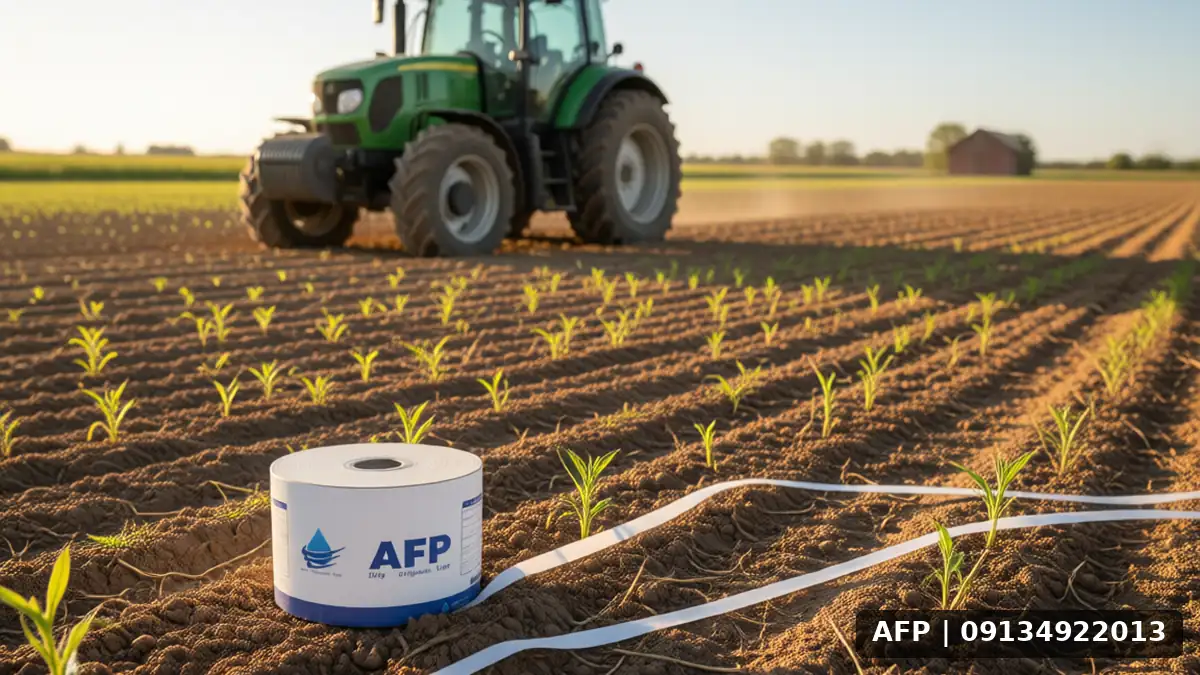
Based on field experience and scientific trials in various regions of Iran, the optimal drip tape spacing for onions is generally set between 70 and 90 cm for multi-sheath varieties (such as Kordistan and Bushehr onion) and between 60 and 80 cm for eight-sheath varieties. These figures represent a range and should be adjusted according to soil type. In sandy soils with high drainage, space the tapes closer, between 60 and 70 cm, to prevent excessive drying. In sandy and loamy soils, a spacing of 80 to 90 cm is more acceptable. [[IMAGE_2]]
Another important point is the depth of tape installation. In onions, due to the superficial nature of the root system, the tape must be placed entirely on the soil surface (surface application) and not buried. This directly affects the placement of the tape and its distance from the row ridges. To learn about the different components of the tape system, refer to the article Components of the irrigation tape and drippers Inspect to ensure connection quality and adequate pressure for uniform flow.
Table of recommended spacing based on soil type
Note that this table is only a starting point. For commercial farms, a drainage test is always recommended before planting. If the pipe spacing for onion is chosen based on this table, the need for mid-season pipe modification will be reduced.
Practical tips for implementation and maintenance
Seedbed preparation
Before installing the pipes, the soil surface should be smooth and free of holes. Small holes can cause water pooling and uneven flow from the emitters. Also, weeds must be completely removed from the future pipe seedbed. Onion is a crop sensitive to weed competition, and if pipe spacing is wide, manual weed control becomes very difficult and labor costs increase. In this regard, the study Garlic yield per hectare can also be a source of inspiration, as garlic and onion share similar water and space demands, and space management principles for one are applicable to the other.
Monitoring water pressure and tape clogging
One common reason for system failure is clogging of emitters due to suspended sediment. When drip tape spacing for onions is optimal, water distribution is more uniform and root stress is reduced. To prevent clogging, ensure the use of appropriate filtration. Technical specifications and tape quality play a significant role in system durability. Therefore, it is essential to review drip tape technical specifications and select a tape with suitable UV resistance for your region’s sun conditions.
Combination with other planting methods
Farmers sometimes encounter spacing challenges with intercropping. Although the main focus is onions, understanding how plants interact is beneficial. For example, if you plant onions with other root vegetables, adjust the tape spacing so that competing roots do not overlap. To understand factors affecting yield, you can refer to the guide for Green bean harvest rate per hectare have a look, as many drainage management and row spacing principles are common to leafy and grain vegetables.
Frequently Asked Questions (FAQ)
Is drip tape row spacing different for white and purple onions?
Yes, relatively. Purple onions typically have larger plants and require more leaf area space, so a spacing of 80–90 cm is recommended. White or Bushehr onions are generally smaller, and 65–75 cm spacing is sufficient. However, these differences should not lead to inaccurate measurements; precision in tape installation is always a priority.
If my soil is heavy, what spacing should I choose?
Heavy soils have poor drainage and retain moisture for longer. Under these conditions, drip tape spacing for onions should be at the upper end of the range (85–95 cm) to prevent root suffocation. Additionally, in these soils, the number of irrigation sessions should be reduced, and the volume per session should be adjusted to avoid excessive saturation.
Can the tapes be placed in the middle of the rows?
No. The gold standard for onions is placing the tape on one side of the seed (usually 15–20 cm from the seed row). If the tape is placed exactly in the middle, the risk of root damage and seedbed diseases increases. Always position the tape slightly angled or perpendicular relative to the seed row to ensure water flows effectively across the entire root cone.
Summary and final recommendations
Selecting drip tape spacing for onion is not a fixed decision but an adaptive process that is adjusted based on soil type, cultivars planted, and local climatic conditions. Observing 70 to 90 centimeters as an initial guideline mitigates major risks. Given the importance of drip irrigation in reducing water consumption, precision in installing and maintaining tapes, alignment with seeding principles (such as mentioned in Black seed quantity per hectare or the guide for Carrot seed quantity per hectare and using high-quality equipment is the key to success.
Remember that every hectare is an investment. Considering optimal tape spacing reduces disease losses and increases the economic efficiency of onion cultivation. Continuous monitoring of tapes during the growth season and regular filter cleaning guarantee satisfactory yields at the end of your work.