Sprinkler Irrigation for Coriander Cultivation: A Comprehensive Technical and Operational Pre-Requirements Review
Introduction: The Critical Importance of Drip Irrigation in Cilantro Farming
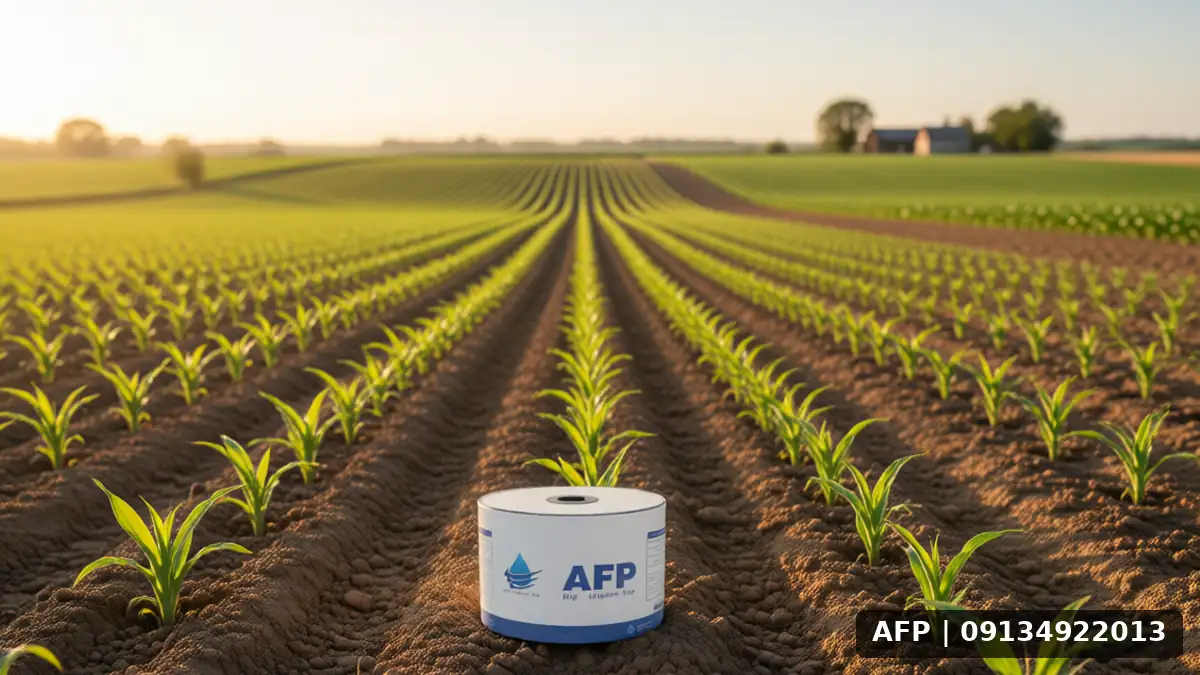
Cilantro, one of the most widely used vegetables in the food industry and modern culinary practices, is a crop that requires precise water resource management to maintain quality and maximize yield. Water stress, even at very low levels, can cause leaf narrowing, reduced plant density, and ultimately economic loss. In this context, drip irrigation as an advanced technique, is not only a solution for uniform water distribution but also a tool for controlling soil chemistry and preventing nutrient leaching into depths inaccessible to roots. A deep understanding of this system’s mechanics and its hardware prerequisites is the key distinction between a successful planting and an unsuccessful attempt. This article, focusing on technical details, provides a complete roadmap for growers on how to reduce operational costs and deliver greener, larger crops by optimizing drip tape.
Precise Definition of Drip Irrigation and Its Differences from Conventional Methods
In specialized irrigation literature, the concept of flushing (Flush/Wash-in) often refers to the process of directing a water volume exceeding daily needs to wash or transport materials toward the downstream end of the system. However, in the clayey and heavy soils common in southern and eastern Iran, flushing irrigation means utilizing the natural longitudinal slope of the land to accelerate water movement through the drip line. In this case, gravity performs the work, reducing pressure on pumps. The main difference between this method and standard drip irrigation is that it focuses on infiltration speed and surface coverage rather than deep saturation. This characteristic is ideal for parsnip, which has surface-oriented roots, as it prevents root proliferation and fungal rot. To better understand the differences between water transfer technologies, studying the types of drip irrigation lines can provide a comprehensive overview of available market options.
Geotechnical and soil mechanical prerequisites: Key foundations for success
No irrigation system, particularly moving-head systems, is viable without a precise understanding of the soil profile. The first and most critical prerequisite is identifying the soil texture. Coriander performs best in sandy and loam soils, but if you must plant in clay loam, the system design must be twice as precise. The field’s longitudinal slope is the determining factor for the moving-head pressure. Slopes of less than 1% may cause flow stagnation and localized wet zones, while slopes exceeding 5% increase the risk of soil erosion and flooding of the tip lines. Therefore, a golden range of 1 to 3% along the planting rows is the ideal design target. In addition to slope, the hydraulic conductivity of the soil at a depth of 20 cm below the surface must be determined using percolation tests to ensure the discharge rate of the tip lines matches the soil saturation rate. Otherwise, water will run off the surface instead of infiltrating the soil, causing the delicate coriander roots to slip.
Drainage testing and discharge coefficient determination
Before any planting, performing a drainage test is essential. This test involves filling a temporary section with water and monitoring the drainage time. If the natural drainage time is less than 24 hours, no high moving-head pressure is required. However, in poorly draining soils, the system must be designed to maintain the slope while enabling rapid drainage. Additionally, identifying hardpan layers at depths of 30 to 50 cm is another vital prerequisite. These layers hinder vertical water movement, forcing the moving-head water to surface, which floods the root zone. Under such conditions, deep plowing and physical soil improvement are mandatory before installing the tip lines.
Hydraulic design and selection of compatible components
The core of a drag-based system is the drip tape network. Field selection depends on both the planting spacing of parsley (typically 25 cm) and the plant’s required flow rate. Using drip tapes with emitters of 1 and 1.2 liters per hour is a common option, but in drag-based conditions, open drip lines are sometimes used to allow for freer water flow. A primary challenge is connecting the drip tape to high-pressure hoses. Pressure mismatches can cause joint ruptures and resource waste. Therefore, the technical prerequisite is the use of standard connectors and inline filters with 120-mesh precision to prevent emitter clogging. In this context, familiarity with key points when using irrigation drip tape can prevent unavoidable errors during system setup.
Pressure management and pressure regulator valve settings
In drag-based systems that utilize natural slope, the pressure at the beginning of the drip tape is higher than at the end. To ensure irrigation uniformity and prevent irregular water discharge, pressure regulators or self-compensating valves must be used. This technical prerequisite is particularly critical in fields with drip line lengths exceeding 100 meters. Additionally, installing air vents at high points in the piping route for air removal and maintaining continuous flow is an engineering requirement that is often overlooked.
Operational prerequisites and periodic growth management
Installing the system is only half the battle; the other half is daily management. Parsley is sensitive to consistent soil moisture. In a drag irrigation system, uniform water distribution requires continuous monitoring. Any kinking in the drip line or partial clogging of emitters can lead to dry zones between plants. Therefore, recalibrating the system after each season is an operational prerequisite. Using smart soil moisture sensors to monitor moisture at depths of 15 to 30 centimeters helps the farmer manage the exact start and end times of the drag process and prevents water waste.
Frequently Asked Questions (FAQ)
Is drag irrigation feasible for all parsley fields?
No, this method is most efficient in fields with gentle slopes and soils with moderate to low permeability. In perfectly flat terrain, the energy advantage of drag irrigation is absent, making conventional drip irrigation simpler and more economical. However, if you are in a region with poor drainage, a drag system can remain efficient even on low slopes by ensuring proper piping installation.
What is the best type of drip tape for parsley in a drag irrigation system?
The most common choice is drip tape with low flow rates (1 liter per hour) and uniform emitters to prevent excessive leaching of soil around the roots. For information on available models and their technical specifications, you can refer to Modern Irrigation Methods for Agricultural Lands Consult resources to compare the latest technologies.
What are the costs associated with the prerequisites for this system?
Compared to overhead sprinkler irrigation, initial costs are higher; however, up to 30% water consumption reduction and improved water-to-yield ratios recover these costs within one to two seasons. A push-type system using ribbon-type tape offers longer durability than standard tapes, as lower pressure exerts less mechanical stress on the tubing.
Final summary: roadmap for future crops
Implementing push-type irrigation in parsley cultivation is a multi-stage process requiring meticulous attention to every prerequisite. From soil and slope inspection to the proper selection of ribbon-type tape and operational management, each component depends on the others. A savvy farmer invests in precise engineering rather than cutting technical costs. Adhering to the principles outlined not only optimizes water use but also enhances parsley quality in terms of size and greenness, earning market acclaim. For further learning on vegetable cultivation and resource optimization, it is recommended to explore other specialized articles in this field.
Related articles: strawberry yield per hectare tajik farmers, types of ribbon drip tape, important tips for using drip ribbon tape, modern methods for irrigating farmland, Types of drip tape irrigation, Squash seed rate per hectare + Factors affecting planting density