Comprehensive Cost Analysis of Border Irrigation: Striped Furrow and Drip Systems
Introduction to the necessity of economic management in celery irrigation
Celty cultivation is considered one of the most complex and challenging segments of modern agriculture due to its extremely high sensitivity to temperature fluctuations and its precise, continuous need for soil moisture. In this context, optimal irrigation cost management is no longer merely an engineering technical issue; it constitutes the main pillar of the farm’s overall economic viability. Leading farmers are moving from traditional linear irrigation methods toward modern systems drip and trickle lines, achieving more precise control over hydraulic cycles and moisture distribution in the root zone. However, this technological transition must be accompanied by a precise and transparent calculation of final costs to prevent hidden losses. The primary objective of this article is to identify major cost drivers in the celery irrigation process and provide data-driven solutions to reduce waste, ensuring your investment yields desirable and sustainable returns.
To deeply understand the cost structure, it must be noted that irrigation efficiency in celery cultivation is directly dependent on accurately identifying the plant’s water requirement pattern. Although celery has structural similarities in water requirements with celery (Note: text implies comparison to celery itself or similar root crops), analysis of existing data in the Comprehensive Celery Drip Line Guide can serve as a valuable pattern for adjusting emitter spacing in celery cultivation. Using smoothed data from other root crops is the key to correctly estimating farm-level energy and water consumption costs and prevents random decisions when purchasing equipment.
Technical review of moisture irrigation systems and their direct impact on costs
Drip tape: Installation speed, durability, and initial cost analysis
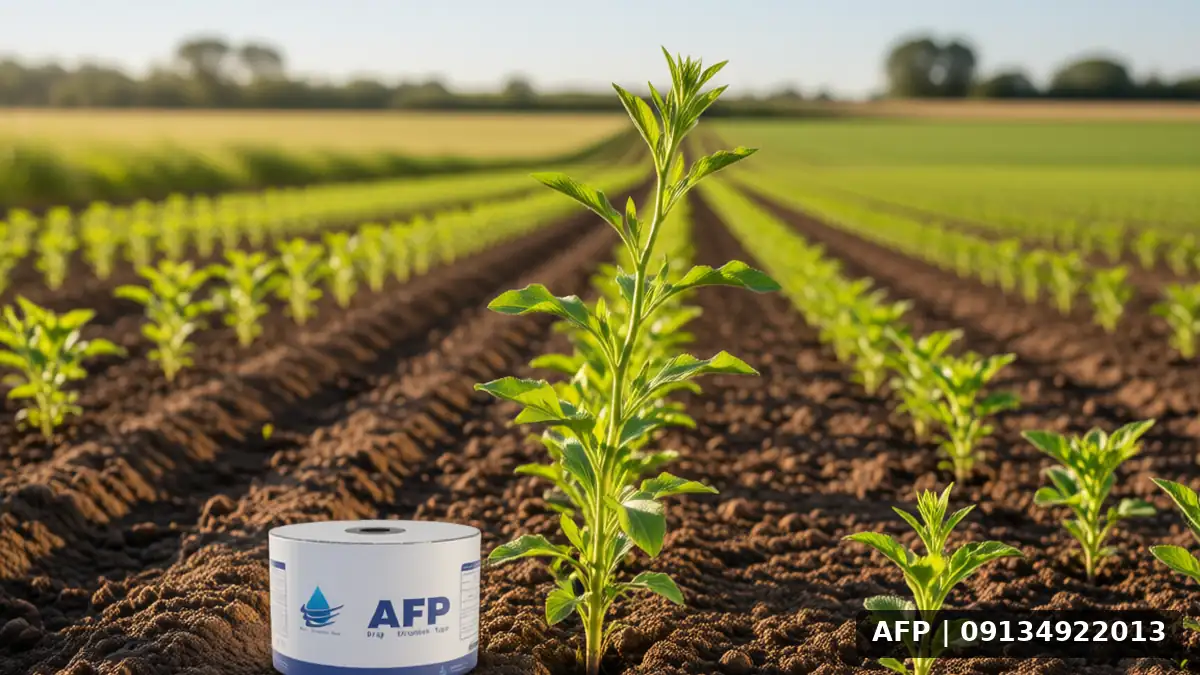
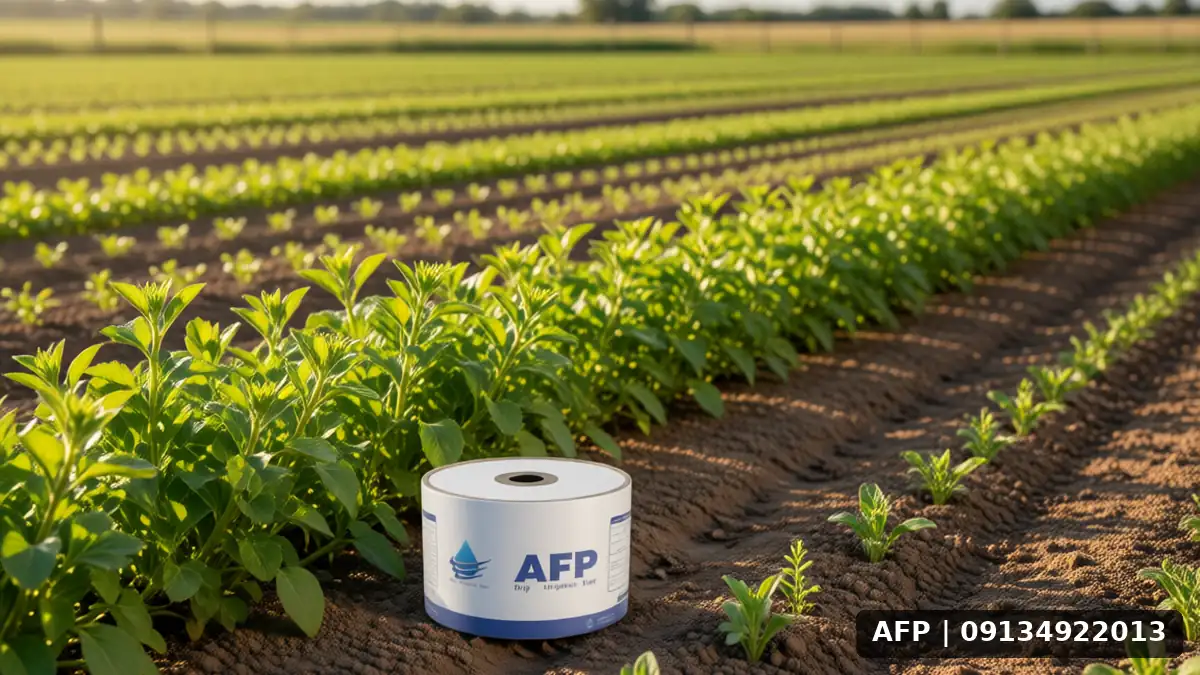
The drip tape system is a highly attractive and economic option for high-seed-density and sensitive crops such as cress due to its rapid installation speed and easy removal after the end of the growing season. Initial costs for this system primarily include drip tape (turbin), connecting fittings, sub-lines, and high-pressure pumps. Since the emission spacing for cress planting requires high precision and accuracy to ensure uniform moisture distribution in the root zone, the choice of tape type (single-channel or double-channel) directly impacts the initial budget. It is recommended that before making any purchase, you pay special attention to the key points in the comprehensive guide to purchasing drip tape This step prevents additional and damaging costs resulting from incorrect selection of disc or tape diameter.
Drip: Precision in moisture and long-term operational costs
In contrast, the drip system with movable and adjustable emitters provides more precise control and greater flexibility over moisture around the sensitive cress roots. Although the initial installation cost of this system is usually higher than drip tape, the significant reduction in water waste and the ability to combine irrigation and pesticide application (Fertigation) can significantly reduce annual operational costs over time. To determine the best emitter placement points and optimize flow, refer to the article Guide to determining drip tape irrigation points Helps minimize unnecessary system throw and optimize electricity costs for pump operation.
Farm cost estimation analysis: Separation of fixed and variable costs
For a final and precise calculation of drip irrigation costs, expenses must be divided into two specific categories. The first category is fixed costs, including the useful life of equipment, periodic maintenance of sand and hydrocyclone filters, and depreciation costs for main line installation. The second category is variable costs, which include water consumption, electricity (or gas) costs for main and auxiliary pumps, and labor for system monitoring. Farmers often overlook the estimation of water costs; whereas, due to system efficiency losses from clogging or leaks, this component can account for up to 20% of the total irrigation cost. To ensure optimal consumption, considering seed quantity per unit area is also important; as explained in the principles of plant density optimization, high plant density directly impacts water consumption intensity and consequently total farm costs, and must be included in your cost model.
Practical tips for cost reduction and increased economic efficiency
- Rainfall uniformity and moisture distribution: Ensure that the distance between emitters in the tape line is optimized so that there are no dry or stress zones around the drip root. Moisture deficiency not only leads to yield reduction but also results in the loss of total planting costs.
- Micro-irrigation pipelining improvement: Using high-pressure pipes of appropriate and high-quality diameter can reduce pressure loss and optimize pumping costs. Referring to relevant articles on calculating required water per hectare to adjust system pressure is essential to avoid pressure fluctuations.
- Smart irrigation scheduling: Fertilizer side-dressing during peak heat hours increases evaporation and directly raises water costs. Utilizing smart timers and automation improves consumption patterns and reduces the need for continuous on-farm labor presence.
- Filter maintenance as a top priority: Filter clogging is one of the largest hidden costs in this system. Regular cleaning of disc filters and sieves extends the lifespan of drippers and delays the need for tape replacement.
Additionally, monitoring water quality and performing periodic chemical tests can prevent clogging in micro-dripper tape lines. These deposits reduce the cross-sectional area of the dripper, consequently increasing system pressure drop and directly boosting the energy costs of the pumps. Therefore, source water maintenance is just as critical as maintaining the irrigation system itself.
Frequently Asked Questions (FAQ)
Is tape drip irrigation more cost-effective than standard drip for fertilizer side-dressing?
The answer to this question depends heavily on the length of the growing season and the farm’s soil type. For long cropping cycles and perennial farms, drip irrigation may be superior due to its higher durability and longer service life. However, for short-term crops, rapid cycles, and annual farms, the low-cost tube system offers a more economical option thanks to its lower initial cost and fast installation. Precise evaluation should always be based on the total cost per kilogram of final product.
How does soil moisture affect furrow irrigation costs?
The use of smart moisture sensors enables irrigation based on the actual needs of the plants. This prevents over-irrigation, which causes water waste and additional costs. In farms with heavy soils that have higher water retention capacity, the interval between irrigation sessions can be extended, reducing operational costs.
How can repair costs for the drip nozzles of the tube system be reduced?
Attention to the system’s operating pressure and preventing severe pressure fluctuations caused by mismatched pumps is the most important factor. Additionally, using treated water or appropriate filtration prevents physical clogging of the nozzles. Proper maintenance in accordance with the manufacturer’s guide extends the useful life of the tube for years and reduces the need for annual replacement.
Conclusion: Smart Cost Management in Furrow Irrigation
Managing irrigation costs in saffron cultivation requires an integrated, multi-dimensional approach that links technical engineering with precise economic accounting. The choice between drip and subsurface drip systems must be based on the farm’s climate conditions, soil type, and growing season length. An initial investment in a high-quality system with correct installation significantly reduces long-term repair and energy costs. A successful farmer is one who optimizes their irrigation system through a deep understanding of the capillary rise in saffron roots and similar crops, ensuring that not only moisture, but also the capital invested in the farm is preserved. Ultimately, continuous monitoring, the use of automation, and adapting the system to the farm’s dynamic conditions are key to reducing costs and increasing economic profitability.