Central Pivot Irrigation in Cantaloupe Cultivation: Advantages and Technical Principles
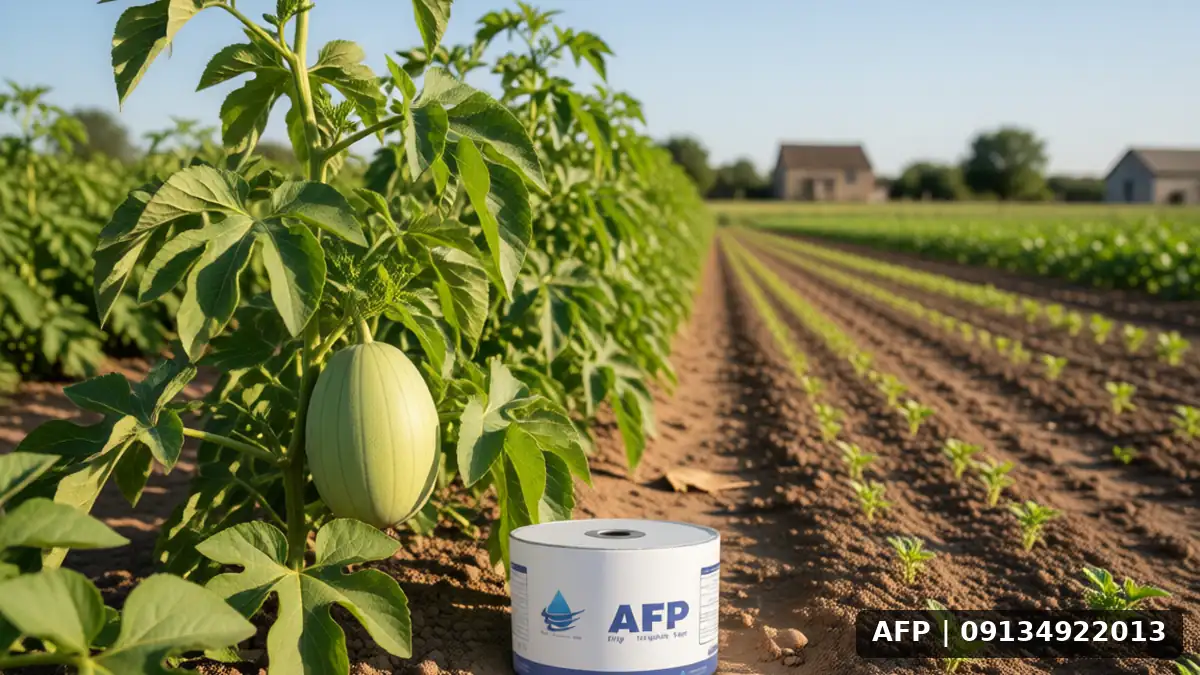
Melon cultivation is a strategic commodity in domestic and export markets, where precise resource management, particularly water, plays a decisive role in the quality and quantity of the final yield. Among various irrigation methods, center pivot irrigation (center pivot or spinner) is considered an attractive option for medium-to-large melon farms due to its uniform coverage and pressure adjustability. Unlike drip lines, which deliver water linearly at low pressure, this method uses greater height and larger droplets, offering significant benefits for fast-growing crops like melons that require uniform nutrition. This article details why this method is chosen and how farmers can leverage its advantages.
Introduction to the importance of water management in melon farms
Cantaloupe is a crop sensitive to drought stress; however, over-irrigation and prolonged leaf wetness can create favorable conditions for the outbreak of fungal diseases. The objective of employing modern irrigation systems is to achieve soil moisture equilibrium. Center pivot systems, which spray water radially from a central point, deliver water with a high uniformity distribution (UD) percentage. This uniformity is critical for open-field crops that utilize complex root systems and vegetative growth. Farmers aiming to optimize water usage and maximize yield per hectare can better understand general farm resource management principles by consulting supplementary resources such as articles on factors influencing yield enhancement.
Specific benefits of center pivot irrigation for cantaloupe cultivation
Increased uniformity of growth and fruit quality
One of the greatest challenges in melon cultivation is the inconsistency in fruit size and color at harvest. The central pivot system creates corresponding moisture zones, ensuring that all plants within the spinner’s coverage radius have equal access to water. This results in synchronized fruit ripening times and improved commercial quality. Unlike drip systems, which may suffer from nozzle clogging and reduced uniformity, the central pivot system lacks small components prone to clogging, offering greater stability throughout the growing season. To better understand the impact of management practices on yield, you can refer to factors affecting yield increase per hectare to gain a comprehensive perspective on the relationship between irrigation and performance.
Reduction of fungal disease incidence through proper scheduling
Although water is distributed as a spray, adjusting low pressure and appropriate spinner height ensures that leaves do not remain wet. Scheduling irrigation during the early morning hours facilitates rapid leaf drying. This offers a significant sanitary advantage compared to surface and furrow irrigation, which retain moisture at the soil surface and in plant bases for extended periods. Additionally, the central pivot system allows for fertigation without the risk of clogging in small lines, thereby enhancing plant nutrient uptake.
Practical tips for installing and operating the central pivot system
Selecting an appropriate spinner based on planting area
The most important technical step is selecting the spinner’s coverage radius. Melon row spacing is typically between 2 and 2.5 meters. Therefore, a spinner should be chosen whose coverage radius aligns with the dimensions of the planted plot to ensure boundary areas are not left unwatered. If using a large-radius spinner, it is essential to cover boundary zones with smaller spinners. Familiarity with the installation steps for irrigation systems, even for tape systems, reminds you of general hydraulic principles such as pressure and flow rate calculations, which are also fully applicable to axial installation.
Managing pressure and flow rate in main lines
The axial system requires higher pressure compared to tape systems. Ensure that farm pumps or storage towers provide sufficient pressure at points far from the source (High Points). Excessive pressure drop can cause the coverage radius at the end to fall short. It is recommended that the operational pressure be between 2 and 3 bar. Also, the appropriate flow rate should be adjusted so that irrigation is performed continuously (e.g., for 2 to 3 hours) to ensure deep water infiltration into the active root zone of the melon (depth of 30 to 50 centimeters). To compare technologies, studying the differences between tape systems and other methods can help you make a final decision based on the farm setting, constraints, and technical conditions.
Answers to Frequently Asked Questions (FAQ)
Is axial irrigation suitable for cloddy fields?
Yes, but it requires more precision. If the soil structure is cloddy, surface infiltration may cause water to be lost or leak faster than expected. In this case, using larger droplets (spinner head adjusted to coarse mode) is recommended to increase deep infiltration and prevent water from splashing onto stems and leaves.
What is the installation cost of a pivot system?
Costs depend on the farm acreage, the number of sprinklers, and the type of pipeline. Pivot systems generally require higher pressure, which may necessitate more powerful pumps. However, because the number of consumable parts (sprinklers) is lower than the number of nozzles in a drip system, long-term maintenance costs can be more cost-effective. A precise hydraulic assessment is recommended before purchase.
What is the effect of pivot irrigation on internal cavity formation (hollowness) in melons?
Internal cavities are usually related to severe fluctuations in soil moisture. Pivot systems maintain stable moisture in the root zone, minimizing fluctuations and preventing hollow formation inside the fruit. Severe fluctuations involve intense dryness followed by heavy irrigation, which causes micro-cracks in the fruit and results in a spongy texture.
Conclusion and final recommendation
Selection Pivot irrigation In cantaloupe cultivation, this is a wise decision for farmers seeking high fruit quality, reduced labor costs in irrigation, and optimal water resource management. Its key benefits include uniform growth, reduced fungal diseases, and flexibility in managing irrigation intensity. By considering technical aspects such as coverage radius selection, pressure management, and proper irrigation timing, one can maximize the potential of this system. Remember that no irrigation technology works alone; soil and nutritional management must accompany it. For further reading on farm development strategies and supplementary notes in the irrigation and cultivation section, you can refer to the comprehensive guide to greenhouse and field irrigation which explains basic hydraulic concepts step-by-step. Ultimately, proper implementation of the design and continuous system maintenance are the keys to success in improving the performance and quality of your farm’s cantaloupes.
Related articles: safflower yield hectare factors increase, Potato drip tape