Surface Irrigation in Garlic Cultivation: Key Points for Maximum Efficiency
Introduction to Surface Irrigation in Garlic Cultivation
Garlic is one of the important agricultural products in Iran, requiring precision and proper water resource management. Among various irrigation methods, Surface irrigation is preferred by many farmers due to its simplicity and low cost. However, optimizing performance with this method requires adherence to specific principles, which we will examine below. Economically, this method is generally cheaper compared to modern systems, as seen in the cost analysis of Stripe drip cost per hectare which indicates a higher initial investment.
In surface irrigation, open water is delivered to the field through surface channels. Although this method uses more water than drip and stripe drip irrigation, it can yield favorable results in garlic cultivation due to the crop’s sensitivity to soil moisture. To learn more about alternative methods and compare efficiency, refer to the article on Cilantro yield per hectare Refer to these guidelines to better understand the functional differences between various crops and the impact of irrigation on them. Additionally, gain a deeper understanding of how to achieve optimal yields in other crops such as Buckwheat yield per hectare can serve as a model for resource management in garlic farms.
Key points in timing surface irrigation for garlic
Dormancy breaking and start of growth stage
The first critical stage in garlic cultivation is breaking dormancy and the start of the vegetative stage. During this period, the plant is highly sensitive to moisture levels. Surface irrigation at this stage should be applied at a low rate (approximately 5 to 7 cm) at intervals of 10 to 14 days. This prevents root drying and growth cessation. Precise monitoring of soil moisture using a probe is vital at this stage to avoid over-irrigation, which can lead to soil-borne fungal diseases.
Rapid growth and bulbing stage
In the mid-growth season, plant growth rate increases significantly. At this stage, the irrigation volume increases to 10 to 12 cm, and the interval between irrigation events decreases to 7 to 10 days. Adjusting these volumes based on rainfall amounts and air temperature is essential. In regions with extreme temperature fluctuations, such as those discussed in Hraact type ornamental maintenance (which refers to temperature stability), surface irrigation must be managed with greater precision to prevent heat stress from damaging the roots.
Bulb Bulbing Stage and Water Reduction
Once bulb bulbing is complete, moisture requirements gradually decrease. In the final weeks, irrigation frequency shifts to once every 15 to 20 days to facilitate proper bulb development within the cloves. Abruptly cutting off water supply before the designated time can cause bulb splitting during harvest. Therefore, soil moisture should be gradually reduced to the wilting point threshold.
Practical Tips for Implementing Surface Irrigation
Proper Bedding
Irrigation beds or furrows should be formed so that the elevation difference from the head to the tail of a bed is less than 15 cm. This ensures uniform water distribution along the entire bed length. Using laser technology for bed leveling is recommended. Inaccurate leveling causes water to stagnate at the end of the bed, leading to root disease contamination. In large-scale projects, utilizing principles of Drip Lateral Installation Stages can also be beneficial in modifying surface irrigation channels, as the principles of gravity and correct grading are common to both methods.
Water flow velocity
Water flow velocity in furrows should not exceed 50 to 60 centimeters per second to prevent soil erosion and root damage. If the flow is too fast, the velocity must be reduced by decreasing the depth or increasing the width of the furrows. Flow velocity control can be achieved by installing sharpshooters or dividers in main canals. This not only ensures soil protection but also allows water to enter the furrow at a more suitable temperature, which is of utmost importance for the sensitive roots of garlic.
Drainage management
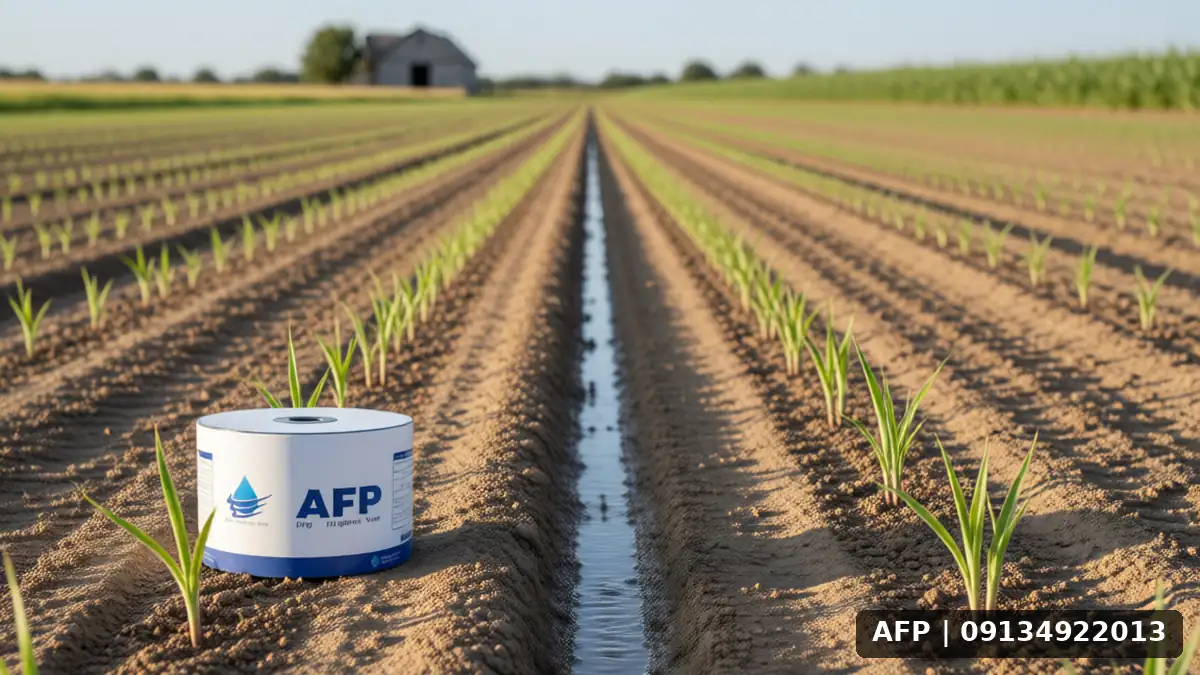
In areas prone to waterlogging, surface irrigation requires the design of an appropriate drainage system. Regular discharge of excess water from the ends of the furrows is essential to prevent root drowning. The presence of excess drain water can lead to root oxygen deficiency, resulting in wilting and stalk lodging. Designing the field bottom with a gentle slope toward discharge canals is one of the main keys to success in this area.
Comparison of surface irrigation with more modern methods
Concurrently with the use of surface irrigation, many farmers have adopted drip line spacing in lettuce and drip irrigation methods. These new methods offer higher efficiency due to water conservation and more precise moisture distribution. For example, in How to increase the useful life of drip lines It is explained that proper management of irrigation systems extends their service life. Therefore, even in surface irrigation farms, principles of maintenance and pressure management can inspire the optimization of surface channels.
In mixed crop conditions, such as using the drip strip in Nooriyab Poly drip irrigation (grain farming), a combination of surface irrigation for wheat and drip strip for other crops can be used. This combination diversifies methods and optimally manages water resources. Additionally, understanding different root establishment depths can be decisive in selecting an irrigation method; as stated in the comprehensive cucumber irrigation guide which highlights the difference between bare roots and wheat.
Frequently Asked Questions (FAQ)
Is surface irrigation recommended for wheat in arid regions?
In arid regions, surface irrigation can result in significant water loss. Under these conditions, using sprinkler or drip irrigation methods is recommended. However, if surface irrigation is employed, apply mulch to reduce evaporation. Otherwise, water use efficiency will drop significantly, making the practice economically unsustainable.
What is the optimal time to start irrigating garlic after planting?
After planting garlic, perform initial irrigation within 3 to 5 days to ensure good soil contact for root establishment. Subsequently, the irrigation schedule is adjusted according to the plant growth stage. Planting without initial irrigation causes cloves to focus on survival rather than root development, resulting in slow growth.
Can water unsuitable for drinking be used for surface irrigation of garlic?
Using water unsuitable for drinking for surface irrigation is not justifiable economically or resource-wise due to high water loss. It is better to use suitable water sources. Additionally, water quality must be evaluated, as saline water in surface irrigation comes into direct contact with roots, which can cause root burn and reduce yield.
Conclusion
Surface irrigation in garlic cultivation, although a traditional method, can yield good results if key points such as proper ridging, precise timing, and water flow control are observed. However, given the water crisis, farmers can reduce water consumption by combining traditional and modern methods. Using specialized guides, such as those for maintaining ‘Herakht’ type bulbs or other educational articles, can be helpful. Ultimately, understanding local farm conditions and adapting irrigation principles to them is the key to success. Continuous monitoring of soil moisture and plant status, even in traditional methods, is a necessity that should not be overlooked.