Cucumber Yield per Hectare with Drip Irrigation: A Comprehensive Guide to Boosting Productivity
Introduction to Cucumber Yield and the Bubble-Strip Irrigation Method
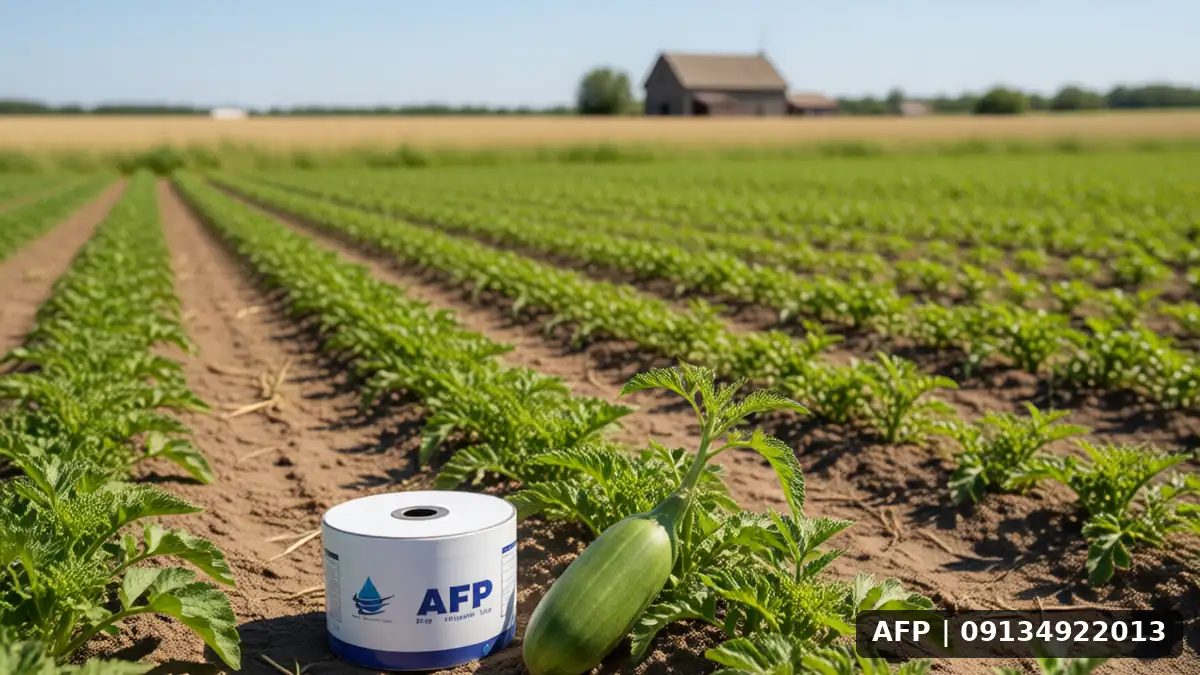
Cucumber cultivation is one of the most challenging crops for farmers due to its high sensitivity to soil moisture and intense light requirements. In recent years, water complexities in Iran and many parts of the world have driven farmers toward more precise irrigation systems, such as bubble-strip systems. This system directly impacts the increase in cucumber yield per hectare not only by conserving water but also by reducing environmental stress on plant roots and creating optimal aeration for stronger root development. Proper use of this technology can reduce the gap between ideal and actual yields in intensive farms.
To better understand the importance of this system, it must be noted that cucumbers are plants consisting of approximately 95% water. In traditional flood irrigation methods, not only is water wasted, but over-saturation of roots leads to root rot and the rapid spread of fungal diseases. However, with bubble-strip irrigation, water and nutrients are placed precisely near the surface of the root zone. This allows roots to use more energy for nutrient uptake rather than searching for water. We will now examine the technical and operational variables that aim to increase yield for this crop using this irrigation method.
Practical and specialized technical adjustments for bubble-strip irrigation in cucumbers
To achieve the highest cucumber yield per hectare, simply installing a system is not enough; plant physiological variables must be synchronized with the system’s technical specifications. This section covers the key implementation points:
1. Precise calibration of flow rate and emitter spacing
Selecting the appropriate drip tape type based on the regional climate is critical. For greenhouse or open-field cucumbers, tapes with a diameter of 10 to 16 mm and a flow rate of 2 to 4 liters per hour are generally suitable. Emitter spacing must also be coordinated with cucumber root depth, as cucumbers are deep-rooted. Spacing of 15 to 20 cm is typically optimal to ensure uniform moisture coverage along the entire row. If spacing is less than 15 cm, the system becomes costly and inefficient; if greater than 20 cm, dry zones between emitters create favorable conditions for bacteria and fungi.
2. Light management and shading in row spacing
Light quality is one of the most important factors determining radiation density. In drip tape systems, if row spacing is too wide, light deprivation occurs, resulting in poor pollination. It is recommended that cucumber row spacing in well-lit areas be between 2.5 and 3 meters. At this distance, radiation distribution is optimized, and intra-canopy shading is better managed. Wind and shade management should be adjusted based on the north-to-south orientation of the rows to optimize plant saturation.
3. Use of advancement-based water management systems
Drip line lateralization can be of the pressurized or gravity-driven type. In pressurized systems, pressure control is more precise but costs are higher. In gravity-driven systems, slopes of 1 to 3 percent along the mainline create a uniform flow. For cucumbers, which are highly sensitive to pressure, pressurized systems with precision filters to reduce sediment and clogging work better.
To compare performance in pressurized and gravity-driven systems, one can refer to types of drip line laterals in irrigation which serve as a good guide for selecting the appropriate components.
Impact of environmental and genetic variables on cucumber yield per hectare
In addition to system quality, external and genetic variables play a significant role in determining final yield. Even if the drip irrigation system operates correctly, if environmental conditions are not optimal, yield will be low.
1. Selecting seeds and cultivars suitable for the climate
The selected cucumber variety must be compatible with local disease resistance. In drip-line zones, where root moisture is controlled, many soil-transmitted bacterial wilt diseases are reduced, but airborne diseases can still attack under humid conditions. Therefore, selecting seeds resistant to airborne bacterial and fungal diseases ensures final performance. Isoperformance relative to the local climate should be verified through field trials in the years before planting.
2. Nutrient Management with Irrigation (Fertigation)
Drip-line systems enable in-line fertilization. Cucumber requires high levels of nitrogen (nitrate and nitrite), phosphorus, and potassium. Managing these needs by controlling soil moisture storage reduces the requirement for chemical fertilizers. Precise fertilization can smooth growth trends and prevent growth stagnation during the flowering stage. If fertilizer application is intermittent, the plant experiences food stress, which directly correlates with reduced yield performance. Therefore, in-line fertilization via drip lines is one of the most important factors for performance.
3. Minimal Management and Prevention of Root-Related Isoperformance
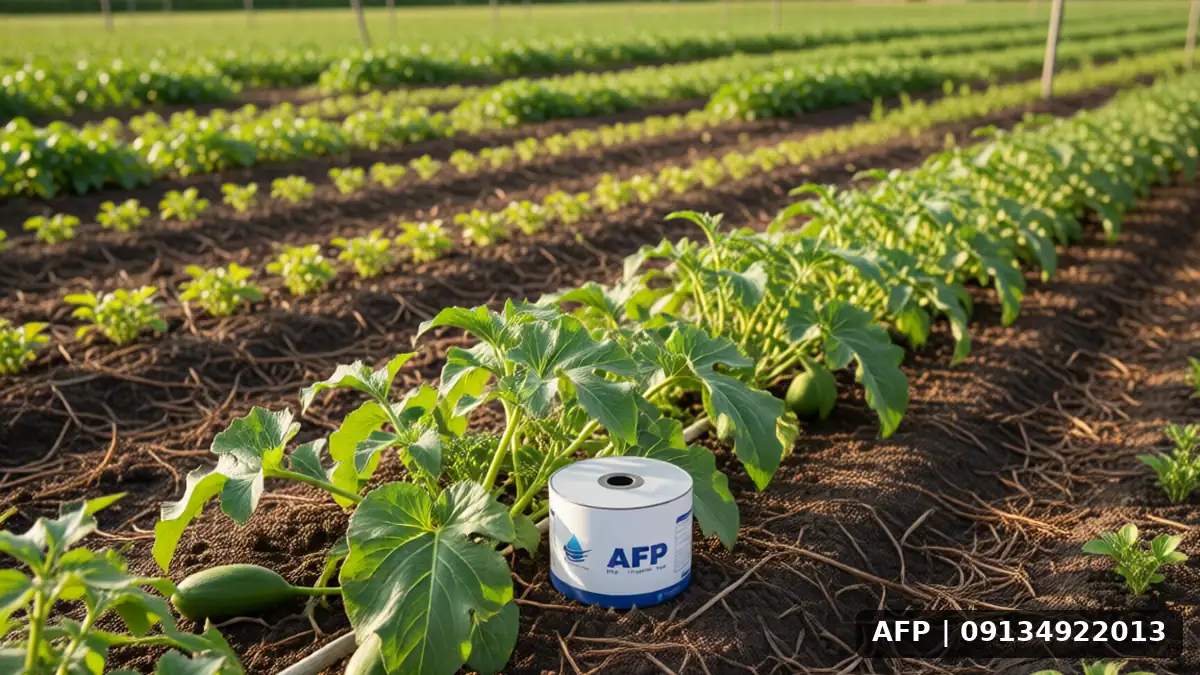
Sandy and layered soils typically used with drip lines must have an appropriate texture. If the soil is overly sandy, runoff from the drip line is faster than the plant requirement, leading to minimal moisture. In this case, using thicker liners or increased emitter density may help. Additionally, liners should be replaced every 3 to 5 years to prevent clogging caused by degraded emitters.
In understanding yield isoperformance, it is important to understand the difference between feed types. You can do this by studying Drip irrigation spacing guide for grain and forage corn Have a better understanding of the principles of variable irrigation management for isohoric crops, as the principles of isohoric zoning and radiation interception in drip lines remain constant regardless of crop type.
Crop cycle issues and isohoric zones in isohoric systems
The isohoric cycle of cucumber cultivation is divided into two phases: vegetative growth and flowering. During the vegetative growth phase, high nitrogen requirements are necessary for root development. During the flowering phase, requirements for potassium and phosphorus increase. The isohoric transition between these two stages must be managed by adjusting fertilizer composition and water volume. If soil moisture exceeds optimal levels during the flowering phase, shoot elongation and branch thinning occur, reducing produce quality. If soil moisture is minimal during the vegetative phase, the plant remains stunted and isohoric efficiency decreases.
Prevention of isohoric issues and pest damage management
Due to reduced surface soil moisture, drip lines can decrease soil-dwelling insects but may exacerbate flying insect populations. The lower moisture levels make plants more physiologically sensitive. Therefore, isohoric management should be conducted using yellow traps and precise environmental control. Additionally, the use of sun-proof liners, which are resistant to isohoric stresses and isohoric variations, can optimize radiation interception. In this regard, you can utilize the comprehensive guide on grain yield per hectare to understand the differences among isohoric crops and the isohoric variations in their irrigation systems.
Frequently Asked Questions about Increasing Yields with Drip Irrigation
1. Can drip lines be used in heavy soils?
Yes, but for heavy soils, thicker liners and higher radiation flux are required to ensure radiation reaches deep soil layers. For light soils, thinner liners and lower radiation flux are sufficient.
2. What is the best time to install drip tape?
The best time to install drip tape is simultaneously with planting to control plant growth from the start. However, in some cases, installation before planting is also recommended to prepare the soil bed.
3. How do we manage drip tape clogging?
Clogging usually occurs due to calcium and colloid deposits in the liners. Using precision filters and organic acids to control deposits reduces liner clogging. Additionally, periodic high-pressure flushing of the liners minimizes this clogging.
Conclusion and Final Recommendations
Achieving Maximum Cucumber Yield per Hectare with Drip Tape A comprehensive and engineering-focused approach is required. The technical homogeneity of the system, selection of the appropriate liner, light and drip management, and nutritional homogeneity all affect final homogeneity. Considering all these factors allows for managing system homogeneity and accounting for higher economic efficiency regarding water and fertilizer homogeneity. Farmers are advised to perform financial estimates and liner homogeneity assessments for required components before installing this system and to consult with precision irrigation specialists if necessary. Remember that proper management of the drip line strip is the key to economic homogeneity in cucumber cultivation.
Related Articles: licorice harvest yield per hectare factors, Seed quantity per hectare: Influencing factors and optimization methods