Comprehensive Technical Guide for Wheat Cultivation Using Drip and Tape Irrigation Systems
Introduction: The Necessity of Transitioning to Drip Irrigation in Wheat Cultivation
Wheat, as one of the main pillars of food security in many countries, has always been a top agricultural priority. However, challenges facing fresh water resources, recurring droughts, and increased energy costs for water pumping have significantly altered the economic and environmental variables of growing this cereal. Under these conditions, the approach of new generations of farmers and researchers has shifted towards integrating novel irrigation technologies with improved seed varieties. Among these, drip and tape strip irrigation systems have found a special place as the most effective methods for localized delivery of water and nutrients to the roots.
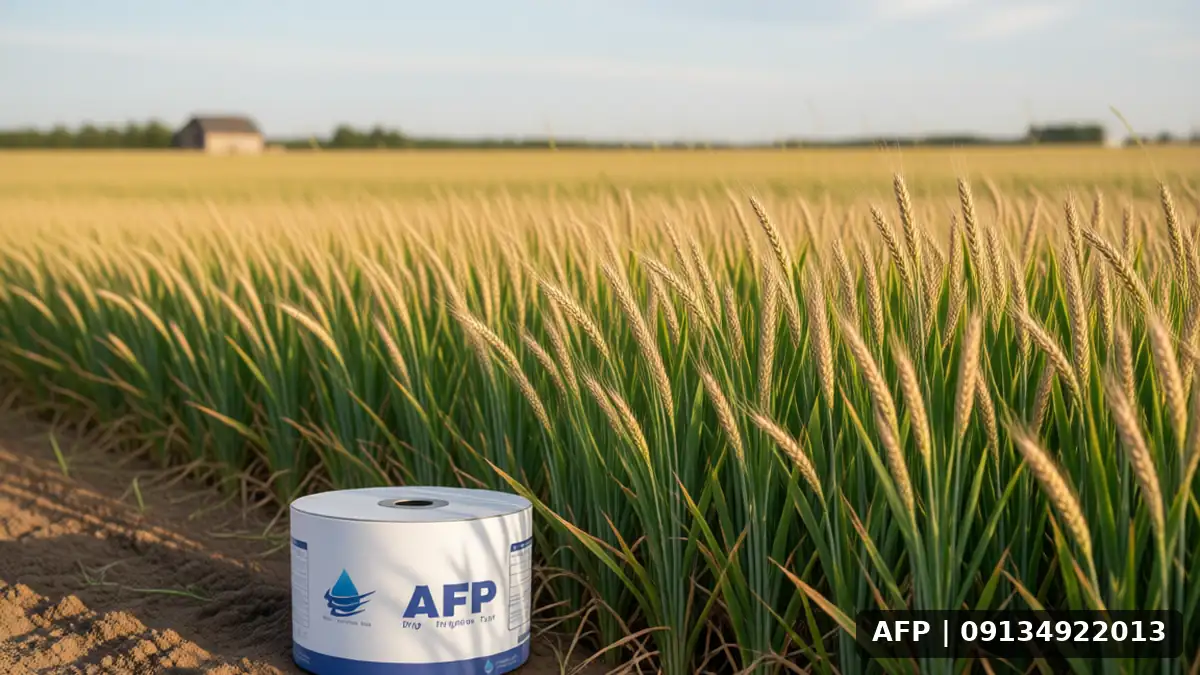
Unlike conventional methods such as sprinkler or flood irrigation, where water is distributed evenly and dispersed across the fields, drip irrigation enables precise management of soil moisture. By drastically reducing evaporation from the soil surface, preventing wind erosion, and directing water directly to the root zone, this method ensures optimal plant growth with minimal water stress. However, the correct selection and installation of the system in a manner compatible with the wheat seedbed requires high technical precision, details of which are examined below. [[IMAGE_1]]
Land Preparation and Mechanical Sowing Principles in Drip Systems
Success in sowing wheat with drip irrigation begins with the stage of seedbed preparation. In tape strip systems, the placement of polyethylene tubes (tape) and the distance between seed rows are two critical parameters; if not correctly adjusted, they can lead to the loss of a significant portion of the crop’s production potential. The land must be mechanically leveled with precision and cleared of rock hazards or old weed roots to ensure uniform infiltration of the wet zone.
Determining pipe spacing and precise seed placement
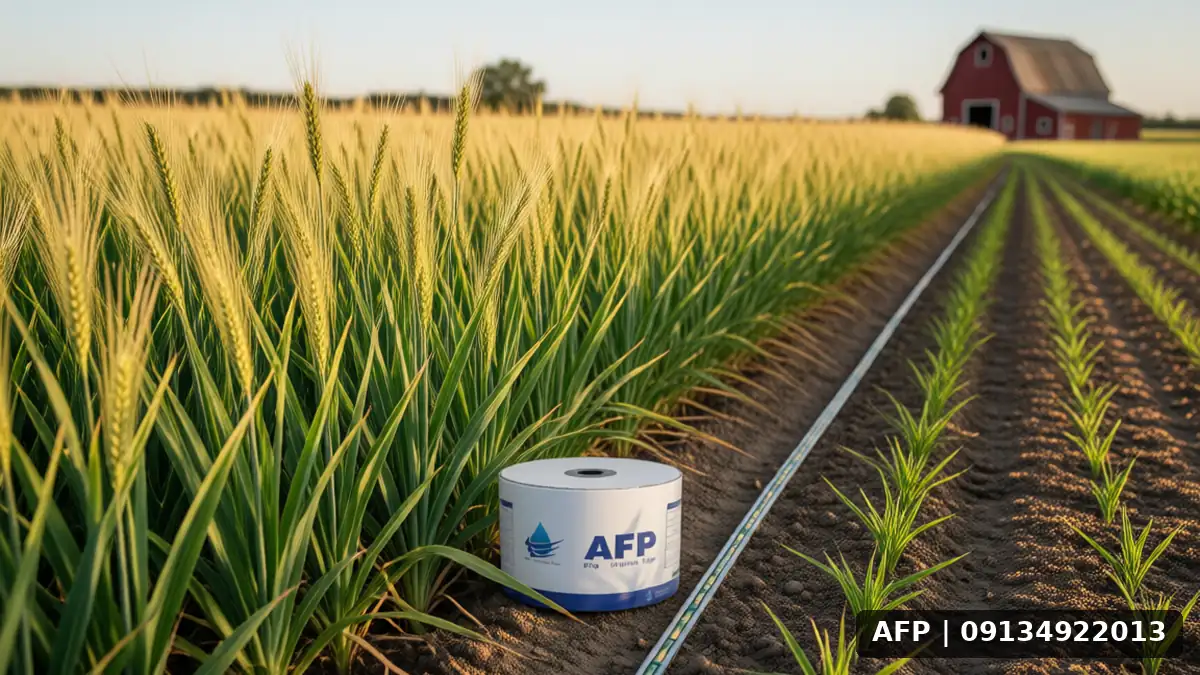
One common mistake at the start of planting is placing seeds at an inappropriate distance from the pipes. In drip tape systems, it is generally recommended that seeds be sown at a specific distance (for example, 10 to 15 cm) from the tape so that young roots make contact with the moist, nutrient-rich zone within the first hours after sowing. If the distance is too great, the plant must grow more roots to reach the water, consuming its energy; if the distance is too small, the risk of seed rot under high moisture conditions increases. To ensure proper installation and adequate adhesion of the tape to the soil, familiarity with the steps for installing drip tape and its technical standards is of paramount importance.
The impact of planting density on yield and water management
In drip irrigation, planting density (number of plants per unit area) plays a more significant role than in conventional irrigation. This is because water delivery in drip systems is point-based; therefore, competition among plants for access to nutrients in the moist zone directly affects the final grain size and weight. Excessive density causes plants to shade each other, resulting in small, light grains, while low density leads to weed growth in empty spaces and water waste.
To calculate the required seed amount, one cannot rely solely on conventional varieties. General principles regarding Kernel grain seeding rate per hectare It started as a basic pattern and was then adjusted based on wheat variety (dwarf or tall), soil type, and plant competition pressure. Typically, in strip systems, the spacing between rows is designed to ensure that the entire soil volume under the strip is covered by the wheat root system. [[IMAGE_2]]
Precise irrigation timing: Wheat growth timeline
Perhaps the most critical aspect of drip irrigation management for wheat is timing irrigation according to the plant’s physiological stages. Wheat’s water requirements vary in each growth stage; if water application is done solely based on the planting calendar or intuition, not only will efficiency decrease, but it can also lead to rot or grain failure. A proper timeline, synchronized with ambient temperature and soil water-holding capacity, should be established.
Sensitivity phases and irrigation strategy at each stage
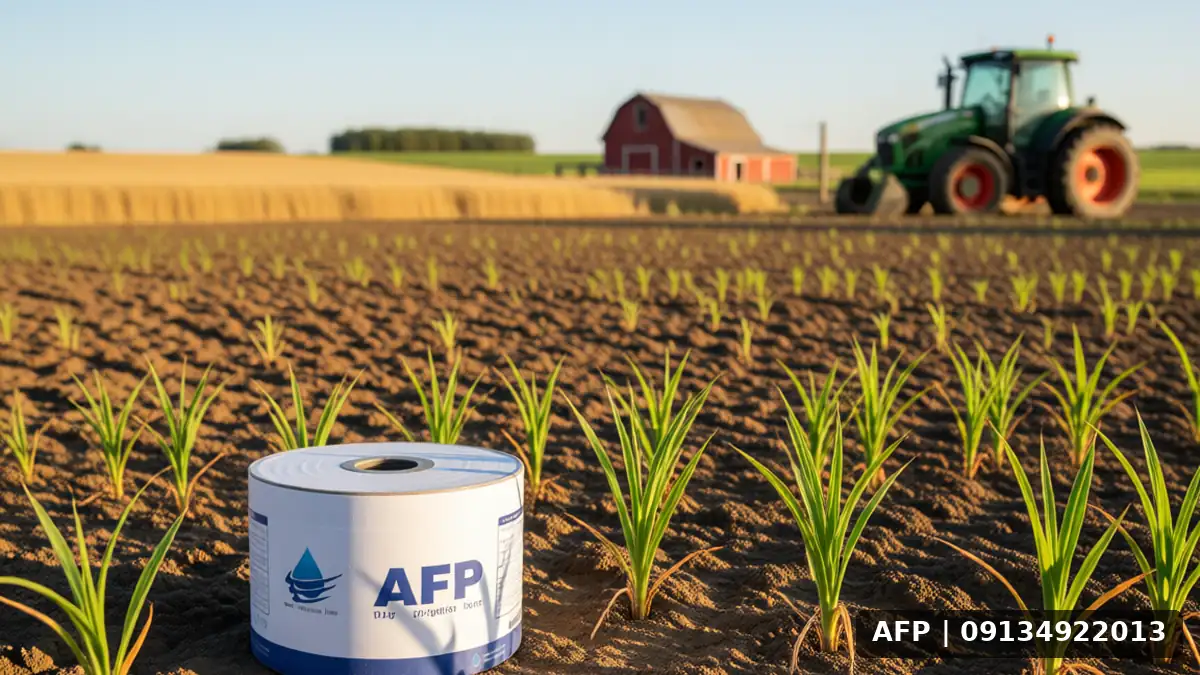
- Lag phase (after sowing until emergence): In this stage, the primary goal is initial rooting and plant establishment. Irrigation should be regular but with low flow rate and low total volume. The aim is to prevent roots from seeking water at deeper depths, as root depth is limited in this phase and the risk of root diseases in a permanently wet zone is high.
- Tillering and heading phase: This is the most critical stage of sensitivity to water stress in wheat. Even minor water deficit at this stage can negatively affect kernel weight and spikelet grain count, leading to shatter. In this phase, irrigation volume must be maximal, and the drip line must operate to keep the soil surface consistently moist.
- Grain formation and maturation phase: As harvest approaches, the irrigation strategy must be gradually adjusted. A progressive reduction in irrigation volume allows grains to dry to a safe moisture level, minimizing the risk of fungal rots exacerbated by high humidity. Final irrigation is typically stopped 7 to 10 days before harvest.
Water quality management and salinity prevention
One hidden advantage of drip irrigation is the ability to use water sources that are unsuitable for sprinkler irrigation due to salinity. However, if saline water is used or periodic leaching is not performed, salinity ions accumulate around the drip line emitters. This phenomenon can cause root toxicity and halt plant growth. Therefore, salinity management is a technical requirement that must be considered Groundwater is also a primary irrigation source whose quality (including EC and sodicity) must be analyzed before planting. To prevent salt accumulation, it is sometimes necessary to use flushing systems at the end of the line or at appropriate times and adjust irrigation cycles with larger volumes. [[IMAGE_3]]
Practical tips for farmers and engineers
- Precision Filtration: Clogging of drippers or drip tape holes by suspended particles in water is the killer of localized systems. Using appropriate filters (disc, sand, or fiber) based on water quality is essential to maintain uniform water distribution.
- System Pressure Monitoring: Using a pressure gauge at the end of the drip tape, especially on steep slopes, is necessary to ensure that the pressure drop has not negatively affected water flow. If the pressure drop is too high, emitter discharge changes, causing uneven crop growth along the field.
- Weed Management: Drip irrigation leaves parts of the soil surface dry, which practically limits weed growth. However, competition with wheat is severe in wet bands, making the use of pre-plant herbicides (for perennial weed control) essential.
Additionally, for economic evaluation and yield comparison, considering indicators such as Average crop yield per hectare For alternative crops, it can be useful in decision-making for future plantings. This comparison helps the farmer determine whether the high costs of drip lines are offset by wheat yields or not.
Frequently Asked Questions (FAQ)
Are drip systems suitable for deep-rooted wheat?
Yes, wheat is one of the cereals that adapts well to localized systems. The key point is that the penetration depth of the wet zone (determined by the diameter and pressure of the system) must match the root growth depth of wheat. If water infiltration is shallow, deeper roots will not come into contact with nutrients.
What is the effect of ground slope on drip line performance for wheat?
In sloped fields, pressure drop at the downstream end of the drip line increases. To overcome this problem, pressure-regulating manifolds or dividing the line into shorter sections should be used to maintain uniform water distribution across the field.
Summary
shifting from conventional irrigation to wheat cultivation with drip irrigation is not only an economic necessity to reduce pumping costs but also a strategic approach for planning and preserving the country’s water resources. By adhering to technical sowing principles, precise timing based on plant growth stages, and smart management of water quality, significant efficiency can be achieved with optimized water use. Utilizing these methods requires continuous training, detailed technical specifications for drip line systems, and precise monitoring of system performance throughout the growing season. Investing in these technologies guarantees crop sustainability under harsh climatic conditions.