Comprehensive Guide to Rosemary Cultivation Using Drip and Tape Irrigation
Introduction to Drip Irrigation for Rosemary
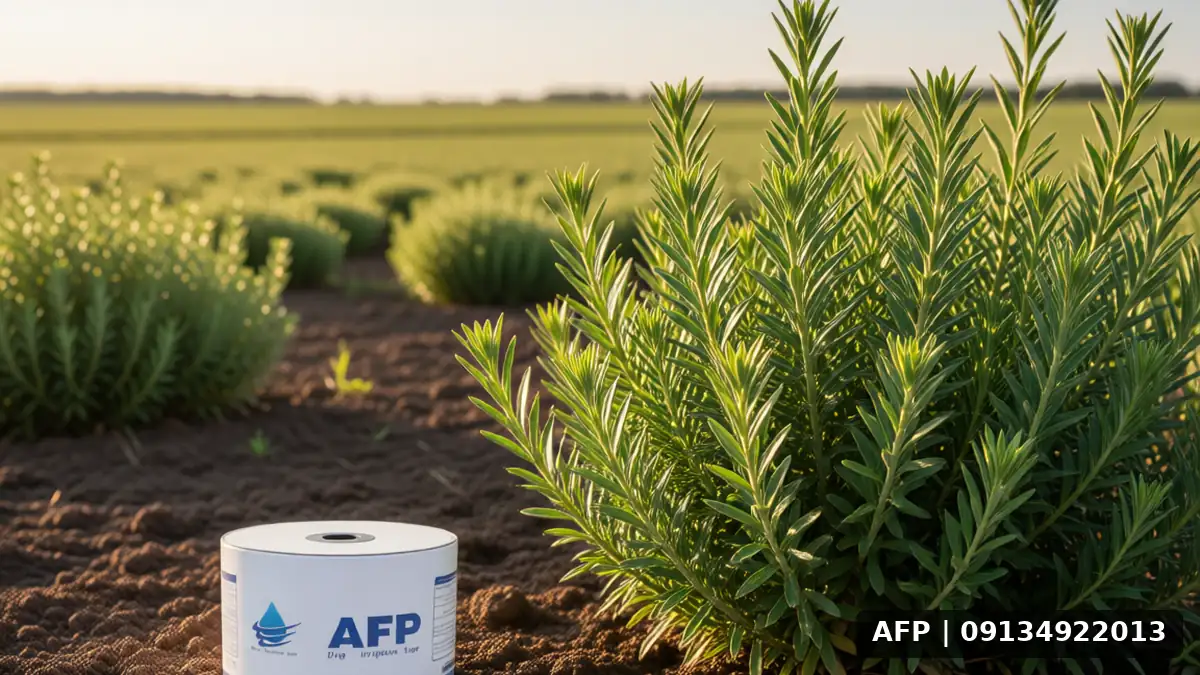
Rosemary (Rosmarinus officinalis) is an aromatic, evergreen, drought-tolerant herb that thrives in Iran’s climate. However, to achieve consistent growth and enhance flavor and aromatic quality, precise soil moisture management is essential. Drip Irrigation of Rosemary This method significantly reduces water consumption and prevents root rot and fungal diseases caused by surface irrigation. In this article, we examine the technical details of rosemary cultivation, optimal drip line selection, and irrigation scheduling.
Why is Drip Irrigation a Better Choice for Rosemary?
- Root Moisture Control: Rosemary develops deeper roots than many aromatic plants and requires consistent moisture at deeper soil layers, a need better met by drip systems than by sprinklers.
- Reduced Evaporation: Reduction in the moist soil level minimizes direct water evaporation.
- Increased efficiency: Precise delivery of water and nutrients to the root zone promotes uniform plant growth throughout the crop.
It is also important to understand the appropriate infrastructure. You can study irrigation systems to select the optimal combination for your farm.
Planting methods and principles of planting methods
The planting method for rosemary directly affects the success of your drip irrigation system. As a native Mediterranean plant, rosemary requires soil with proper drainage.
Plant spacing and layout
- In-row spacing: For young plants, a spacing of 30 to 40 cm is recommended, increasing to 60 to 80 cm after one year.
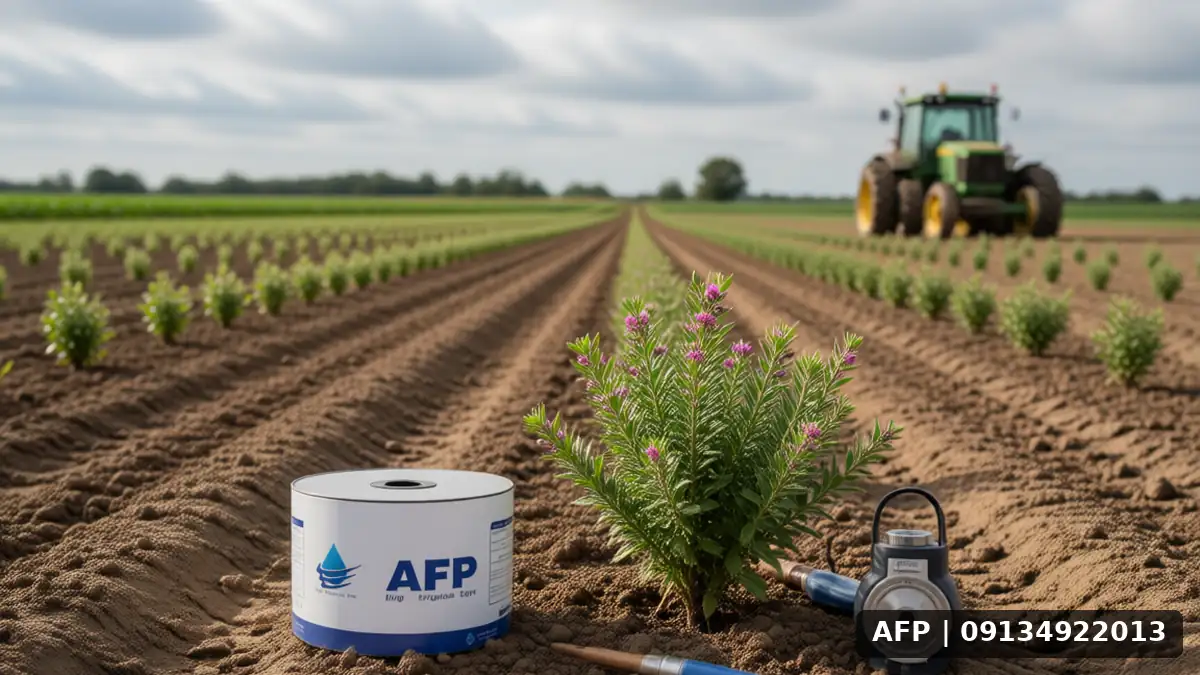
- Row spacing: A row spacing of 100 to 120 cm is required to ensure rosemary receives direct sunlight.
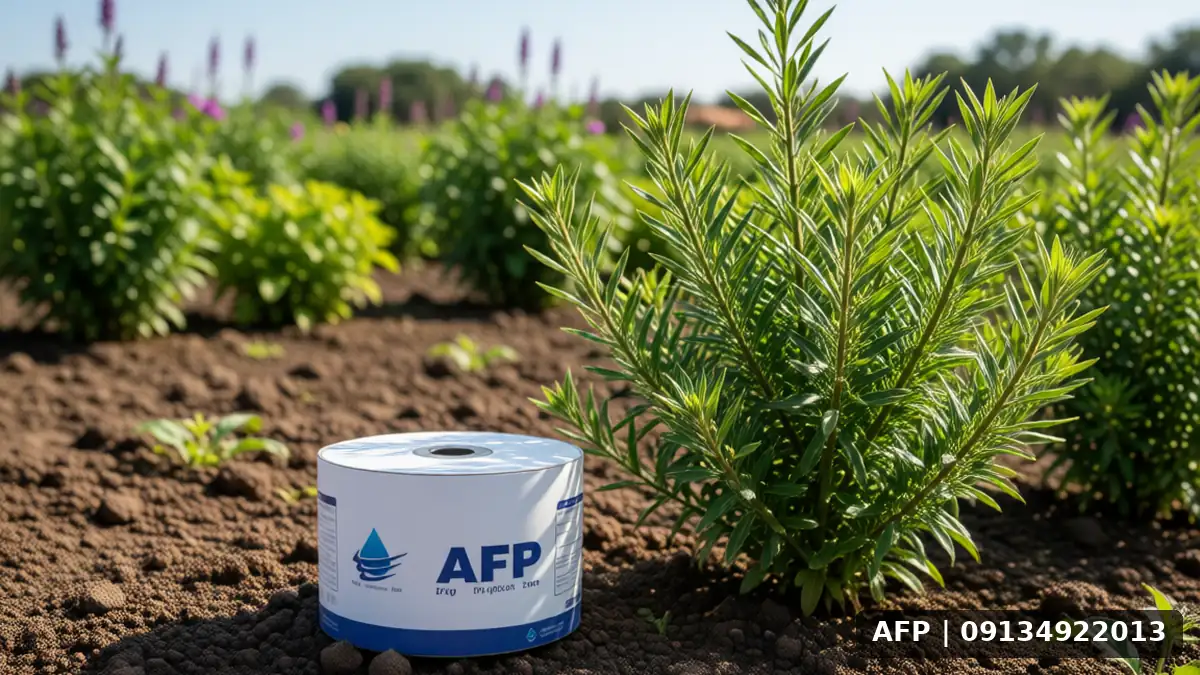
- Drip line installation: Place the drip line 15 to 20 cm away from the plant to direct moisture to the root zone rather than the stem and leaves.
If using a dual-line drip system, slightly wider spacing can be used. Also, before finalizing the infrastructure, familiarize yourself with Foscha Linear Standard Drip Tape It can help you understand the different materials of the system.
Key points in preparing the planting medium
Soil before planting must be checked for pH (ideal: 6.0 to 7.5) and drainage. Adding peat moss or perlite can improve settling. Prevent roots from sticking to the drip tape; regarding this, read on Tips before buying drip irrigation tape It helps you become aware of potential clogging and installation problems.
Rosemary Drip Timing: Irrigation Schedule
Access to a drip irrigation schedule for rosemary (Irrigation Schedule) precise schedule is the key to plant sustainability. Rosemary’s water requirements vary depending on the growth stage, temperature, and soil type.
Irrigation planning based on growth stages
Note: The required water amount varies for 16 mm diameter tapes with 20 to 30 cm spacing between holes. It is recommended to calculate water infiltration in your soil using simple catchment buckets or cylindrical cylinders. To find out about the required seed amount for rainfed agriculture per hectare (and generally rainfed versus drip irrigation patterns), you can read companion articles to compare the yield difference between the two methods.
Calculating system flow rate and line pressure
After determining the daily water requirement, multiply the flow rate of each line along its length to obtain the total flow rate required for one line. Then, multiply this number by the number of lines active at the same time to obtain the total system flow rate. For rosemary lines, the appropriate line pressure is generally between 0.5 and 1.5 bar. Higher pressure causes uneven emission, while lower pressure reduces efficiency at the end of the line.
Practical tips and supplementary management
- Mulching: Using mulch around rosemary plants reduces evaporation and prevents weed growth. Under these conditions, place the drip line slightly farther from the plants (approximately 25 cm) to ensure the mulch does not cover the line.
- Fertigation: Rosemary requires nitrogen, phosphorus, and potassium during the active growth stage. Injecting fertilizer into the drip irrigation water can increase fertilizer efficiency by up to 50%. Remember to adjust the system pH before adding fertilizer to prevent precipitation.
- Monitoring for Clogging: Rozmarin tube bands are typically manufactured with a 20 cm emitter spacing, which is well-suited to the root system of Rozmarin. Every six months, open both ends of the band and inspect the water flow.
- Response to Stress Conditions: If yellowing leaves and wilting are observed, overwatering may be occurring. Rozmarin is sensitive to high root-zone moisture. In such cases, reduce the flow rate and increase the irrigation frequency interval.
Response to Frequently Asked Questions (FAQ)
Q1: Can Rozmarin be irrigated using a classic drip system (Dripper)?
Yes, classic drippers with a flow rate of 2 to 4 liters per hour are suitable for Rozmarin. However, tube bands offer higher efficiency and lower costs for row planting and larger-scale farms.
Q2: What is the best time to purchase and install tube bands for Rozmarin?
The best time is 2 to 3 weeks before planting the crop. At this stage, site preparation, installation of the main pressure line, and pressure regulation are carried out. Before purchasing, be sure Importance of site inspection for polyethylene drip tape to ensure surface leveling for uniform irrigation.
Q3: In arid regions, does the water requirement for rosemary change?
In arid regions, due to high evaporation, water requirements can increase by 20 to 30 percent. Using sand mulching in these areas is strongly recommended, and the system flow rate should be manually adjusted.
Conclusion
Application Drip irrigation of rosemary By following planting principles, selecting an appropriate dripline with a 20 cm lateral spacing, and precisely scheduling drip application, product quality and yield can be significantly increased. Initial investment in drip systems maximizes water and nutrient efficiency. It is recommended to review related articles, such as pumpkin seed harvest per hectare using dripline, which examines similar drip processes for other crops. Smart rosemary irrigation is both an economic necessity and an environmental requirement for the future of agriculture.