Comprehensive Guide to Chickpea Planting Using Drip Irrigation
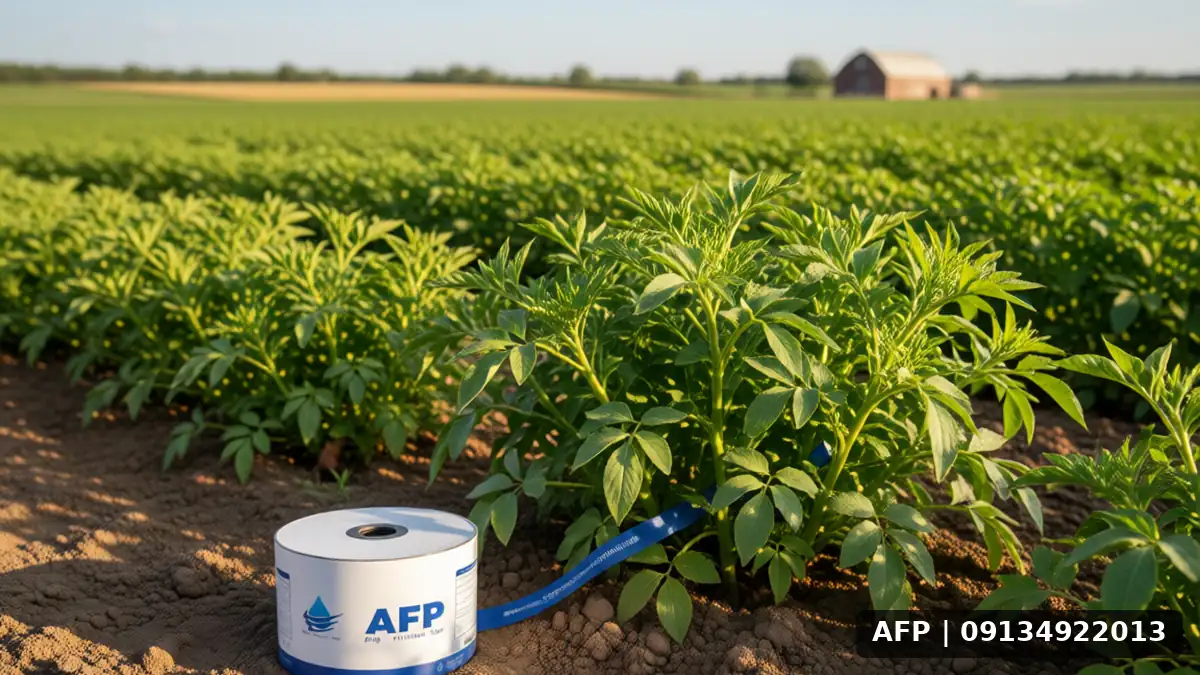
Introduction to the importance of modern irrigation in chickpea cultivation
Chickpea is a strategic legume that, in addition to its high nutritional value, plays a vital role in the health of farm ecosystems due to its ability to fix nitrogen in the soil. Given water resource limitations in most arid and semi-arid regions, transitioning from conventional irrigation methods to precision systems such as drip irrigation and micro-irrigation is not merely an option but an economic and environmental necessity. Proper use of these technologies can lead to water savings of up to 30 percent. Simultaneously, by improving soil moisture uniformity, they significantly increase seed weight and the quality of the final crop.
Key benefits of growing chickpeas with drip irrigation systems
- Direct delivery of water to the root zone (rhizosphere), which is located at a shallow depth in the soil.
- Reduces direct water contact with buds and decreases the incidence of leaf fungal diseases.
- Enables simultaneous plant nutrition through nutrient solution delivery (fertigation), which is highly effective for the growth phase of chickpeas.
- Provides better weed control compared to sprinkler irrigation due to the non-wetting of surfaces between the lines.
For success in this system, a deep understanding of the plant’s water requirements in each growth phase is critical. If you wish to familiarize yourself with technical criteria and more precise indicators for evaluating your irrigation systems, you can also look at the topic of spinach yield per hectare. Although it is a different crop, the calibration principles for drip systems for slender-stemmed plants (including chickpeas) are very similar.
Sowing techniques and technical design of the irrigation system
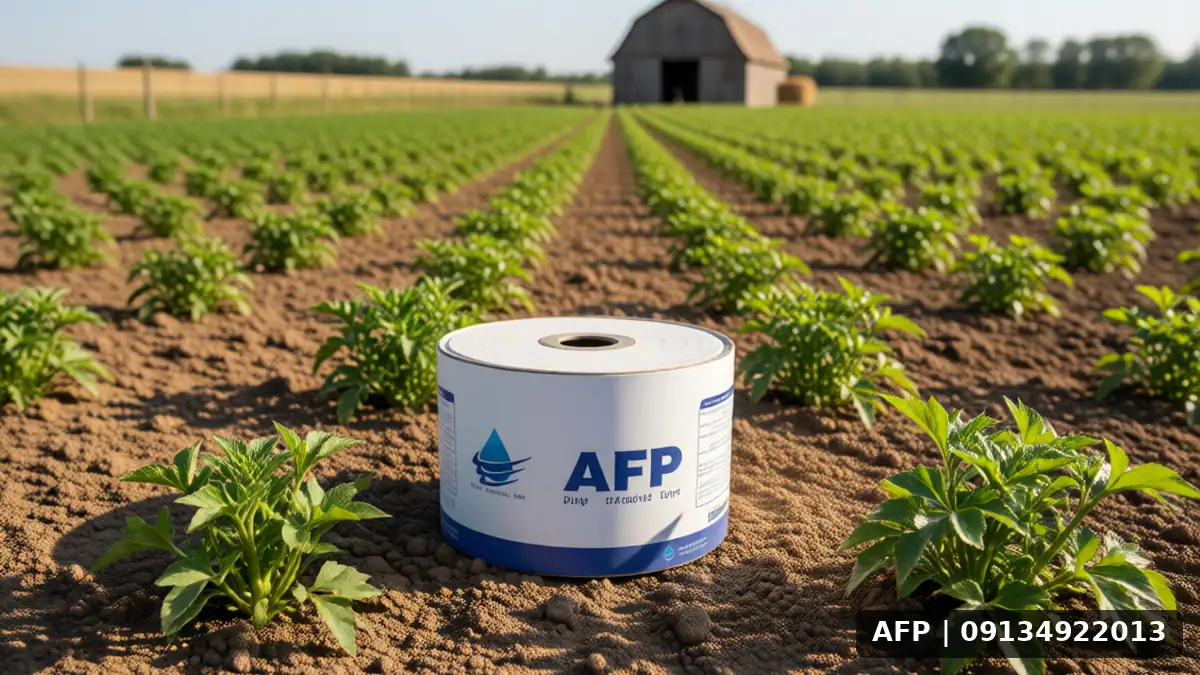
Sowing chickpeas with a drip system requires precise coordination between the seed track (seed furrow) and the path of the irrigation lines. The most common method is sowing in parallel rows, where drip lines are placed exactly on the seed line or at a specific distance from it (e.g., 10 to 15 cm). This layout ensures that the main roots, which reach depths of 20-25 cm, are fully within the wetted zone.
Selection of pipe type and dripper spacing
For chickpeas, due to the relatively shallow root system compared to plants with deep taproots, it is recommended to use drip tapes with a dripper spacing of 20 or 30 centimeters. The 20-centimeter spacing provides better and more uniform coverage but at a higher cost. The 30-centimeter spacing is suitable for lighter soils with rapid drainage, while in clay soils, the 20-centimeter spacing is preferable to prevent drying out between drippers. The choice of tape type is directly related to the material and type of the drip tape; a useful guide for this selection is to read an article on how to choose a suitable drip irrigation tape, which also addresses pressure stability and tape lifespan.
A tape line, as an economical alternative to drip systems, is a line with emitters that discharges water thinly over the soil surface or root zone. This method is highly effective for chickpeas in conditions where light and mountainous soils exist and the cost of a drip system with fine filtration is high. However, tape line irrigation requires greater precision in land leveling to prevent water accumulation in one spot and water stress in another. For a better understanding of tape line irrigation methodologies, it is recommended to read the basics of tape line irrigation.
Irrigation Schedule
The most important challenge in drip irrigation for chickpeas is synchronizing with the plant’s sensitive phases. Chickpea is an annual plant with a rapid growth phase that is sensitive to water stress during the flowering and grain filling stages. Based on agronomic research, the general irrigation schedule is as follows:
- Vegetative Phase (Before branching): In this stage, the plant has low water requirements. Irrigation should be light and frequent to prevent excessive stem elongation and lodging. Maximum 4 to 6 hours of irrigation per week.
- Flowering and Grain Formation Phase (Most Sensitive Stage): This is the most water-sensitive stage. Drought lasting even 24 hours can cause flower drop and significant yield reduction. During these weeks, irrigation volume must be maximized. Soil moisture should be maintained within the root zone field capacity range.
- Grain filling and maturity phase: Upon reaching physiological maturity, plant water requirements gradually decrease. Gradually reduce irrigation to place the plant in a semi-dry state, preventing grain cracking.
For precise calculation of irrigation volume, knowledge of Cockspeer seed rate per hectare as a root zone density variable can assist in mathematical water consumption modeling, although for chickpeas, seed density (250 to 350 kilograms per hectare) is typically constant, and the focus remains on soil moisture management.
Soil moisture management with sensors
Instead of relying solely on timers, using soil moisture sensors at depths of 15 and 30 centimeters increases irrigation schedule accuracy by up to 50 percent. The irrigation threshold (start of irrigation) is when soil moisture reaches 40 percent of field capacity.
Practical tips and smart farm management
Drip irrigation for chickpeas is not complete without full integration with fertility management (Fertigation). Nutrient solutions must have appropriate concentrations to prevent precipitation in drippers. The pH of the nutrient solution must be maintained between 5.5 and 6.5. Also, a mismatch between the filtration system and water quality can cause dripper clogging, leading to uneven irrigation.
Common challenges and solutions
- Dripper clogging: Use a 120-mesh disc filter and flush the system every 2 months.
- Other issues: Pod shattering: If pods shatter early, there may be water stress during the sensitive stage; increase irrigation volume by 20% during the first 2 weeks of flowering.
- Soil-Borne Diseases: Drip irrigation maintaining high root zone moisture creates favorable conditions for root rots. Observe the 7-day plant cycle to increase soil resistance against diseases.
To compare performance with other low-cost crops using similar systems, studying wheat and barley yields per hectare can provide good insight into the impact of precision irrigation on other grain crops and clarify performance benchmarks.
Frequently Asked Questions (FAQ)
Is tape line better than drip for chickpeas?
It depends on soil type and budget. Tape line is more affordable and suitable for clay soils with appropriate slope, but drip offers higher uniformity and better runoff control. For sensitive or high-yield chickpea varieties, drip is the safer option.
When should we stop irrigation?
Normally, stop irrigation completely 10 to 14 days before harvest to allow the grains to dry and reduce post-harvest rot.
Is it necessary to control salinity in drip irrigation?
No. Drip irrigation has low sensitivity to soil salinity due to high leaching fractions. In some cases, excessive leaching can even cause physiological stress. Precise root zone management is more critical than soil salinity management.
Conclusion
Chickpea cultivation using drip or strip tape irrigation combines agronomic, technical, and resource management knowledge. Final success depends not only on the installed system type but also on the precise execution of the scheduling program, continuous soil moisture monitoring, and fertigation integrity. By adhering to the principles outlined in this guide, you can reduce water and fertilizer costs while maintaining high crop yield and quality. Familiarity with the principles of optimal conditions and irrigation engineering provides a solid foundation for any precision cultivation. Investing in technical knowledge guarantees yield.
Related articles: Related article Related article Related article D8AFD8B1 Related article, lettuce yield per hectare factors increase, piyozcha hosili gektar rohnomo