Pest and Disease Management in Chives Under Drip Irrigation: A Comprehensive Guide
Introduction: The Importance of Moisture Management in Chive Cultivation
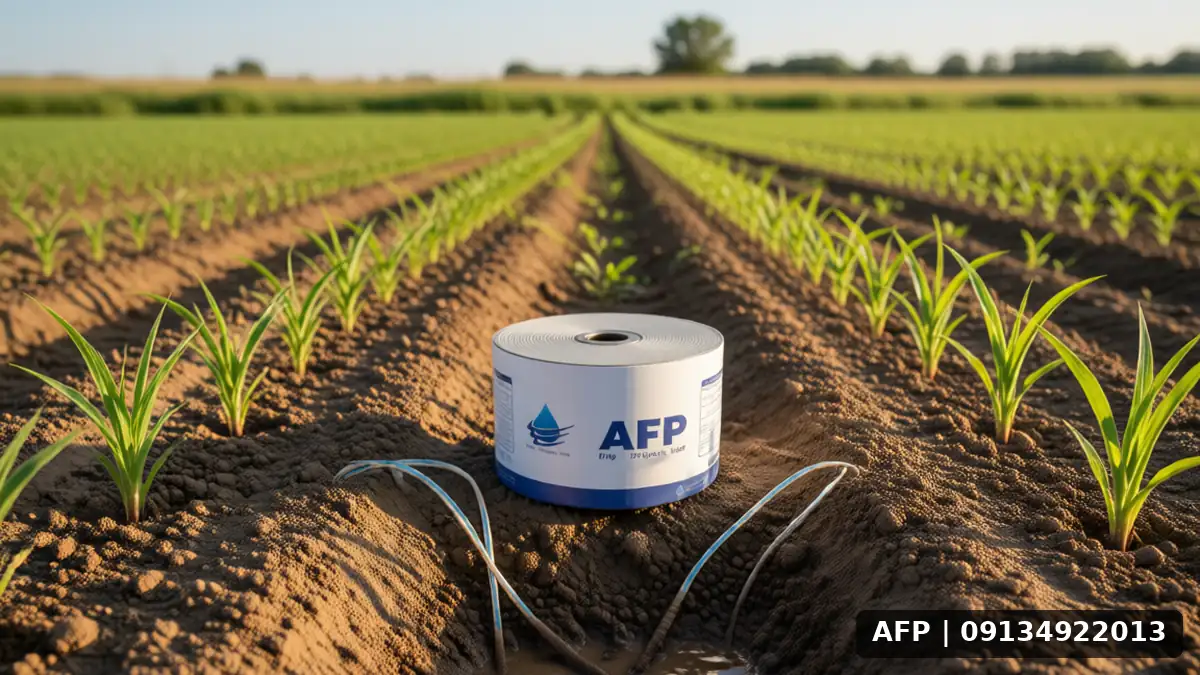
Chives are plants that, due to their rapid growth and high root sensitivity to excessive moisture, are susceptible to fungal and bacterial diseases. In conventional irrigation methods such as flooding, high soil and air moisture around the roots provides a suitable medium for pathogen proliferation. However, with the installation of drip irrigation and tape strip, moisture can be concentrated precisely in the root zone while keeping non-root areas dry, resulting in a significant reduction in the incidence of Phytophthora and Thrips diseases.
In this article, we examine the technical details of pest and disease management in chives, focusing on modern irrigation systems, so that farmers can benefit from water and energy savings while maintaining plant health.
The Impact of Drip Irrigation on Reducing Fungal Disease Incidence
Controlling Relative Humidity and Preventing Leaf Spot Diseases
One of the most common challenges in green onion cultivation is fungal leaf diseases, such as yellow and dark spots, which spread rapidly in humid weather. Drip systems prevent the formation of splash zones, a primary vector for spore transmission, by reducing soil splashing and surface moisture. Leveraging the benefits of drip tubing, growers can establish a steady, uniform flow that applies mild osmotic pressure to the roots and prevents root rot caused by repeated saturation.
Management of Root and Crown Rot Diseases
Root Rot in green onions is often caused by excessive dynamic moisture in the growing medium and poor drainage. In drip irrigation, the timing of irrigation cycles is critical. By reducing the frequency of irrigation while increasing the volume per application, growers can regulate dry and wet cycles to maintain adequate oxygen supply to the roots. Furthermore, using drip tubing with a smaller diameter provides better control over flow intensity and uniform distribution along the line, which helps prevent the formation of waterlogged zones around the tubes.
Preventing Root Pests with Drip Tubing
Reducing Whitefly and Soil Insect Populations
Root pests such as whiteflies (Sciaridae) and certain nematode species are less active in wet soils rich in organic matter. Drip tubing creates a variable moisture profile with depth, encouraging green onion roots to grow toward concentrated moisture rather than scattered moisture. This root aggregation increases the plant’s resistance to nematode attacks. For better management, it is possible to Green onion seed rate per hectare standards are applied to reduce excessive plant density, which itself contributes to moisture accumulation and pest attraction.
Management of whiteflies and small flies
Whiteflies and small flies prefer plants with dense foliage and high ambient humidity. Maintaining open spacing between rows and using localized irrigation systems enables better ventilation and reduces leaf surface relative humidity. In closed systems or greenhouses where tape drip is used, anti-whitefly microfilters and yellow sticky traps can be employed; combined with precise humidity management, this minimizes pest survival rates.
Practical tips for optimizing irrigation systems and plant health
Regulating pressure and flow rate in drip systems
For green onion cultivation, adjusting the appropriate flow rate of emitters is critical. The recommended flow rate is generally between 2 and 4 liters per hour, varying based on soil type and weather conditions. Using tape drip with a diameter of 16 to 20 mm provides better distribution, particularly in green onion orchards or open fields. It is recommended to review the tape flow rate every 4 to 6 weeks to prevent clogging of micro-port holes caused by salt deposits or organic matter.
Use of filtered and fertigation irrigation
One of the major advantages of drip irrigation is the ability to perform precise filtration and inject chemicals or biologicals directly into the root zone. To control bacterial diseases, approved agricultural antibiotics can be used and delivered directly to the roots via the drip system, which provides better efficacy than manual spraying. Additionally, injecting soil amendments such as humic acids through drip lines enhances root health and the plant’s overall resistance to environmental stresses. A study on vegetable yield per hectare shows that root health has a direct correlation with final crop performance.
Scheduling irrigation timing based on meteorological data
Using miniature weather stations to record bed temperature, relative humidity, and soil moisture enables the precise execution Smart Irrigation it provides. On hot, humid days, irrigation frequency should be reduced to prevent an increase in relative humidity. Conversely, on dry, cold days, increasing irrigation volume is essential to maintain root moisture. This balance is the key to preventing fungal diseases.
Frequently Asked Questions (FAQ)
Can drip irrigation replace chemical spraying for pest control?
No, drip irrigation does not directly eliminate pests, but it modifies environmental conditions to reduce the outbreak of pests and diseases. It functions as a preventive and complementary tool in Integrated Pest Management (IPM), reducing the need for chemical spraying due to the lower intensity of outbreaks.
What is the best type of filter for drip tape in green onion cultivation?
For green onions, which have sensitive root systems, the use of disk or mesh filters with particle sizes of 120 to 200 microns is recommended. Sponge filters are also used in simpler systems, but for long-term use with drip tape, mesh filters are more economical in terms of durability and maintenance costs.
How can clogging of drip tape caused by salts in the water be cleared?
To prevent clogging by salt deposits, it is recommended to use water with an EC of less than 2 dS/cm. Additionally, periodic flushing of the system with citric acid solution and adjusting the appropriate slope of the lines help drain the deposits. Using Naseriyah drip irrigation belts can help in selecting suitable parts for hard water.
Conclusion: Future Outlook for Shallot Pest Management
Transition from conventional irrigation to drip and tape irrigationis a paradigm shift in precise shallot agriculture. By focusing on moisture management, these technologies not only conserve water resources but also help farmers obtain healthier crops with higher value-added by directly reducing the risk of fungal and bacterial diseases. To optimize performance, a mutual understanding of pests and soil environmental changes is essential. Adhering to Integrated Pest Management principles and using irrigation systems intelligently will guarantee sustainability and profitability in shallot cultivation.
To better understand production levels and optimize resources, study articles related to increasing onion yield per hectare It can also give you a broader perspective on farm economics.
Related content: Drip irrigation system in Kirkuk: sustainable agricultural solutions