Sugar Beet Seeding Rate Per Hectare: Comprehensive Planting and Irrigation Guide
Introduction to the importance of beet root planting density
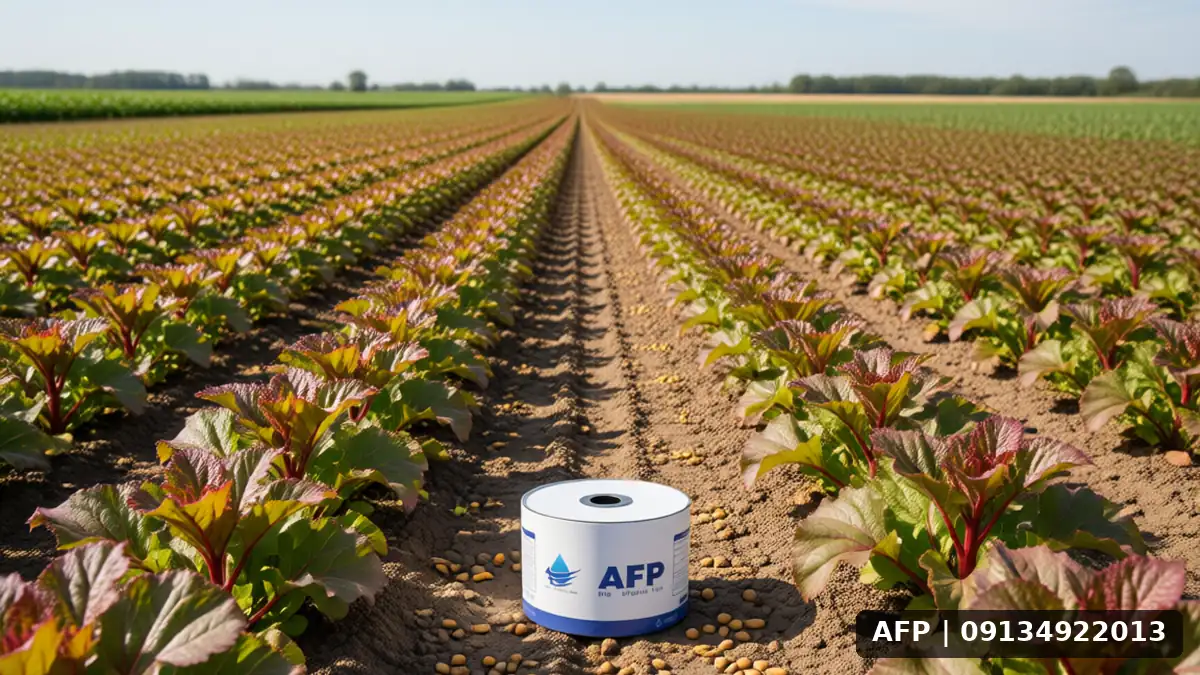
Sugar beet is one of the most important fodder and industrial crops in the agricultural sector, playing a key role in animal feed and the sugar industry. One of the most important questions farmers face before starting cultivation is the sugar beet seed rate per hectare . Precise determination of this parameter depends not only on seed weight but also on plant population density, row spacing, and the farm’s climatic conditions. In this guide, while explaining basic principles, we examine the impact of modern irrigation systems, such as drip and tape, on managing planting density. This comprehensive approach helps you make smarter decisions by developing a deeper understanding of agronomic variables.
Preliminary studies for successful cultivation
Before sowing seeds, it is vital to understand the relationship between seed type (single-grain or multi-grain) and planting depth. Since sugar beet roots are sensitive to the precise distribution of water and nutrients, alignment between planting density and the farm’s irrigation system determines the difference between poor yield and a high-yield crop. Additionally, assessing soil quality and making necessary amendments before planting ensures uniform initial plant growth.
Calculation principles and global standards
There are two main methods for determining plants per hectare: the spacing method and the weight method. The spacing method is based on row-to-row and plant-to-plant distances. The weight method is based on seed weight (usually 20 to 40 kilograms per hectare, depending on the commercial variety). These calculations must be adjusted according to the climate of the cultivation region.
Impact of spacing on root health
Standard row-to-row spacing for sugar beet is usually recommended at 40 to 50 centimeters, with plant spacing between 10 to 15 centimeters. These intervals allow roots to have minimal competition for micronutrient uptake. To learn more about calculating these distances for other crops, you can refer to the guide on yield per hectare, as the basic principles of planting density are interconnected. Also, studying scallion yield per hectare: A comprehensive guide + tips for increase can provide a comparative perspective on the planting density of other root crops.
The role of modern irrigation systems in planting density
After determining the sugar beet seed rate per hectare, the irrigation system is the main determinant of the farm’s final efficiency. The use of drip and tape irrigation enables an increase in planting density, as uniform moisture distribution prevents water stress even in closer spacing. These systems also optimize irrigation costs by reducing water waste.
Tape irrigation and how to increase density
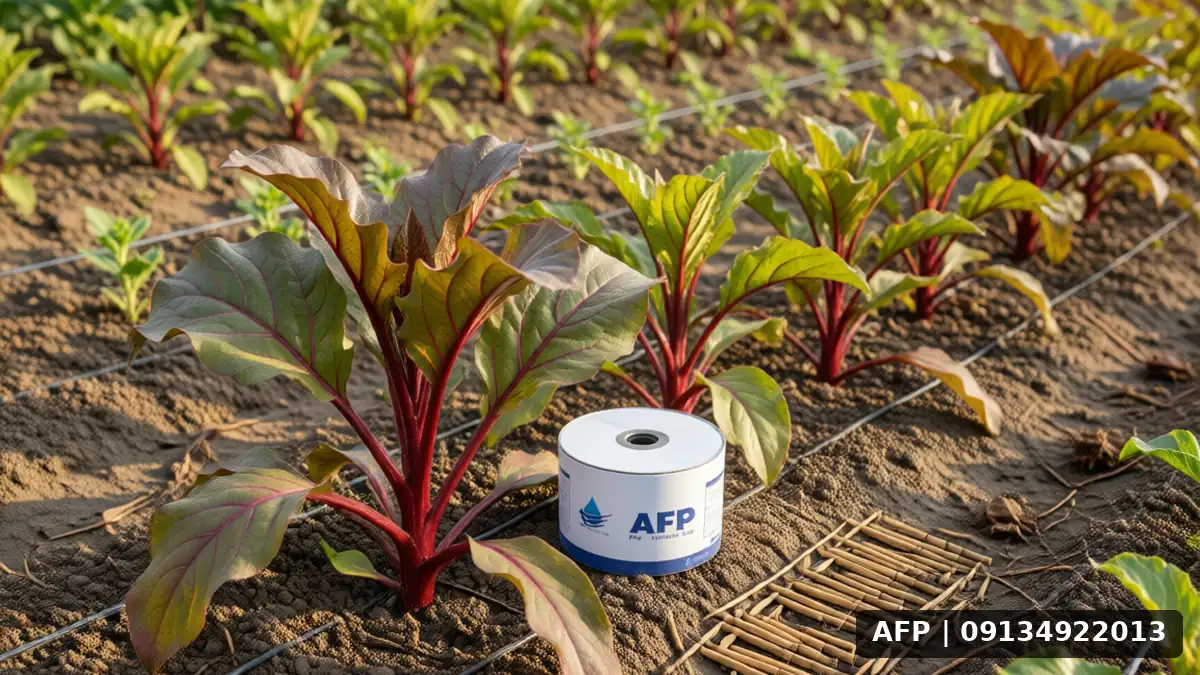
Drip tape is the solution to the problems of sprinkler irrigation, such as water accumulation and weed growth. By reducing evaporation and using less water, denser planting is possible. To better understand the differences between drip tape and drip systems in various climates, study Drip irrigation tape: Everything you need to know for modern agriculture in Iraq can provide an international perspective on these technologies. This information is highly valuable for farmers in arid regions.
Choosing the drip tape spacing from the plants
The point where the drip tape connects to the soil must be set precisely as the ‘radial spacing.’ For beet, where the seed crown diameter at maturity is 60 to 100 centimeters, the drip tape spacing from the plants should not be less than half the crown diameter to prevent root waterlogging. In this regard, understanding drip tape spacing in beans and other vegetables shares a common concept with beet, as both require crown moisture management. These principles can be extended to other crops as well.
Practical and actionable tips for beet cultivation
Practical implementation of dense beet cultivation requires adherence to several principles. These tips help you achieve maximum yield without wasting resources. Following these protocols reduces agricultural risks.
- Land preparation: Deep plowing and topsoil removal to open soil structure and provide a suitable bed for planting.
- Planting requirements: Before planting, apply the required seeding rates with appropriate adhesives so that seed holes are not shifted and density remains uniform.
- Water management: If using drip systems, check for initial leaks. If using drip tape, ensure uniform flow pressure.
- Weed control: Denser planting increases light competition, so weed management must be performed earlier and with greater precision.
Optimizing soil moisture
Since beet has deep roots, water must reach the deep root zone. In drip tape systems, adjusting the tape spacing allows control over the depth of soil wetting. To familiarize yourself with correct installation principles, studying board drip irrigation systems helps select the optimal installation spacing for your farms. This choice directly affects the final crop quality.
Frequently Asked Questions (FAQ)
1. What is the best time to plant turnips in warm and cold regions?
In regions with four seasons, mid-spring (after the last frost) is generally the best time. In warm regions, a fall planting can yield notable results and prevent the spring heat stresses.
2. Does planting density affect the quality of turnips?
Yes. If the density is too high, root size will be smaller and the quality will be lower. Therefore, balancing plant count and spacing is the key to achieving large, high-quality roots.
3. How can I reduce seed waste?
Using treated seeds and being careful with seed placement via modern equipment minimizes seed waste and increases the germination probability per seed.
4. Is drip irrigation more suitable for dense planting?
Drip irrigation performs better in moisture stability, but tape drip is a very cost-effective option for extensive dense plantings in terms of total cost and operational speed. The choice between these two systems depends on your budget and farm scale.
Conclusions and Final Recommendations
Determining turnip seed amount per hectare Determining turnip seed amount per hectare is a scientific process that requires precise calculations and adaptation to farm environmental conditions. Since water management is a key pillar of this crop, investing in drip and tape drip irrigation systems is a path to long-term profitability. By correctly combining planting density with an optimal irrigation system, you can maximize the yield from your farms.
Related Articles: Importance of site inspection for tape drip and polyethylene pipes, Related article Related article Related article Related article Related article