TIP Strip Spacing in Clover Cultivation: Recommended Standards
Introduction: Why drip line spacing matters in alfalfa
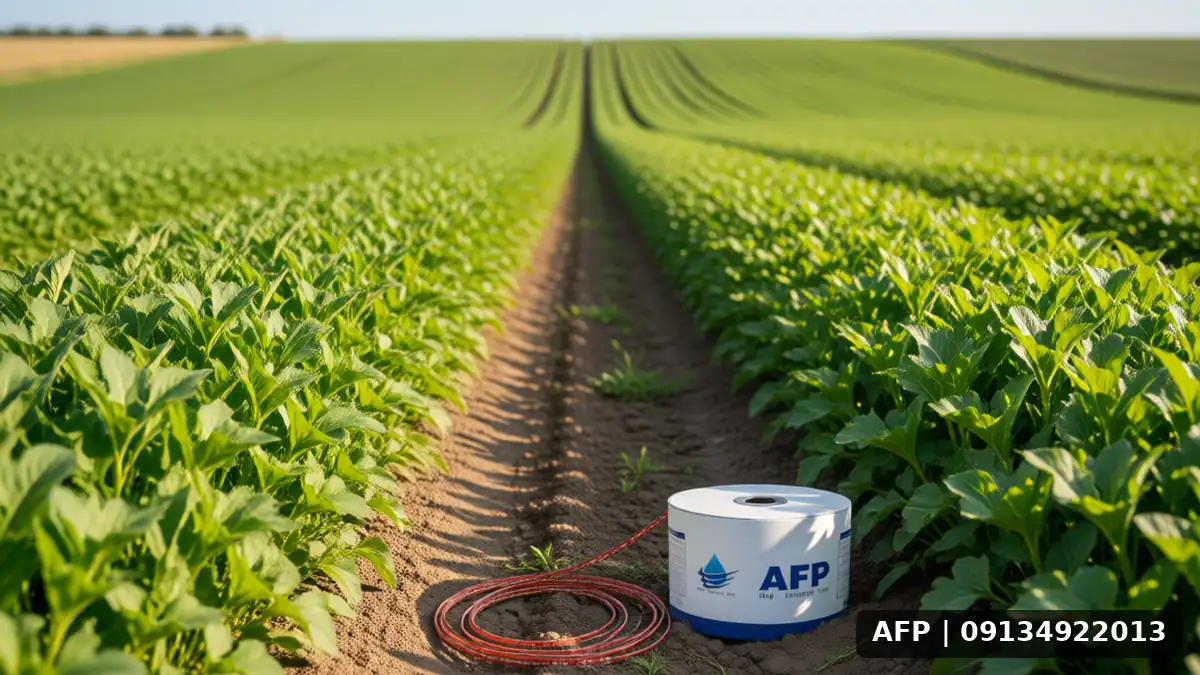
Alfalfa is one of the most important perennial forage crops grown in many regions of Iran. Considering the high water consumption per cut and the need for deep roots to have continuous access to moisture, the selection drip line spacing suitable is the result of a balance between initial investment costs and long-term yield. If the distance between lines is too wide, dry zones form between planting rows, reducing root coverage. Conversely, spacing that is too narrow leads to line overlap, increased costs for plastic components, and conditions favorable for fungal diseases in the plant crown zone.
In drip irrigation, the slow water flow and low movement in the root zone make moisture distribution highly dependent on the geometry of the irrigation lines. Therefore, understanding recommended standards for line layout is of high importance. In the following, we will examine technical details, recommended figures, and practical execution tips.
Technical standards for drip line spacing in alfalfa varieties
Determining irrigation line spacing depends on three main factors: alfalfa varieties, desired rooting depth, and seedbed conditions. In general, alfalfa plants have a deep root system that can reach depths of 3 to 5 meters, but the highest density of active roots is in the top 60 centimeters of soil. Therefore, the goal of drip line layout is to create a wetting cone that allows lines to overlap at a depth of 30 to 50 centimeters.
Impact of line diameter and discharge rate on moisture coverage
- 1/2-inch (12.7 mm) tape: Recommended for alfalfa cultivars with high tiller production (typically local varieties). This tape has a higher flow rate and creates a wider wetting cone. Suitable spacing: 70 to 80 cm.
- 3/4-inch tape: The use of this tape is less common in alfalfa, unless specific conditions require very high water and nutrient demand. Suitable spacing: 90 to 100 cm.
- 1/2-inch tape with sub-loops: For newer cultivars with faster growth rates, sub-loop tapes are sometimes used to increase penetration depth. Suitable spacing: 60 to 70 cm.
Optimal soil temperature range and evaporation levels also affect the spacing interval. In hot and dry regions, such as southern Iran, smaller spacings (60–70 cm) are more logical due to higher evaporation from the soil surface between the tapes, helping to maintain soil moisture between lines.
The Relationship Between Tape Spacing and Alfalfa Planting and Harvesting
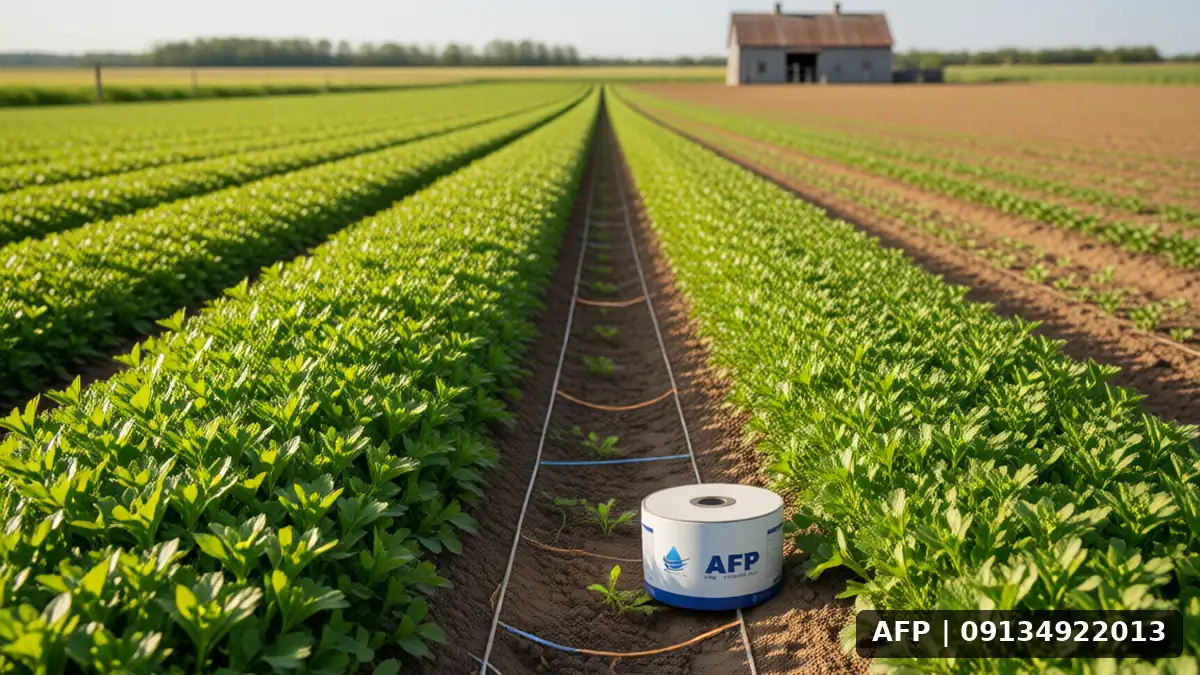
The row layout configuration must align with the irrigation tapes. In alfalfa cultivation, row seeding (drill) is typically used. If one drip tape is placed between two seeding rows, the drip tape spacing will be exactly equal to the row spacing. This method (One-tape method) is the most economical option since only one tape is placed for every pair of seeding rows.
In contrast, the Two-tape method involves placing two drip tapes between two seeding rows. This method is common for alfalfa with denser seeding rates in the initial years, due to faster weed coverage and adequate shade creation. In this case, the spacing between drip tapes must be at least 40 centimeters to prevent mechanical pressure from roots on the tape. It is also important to note that subsurface drip tapes have limited application in alfalfa, as alfalfa roots eventually grow over the tape and cause physical blockage. Therefore, surface tapes are preferred for alfalfa.
For a better understanding of the moisture distribution pattern, one can refer to the article on corn drip tape spacing for a single hectare planting, as the principles of the moisture cone geometry are also applicable to plants with growth habits similar to alfalfa (Corn drip tape spacing for single hectare planting). This pattern shows how water infiltration angle and soil type determine the wetting radius.
Practical points in calculating and installing drip tape for alfalfa
- Determining spacing based on soil type: In clay soils, water infiltration radius is smaller, so band spacing should be closer (approximately 60 cm). In sandy soils, infiltration is faster and spacing can increase up to 90 cm.
- Band orientation: Bands should be laid perpendicular to the slope to prevent water accumulation in lower areas. This ensures uniform band spacing across the field.
- Fertigation: Since alfalfa has a high demand for potassium and nitrogen in the first year, drip tape should be placed directly in the fertilization line. If drip tape spacing is too wide, potassium uptake via lateral roots decreases. For more guidance on fertilizer blends, refer to the comprehensive alfalfa plant guide (Types of irrigation bands and their performance).
- Covering the band: After planting, backfill over the bands to a height of 10-15 cm from the soil surface. This maintains visually consistent drip tape spacing and prevents the tape from being blown by wind. Covering ensures root zone temperature retention and reduces evaporation.
Additionally, if you intend to use alternative methods such as rain irrigation, you must know that alfalfa, due to its broad leaves, is susceptible to crown diseases. A drip system with controlled tape line spacing is the safest option. For comparison, you can read the articles on ‘Condensed Adaptations,’ ‘Taste-water Tape Line (Interpretation: Key Points in Standardizing Water Tape Line Use),’ and ‘Key Points in Standardizing Water Tape Line Use’ to reduce common execution errors.
Yield Comparison: Different Spacing Distances Versus Each Other
To better understand the effect of tape line spacing on water consumption and production increase, a comparison between two common scenarios is presented in the table below. These figures are calculated based on field data in semi-arid regions of Iran, assuming a flow rate of 2 liters per hour per meter of tape line (with a loop distance of 20 centimeters).
Data indicate that reducing the strip spacing to 60 cm, although it increases the initial cost, yields greater economic returns in the first and second harvests in terms of forage yield per kilometer of strip, due to uniform moisture and reduced plant heat stress. In drought conditions, this narrow spacing plays a vital role in maintaining vegetative cover.
When discussing the hectare yield of cereal crops, comparisons are sometimes made with other crops, such as barley. To understand the difference in hectare yield under similar conditions, you can refer to the barley per-hectare crop guide (oat yield per hectare guide) Take a look. Although alfalfa is a perennial crop, its root architecture and water requirements present similar equations in irrigation system design as other complex shrubs.
Frequently Asked Questions (FAQ)
Should sub-surface drip tape be used for alfalfa planting?
No, it is not recommended. Alfalfa roots quickly intertwine with the sub-surface line and cause physical clogging of the tape during the second growth cycle. Surface tapes with 10 cm soil cover are the best option for maintaining drip tape spacing and ensuring root access to moisture.
What criteria should determine drip tape spacing in sandy soils?
In sandy soils, vertical water percolation is higher and lateral radius decreases. Therefore, drip tape spacing should be reduced (maximum 50–60 cm) to ensure the wetting cone covers the desired depth. Additionally, in these soils, frequent irrigations with smaller volumes replace heavy, infrequent applications.
Does drip tape spacing differ for Sainfoin alfalfa varieties compared to standard forage alfalfa?
Yes, leafy green crops generally have harder and deeper root systems. In these cases, the drip line spacing can be increased up to 10 cm, as their lateral roots are capable of exploring moisture over greater distances. However, for alfalfa forage with upward growth, closer and more concentrated spacing is more effective.
Summary
Selecting drip line spacing for alfalfa cultivation is a multi-faceted decision that encompasses soil, climatic, and economic factors. General standards indicate that a range of 70 to 90 cm is the optimal point for most clay and silty soils in central Iran. Given the principles of planting line arrangement and root zone coverage, use polyethylene drip lines with appropriate flow rates. Adhering to simple engineering principles, such as proper soil cover over the drip lines and orientation perpendicular to the slope, ensures the useful life of the system and the quality of moisture available in the root zone.
Ultimately, regular monitoring of emitter performance and adjustment of output pressure are the keys to sustainability. By optimizing drip line spacing, you can both prevent the loss of forage production potential and bring water consumption to standard levels. For additional information regarding the overall system layout, it is recommended to study the comprehensive alfalfa guide and articles related to the geometry of irrigation lines in other crops.
Related articles: Related article Related article D8AFD8B1 Related article Related article D8A7D8B2 Related article Related article D8A2D8A8