Comprehensive Guide to Drip Line Maintenance and Parsley Irrigation Management
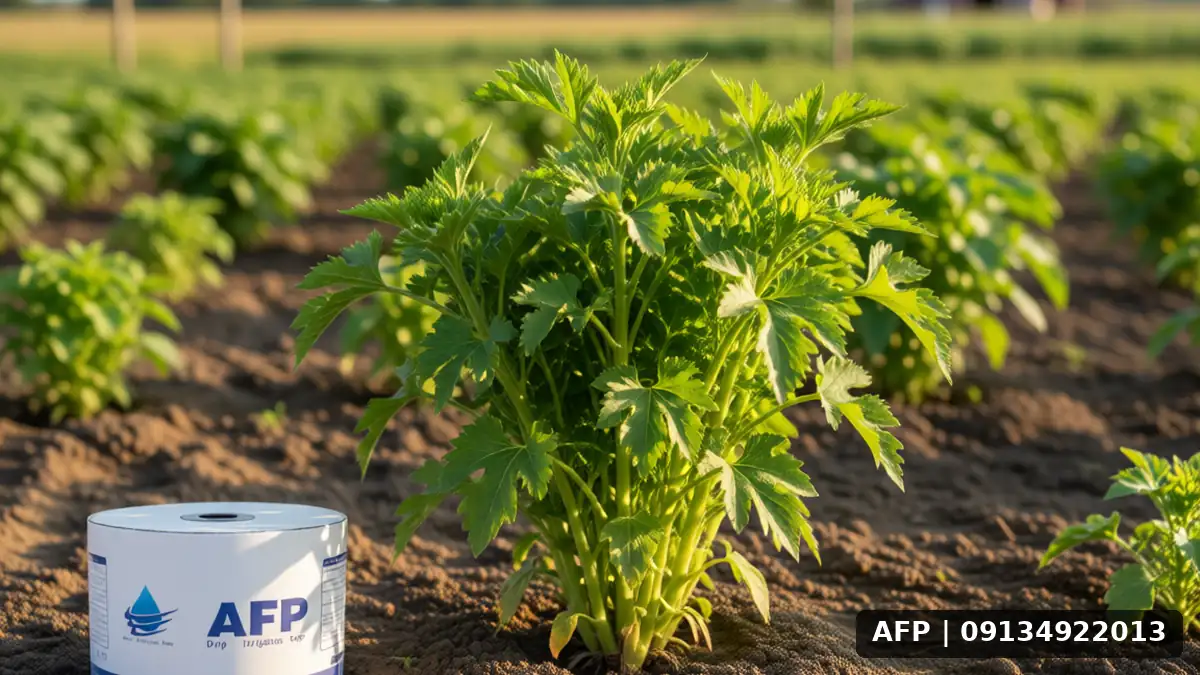
Introduction: The critical role of drip tape in successful parsley cultivation
Parsley is one of the most popular leafy vegetables, and its rapid growth, leafy stem development, and weed suppression rely on uniform soil moisture and stable water sources. Among modern irrigation systems, drip tape (Rain Gun or Drip Tape) has become a primary choice for many farmers due to its low investment costs and high flexibility in row cropping. However, an important fact remains: drip tape is a consumable product; in other words, its useful life depends heavily on proper maintenance and management. Many farmers face issues such as emitter clogging, water leaks, or reduced flow rates after one or two seasons, often rooted in a neglect of basic maintenance principles. This article aims to provide a practical and technical guide for managing the full lifecycle of drip tape in parsley farms, helping prevent common failures and optimizing economic and quality yield.
For a better understanding of this system’s position among other modern irrigation methods and to examine its general advantages, studying the guide ‘Drip Irrigation Belt: Your Comprehensive Guide to Increasing Crop Productivity’ can provide complementary insight, although it focuses more on fixed drip systems.
Technical principles of drip tape maintenance specific to parsley
The most critical aspect of irrigation system maintenance is preventing hydraulic disturbances. Parsley has a shallow to semi-deep root system and is sensitive to water-soil relationships. Therefore, pressure and water quality are the two main pillars of drip tape health in this crop.
Optimal water pressure management: The physical damage threshold
Most drip tapes on the market are designed for a pressure range of 1 to 3 bar. Parsley is highly sensitive to high pressures due to its light canopy and delicate root system. Excessive pressure not only causes the thin tube wall to rupture and create continuous leaks but can also injure young roots, leading to the entry of soil-borne pathogens such as nematodes and root rot. Conversely, low pressure results in water discharging in a scattered, inefficient manner that fails to reach deeper soil zones. The technical recommendation is to monitor the system’s outlet pressure using a manometer at the end of the lateral lines and use pressure-regulating valves (PRV) to compensate for pressure loss caused by line length. For detailed technical aspects and exact dimensions of system components, which sometimes overlap with principles in drip irrigation systems, you can refer to the article on 3-inch gravel which serves as a reference for understanding working pressures in main lines; while its direct application to parsley is limited, the underlying hydraulic logic is useful.
Filtration Hygiene: The First Line of Defense Against Clogging
Parsley varieties are typically cultivated under conditions where non-conventional or relatively saline water sources may be used. Calcium, chloride, and suspended particle deposits are the primary cause of blockage in drip tape. Complete clogging of emitters not only renders the system inefficient but also creates surface soil irregularities that can lead to non-uniform irrigation and, consequently, differences in the growth and yield of different rows. Standard maintenance practice dictates that mesh filters (filter service) must be opened and washed every 7 to 14 days. If cloudiness or brown sediment is observed inside the tape, it is necessary to use weak acidic cleaners (pH less than 3) in the water and perform regular flushing of the tapes to reopen the internal channels. This procedure reduces the cost of tape replacement for the next season.
Executive points for the correct operation of drip tape in a parsley field
Beyond equipment maintenance, the method of daily operation of the drip tape determines the final efficiency. This section includes operational settings that must be observed during planting and irrigation.
Allocation of appropriate flow rate based on growth stage
From after sowing parsley seeds until the germination stage, the plant’s water requirement is low. A sudden increase in water flow rate at this stage can cause root pruning or seed-borne fungal diseases. Modern drip tapes are usually designed with a flow rate of 2 to 4 liters per hour per meter. For parsley, it is better to start with a lower flow rate (close to 2 liters) and increase the flow rate to the specified amount after 3 to 5 leaves have formed. This gradual increase strengthens the root system and prevents water supply stress on the plant during sudden changes in flow rate. Additionally, if using lower-flow-rate tapes, the irrigation duration should be increased to ensure the total volume of water required in each cycle is supplied.
Correct spacing and depth of the tape
Before sowing begins, accurately determining the spacing between rows and the distance between the drip line and the seed row is critical. In coriander, the roots are most active in the top 10 to 25 centimeters of soil. Placing the drip line on the soil surface or at a depth greater than 20 centimeters increases water loss and prevents shallow roots from accessing moisture from the line. The optimal configuration is to place the drip line 10 to 15 centimeters away from the seed row and at a depth of 10 to 15 centimeters below the soil surface. To understand the general principles of row layout, which apply to other fibrous-rooted crops beyond coriander, refer to Bean Strip Spacing the article; although it concerns beans, the geometric and mechanical principles of line-to-line planting described are similar to those for coriander, helping to avoid excessive crowding or spreading of the lines.
Salinity Monitoring and Root Zone Leaching
The drip line is not merely beneficial but can be an active tool for reducing soil salinity. In fields where salty water is used, each irrigation cycle causes salt accumulation in the root zone. To prevent this accumulation, the irrigation schedule must be adjusted so that approximately 10 to 20 percent extra water (based on root zone water demand) is applied after each cycle for leaching. This process removes soluble salts from the root zone. Neglecting this step will lead to leaf burn and reduced coriander growth within a few weeks. Regular monitoring of soil salinity using EC meters or specialized laboratory tests is the key to accurately calibrating this leaching fraction.
The Direct Impact of Proper Drip Line Maintenance on Coriander Yield and Quality
The ability of drip tape to increase yield per hectare is contingent upon the system operating correctly. When soil moisture is uniform, all plants in a row reach the growth and harvest stages simultaneously. This uniformity improves the volume and quality of the cut bunches and significantly reduces the risk of fungal diseases, which thrive from excessive surface moisture caused by rain or inefficient sprinkling. Reducing soil surface moisture, a key benefit of drip and drip-tape irrigation, directly promotes the health of parsley bunches, whose lower parts are in contact with the soil. For a more accurate calculation of expected yield and comparison with other leafy greens, refer to the Vegetable Yield Per Hectare Guide to utilize drip tape as a tool for improving your economic yield index.
Physical maintenance of drip tape after harvest: an investment for the future
A common mistake in managing irrigation costs is neglecting the condition of the drip tape at the end of the season. Polyethylene or PVC-free drip tapes must be removed from the field after the parsley harvest, washed with clean water (to remove undissolved salts and detergent residues), and stored in a shaded area away from direct sunlight. Prolonged UV exposure of transparent or semi-transparent tapes causes polymer brittleness and a reduction in mechanical strength, leading to tape rupture under the first operational pressure the following season. Consequently, proper maintenance can extend the useful life of drip tape from one season to two or three, offering significant economic savings for the farmer.
Frequently Asked Questions (FAQ) about parsley drip tape
1. Is drip tape reusable for 3 years?
This depends on the material type, water conditions, and storage. High-quality tape with appropriate wall thickness can last up to 3 seasons, provided it is flushed and stored in a cool, shaded location after each season. However, if thinner tapes are used, annual replacement is recommended because their flow rate and uniformity degrade quickly. Nonetheless, if the tape remains in good condition, reusing it ensures cost-effectiveness.
2. What is the precise drip tape installation depth for parsley roots?
For parsley, a depth of 10 to 15 centimeters from the soil surface is appropriate. Depths less than 10 centimeters cause moisture to dissipate rapidly and make roots susceptible to damage, while depths exceeding 15 centimeters make it difficult for the shallow parsley roots to access water. This standard depth should also be adjusted according to the farm’s soil type; for fine-textured (clay) soils, a shallower depth is recommended.
3. How can I eliminate water leaks from emitters?
Minor leaks are often caused by the accumulation of scurf or sediment within the tape channels. First, inspect and clean the filter to ensure scurf has not entered the tape. Then, use an appropriate chemical cleaner for drip irrigation systems. If the tape has exceeded its allowable pressure, check the pressure regulating valves. In rare cases, if the tape is torn or punctured, it may be temporarily repaired with adhesive or a physical clamp, but the permanent solution is to replace the damaged tape. To understand the various types of tape and their applications, review the content on 20 cm drip tape pricing to familiarize yourself with the different quality levels available in the market.
4. Is drip tape suitable for saline water?
Yes, but with the condition of regular root zone flushing. Saline water can gradually cause chemical deposits in the drip tape. If the water source has high salinity, you must consider a root zone flushing schedule (10 to 20 percent additional water) as well as periodic or corrective flushing of the drip tape with a weak acid to prevent changes in dripper flow rates.
Summary: The key to success in cilantro drip tape irrigation
Growing cilantro with drip tape is a combined process that links technical knowledge, precise design, and operational discipline. From correct pressures and filter maintenance to proper drip tape burial depth and root zone flushing schedules, every factor affects final yield. By implementing these points, farmers can avoid unlisted repair costs, crop damage due to insufficient root moisture or salinity, and, most importantly, a decline in the commercial quality of cilantro cuttings. Remember that drip tape is a dynamic tool; without regular maintenance, it transforms from a source of productivity into a source of wear and tear.
Finally, to expand technical knowledge on complementary or competitive crops often intercropped with cilantro, studying the green onion seed rate per hectare can broaden your view on multiple cropping cycles in leafy vegetable farms. With proper irrigation system management, both crops can benefit from a shared drip tape system, increasing the farm’s economic productivity. Aim for success in achieving healthy, high-quality green produce.
Related and complementary articles: Sprinkler nozzle changes For a technical comparison between drip tape and hose tape methods, and Fennel seed rate per hectare To understand the difference in seed sowing levels in various textured cultivation systems, which are sometimes intercropped with parsley.