Pest and Disease Management in Beet Crop under Drip and Tape Irrigation
Introduction: Why Is Drip Irrigation Critical for Beet Pest Management?
Beet is a key horticultural and industrial crop highly sensitive to moisture and temperature conditions. Drip irrigation and strip-typing play a vital role in reducing soil humidity by delivering water centrally and deeply to the root zone, thereby addressing a primary driver of fungal and bacterial disease development. In this article, Beet pests and diseases under drip irrigation are examined in practical terms, with practical strategies provided for prevention and management. Our primary goal is to help minimize crop losses from pests and diseases through a deeper understanding of the relationship between moisture management and plant health. This approach not only reduces reliance on chemical pesticides but also improves the quality of the final produce.
The Impact of Drip Irrigation on Humidity Reduction and Disease Prevention
Persistent soil moisture, particularly in the beet root zone, creates a favorable environment for the growth Fusarium, Pythium and soil-borne pathogenic bacteria. Drip irrigation, with its periodic, low-volume water delivery, allows for relative drying of the soil between irrigation cycles. This reduces the metabolic activity of pathogenic fungi. In contrast, sprinkler irrigation keeps leaf surfaces wet and increases the humidity of the air surrounding the plant canopy, promoting the outbreak of diseases Downy Mildew and Alternaria This occurs. Therefore, selecting the correct irrigation method is your first line of defense against soil-borne pathogens. By precisely controlling the water volume applied, you can establish a balance that meets root requirements while keeping the environment unfavorable for fungal growth.
Managing soil wetness using drip lines
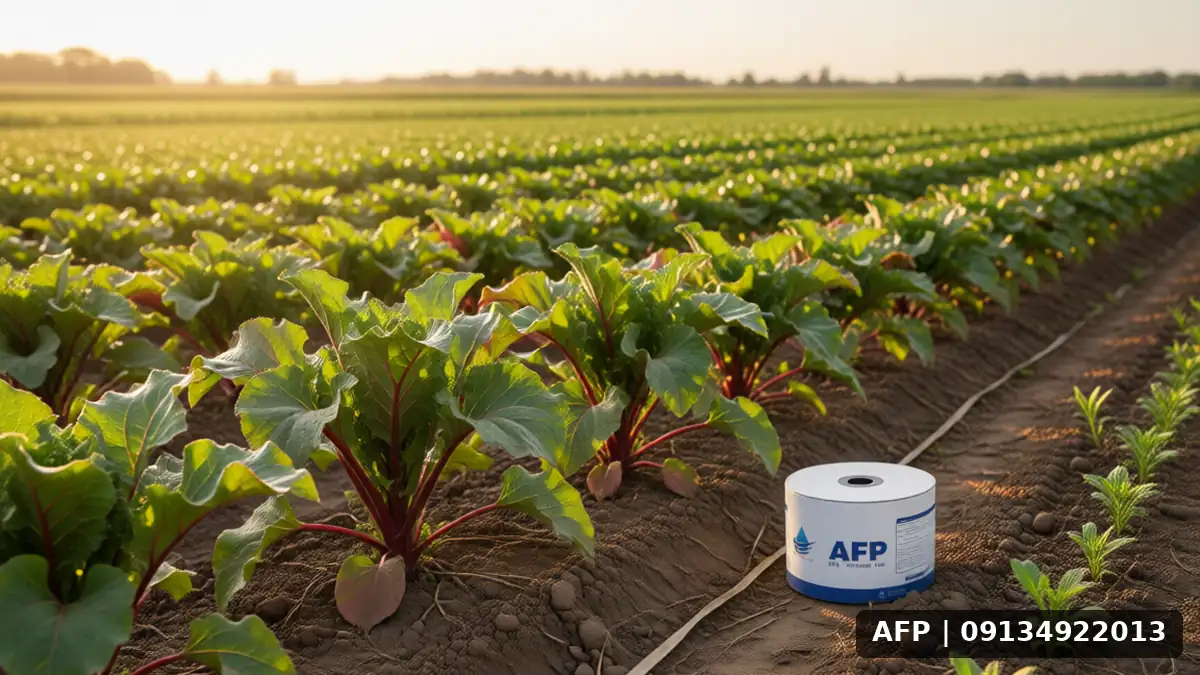
Drip lines, especially when combined with appropriate and controllable filtration, can minimize wetness in areas beyond the root zone. Proper design of irrigation points prevents water from entering unnecessary areas. You can use drip line point placement to optimize line density. Correct spacing of emitters ensures beet roots access moisture uniformly without keeping the entire surrounding soil wet. This precision in design directly reduces the need for chemical fungicides.
[IMAGE_1]
Root pests and integrated management with drip irrigation
Root pests such as Sucking pests and soil molds reproduce rapidly in highly humid conditions. Drip irrigation enables fertigation (Fertigation). Using drip systems allows for the precise application of biological or chemical pesticides, enhancing their efficacy in the rhizosphere. However, the use of bacterial pesticides such as Bacillus is far more effective in drier, alternating conditions than in permanently wet soil. Combining precise irrigation with biological control is one of the most advanced methods of Integrated Pest Management (IPM). This approach ensures that active ingredients reach the root zone directly, preventing their loss to rain leaching or overhead spray drift.
Aphid proliferation and bacterial management
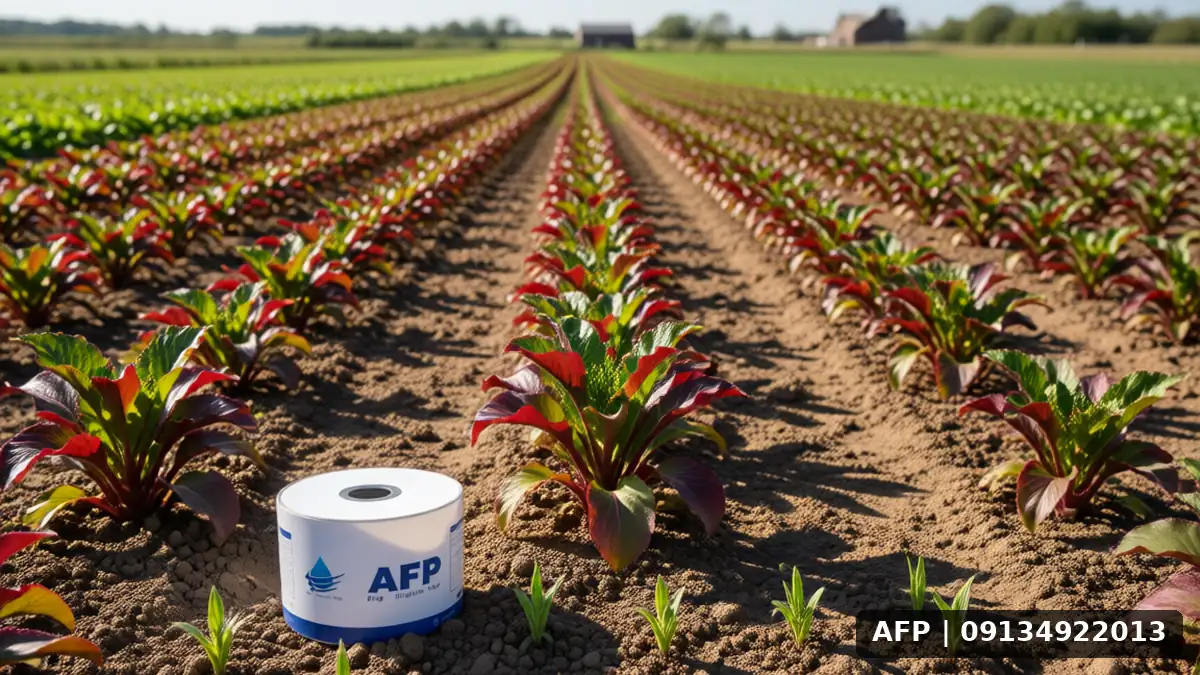
Aphids, particularly green and silver-colored species, become more active at moderate temperatures and high humidity. Drip irrigation keeps leaf surfaces dry, thereby reducing insect activity. Additionally, the use of yellow traps as a complement to the irrigation system prevents aphid migration into the field. The principles of humidity and pest control are similar across various crops; for example, a study on Spinach Yield per Hectare: Influencing Factors and Methods for Increase It can serve as a model for moisture management in other vegetables. This similarity in response to moisture stresses doubles the importance of precise irrigation system evaluation for both crops.
[IMAGE_2]
Viral Diseases and the Role of Irrigation Management
Viral diseases such as Beet Mosaic Virus (Beet Mosaic Virus) occurs via vector insects and seed-borne contamination. Drip irrigation does not directly eliminate the virus, but by reducing the activity of vector insects (such as aphids and flies), it indirectly reduces the level of viral contamination. Additionally, proper management of insect-attracting plants around the farm can help the irrigation system better control insect populations. Combining precision irrigation with resistant seed selection is the best strategy for minimizing damage. Attention to water source and its filtration is also highly important, as the entry of suspended particles through the irrigation system can cause clogging of drippers and result in plant moisture stress. Moisture stress reduces the plant’s resistance to viruses. Therefore, proper maintenance of the technical system is an inseparable part of plant health.
Practical Tips for Managing Pests and Diseases with Drip Irrigation
- Regular soil monitoring: Use reliable moisture sensors to prevent drying out or over-wetting. The data obtained from this monitoring is the basis for decision-making on adjusting the irrigation cycle.
- Adjusting the irrigation cycle: Adjust the irrigation cycle according to ambient temperature. In summer, increase the frequency of irrigation and decrease the duration of each session to maintain optimal humidity.
- Use of appropriate filters: Prevent clogging of drip emitters, as this causes water accumulation and increased humidity. One Barley yield and six heads per hectare can serve as a model for moisture management in different crops, but filtration principles are the same for all cases.
- Fertigation and spray irrigation: Use water and spray solutions to distribute biological pesticides such as Bacillus and Trichoderma . This method offers a more precise and lower-risk application compared to aerial spraying.
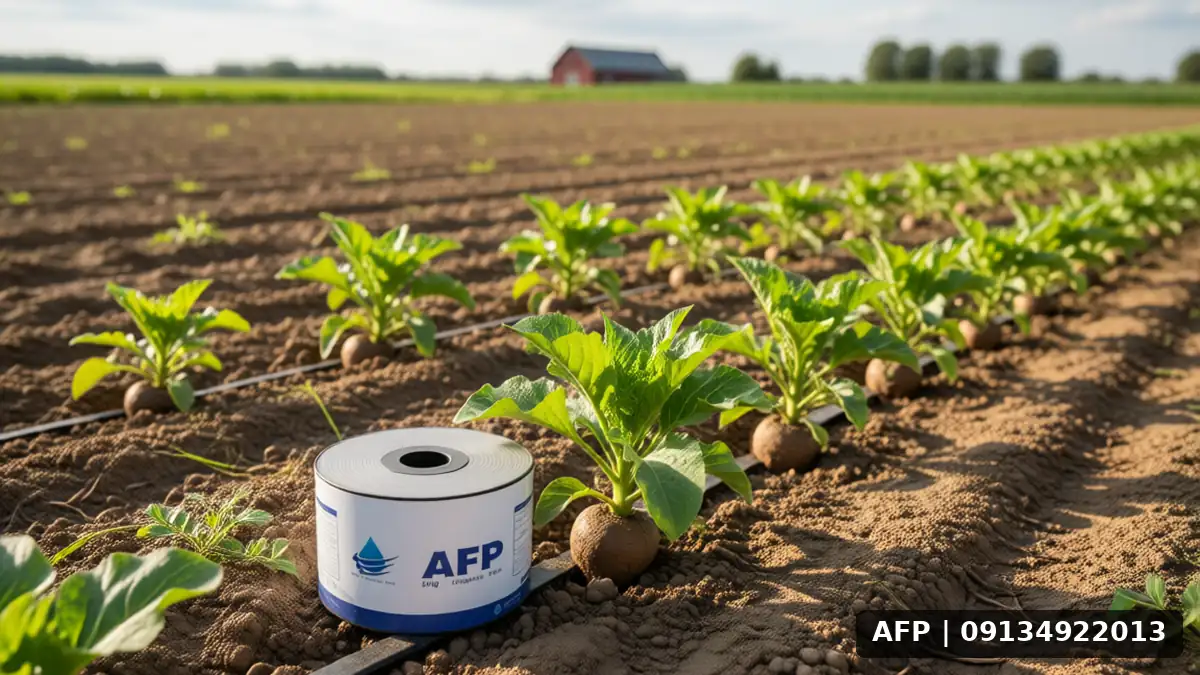
- Water control in the drip line: Prevent water from leaving the root zone to keep the subsoil dry. A detailed cucumber drip irrigation guide can serve as a model for drip application in similar vegetables, as beets, like celery, require uniform moisture.
[IMAGE_3]
Frequently Asked Questions (FAQ)
Can drip irrigation alone eliminate pests?
No, drip irrigation alone does not eliminate pests. However, by reducing and controlling soil moisture, it reduces the favorable environment for pest and disease development. Pest management requires an integrated approach, including monitoring, biological control, and the timely use of pesticides. Any factor that reduces plant stress increases its natural resistance against pests.
When should I use drip tape instead of standard drip irrigation?
Drip tape is generally suitable for vegetables with superficial root systems, such as beetroot, because it delivers water directly to the root zones. However, in conditions with heavy soil, standard drip irrigation may be preferable. This is because heavy soils have low permeability, and drip tape could potentially cause waterlogging in the root zone.
Does the spacing of drippers affect diseases?
Yes, improper spacing can cause unnecessary areas to remain wet, increasing humidity. One Green bean yield per hectare + influencing factors It can serve as a good guide for moisture management in root crops, because the water use pattern of these crops is very close to that of beets.
Should drip irrigation water be filtered?
Yes, water filtration is necessary to prevent clogging of drippers. A 3 inch cotton pipe guide can help you design irrigation systems with appropriate sand media, although for fine systems like drip irrigation, disc or turbo filters are recommended.
Summary
Managing pest and disease issues in beets using drip and strip-tube irrigation is a smart and sustainable approach. By controlling soil humidity, reducing insect activity, and utilizing fertigation, one can effectively prevent the occurrence of diseases and viral infections. The combination of regular monitoring, proper filtration, and optimized irrigation cycles is the key to success in this method. This process requires precise agricultural engineering. For further optimization, utilize specialized resources such as Drip Irrigation Strip in Erbil: A Comprehensive Guide to Modern Agriculture to gain more information about drip irrigation in various regions. Ultimately, investing in precision irrigation infrastructure yields high returns in reducing biological damage.