T-Drip Line Spacing for Squash: Recommended Standards
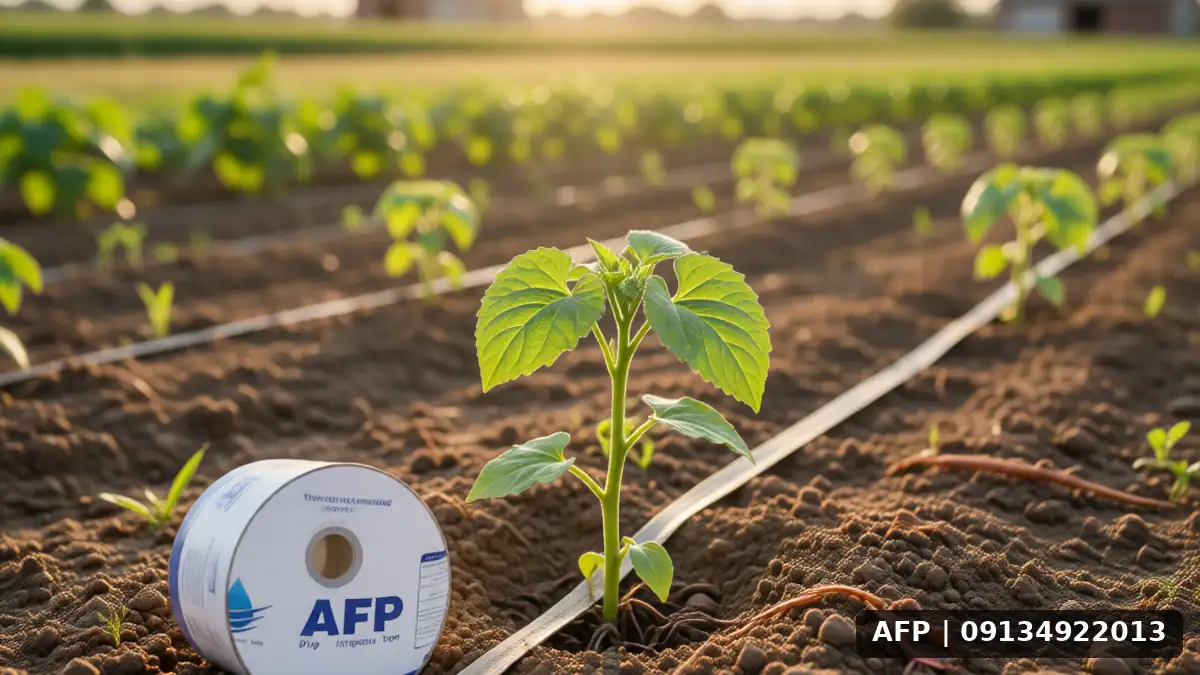
Cucurbit crop (melon and pumpkin) cultivation, due to high needs for uniform root zone moisture, is one of the most suitable crops for using drip and tape irrigation systems. However, many farmers experience uncertainty in determining pumpkin tape drip spacing and row layout. Incorrect spacing not only causes water stress in the plant, but also increases production costs and reduces fruit quality. In this comprehensive guide, you will learn about the technical standards for spacing, layout dimensions, and practical principles for installing tape drip in pumpkin farms.
Importance of correctly determining tape drip spacing in cucumber cultivation
Cucumber is a plant with a shallow to semi-deep root system that requires uniform distribution of water and nutrients in the root crown zone during the vegetative growth season. If cucumber tape drip spacing is less than the necessary limit, inter-plant root competition in a row increases and prevents healthy growth. Conversely, if the spacing is wider than needed, the initial cost for purchasing pipes increases and sections of the soil remain dry, leading to the loss of lateral roots. The goal of correct layout is to create an effective wetted zone (Wetted Zone) that covers all active plant roots.
Technical standards for row and tape drip spacing
Row Spacing
Row spacing for squash depends on climate, variety, and harvesting method. However, the following guidelines are generally recommended to optimize drip irrigation:
- Conventional cultivation (native varieties): Row spacing is usually 1 to 1.2 meters.
- Industrial and mechanized cultivation: A spacing of 1.2 to 1.5 meters is recommended to allow harvesting vehicles to pass.
- Impact on drip line placement: The drip line is placed either in the middle of the row or along the edge (depending on the variety). The distance between two drip lines equals the row spacing. For example, if the row spacing is 1.4 meters, the drip lines are installed at 1.4-meter intervals.
In-Row Plant Spacing (Plant Spacing)
The distance between two plants along a row affects the intensity of root competition. This spacing directly impacts the output capacity of drip tape emitters. If plants are planted too close, irrigation zones overlap, concentrating excess moisture in one area.
- For standard varieties, a spacing of 0.5 to 0.6 meters is recommended.
- For large and fast-growing varieties, a spacing of 0.7 to 0.8 meters is mandatory.
- Note that each dripper must be located within a maximum radius of 20 to 30 centimeters from the plant’s main root to ensure moisture reaches the root zone.
For more information on general spacing principles for other grain crops that are sometimes intercropped with squash, refer to drip tape spacing for beans, as the row layout patterns of the two crops have structural similarities.
Impact of Row Layout on Squash Yield
Relationship to yield per hectare
Many farmers believe that reducing the watermelon row spacing and increasing plant density directly leads to higher fruit weight. However, the reality is that excessive density causes smaller fruit size and reduced bulk quality. There is a simple mathematical relationship between row spacing, intra-row spacing, and yield:
If your goal is to achieve a yield at the national average level, you must strike a balance between plant count and the risk of fungal diseases. Reducing the watermelon row spacing means reducing the air flow gradient between plants, which increases the risk of fruit rot in humid areas. Therefore, Watermelon row spacing must be adjusted based on climatic conditions. In dry regions, spacing can be slightly reduced (with higher density), but in humid regions, wider spacing is essential.
For a yield comparison, refer to the Watermelon Yield Guide Per Hectare This is useful because watermelons and cucumbers belong to the same plant family and have very similar root behaviors and irrigation zones.
Practical considerations for installation and layout
Selecting the drip tape route
The drip tape must be installed parallel to the crop row. There are two common methods:
- Mid-row installation: If the intra-row spacing is less than 40 cm, the drip tape is placed between two plants. This method is suitable for dense plant varieties.
- Side-row installation: If the intra-row spacing exceeds 50 cm, the drip tape is placed on one side of the plants (e.g., the sun-facing side) to assist in shading and moisture retention.
Common error in pressure calculation
One major problem in drip tape systems is pressure drop along the line. If the drip tape spacing for squash is long (e.g., 100-meter rows), you must increase the mainline pipe diameter and inlet pressure. Otherwise, plants at the end of the row will suffer from under-irrigation. It is recommended not to use drip tape pressure below 0.3 bar, as it causes water to be ejected outside the root zone.
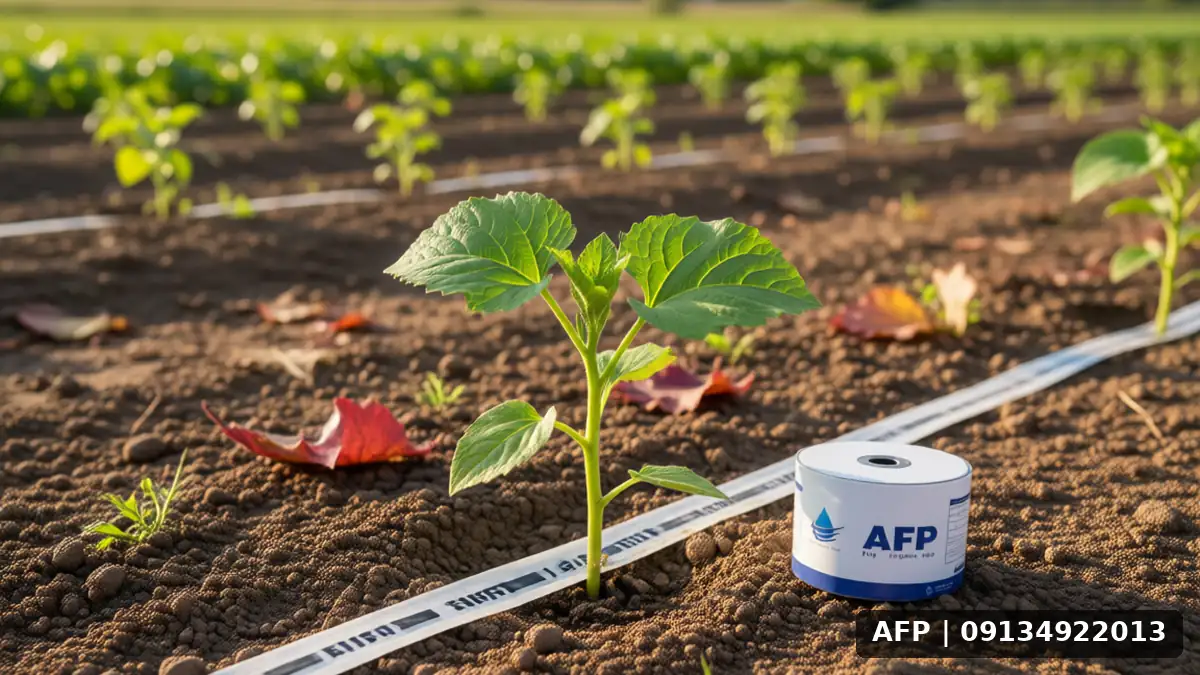
Proper installation operations for drip tape can extend the system’s useful life several times. Review the correct connection and installation steps in the article Drip Tape Installation Steps to prevent early issues such as hidden leaks.
Optimizing Costs and Maintenance
Determining the drip tape spacing for squash is not a one-time task performed at harvest; it requires continuous monitoring. Over time, sedimentation inside the drip tape can clog emitters. While wider spacing between tapes means fewer tubes, managing longer tubes is more difficult.
- Backflushing costs: Systems with standard spacings of 1.2 to 1.5 meters generally require simpler filtration and backflushing systems.
- Drip tape lifespan: Wider spacing between tapes results in fewer connection points, leading to increased tube durability against abrasion.
For a better understanding of irrigation system maintenance budgeting, you can read the article on drip tape maintenance and associated costs. This will help you determine whether changing the squash drip tape spacing for the next season is economically justifiable.
Frequently Asked Questions (FAQ)
Can double-sided drip tape be used in squash cultivation?
Using double-sided drip tape (one line in the middle of the row) is generally not recommended unless the row spacing is very wide (over 2 meters). In standard squash planting, using a single drip tape line per row makes pressure control easier and creates a more uniform irrigation zone. Switching to a double-sided line requires a complete reconfiguration of the fittings and may lead to water waste.
What is the optimal burial depth for drip tape in heavy soils?
For sandy soils, drip tape should be installed at a depth of 10 to 15 centimeters to prevent direct evaporation. For clay and heavy soils, a depth of 5 to 10 centimeters is sufficient because low permeability causes water to remain on the surface longer. The vertical distance between the tape and the main root should not exceed 5 centimeters.
What is the impact of drip tape spacing on water costs?
Incorrect spacing between drip tapes can cause water waste of up to 20 percent. If drip tapes are spaced too far apart, the arid sections between rows remain dry, forcing the farmer to increase the system flow rate to compensate, which leads to salt pollution in the root zones. Precise calibration Squash drip tape spacing Based on planting density, it is the key to reducing water costs.
Conclusion and Final Recommendations
Determining drip line spacing for squash cultivation is a precise engineering process that requires mutual understanding of botany and hydraulics. In summary:
- Fix the row spacing based on the selected cultivars (usually 1.2 to 1.5 meters).
- Install the drip line so that it covers at least the main root zone up to 30 centimeters.
- Avoid excessive row compaction in moist areas.
- Schedule periodic system maintenance based on the specified intervals.
To complete your knowledge of general irrigation principles and efficiency improvement, studying lake water volume and irrigation per hectare can provide a broader perspective on water resource management in your farms. By following these principles, you will not only improve the quality of the produced squash but also save on unnecessary irrigation costs.
Related topics: Related article Related article Related article D8AFD8B1 Related article, garlic seed per hectare factors increase 37460 2