Complevia Seed Rate per Hectare: A Comprehensive Planting and Irrigation Guide
Introduction to the Importance of Precision in Calculating Kalanchoe Seed Quantity
Economic development of Iran’s industrial horticulture sector depends directly on the correct selection of the species, variety, and seed amount per unit area. Kalanchoe, as a plant with a high risk of sensitivity to sex ratio and environmental factors, requires precise planning. Many farmers focus only on seed cost; however, errors in estimating planting density can lead to a severe decrease in flowering and productivity during the late production phase. This guide provides revised formulas for accurately calculating the required seed amount based on plant physiology and irrigation engineering principles to minimize the misuse of water and soil resources.
Factors Influencing Seed Quantity per Hectare
Unlike native plants with a 1:1 sex ratio, commercial Kalanchoe plants are affected by environmental stresses. These stresses can disrupt the sex ratio in favor of female flowers. Therefore, calculating the seed amount is not simply a matter of 20,000 temperature degrees; it is a function of base seed health and the planting climate.
- Hot and dry climate: In southern regions, it is necessary to use higher quality seeds (98% standard) and higher density to prevent a reduction in the germination rate.
- Moderate climate: In northern and central regions, with adherence to standard spacing, lower density can also lead to better stem growth.
- Plant Sex: Considering that Kalanchoe flowers are monoecious (one complex), the percentage of healthy flowers must be applied in the final calculation to prevent a shortage of pollination.
Planting Density Calculation Formula (Based on Sex)
To achieve maximum economic yield, the following formula should be used to calculate seed amount per hectare:
Seed Amount (Kilograms per Hectare) = (Target Number of Pickles × Sex Correction Coefficient) / Pistil Percentage
Under ideal conditions, the sex correction coefficient is assumed to be 1.0, but in arid regions, it is recommended to increase this coefficient to 1.2 to compensate for defects caused by insufficient pollination. This calculation is similar to the methods used in estimating Eggplant performance and other greenhouse crops that have high sensitivity to planting density.
<>
Sowing and spacing management strategy
Camelinea is a plant that requires good airflow. Dense planting prevents leaf overlap, but excessive density increases fungal diseases and causes light deficiency at the soil level. The optimal sowing method is planting in narrow strips with adequate runner space.
- Space between strips: 70 to 100 centimeters, depending on the irrigation system and climate.
- In-strip spacing (thinning): 10 to 15 centimeters for warm climates.
- Planting depth: 2 to 3 centimeters; deeper planting causes flopping of flowers, leading to poor fruit set.
By properly adjusting spacings, you effectively determine the final seed dose in intercropping. If you use high-quality seed, you can reduce the space between strips and use higher density for faster soil cover. This is critical in areas with strong winds, as stronger plants have better resistance to arborization (acidification).
<
Critical role of drip and tape irrigation systems
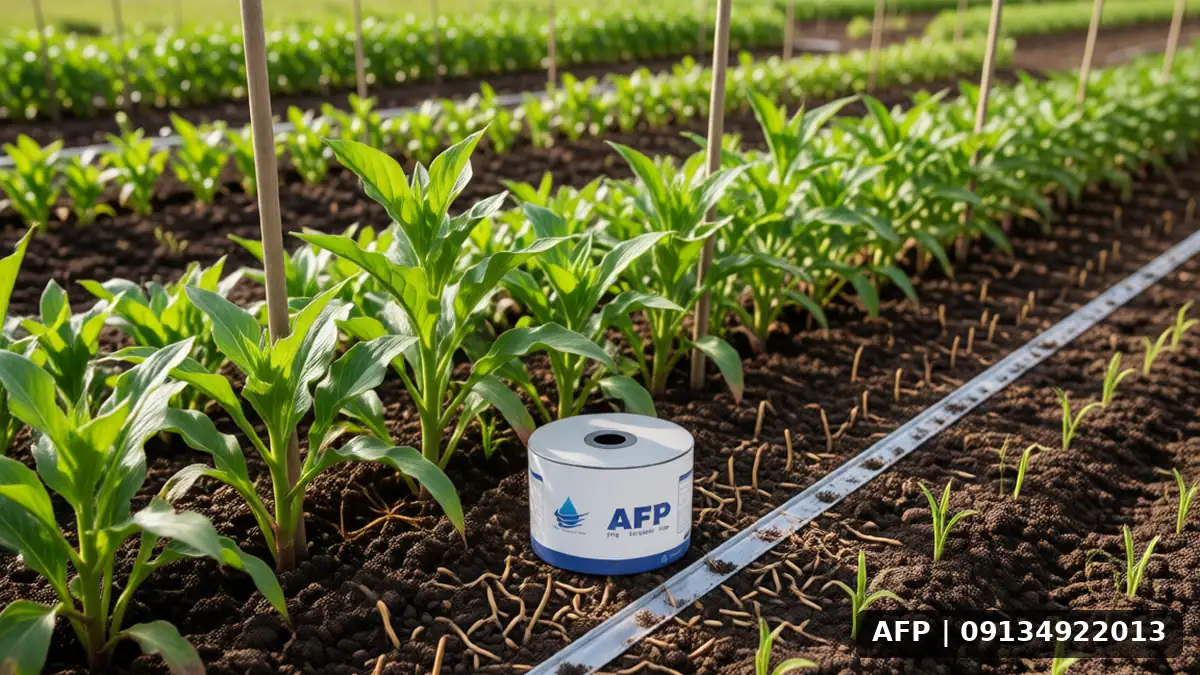
One of the biggest challenges in Camelinea cultivation is root sensitivity to suffocation. Camelinea roots must always have adequate aeration. In this regard, using irrigation tapes of appropriate diameter is the key to success. The irrigation tape must be placed exactly under the root crown to ensure water reaches the root zone directly, not the stem, which causes rot.
To select the appropriate system, pay attention to the technical specifications of the irrigation tape. A standard system should include a tape hose with a diameter of 16 or 20 millimeters, an emitter flow rate of 2 liters per hour, and an Emitter Spacing of 20 centimeters. These settings ensure that soil moisture is distributed uniformly among the multiple root systems of Camelinea.
Irrigation schedule based on meteorological data
Camelinea irrigation should not be pre-scheduled; rather, it must be adjusted based on the Water Deficit index. If you use smart systems, Moisture Sensors should be installed at a depth of 15 centimeters. A drop in moisture below 60% of saturation is an early sign of stress and seed drop. Under these conditions, the irrigation dose should be increased, but the irrigation duration should be kept short to prevent total soil saturation. This approach is similar to the principles applied in water management in other industrial orchards, which emphasize maintaining water-oxygen balance.
<
Practical tips for increasing yield and reducing losses
Many farmers worry about flower quality after planting. To address this issue, follow these key points:
- Seed Priming: Before planting, soak the seeds in distilled water for 30 minutes to increase the priming rate. This is particularly effective in late autumn and early winter when temperatures are low.
- Root Nutrition: Applying potassium and phosphate fertilizers via drip irrigation (Fertigation) during the germination stage strengthens the floral structure and reduces flower drop.
- Pest Management: Soil-dwelling larvae (Grub) are the number one enemy of Calamintha roots. Before planting, be sure to use appropriate soil pesticides. Damaged roots deteriorate quickly, and unproductive seeds lack viability.
Also, pay attention to Vegetable Harvesting and proper harvesting timing, which can extend flower life. Calamintha is a plant with a short vase life; therefore, harvesting should be done at the peak of flowering to ensure grain size quality.
Frequently Asked Questions (FAQ)
1. Is it possible to reduce seed usage with the help of growth enhancers?
No, enhancers affect plant growth but do not directly influence sex ratio or seed count. The only way to reduce seed usage is to use high-purity seeds with a higher salvage rate. Reducing seed amount without improving quality leads to a high risk of male flowers and waste.
2. What is the best time to plant Calamintha in southern regions?
For regions with hot summers (semi-tropical), ideal planting is from late September to early December. This timing allows flowering during colder seasons, reducing heat stress on pollination and standardizing the seed quality per hectare.
3. Is a sprinkler irrigation system suitable for Calamintha?
Not recommended. Calmellina is sensitive to root suffocation. Rain irrigation causes fungal growth and uneven moisture penetration. Drip and subsurface band systems provide better control over the root water-oxygen balance, leading to higher efficiency.
Summary: The key to success in seed and water management
Precise calculation of Calmellina seed quantity per hectare is not a one-time process; rather, it is a combination of selecting high-quality seed, observing climate-specific spacing, and precise drip irrigation management. By applying sex correction factors and utilizing modern band systems, you can minimize the risk of flower shortage and increase your economic performance. A successful farmer is one who plans based on scientific data and local environmental conditions instead of guesswork. Adhering to the principles outlined in this article is a solid step toward balanced and sustainable Calmellina cultivation in Iran.