Basil Maintenance with Drip Lines: Key Tips for Boosting Yield
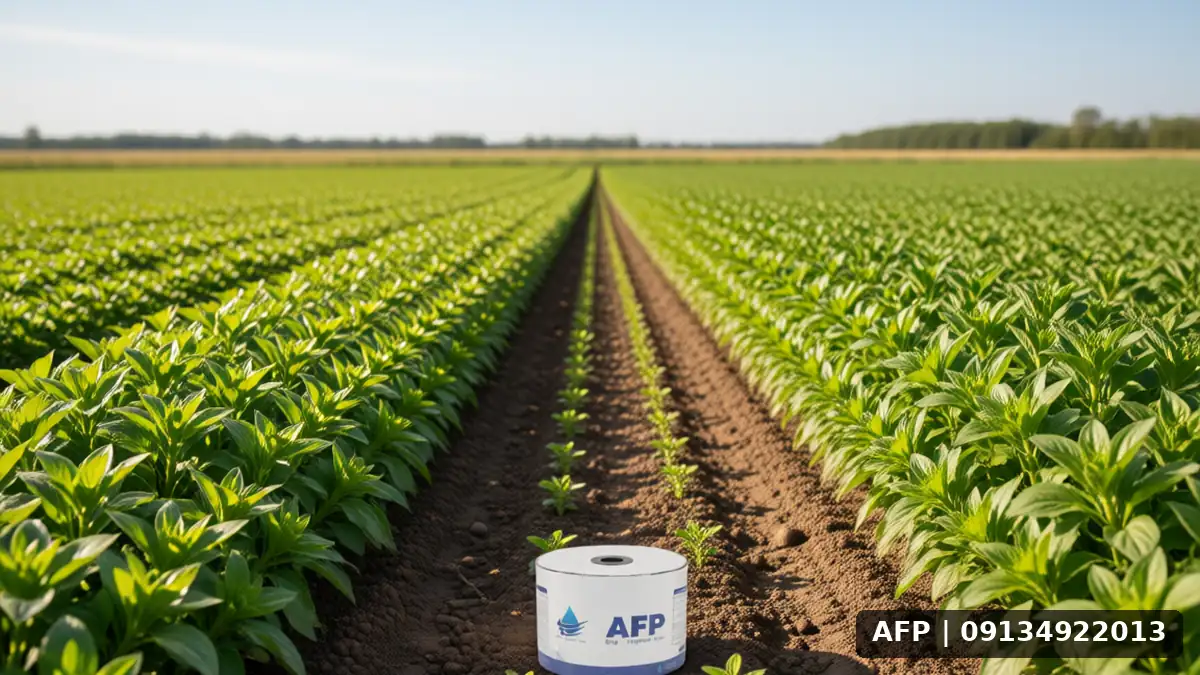
Introduction to the importance of optimal irrigation in basil cultivation
Basil, despite its rapid growth and water requirements, is a crop whose delicate roots are highly susceptible to damage from irregular irrigation. The use of drip irrigation systems, and specifically tape drip is one of the most efficient methods for providing uniform moisture to the root zone. However, many farmers focus solely on initial installation and overlook the critical maintenance and sustainability aspects of this system. The following outlines the technical principles of tape drip maintenance, with a focus on basil cultivation, on a step-by-step basis to ensure optimal system and plant performance throughout the growing season.
Why tape drip is the first choice for basil
Basil is a crop that requires stable soil moisture but is intolerant of root waterlogging. Tape drip, by delivering water uniformly along the line, prevents water accumulation at specific points and keeps roots at desired moisture levels. To better understand planting parameters and the space required for laying the tape drip line, you can refer to the farmer’s one-hectare crop guide which explains the general principles of planting medicinal and aromatic products.
<>
Key points for initial drip tape maintenance
Basil drip tape maintenance begins at the point of manifold connection. Common errors at this stage can lead to leaks, punctures in the clear plastic, and ultimately uneven water distribution.
Fluid pressure control
The maximum operating pressure for drip tape is usually between 1 and 1.5 bar. Using higher pressure can cause the tape to swell, deform, and eventually burst. Always use a manifold that allows precise pressure adjustment. For a better understanding of the required auxiliary equipment, read the 3-inch cotton guide pipe guide, which can help in selecting appropriate main and lateral lines, although smaller-diameter lines are generally used for basil drip tape.
Compatibility with drip tape type
Tubing drip lines are manufactured in fixed and mobile types. For basil, which is typically planted in rows, fixed drip lines are often the more suitable choice. If you need to review various options, you can read the fixed drip line guide to have more precise selection criteria.
<>
Preventing Clogging: The Main Maintenance Challenge
Clogging of drip line emitters is the biggest enemy of system performance. Basil is generally grown in irrigation systems with medium to low water quality (such as municipal wells or rainwater tanks), which may be sediment-laden. To maintain the clarity of the plastic tubing, multi-stage filtration (disc and sand) must be used. If your water source contains suspended particles, consider Key Points Before Installing Drip Lines can provide good ideas for pre-treatment.
System Flushing Schedule
- Initial flushing: Before the start of each season, flush the entire system with clean water at medium pressure to remove suspended particles.
- Acid flushing: Using citric or lemon acid at a concentration of 2 to 3 percent per 100 meters of drip line helps dissolve calcium carbonate deposits. Repeat this step once a month.
- Chlorine flushing: To eliminate bio-fouling deposits, which are common in long-term basil cultivation, inject a chlorine solution at a concentration of 200 mg/L into the system and let it remain in the drip lines for 24 hours.
Note that after flushing with acid or chlorine, always flush the system with clean water to prevent residual chemicals from damaging the basil roots.
Basil planting and drip tape line spacing strategy
Basil is a plant that requires full sun, but in very hot regions, relative shading by dense bushes can lead to a decrease in soil temperature. The arrangement of drip tape lines affects this soil temperature.
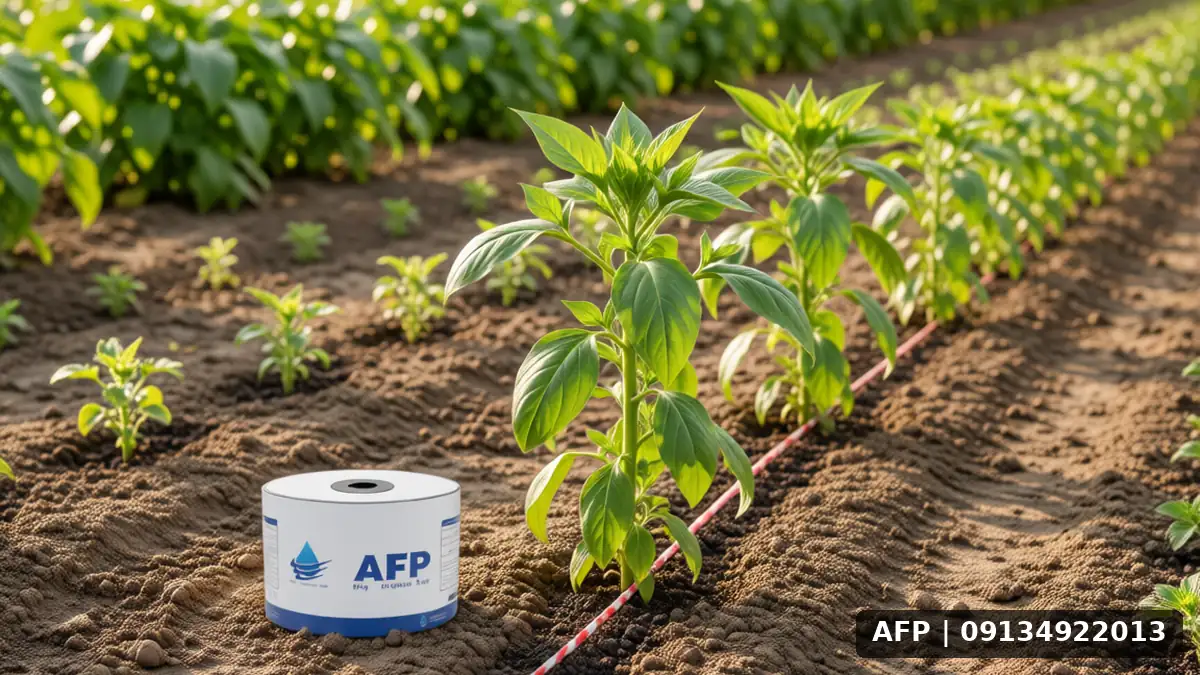
Proper Spacing
The spacing between two drip tapes should be adjusted to the canopy width of the basil. If the tape spacing is less than the canopy width, the roots of adjacent plants will overlap, increasing the risk of fungal diseases. For calculating planting density and appropriate spacing, consulting the table for melon planting density per hectare can provide a model for calculating growing space, although the specific figures for basil (usually 15 by 15 cm planting) differ.
Drip Tape Discharge Angle
The discharge angle of the drip tape holes affects moisture distribution under mulch or bare soil. If mulch is used to control basil weeds, ensure the drip tape is placed underneath the mulch layer so moisture reaches the roots directly and rapid evaporation is prevented. In the case of using spray tapes, more space is required for uniform moisture distribution; additional information on mint seed quantity per hectare can also be helpful regarding similarities in herbaceous plant behavior.
<>
FAQ: Frequently Asked Questions about Basil Drip Tape Maintenance
1. Can drip tape be used for multiple seasons?
The durability of the drip tape depends on the material (PVC or PE) and maintenance practices. High-quality tapes can last up to 3 seasons, but moisture and intense UV exposure during basil cultivation, which is often done in warmer seasons, cause the plastic to become brittle. It is recommended to inspect the system every 2 seasons and replace the tapes if small holes are observed.
2. What pressure is suitable for basil drip tape?
The optimal operating pressure is between 0.8 and 1.2 bar. Lower pressure prevents water from reaching the end of the tape (especially in tapes longer than 100 meters), while higher pressure causes rapid wear of the tapes.
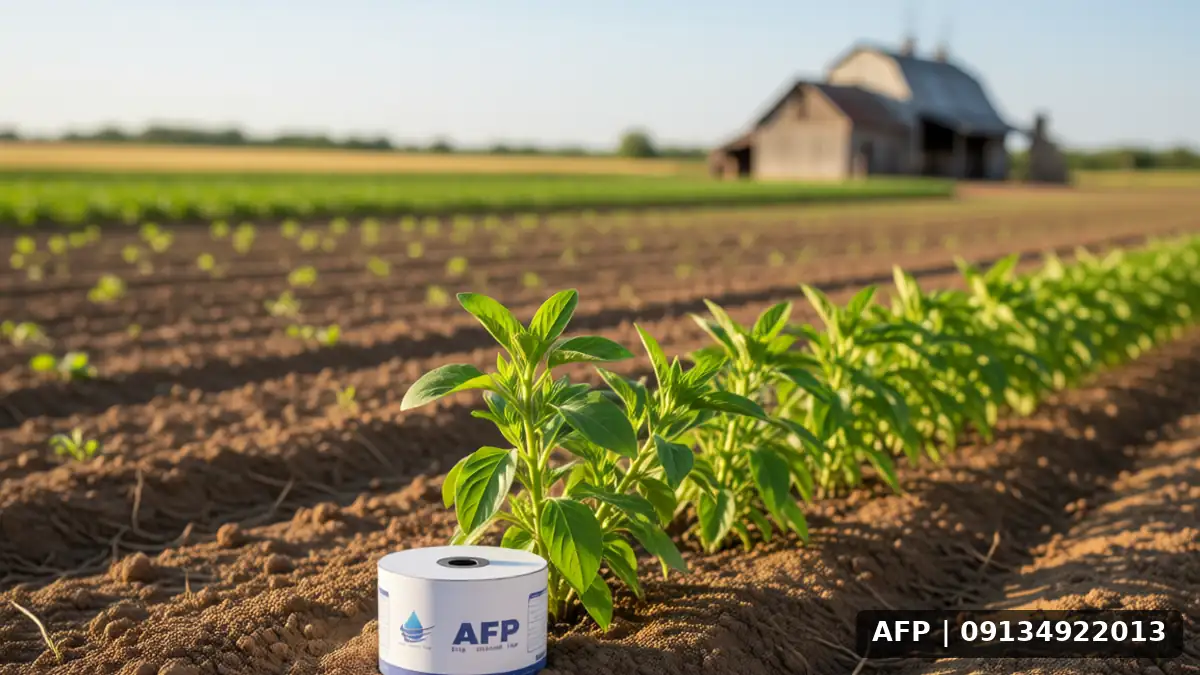
3. How can I detect drip tape clogs before they become critical?
Monitor the uniformity of soil wetness. If a section of the field is drier than the rest, the emitters in that section are likely clogged. Additionally, applying chemical cleaners preventively is the best solution.
Conclusion and Final Recommendations
Successful basil cultivation using drip tape requires a technical approach to details. From selecting the appropriate pressure and water filtration to scheduling regular acidic and chlorinated flushing, all these factors are interconnected. A farmer who properly maintains their irrigation system not only saves on energy and repair costs but also reduces basil root stress by maintaining uniform moisture, ensuring better aroma and taste in the final product. Always remember that drip tape maintenance is a continuous process, not a one-time action at the beginning of the growing season.
Related articles: Related article Related article Related article Related article D8AFD8B1 Related article