Type Drip Tape Spacing for Pepper Cultivation: Recommended Standards
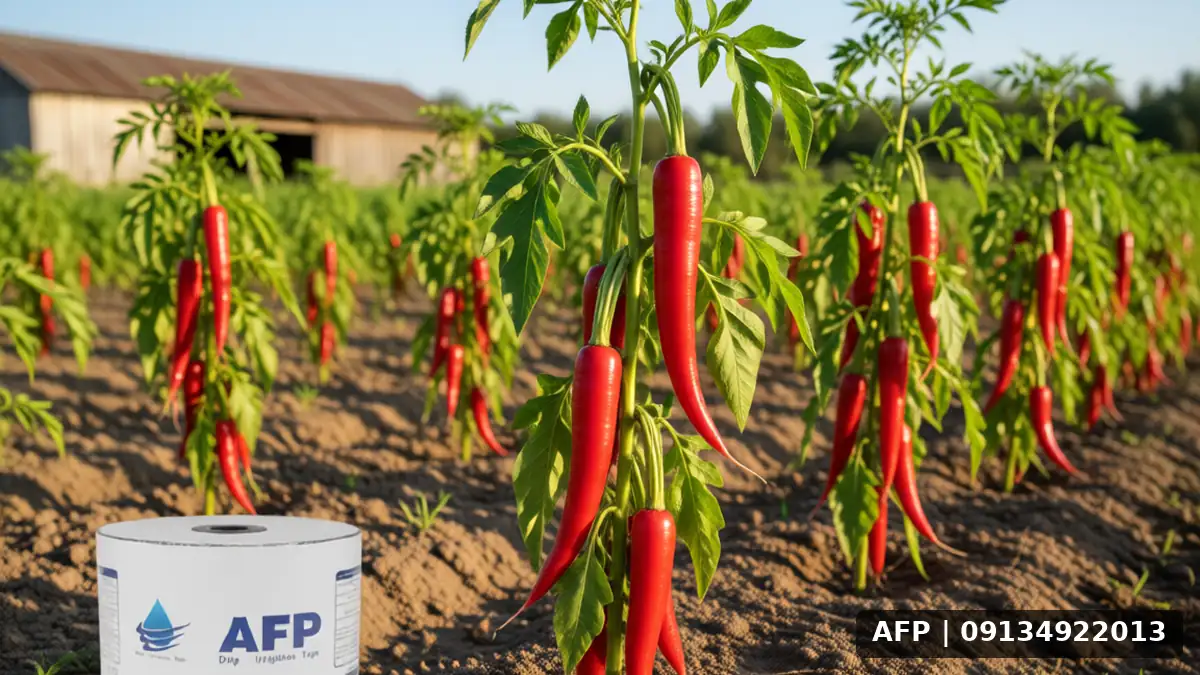
Cultivating bell pepper, one of the most important tropical crops, requires precise management of water and nutrient resources. In this context, Bell Pepper Drip Tape Spacing plays a decisive role in distributing moisture uniformly throughout the root zone. Selecting the correct spacing not only impacts yield but is also effective in preventing water stress and soil-borne diseases. In this article, we examine the recommended standards for arranging bell pepper rows using drip tape, applying principles from hydraulic and agricultural engineering.
Introduction to the Importance of Row Arrangement in Drip Irrigation
Drip tape irrigation is a method where water is released point-by-point at a controlled intensity near the roots. For bell peppers, which have a predominantly shallow and non-deep root system, uniform moisture distribution across the row width is critical. If the drip tape spacing from the row center is incorrectly adjusted, parts of the root system may suffer from drought while other parts are prone to rot. Therefore, understanding the geometric relationship between plant gating, row width, and drip tape placement is the first step in planning the crop layout.
Global standards for fruiting pepper cultivation generally recommend positioning the drip tape 15 to 25 centimeters away from other plants and at the center of the row width. These dimensions are designed so that the lateral reach of water from the drip tape emitters completely covers the active root zone. If planting density is higher, spacing requires more precise adjustment to prevent excessive overlap of irrigation wetting patterns between adjacent rows.
Recommended Drip Tape Spacing Standards for Bell Peppers
Impact of Growing Medium Type on Drip Tape Spacing
The type of planting bed (Xochi or soil) directly affects the burial depth of the drip tape and its distance from the plant. For planting on a regular soil bed, it is recommended that the drip tape be placed 10 to 15 cm from the plant base and 10 to 15 cm deep from the soil surface. This depth targets the main root absorption zone. In mounded bed planting, due to the presence of two tapes per row (one on the inner shoulder and the other on the outer shoulder), the distance of each tape from the center of the mound must be adjusted to prevent drying out of the shoulders.
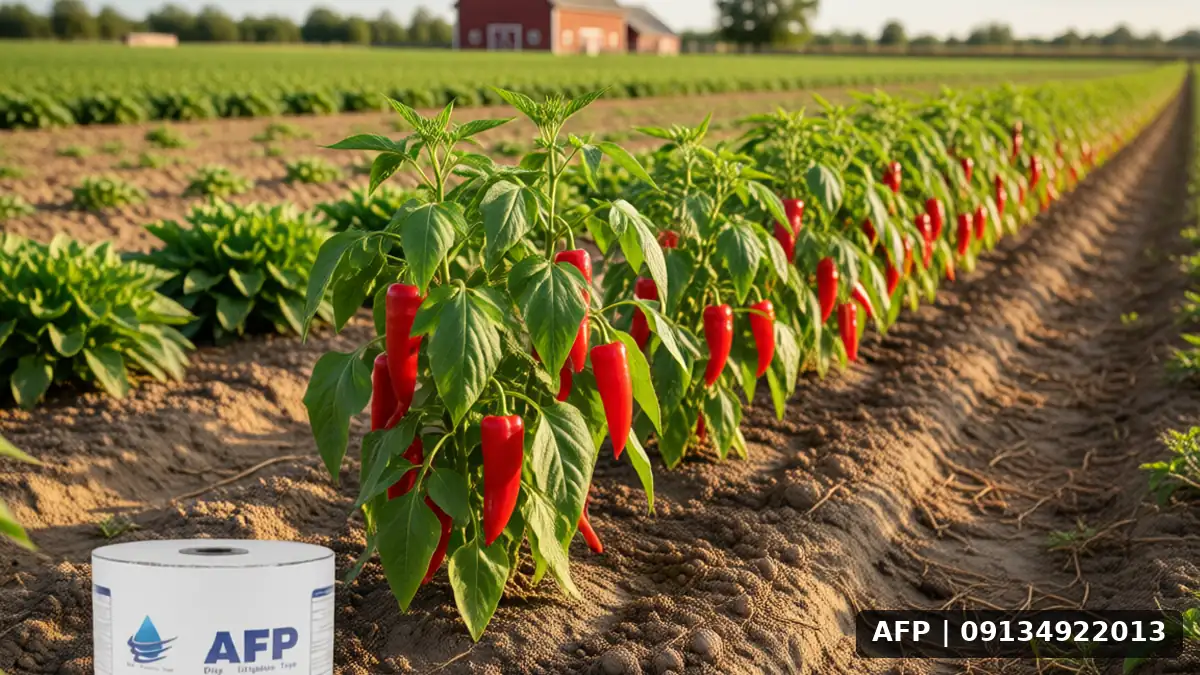
For bell pepper, the layout pattern usually includes a Row-to-Row distance of 120 to 150 cm and a Plant-to-Plant distance within the row of 35 to 45 cm. In this pattern, Bell pepper drip tape spacing from the row center should be equivalent to the width of the active root zone. Empirical data shows that placing the drip tape exactly in the center of the row width results in the most uniform moisture distribution and reduced water stress during peak heating hours.
Calculating flow rate and impact on gapping
The selection of the drip tape orifice flow rate (usually 1/8 or 1/4 inch) is directly related to the gapping (orifice spacing). For bell pepper, a gapping of 30 to 40 cm is usually ideal. If the gapping is less than 30 cm, salinity and salt accumulation in the root zone increase. Since bell pepper is sensitive to re-rooting, drip tape with larger emitter diameters but appropriate gapping creates a more stable flow. It is recommended to use tapes with higher flow rates and denser gapping in dry regions with intense radiation to ensure continuous moisture coverage.
Practical tips for drip tape installation and maintenance
Correct drip tape installation is not limited to its distance from the plant; it also includes how it is connected to the main hoses and stands. Using fertigation through drip tape requires precise chemical management. Practically, maintaining the benefits of drip irrigation requires periodic inspection for emitter clogging. Drip tape in pepper cultivation is often exposed to high moisture, which increases the risk of emitter clogging due to lime deposition or algae growth.
- Filtration equipment: Ensure the use of a two-stage screen filtration system with a 100-130 mesh rating that matches the drip tape emitters.
- Backflush: If you are using flushable tapes, ensure that the backflush is performed correctly from the end of the line.
- Tape coverage: After planting, cover the drip tape bed with soil or clear/opaque plastic mulch. Compared to opaque mulch, clear plastic mulch requires more weed control in the root zone due to increased light and allows more weed growth, which can affect drip tape behavior and moisture absorption.
To better understand water consumption per unit area, study the Drip line quantity per hectare This can help you estimate costs and plan purchases. Calculating the required drip line length based on row width and plant count is fundamental to ensuring uniform pressure throughout the line.
Common issues and consequences of inappropriate spacing
One of the biggest problems in bell pepper is fungal root diseases (Fusarium and Phytophthora). If Bell pepper drip line spacing is too close to the stem, prolonged moisture at the base creates a breeding ground for fungal infection. In this case, increase the spacing to 25 to 30 cm. Conversely, excessive spacing reduces nutrient concentration in the root zone and causes fruit drop.
To address these challenges, multi-point systems are recommended over simple drip lines in specific conditions. However, drip lines remain the primary option due to lower cost and better coverage. Note that different layouts are applied in multi-crop systems. You can read more about Feed and light for irrigation drip tips, help you understand the general operational principles of drip tape irrigation across various industries. Each crop has its specific rooting pattern, and paprika requires very high moisture stability due to fruit drop sensitivity during the flowering phase.
Frequently Asked Questions (FAQ)
1. Can drip tape be installed inside furrows?
Yes, but you must be careful to prevent mechanical damage to the tape by hand tools. In smaller furrows, a single drip tape with reduced emitters is typically placed in the center of the furrow to ensure complete root zone coverage.
2. What is the optimal burial depth for drip tape in paprika cultivation?
A depth of 10 to 15 cm from the bed surface is optimal. Deeper placement prevents paprika’s superficial roots from accessing water effectively, while shallower placement increases the risk of evaporation and fungal contamination.
3. When is it necessary to replace drip tape in paprika crops?
New drip tape typically lasts one season. At the end of the season, after the bell pepper harvest, old tapes must be removed from the field to prevent undissolved liquids or sediments from entering the new soil.
4. Does drip tape spacing directly affect bell pepper crop yield?
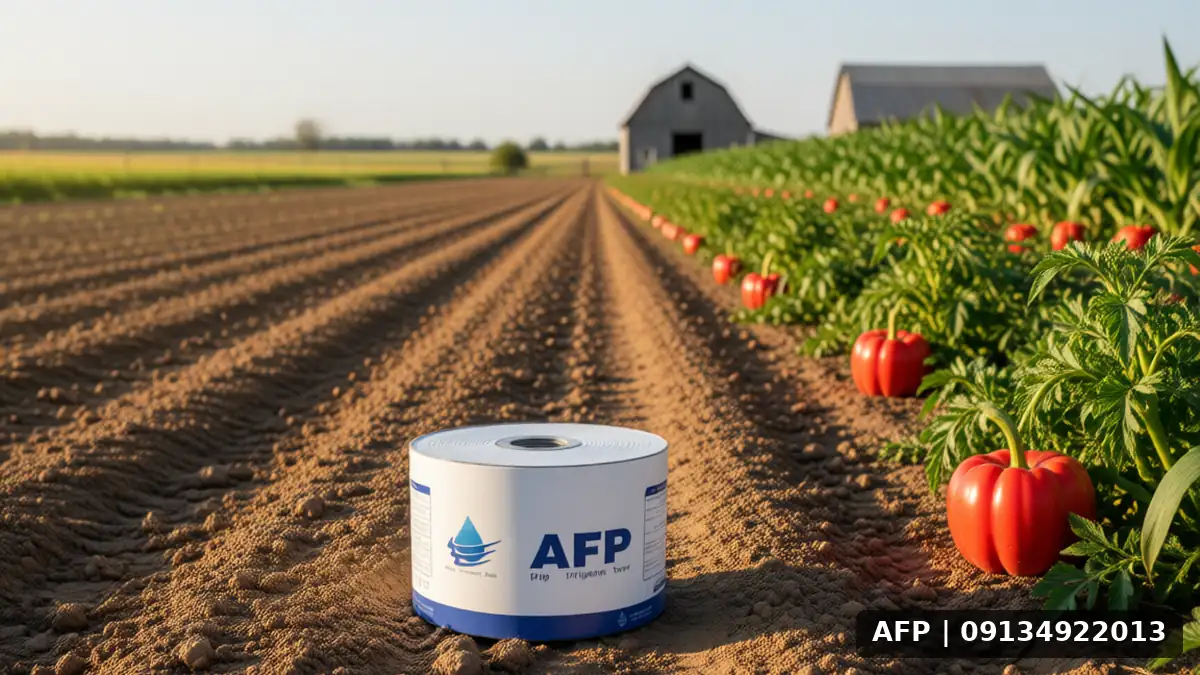
Certainly. Moisture fluctuations caused by improper layout severely affect bell pepper fruit size and skin quality. Bell pepper fruits exposed to fluctuating water stress develop cracking, which reduces commercial value.
Summary and final recommendations
The correct configuration of a drip tape irrigation system for bell pepper is a combination of hydraulic engineering knowledge and horticulture. Observing bell pepper drip tape spacing from the row center, adjusting burial depth, and selecting appropriate gaterings are the three main vertices of the success triangle for this crop. By following these standards, you not only reduce water consumption but also maximize the field’s production potential. If your farm is located in a region with a harsh climate, you can study Performance guide for chili and paprika in this region, review your yield expectations under various geographical conditions. Also, familiarize yourself with the principles Key considerations when using drip tape in irrigation This will help you avoid common execution errors in future years. Ultimately, continuous monitoring of pressure and outflow from boreholes is the key to preventing sudden system failures. Agile, knowledge-based management ensures higher quality paprika in competitive markets.