Strip Spacing in Winter Rye Planting: Recommended Standards
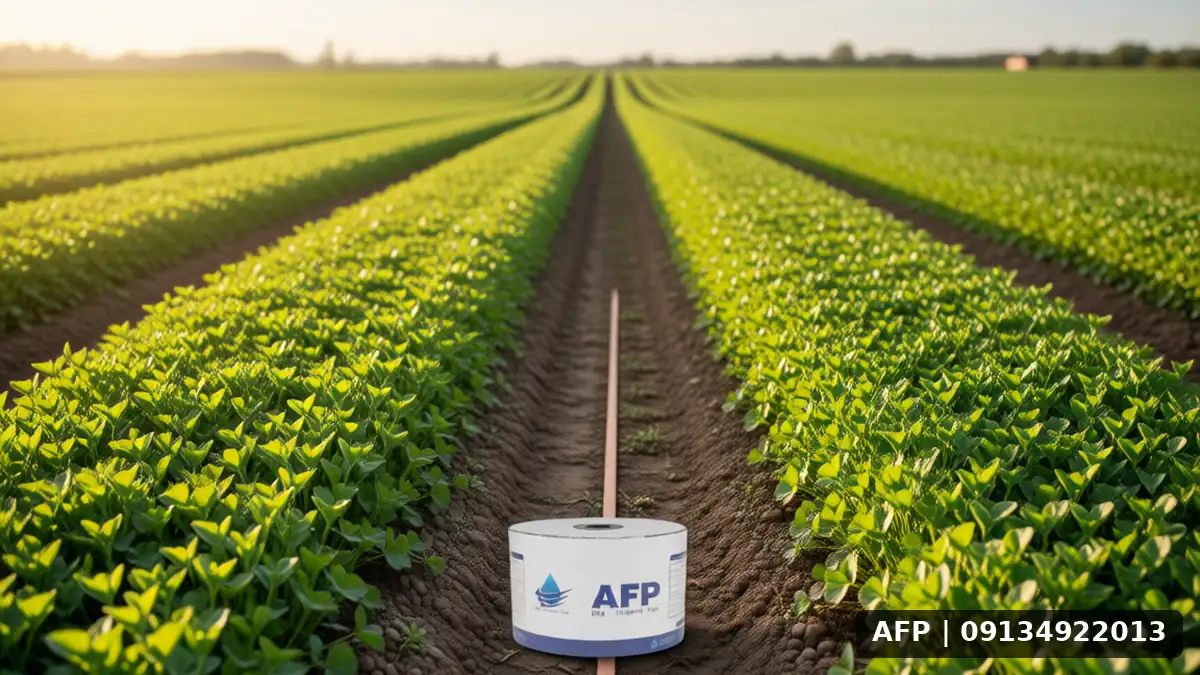
Alfalfa is one of the most important cover crops and forage crops. Due to its specific needs for consistent moisture and uniform nutrition, it requires a high-precision drip irrigation system. In many farms, decisions regarding the spacing of drip tape lines in alfalfa cultivation are made without sufficient knowledge of soil physics, regional climate, and plant genotype, which can lead to resource waste and reduced yield. The objective of this article is to provide technical and operational standards for determining the optimal spacing between drip tape lines, enabling farmers to improve their irrigation system design based on scientific data.
Technical fundamentals of drip irrigation in row systems
Drip tape is one of the most common water delivery systems in agriculture. In this system, water flows from the drippers along the length of the tape. The soil’s water infiltration rate and the wetting radius are the key factors in determining the spacing between tapes for clover rows. If the spacing exceeds the effective radius, dry zones will form in the soil. Conversely, if the spacing is less than the optimal threshold, wetting zones will overlap, extending the drying period and potentially causing root suffocation.
Relationship between tape spacing and clover root density
Clover root system (specifically species Trifolium repens and Trifolium pratenseThe wetted zone is primarily shallow and dark. Main roots have limited depth, while lateral roots spread more extensively. Consequently, in large spacings between tapes, vertical soil sections without root coverage remain dry. Conversely, closer spacings increase installation and maintenance costs. Field studies indicate that the optimal balance is achieved when the wetted radius of each tape covers approximately 75 to 100 percent of the total distance to the adjacent tape.
Recommended standards based on soil type
The safe drip tape spacing for rye cultivation depends directly on soil texture. In sandy soils, water infiltration is faster and the wetted radius is shorter; therefore, smaller spacings are recommended. In contrast, in clay soils, water movement is slower, and vertical and horizontal spread takes longer, allowing for greater spacings with increased caution.
These figures are provided as a baseline and must be adjusted to local conditions and preliminary field trials. For more information on the impact of planting density on the irrigation system, refer to the ‘Prerequisites by Order’ guide in the Work Plan, which outlines similar principles regarding resource distribution.
Impact of strip spacing on forage yield and quality
Relationship with forage production
Forage maintains chlorophyll levels and leaf stratification by providing uniform moisture in the root zone. When the strip spacing in a standard forage crop is incorrect, plants in the rows experience moisture stress. While minor stress may not directly reduce mortality, it slows growth rates and decreases dry matter production. In Lomi farms, maintaining a spacing of 55 to 65 centimeters reduces soil salinity and allows deeper roots to access nutrients more precisely.
To compare the functional approach in other drainage and cover crops, the study perimeter spacing route per hectare can provide a better perspective on population and irrigation management in cover crop units.
Salinity and root disease management
In drip tape systems, the concentration of dissolved solids increases in the wetted zone. Inadequate spacing between lines exacerbates this phenomenon. Rye is sensitive to salinity; therefore, adhering to spacing standards, in addition to saving water, reduces the risk of salinity damage to sensitive root zones.
Practical tips for proper farm implementation
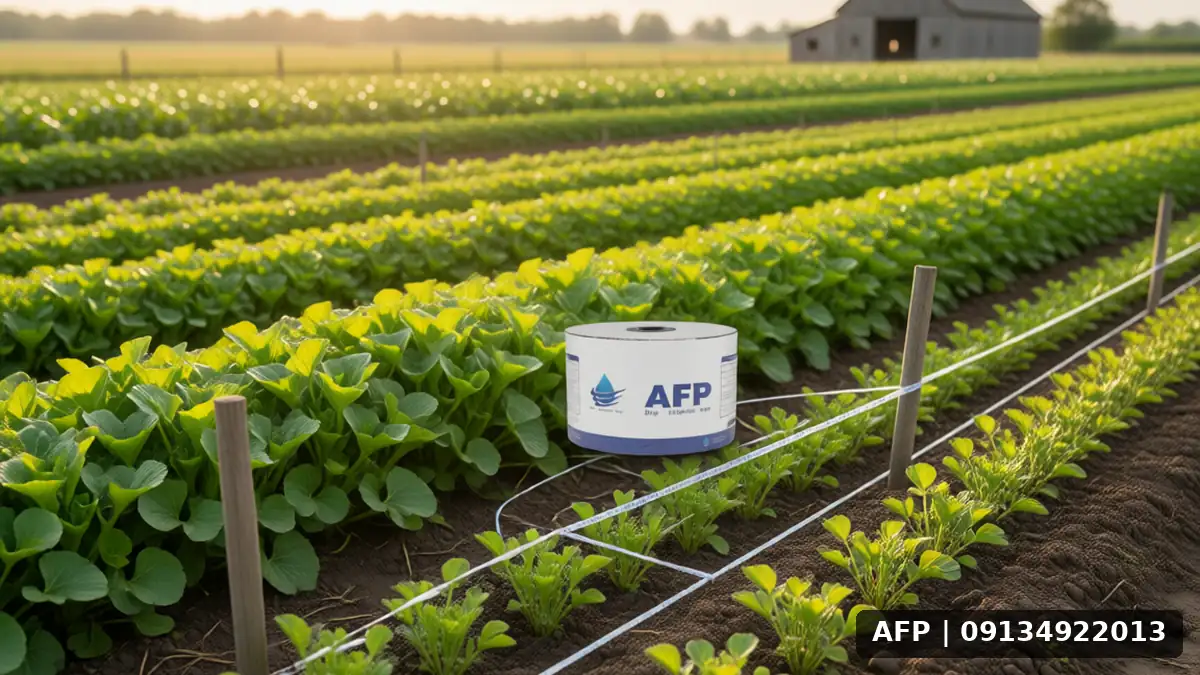
- Local soil texture review: Before purchasing drip tape, conduct a soil sampling and infiltration test. Sandy soils require shorter spacings (45-55 cm), while clay soils require wider spacings (65-75 cm).
- Row Alignment: Clover is typically planted in double rows or multi-row configurations. The drip tapes must be placed precisely in the middle of the row group or in alignment with the inter-row furrows to ensure symmetrical water distribution.
- Selection of Drip Slot Diameter: If the tape spacing is wide, use drip slots with a higher flow rate (e.g., 2.5 or 3 liters per hour) to increase the wetted radius. Conversely, for narrow spacings, slots with a lower flow rate (1.6 to 2 liters) are more appropriate.
- Installation and Periodic Replacement: Drip tapes are consumable items. In clover conditions, which involve high humidity, the risk of slot clogging is significant. Reduced tape spacing means more tapes per hectare and higher replacement costs. Therefore, a balance between spacing and the system’s functional lifespan must be considered.
As a supplementary resource for optimizing costs in other leaching-requiring crops, refer to the guide OKRA performance per hectare for Tajik farmers It can serve as a good example of the economic management of drip tape systems.
Frequently Asked Questions (FAQ)
Is the unique drip tape spacing the same for all types of rye?
No. Different rye species have differences in root depth and moisture requirements. Brown rye (red clover) has deeper roots and may tolerate wider spacings, whereas white rye (white clover), with its shallow roots, requires closer spacing (approximately 45 to 55 centimeters) to ensure adequate access to the moistening furrow.
Is it possible to relocate drip tapes after planting?
Relocating drip tape after sowing vetch is practically impossible because the plant roots and surrounding soil are precisely calibrated. If a spacing change is necessary, the system must be reinstalled during bed preparation, prior to sowing. Additionally, for crops with similar irrigation systems, you can refer to the guide Low-value water supply for cotton via 2-inch hose that explains the general principles of pipe installation.
How much does the tape spacing affect water costs?
Increased spacing means fewer tapes and consequently lower initial installation costs; however, if the spacing exceeds the effective radius, plants will suffer stress and may require supplementary sprinkler irrigation, which is a cost consideration. Ideally, adhering to standards reduces total water consumption by 15-20% compared to sprinkler systems. Regarding resource optimization in cereal crops, the study of wheat planting rate per hectare offers an overview of how to manage density and irrigation source in similar crops.
Summary and Final Recommendations
Determination of Drip line spacing in clover cultivation It is not just a fixed number; rather, it is a combination of soil texture, genotype, drip discharge rate, and climatic conditions. Generally, for most loamy soils in Iran, a spacing of 55 to 65 centimeters with 2 liters per second emitters provides the optimal balance. Farmers should conduct infiltration tests before implementation and adjust the spacing so that wetting fronts from adjacent lines meet. Adhering to these principles not only prevents salinity and root diseases but also ensures more stable yields and better grazing for drainage-clover. Please note that no pricing or distribution services are provided in this guide, and all figures are based on irrigation engineering principles and general technical studies.