Specialized Comparison of 20cm 1000m Drip Tape Rolls vs. Other Brands: Smart Buyer’s Guide
Introduction: Why is Selecting the Right Drip Tape Critical?
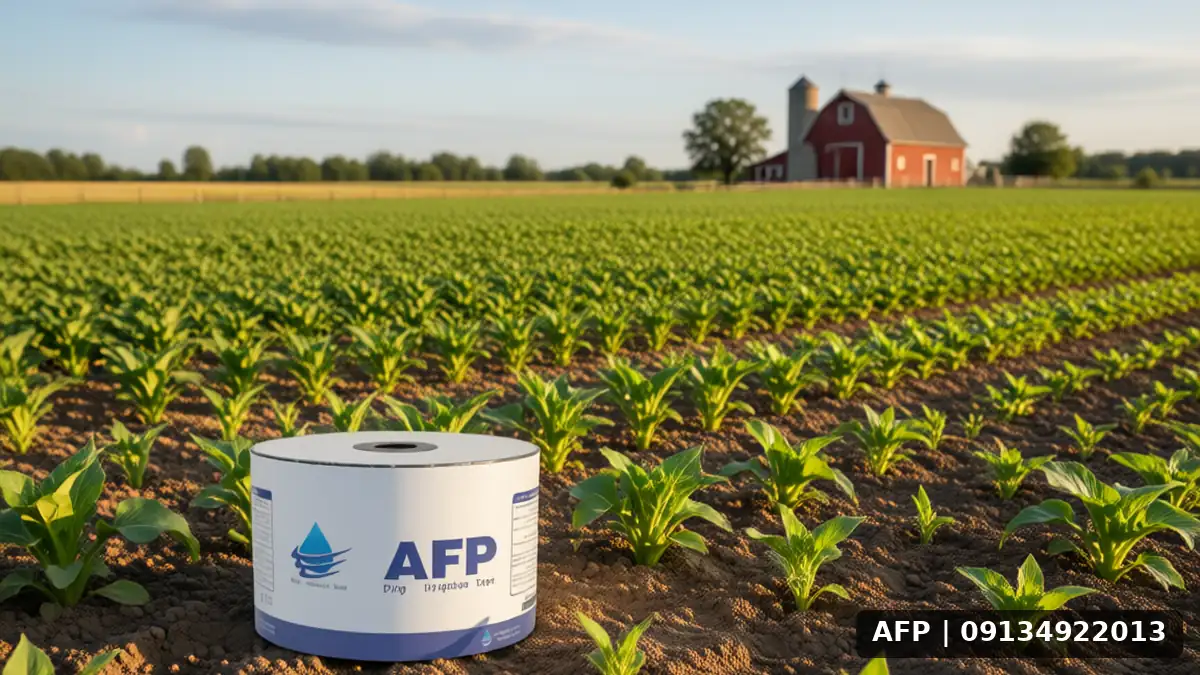
In modern agriculture, water resource management is one of the main challenges for producers. Drip and drip tape irrigation systems play a pivotal role as solutions to reduce water consumption by up to 50%. Among the various types of drip tape, 20 cm Drip Tape with a 1000 m Roll due to its optimal coverage in seedbed spacing, it is one of the most in-demand options. However, are all drip tapes available on the market of equal quality? The definitive answer is “no.” The quality of raw materials, wall thickness, precision of emitter slotting, and resistance to ultraviolet (UV) rays create fundamental differences. In this article, our goal is to thoroughly examine the characteristics of 20 cm drip tape with 1000 m rolls and compare them across different brands from various companies, enabling farmers to make informed and economical decisions.
To better understand the technical structure of these products, a review of the Components of the Drip Tape System is recommended, providing a general overview of the relationship between the filter, the regulator, and the tape.
Technical Features and Advantages of 20 cm Drip Tape with 1000 m Rolls
20 cm width: Balance between drip spacing and wetting
A 20 cm width in tip lines is typically designed for 20 cm drip emitters. This spacing provides a good balance between irrigation rate and uniform moisture distribution in the root zone. Compared to 15 cm lines, 20 cm lines require fewer lines per hectare, reducing initial costs and installation time. On the other hand, compared to 25 cm lines, 20 cm lines offer better control of the wetting pattern and prevent surface drying between the emitters.
1000 m roll size: Flexibility for small and medium-sized farms
The market standard for tip lines is often 4000 m rolls. However, for farms with multi-cropping or smaller plots, purchasing 4000 m rolls can lead to waste (excess line) and increased costs. 1000 m rolls 20 cm tip line allow farmers to cut the line to exactly the length of their rows. This feature reduces material waste and facilitates lay-out of the line along the path. Additionally, smaller rolls are easier to transport from the warehouse to the field and subject the polyethylene (PE) to less mechanical stress.
Alternatives and comparison with other brands
The tip line market in Iran is served by multiple domestic and international brands. Each brand has its own claims. High-quality brands generally use stronger UV Stabilizer layers, increasing the useful life of the line from one season to two or three seasons. Economy brands are typically designed for single-season use. When comparing, look for quality certifications and the type of internal grooves. Some brands use needle-shaped grooves while others use conical grooves, which affects the stability of the flow rate under variable pressure.
If you seek a deeper understanding of drip tape manufacturing and quality, the article on how to test and repair (upkeep) drip tape can be beneficial.
Practical tips for installation and operation
If you are using conventional pipes in the main system, be careful about compatibility.
Proper connection of drip tape to sub-mains is key to successful uniform irrigation. Many farmers use low-quality fittings due to size mismatch, which can lead to leaks and pressure drop at the end of the line. Using specific drip tape connections is recommended. To better understand the overall pipeline system, read the Leflats pipe price guide and installation tips to learn how to design main lines for feeding drip lines. Leflats pipe price guide And tips for their installation can give you a good idea of how to design the main lines to supply the drip tape.
Additional notes and practical recommendations
- Filtration: Before installing the 20 cm tape, ensure a mask filter with the appropriate aperture (e.g., 120 or 150 mesh) is at the start of each lateral line. Clogging of the small tape slots is the most common system failure.
- Handling: Lay the 1000 m roll out on uniform ground. Avoid stretching the tape during installation, as this alters slot dimensions and causes uneven irrigation.
- Coverage: In areas with direct sunlight, if non-UV-resistant tapes are used, plastic mulch may be applied to extend tape lifespan.
For detailed guidance on selecting the appropriate dropper or tape type for your crop, refer to the Brix level per hectare guide. Although the link title is technical, its principle focuses on optimizing field conditions to manage water stress.
Brand comparison based on key criteria
For transparency, here is a comparative table of 20 cm 1,000 m drip tape from various brands. Note that ‘Brand A’ refers to a reputable manufacturer’s brand with high standards, and ‘Brand B’ refers to an economical brand with acceptable quality for one season.
In many cases, investing in Brand A is economically justified for high-value-added crops (such as vegetables and greenhouse crops). However, for crops with short life cycles, Brand B may be a better option.
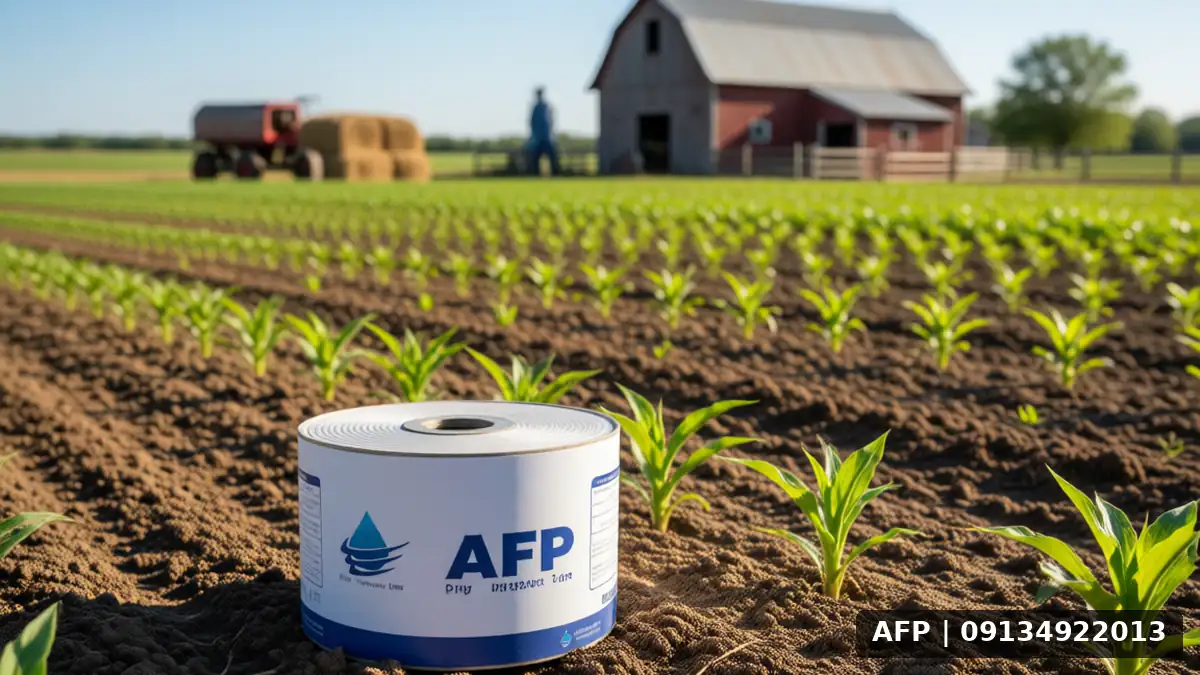
To better understand the factors affecting the choice of drip tape type (such as 20 cm spacing), refer to the Fixed Spray Tape Guide It can be helpful. Although fixed spray tape differs from frequency drip tape, understanding both helps in making the correct selection.
Frequently Asked Questions (FAQ)
Is the 20 cm, 1,000 m roll drip tape suitable for tomato cultivation?
Yes, it is very suitable. Tomatoes are typically grown with row spacing of 1.5 to 2 meters, and the seed rows have an appropriate layout. A 20 cm drip tape with a tapered nozzle is ideal for tomatoes. However, you must use the UV-resistant type for a full growing season.
What is the difference between 20 cm and 15 cm drip tape?
The 15 cm tape is for plants with shallower root systems that require more frequent wetting. The 20 cm tape is for plants with deeper roots or wider spacing between rows. Incorrect use can lead to root diseases or water stress.
Can I store a 1,000-meter roll for multiple seasons?
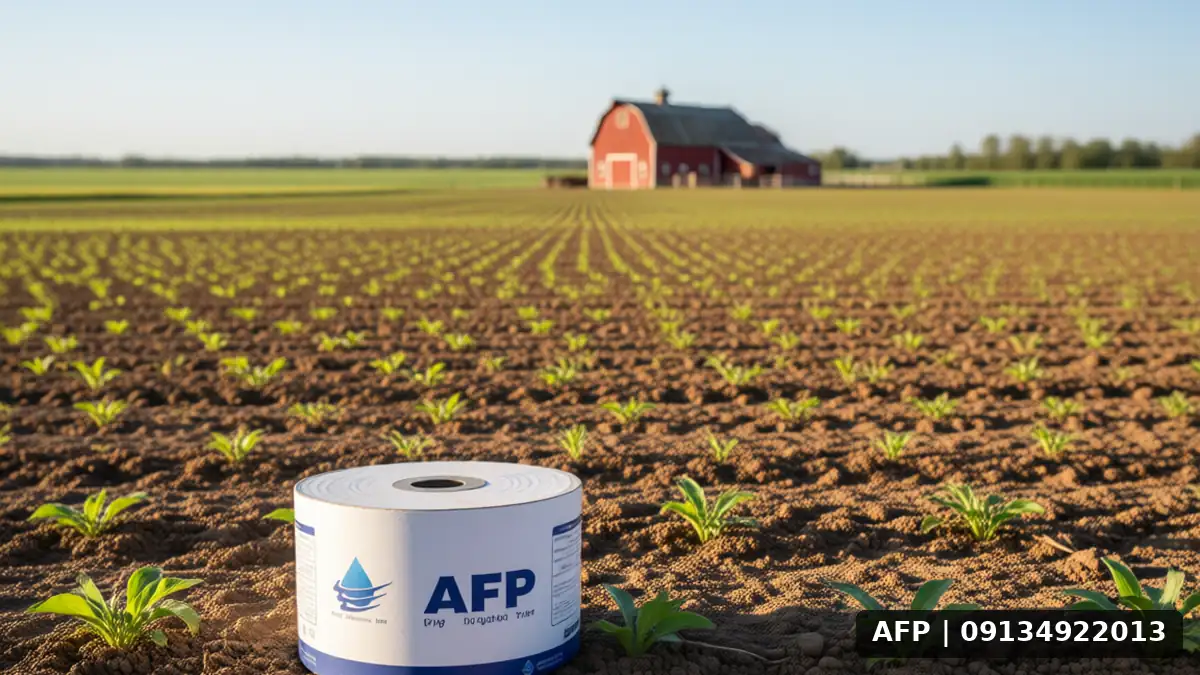
Drip tape indicators are generally single-use items. If you keep the roll unopened and store it in a dark, cool place, it may still be usable next year. However, the best solution is to purchase it when needed.
How can I prevent clogging of the emitters?
Using an appropriate filter, changing the filter every two weeks, and washing the tape before storage are the most important methods. Additionally, avoid using water-insoluble chemicals directly in the drip tape system.
Summary: Smart Selection for Sustainable Irrigation
Comparison 20 cm drip tape, 1000 m roll Comparison with other brands shows that “cheapest” is not always “best.” Reputable brands with greater thickness and higher UV resistance reduce replacement costs and the risk of uneven irrigation. 1000 m rolls, due to their flexibility, are an excellent option for large-scale farms that do not want to be left with excess tape inventory.
Our final recommendation is to determine the tape type before purchasing, based on crop type, irrigation network pressure, and field conditions. Use certified, high-quality brands and always keep a spare roll on hand. To understand water optimization for specific crops, you can refer to the guide on blue chickpea seed rate per hectare (which is also applicable to other crops regarding resource management) or more specialized guides. Additionally, studying Drip tape guide for tomatoes can be useful in selecting the appropriate emitter type and groove for this crop.