Trapezoid Strip Spacing in Onion Seedling Cultivation: Recommended Standards
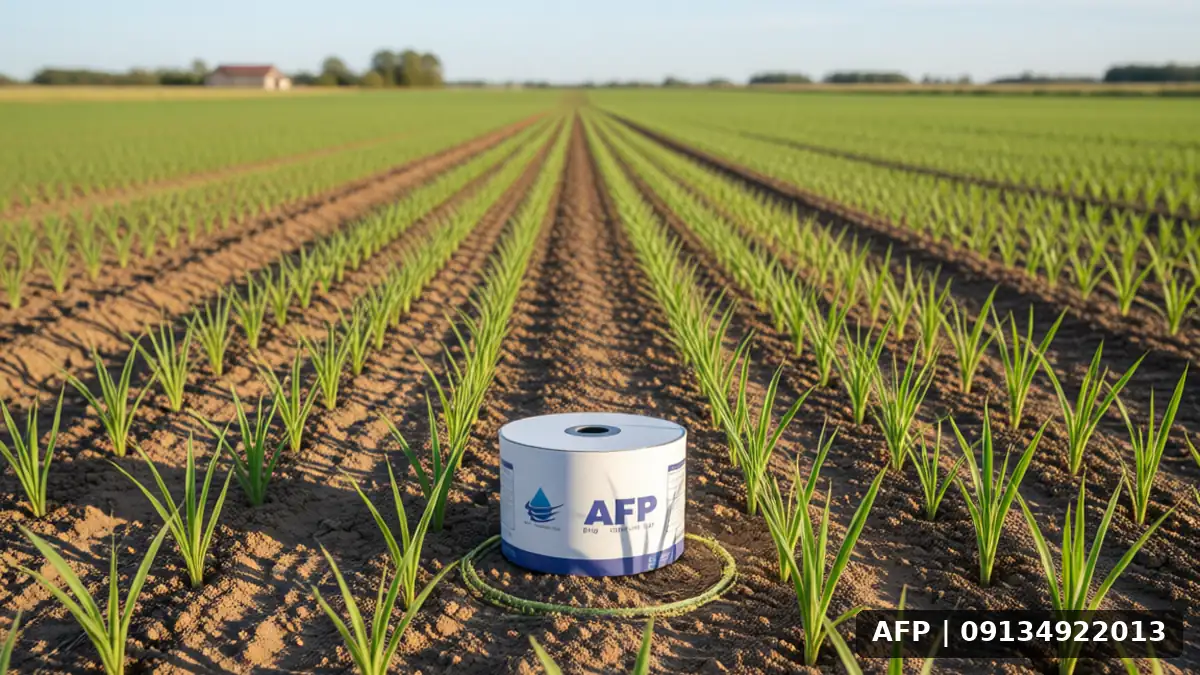
Determination Tape line spacing in green onion cultivation This is one of the most critical decisions in designing drip irrigation systems. Due to its short growing cycle, high sensitivity to water stress, and the need for rapid initial growth, green onion requires precise attention to irrigation component layout. This comprehensive guide examines the recommended standards for tape line spacing from the perspective of precision agriculture to ensure uniform root establishment and prevent water waste. The process requires a deep understanding of the plant’s root architecture and growing medium properties to achieve an exact balance between water delivery and root aeration. Ignoring these principles can lead to root constriction, reduced yield efficiency, and ultimately the loss of vegetables in the early stages. Therefore, irrigation engineering must be in complete alignment with the planting schedule.
Fundamentals of selecting tape line spacing in green onion
To properly understand Amount of sesame seed per hectare Keep in mind that every crop has its specific logic. Onion is typically planted at high density. The drip line spacing must align perfectly with the row spacing. If the row spacing is 40 cm, the drip line must be placed exactly under the planting row to ensure the entire root zone remains moist. The gold standard is that the center-to-center distance between two drip lines equals the planting row spacing. Even a 5 mm deviation can cause a root shading effect and reduce water uptake by immature roots. This requires precise measuring tools during installation to prevent human error. Additionally, drip line alignment with main pipe lines must be perfect to maintain uniform hydraulic pressure across the field and prevent uneven root growth. In onion fields, where spacing is tight, even millimeter-level errors can affect final produce quality and cause uneven plant growth. Therefore, precision during the installation phase is more critical than at any other stage and requires continuous supervision.
The Impact of Soil Type on Spacing
The soil profile plays a decisive role in drip line infiltration. In sandy soils, irrigation should be more frequent and at shorter time intervals, but the drip line distance from the plant base should be slightly farther (approximately 10 to 15 cm from the row center) to prevent water saturation and encourage roots to grow toward deeper layers. Conversely, in clay and heavy soils, the drip line distance from the row center can be closer (5 to 7 cm) because lateral water infiltration is lower. [[ [IMAGE_1] ]]
Sizing and Row Layout Standards
Optimal performance for onions is achieved when the system fixed drip line properly calibrated. Recommended spacings for modern crops:
- High-density planting: Row spacing of 35 to 40 centimeters. Use 16 mm drip tapes with an emitter spacing of 30 centimeters.
- Standard planting: Row spacing of 45 to 50 centimeters. Use 16 or 20 mm drip tapes.
- Concentrated planting (Center Pivots): Larger spacings of 80 to 100 centimeters. In this case, continuous drip tape lines are used under the main irrigation pipe.
When purchasing components, ensure you select certified drip tape to prevent the need for replacing leaky lines in future seasons. System stability helps extend the productive life of chive crops. In addition to wall thickness, the polymer material used in the drip tape must also be resistant to biological decay. Certified drip tape meets industrial standards that guarantee quality. Using low-quality tape can lead to emitter clogging and system inefficiency. Also, ensure that connections between the tape and the main line are fully secure to prevent leaks at junction points.
Practical tips for implementing drip tape spacing
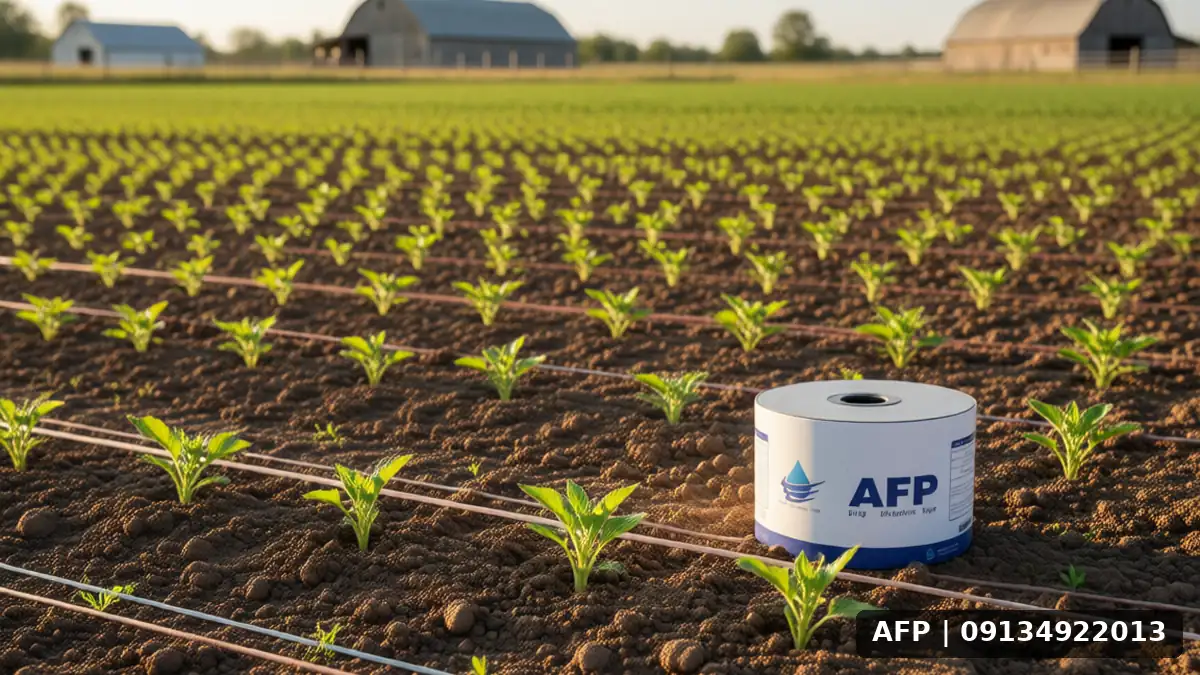
Final on-farm operations are critical. Always use constant pressure hoses to prevent pressure drop at the end of the hose. In chives, roots are highly active during the first month; therefore, the distance from the drip tape to the seedbed floor must be less than 10 centimeters. If you are using a drip tape system, a complete guide on drip tape spacing in fields is highly practical.
- Distance of drip tape center from the planting row axis: 5 to 10 centimeters.
- Drip tape burial depth in the seedbed: exactly level with the seedbed floor (recommended: 5 to 7 centimeters).
- Covering the drip tape with soil: prevents washout and physical damage to the tape.
- Leak inspection before planting: minor leaks on the drip tape can cause weed growth in that specific row.
[[ [IMAGE_2] ]]
Irrigation management based on ambient temperature
The two biggest enemies of green onion in drip irrigation are seed rot in wet soil and soil dryness during peak heat. By adjusting the drip line spacing, you can control the wetted zone volume. In hot weather, choose a smaller spacing to ensure higher flow rates; in cool weather, increase the spacing to prevent waterlogging. Combine these settings with Green onion drip irrigation planting method to ensure the system’s lifecycle is integrated. It is important to remember that green onions have delicate roots and are highly sensitive to sudden changes in humidity. Therefore, stability in irrigation is more important than volume. Continuous changes in irrigation lanes can cause root damage. Also, attention to wind direction and shading is crucial, as shade can affect evaporation rates and plant moisture requirements.
Frequently Asked Questions (FAQ)
Does the drip line spacing for green onions differ from that for mature onions?
Yes. Green onions are usually planted more densely and have shallower root systems. Therefore, the drip line should be placed exactly at a depth of 5 to 7 cm with shorter emitter spacing (30 cm). This differs from large onions, which, due to their growth, require deeper space. However, with green onions, the goal is rapid leaf growth, and the roots spread across the soil surface. Therefore, the main drainage layer should be placed at a shallow depth to keep moisture available to the plant and prevent deep leaching.
What is the recommended distance between the drip line and the main pipe?
Spacing must be arranged so that the pressure drop at the end of the hose is less than 10%. Using hoses with a 25 millimeter diameter is recommended for 10-meter rows. For longer lines, the pipe diameter must be increased to ensure an acceptable pressure drop. Pressure drop calculations should be performed using specialized irrigation software. Ignoring this point will cause emitters at the end of the row to underperform, resulting in weak plants in that section. Additionally, the connection between the drip tape and the pipe must use appropriate fittings (T-Connectors) to prevent leaks.
How do we adjust the drip tape spacing if an automatic system is not available?
You can use drip tape pipes with controlled leakage. Determine the spacing based on the lettuce harvest per hectare and calculate accordingly; onion seedlings are a high-density crop. In this case, manual pressure management is critical. Using a Dripper Pressure Compensator at the end of the tape can compensate for pressure drop caused by hilly terrain. Additionally, valves must be closed and opened carefully to ensure uniform pressure across all tapes. Otherwise, downstream rows will remain dry, and upstream rows will suffer from waterlogging and decay.
Conclusion and final recommendations
Adherence to Drip tape spacing for onion seedling cultivation This is the only way to achieve uniform root development and a consistent quality crop. Start with the standard 40-centimeter row layout, lock the drip tape depth at 5 to 7 centimeters, and use high-quality tapes Drip irrigation for onion planting to benefit. If you wish to consider other crops as well, studying vegetable yield rates can broaden your perspective. Ultimately, always focus on combining drip tape with root drainage checks to optimize the system. [[ [IMAGE_3] ]]