Tipe Belt Drip Irrigation for Full-Cover Calian Cultivation: Benefits and Practical Tips
Introduction: The Importance of Optimizing Water Resources in Celery Cultivation
Celery cultivation, due to its high moisture requirements and specific climatic conditions, has always been a primary challenge for farmers. Under drought conditions and limited water resources, the use of modern irrigation technologies such as Drip irrigation using tape lines can serve as a turning point in improving efficiency. Tape irrigation, recognized as a low-consumption method, not only prevents water waste by precisely directing water to plant roots but also ensures uniform moisture distribution in the root zone. In this section of the article, we aim to provide a specialized and practical perspective focusing on the advantages of this system in celery cultivation.
Climate change and freshwater scarcity in many agricultural regions have intensified the need to adopt direct irrigation methods. Drip irrigation using tape lines is specifically designed for small-leaf vegetables such as celery, reducing evaporation and water loss to create conditions for better plant growth. We will discuss the technical and operational details of this method below.
Specialized Advantages of Drip Irrigation Using Tape Lines in Celery Cultivation
Improving Water Use Efficiency and Reducing Losses
One of the key advantages of using tape lines in drip systems is the significant reduction of water losses through evaporation and runoff. In celery cultivation, where soil surfaces are typically kept moist, precise control of the water volume entering the topsoil layers is possible with tape lines. This allows farmers to provide only the amount of water the plant needs, preventing over-saturation that causes root diseases. To better understand water volume relative to surface area and its precise management, you can refer to the section on Barley seed rate and water requirement per hectare Please refer to it to better analyze resource overlap.
Improving root zone environment and reducing water delivery stress
Columnea is a plant that is sensitive to sudden changes in moisture. The drip tape creates a stable, enclosed channel for water delivery, ensuring that moisture moves gradually and uniformly toward the roots. This reduces physiological stress on the plant and increases the final yield of the crop. Additionally, this method prevents the leaching of nutrients from the deeper soil, as the amount of water consumed is significantly lower compared to flood or sprinkler irrigation methods.
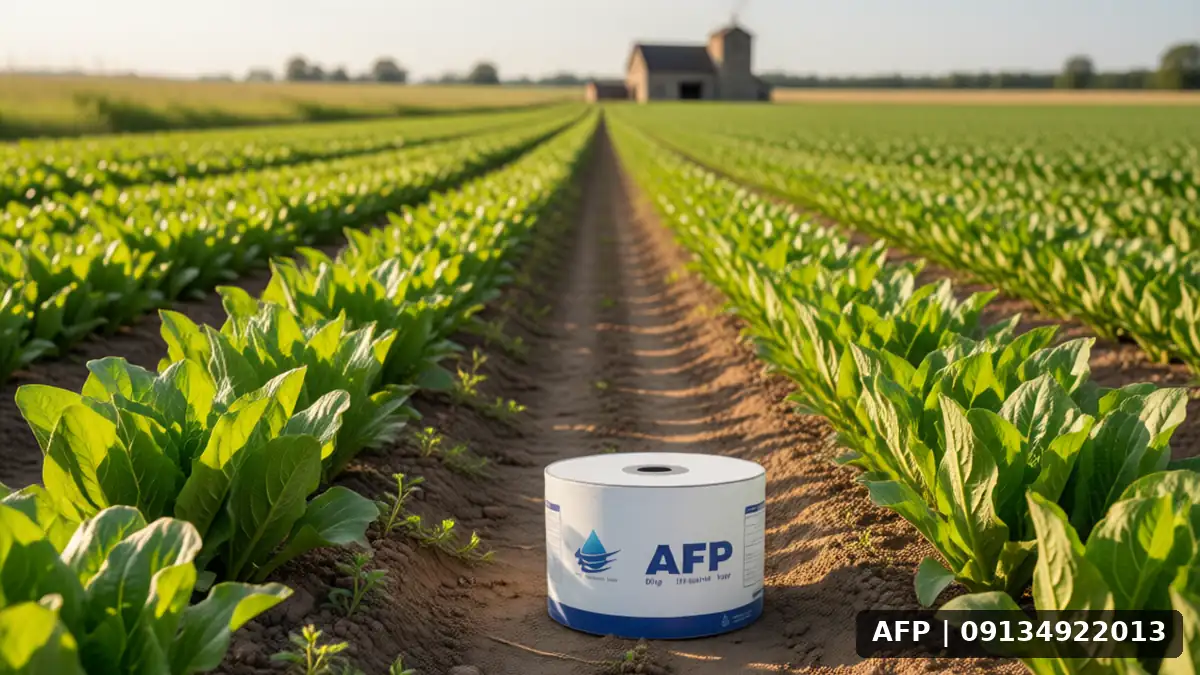
Besides improving moisture, fertilization management via a drip system (liquid feeding) is also facilitated by drip tape. Columnea roots can absorb fine nutrient particles with greater precision. This advantage is particularly vital during the rapid growth stage of Columnea, which requires intensive nutrition. [[ [IMAGE_1] ]]
Components and installation tips for drip tape
Selecting the appropriate tubing for drip tape
In implementation, selecting the right pipe type is a key factor for drip lines. Typically, HDPE pipes are used for mainlines, but for drip lines, specialized plastic pipes or ground-adhered tubing are recommended. However, in hybrid systems that require high-pressure conveyance, HDPE pipes remain a viable option. You can learn more by reviewing the comprehensive guide on HDPE 90 Pipe: A Comprehensive Guide, Applications, and Benefits in Irrigation, to better understand their durability and mechanical properties and match them to your specific needs.
It is essential that drip lines are accurately installed and mechanized to ensure proper burial depth below the soil surface (typically 10–20 cm within the complete root zone of the crop). Any kinks or improper adhesion of the drip line to the soil can obstruct water flow and create uneven root environments. In some advanced systems, incorporating standard chain lines alongside the drip lines is considered to enhance and more uniformly distribute water on the surface. In this context, reviewing the technical specifications of Standard linear Phosphor can assist in selecting appropriate auxiliary components for the system.
Practical Tips for Pressure Management and Filtration
For the drip system to operate correctly in a fully established crop, system operating pressure must remain stable and within the optimal range. Pressure fluctuations cause uneven water application. Using appropriate filters to prevent clogging of the drip emitters is critical; blocked drip lines can rapidly lead to root zone dryness and severe yield reduction in the crop.
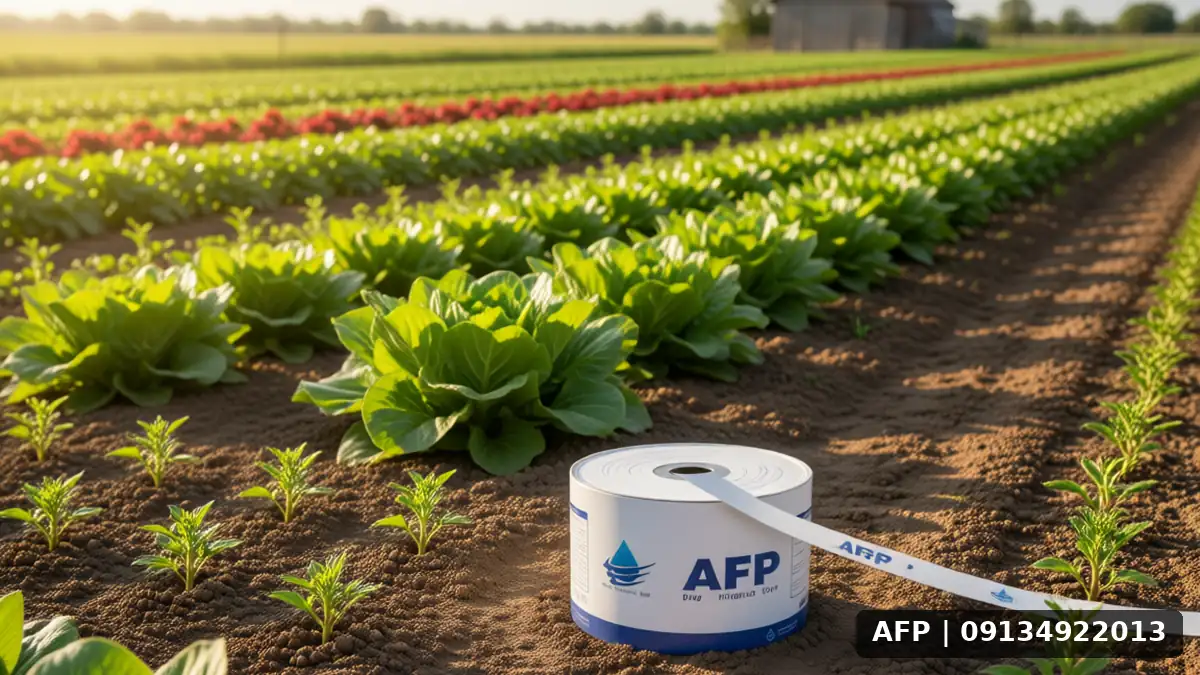
Additionally, irrigation scheduling must be synchronized with the plant’s root development pattern. During the early planting stage, when roots are superficial, the tape line depth should not be too deep to ensure root access to water. As the plant grows, the irrigation schedule can be adjusted to accommodate increasing root depth. [[ [IMAGE_2] ]]
Performance comparison with other irrigation methods
Tape line drip irrigation vs. subsurface irrigation
Many farmers confuse tape line drip irrigation with subsurface irrigation. In contrast to subsurface systems that release water directly through underground pipe networks, tape line drip irrigation delivers water via surface or semi-buried pipes. Tape line is more efficient for fast-growing vegetables like endive because access to the pipes for cleaning and maintenance is easier. Subsurface systems, on the other hand, are primarily used for grain crops and trees. For a detailed analysis of the pros and cons of that method, you can read the article “Everything About Subsurface Irrigation” and carefully compare the two methods.
Impact of tape line irrigation on crop quality and productivity
Improved commercial quality of endive
One of the primary goals of growing endive is to produce fresh vegetables with high shelf life. Tape line drip irrigation creates a stable root zone environment without stress, promoting uniform growth of leaves and stems and preventing rot caused by excessive soil surface moisture. This directly leads to higher market prices and reduced post-harvest loss. Farmers believe that plants irrigated with tape line systems have better flavor and appearance, giving them a greater share of the market.
To better understand how efficiency is calculated for different crops, you can take a look at the guide Chickpea seed rate per hectare Although the crop is different, the principles of root and moisture management share similarities in both cases, allowing you to better understand the optimal calculation algorithm.
Frequently Asked Questions (FAQ)
Is tape drip only used for vegetables?
No. Although tape drip performs very well for leafy vegetables such as kale, spinach, and lettuce, it can also be used to irrigate the inter-row zones in certain row crop seed systems with wide row spacing. However, individual drippers are usually used for orchards.
How much does it cost to maintain a tape drip system?
Maintenance costs primarily include filter cleaning, periodic pipe inspection for leaks, and replacement of damaged tape. Due to the durability of polyethylene pipes, the useful life of tape drip is usually 5 to 8 years, which is considered a cost-effective long-term investment.
What is the impact of the plant canopy on drip lines?
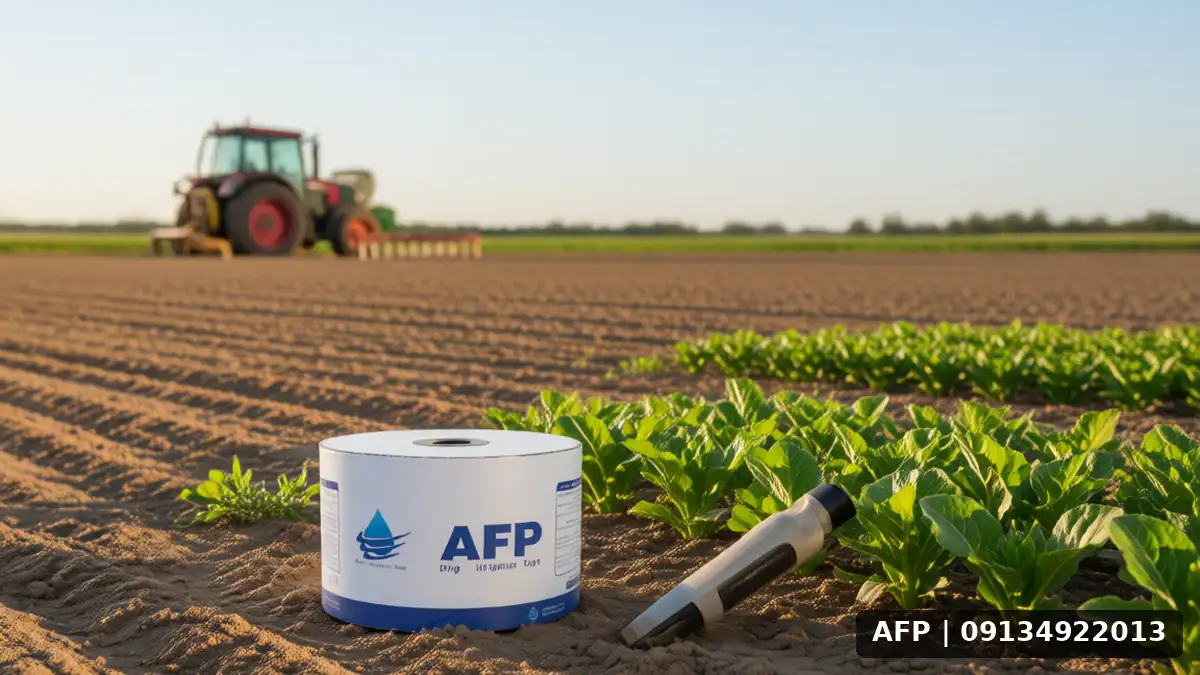
The most critical aspect of drip lines is that if the plants shade the tubing during the growth stage, it may cause physical or thermal damage to the tubing. Therefore, planting canna should be done in a manner such that the irrigation lines do not end up under the plant canopy or, in case of shading, heavier and UV-resistant tubing should be used.
To better understand the crop growth stages and their implication for irrigation scheduling, you may want to read the article “stages of drip line cultivation.” It can help you accurately align the irrigation timing with the growth phases of canna. [[ [IMAGE_3] ]]
Conclusion: a sustainable future through precision irrigation
Use of drip line-irrigation for full-rotation canna cultivation in canna cultivation, is not merely a technical approach, but a management methodology that reduces costs and improves yields. Considering benefits such as reduced water usage, prevention of root diseases, and precise control of moisture levels, this system has become an essential tool in modern agriculture. Growers who implement this technology are more resilient to weather extremes and deliver high-quality products to the market.
It must be emphasized that successful implementation of drip irrigation requires sufficient knowledge of proper pipe layout, correct filtration, and precise irrigation scheduling based on local soil and climate conditions. Since every region has its own specific characteristics, consultation with irrigation specialists and conducting small-scale field tests before full-scale implementation is recommended. Ultimately, moving towards precise and sustainable irrigation is a significant step towards food security and water resource conservation.