Sorghum Yield per Hectare Using Tip Line Drip Irrigation
Introduction to the Importance of Irrigation Optimization in Sorghum Farms
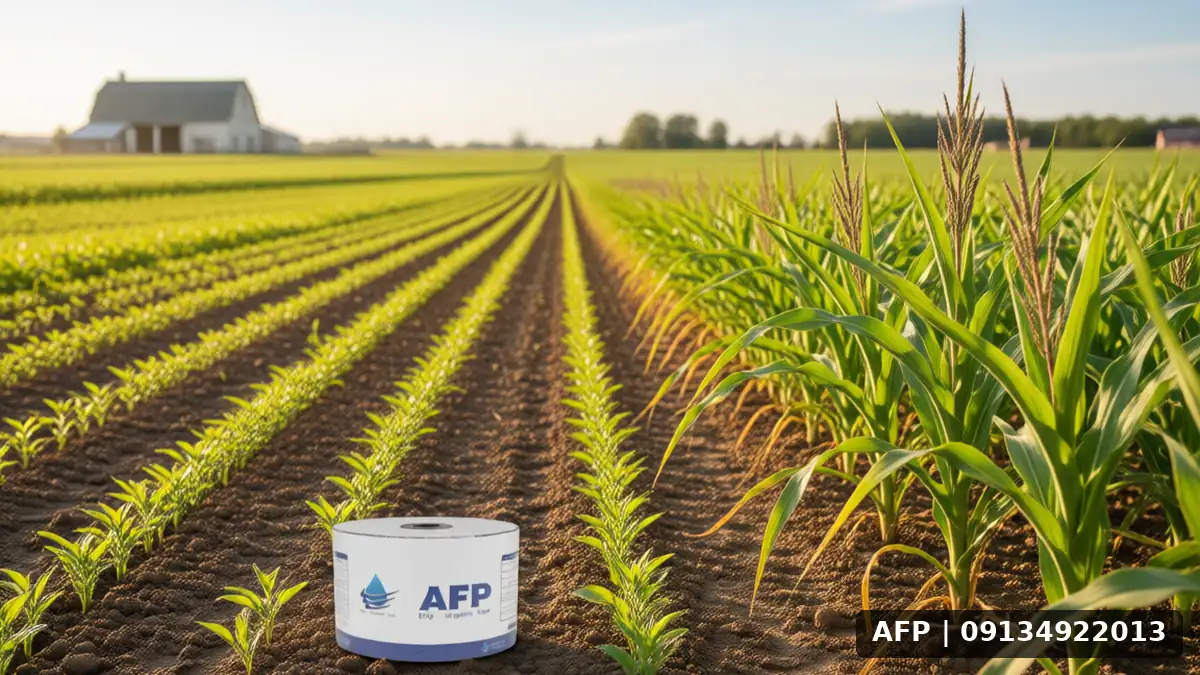
Sorghum is a warm-season crop that holds a significant place in agricultural programs in regions with hot, dry summers. Given this plant’s high water requirement and sensitivity to drought stress, efficient irrigation methods can play a decisive role in increasing the per-hectare yield of sorghum . Among modern irrigation systems, the strip-tape method has gained attention among growers due to uniform water distribution, reduction of losses from evaporation, and the potential for optimal grading. This method not only improves water resource use efficiency but also facilitates vegetative growth and appropriate flowering by providing adequate moisture to the root zone. The following section reviews technical details and provides practical points and key indicators for improving performance.
Factors Influencing Sorghum Yield per Hectare
Climatic Conditions and Variety Selection
Sorghum is highly sensitive to weather conditions. Selecting native or improved varieties that are compatible with the local climate is the first step toward achieving satisfactory performance. In hot, dry regions, varieties with heat and drought tolerance can provide higher efficiency when using the strip-tape system. Optimizing the planting schedule and reaching optimal temperature ranges directly impacts the per-hectare yield of sorghum affects.
Soil characteristics and water retention capacity
Soil structure is a key parameter in determining the drip zone spacing and the number of irrigation lines. Loose, sandy soils, if not managed properly, may lose moisture quickly. Conversely, heavy clay soils, without adequate drainage, may lead to root crowding and rot. Using precise soil analysis to determine rooting depth and liquid capacity helps optimize the drip tape system.
Technical aspects of the drip tape system in sorghum fields
Selection of pipe diameter and working pressure
In designing a drip tape system, selecting the main pipe diameter based on planting line spacing and slope length is of particular importance. Plastic pipes with various diameters, such as 50, 75, and 90 mm, are used depending on field conditions. [Internal Link: Guide to Irrigation with 90 mm Plastic Pipe](https://navar-abyari.ir/90mm-plastic-pipe-irrigation-guide/). Using appropriate pressure that simultaneously prevents uneven spray distribution and protects the pipe is essential to prevent pressure drop at the end of long lines.
Zone valves and zone width
The width of the drip tape directly affects the volume of water flowing uniformly through it. In sorghum fields, which typically have specific planting line spacings, adjusting the tape width to ensure all roots fall within the irrigation zone is essential for optimizing water use and preventing stress in the plants. Reviewing and aligning with [internal link: Standard Rules for Grain Planting Spacing](https://navar-abyari.ir/bean-strip-spacing-optimal-cultivation-standard/) can help correctly calibrate the relationship between planting slope and irrigation tape coverage.
Selecting Drip Tape Thickness
Drip tape capacity must be adjusted according to line pressure and field slope. For drip tape systems in sorghum fields, using tapes with a uniform thickness of 4 to 8 mm, depending on soil conditions, is generally recommended. For more details and technical optimization, refer to [internal link: Optimal Wall Thickness for Drip Irrigation Tape](https://navar-abyari.ir/%d8%b6%d8%ae%d8%a7%d9%85%d8%aa-%d8%a7%db%8c%d8%af%d8%b9%d8%a7%d9%84-%d8%ac%d8%af%d8%a7%d8%b1%d9%87-%d9%86%d9%88%d8%a7%d8%b1-%d8%a2%d8%a8%db%8c%d8%a7%d8%b1%db%8c-%d8%aa%db%8c%d9%85-2/). Tape thickness directly impacts system durability and uniform water distribution throughout the line.
Practical Tips for Optimizing Sorghum Irrigation Management
Irrigation Scheduling and Plant Moisture Requirements
A key factor in increasing sorghum yield per hectareis coordinating irrigation with plant growth stages. During early vegetative growth and flowering, water demand is higher. Conversely, during the grain ripening stage, gradual reduction of irrigation is recommended to prevent grain shriveling and improve quality. Using soil moisture sensors can ensure irrigation occurs precisely when the plant needs it, preventing water waste.
Planting and Management of Row Spacing
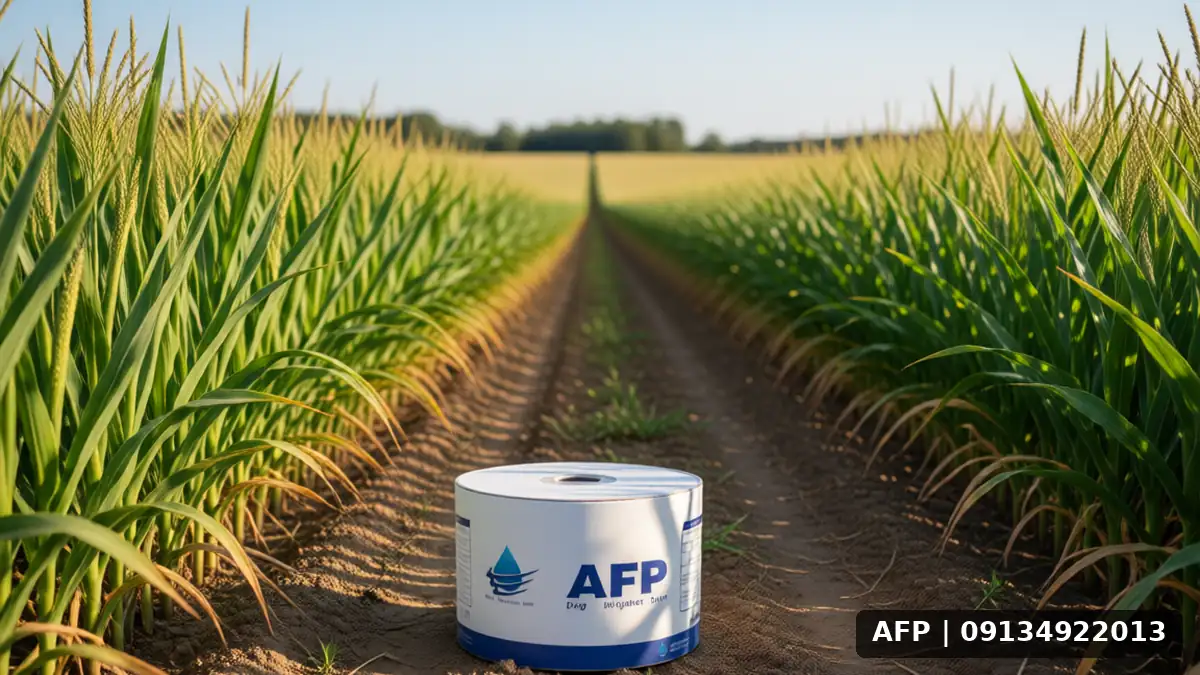
In banded drip irrigation systems, sorghum row spacing and wetting distance are critical factors for ensuring adequate soil moisture. Planting rows should not be too far from the drip line to ensure the entire root zone is within the irrigation wetted area. Conversely, overly dense planting can negatively impact yield due to competition for water and light. Therefore, optimizing planting density and row spacing should be done based on field conditions and [internal link: How much wheat can you grow per hectare?](https://navar-abyari.ir/%d9%85%db%8c%d8%b2%d8%a7%d9%86-%d8%a8%d8%b1%d8%af%d8%a7%d8%b4%d8%aa-%d9%85%d8%a7%d8%b4-%d8%af%d8%b1-%d9%87%da%a9%d8%aa%d8%a7%d8%b1/).
Frequently Asked Questions
Is a banded drip irrigation system suitable for sorghum?
Yes, banded drip irrigation is highly effective for sorghum cultivation due to its ability to precisely control wetting distance, provide a stable water flow, and reduce water loss. With proper design, it can achieve higher yields compared to surface irrigation.
How many hours per day should banded drip irrigation run?
Irrigation duration depends on factors such as line pressure, planting slope, and ambient temperature. Typically, because higher irrigation volumes are required during the vegetative growth stage, an irrigation cycle of 4 to 6 hours may be used. Fine-tuning based on the plant’s actual water needs is recommended.
Is drip tape irrigation feasible for large-scale sorghum farms?
Given its flexibility and automated control, drip tape systems can be used for large-scale sorghum farms. Using precise flow control and automation, large systems may offer better stability and moisture uniformity.
Conclusion and Final Recommendations
Sorghum yield per hectare depends directly on proper irrigation management and planting slope. Drip tape systems, by providing uniform water and reducing losses, are an effective solution for increasing farm efficiency. The correct selection of tape thickness, operating pressure, planting grade, and irrigation timing is key to achieving desired performance. Due to the variety of agricultural conditions, using specialized advice and detailed field analysis is recommended to optimize results.
Related articles: miqdori daromadi zurati meksikii dar hektar, thyme yield per hectare guide iraq, Related article Related article Related article Related article, forage corn yield per hectare guide