Comprehensive Guide to Boosting Garlic Yield per Hectare Using Drip Line Irrigation
Introduction: The Role of Irrigation in Determining Garlic Yield
Garlic (Allium sativum), as one of the oldest aromatic and medicinal vegetables, holds a special position in domestic and international agricultural markets. Success in cultivating this crop requires a deep understanding of the plant’s root and physiological needs. One of the main challenges for farmers in arid and semi-arid regions is the optimal management of water resources. Traditional irrigation methods, such as flood irrigation, often lead to significant water waste, soil salinization, and sometimes root suffocation. In contrast, modern drip irrigation systems and specifically drip tapeprovide a precise and efficient solution for achieving maximum garlic yield per hectare. Drip tape offers controlled, low-pressure, and uniform water distribution in the root zone, enabling precise management of moisture levels that directly impacts the formation and bulb expansion of subterranean garlic.
Drip Tape Operating Mechanism and Its Impact on Garlic Growth
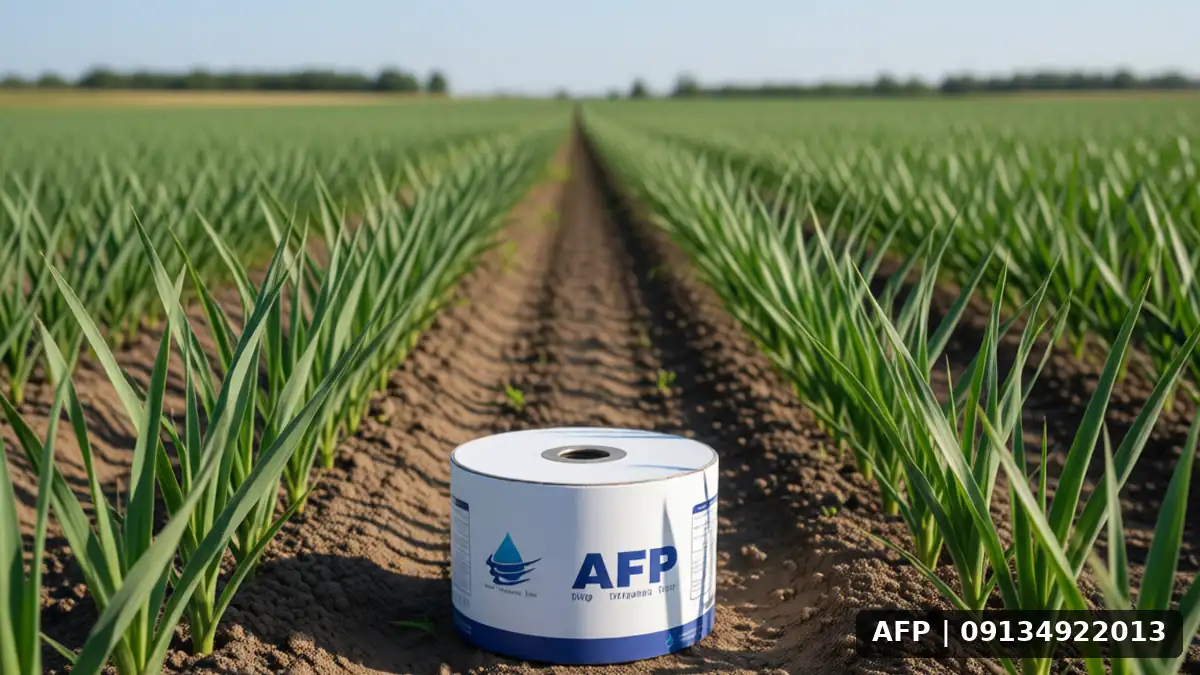
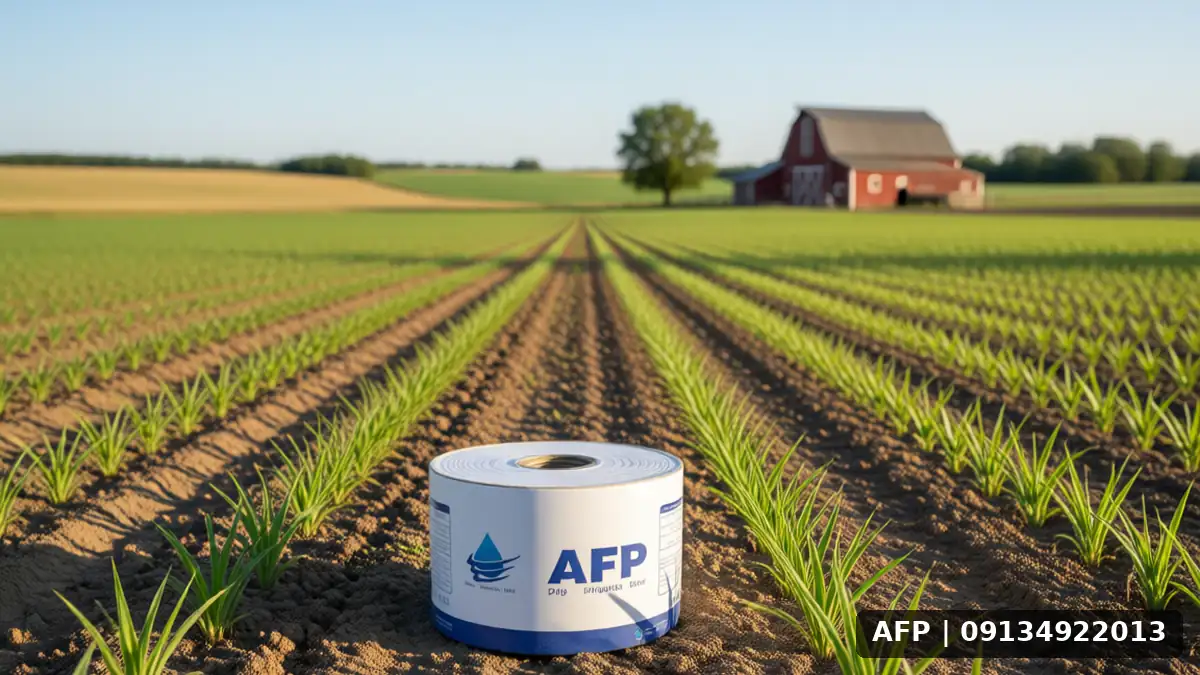
Drip tape is a thin polyethylene pipe with micro-holes, typically laid suspended or on the soil surface along crop rows. This system converts water into fine droplets under low pressure, distributing them near the roots. For garlic plants, this method is ideal because garlic roots are shallow and have limited penetration depth. Using drip tape maintains moisture in the upper soil layers while preventing soil saturation and oxygen depletion in the root zone. Sufficient oxygen for root respiration is a critical factor in nutrient uptake and organic material translocation, which leads to greater bulb expansion. Additionally, uniform temperature distribution around the roots reduces heat stress, resulting in more consistent scale development and decreased garlic malformation. This uniformity in growth directly leads to an increased harvest index and improved commercial product quality.
Key benefits of using drip tape in garlic cultivation
- Water resource savings: By reducing direct evaporation from the soil surface, drip tape can reduce water usage by up to 40% compared to conventional irrigation while fully meeting root moisture requirements.
- Weed reduction: Since moisture is maintained only in a narrow strip around the plants, weeds in the inter-row spaces face water stress, reducing their competition for resources.
- Possibility of more precise fertilization: A key advantage of drip tape is the ability to perform fertigation. Injecting soluble fertilizers with the water allows for faster uptake of nutrients by the shallow roots of garlic.
- Improved bran quality: Allowing the soil surface to dry partially between irrigation intervals helps garlic shoots harden off and prevents premature bolting.
Practical strategies for optimizing drip tape in garlic fields
To achieve maximum garlic yield per hectare with drip tape, merely installing the system is not enough; precise technical and agronomic adjustments are critical. Below, we examine the key parameters in detail.
Selecting the appropriate material and thickness for drip tape
The durability of drip tape during the growing season and in subsequent years depends on the material and wall thickness of the irrigation tape. Very thin tapes (under 0.2 mm) are vulnerable to damage from field irrigation and sun exposure by animals. However, very thick tapes may increase initial costs and reduce water flow rate from the holes. For garlic, tapes with medium thickness (0.3 to 0.4 mm) and micro-holes (0.4 to 0.8 mm) are recommended to balance durability and water delivery rate. Additionally, using anti-clog tapes to prevent hole blockage from sediment deposits is essential.
Determining the correct drip tape spacing
The distance of the drip line from the garlic planting row is a critical parameter. If the line is too close to the stem, excess moisture at the stem can lead to the growth of fungi and leaf-rosette diseases. If it is too far away, the shallow roots will face water deficiency. Generally, a distance of 5 to 8 centimeters from the center of the planting row is the optimal point. The placement of the drip line in sugar beet also follows similar principles, but for garlic, due to its higher sensitivity to excess moisture, more caution is required. The farmer must determine the Wetted Area of the drip line in the target soil through soil moisture tests and adjust the spacing accordingly.
Irrigation planning based on the growth stages of garlic
The irrigation needs of garlic are not constant throughout the growing season and must be controlled via drip irrigation:
- Initial vegetative stage: At this stage, a small but consistent amount of water (every 2 to 3 days) is required for germination and root establishment.
- Active growth stage: As the leaves grow larger, the water requirement increases. The drip line should be adjusted so that root zone moisture remains at the optimal level.
- Garlic formation stage: Approximately 3 to 4 weeks before harvest, the irrigation schedule should be gradually reduced. Heavy irrigation at this stage causes the grain to become loose and reduces the shelf life of the product. Drip tapes allow farmers to precisely control this gradual reduction.
Economic comparison and efficiency: Drip tapes vs. other methods
Economic analysis shows that although the initial installation cost of drip tapes is higher than that of regular hoses, the return on investment through increased yields and reduced labor and water costs is highly profitable in the long term. Compared to sprinkler irrigation, drip tapes lead to more uniform plant growth across the entire field. Managing drip tapes requires only a pump and a timer, and it eliminates the need for furrowing the beds for irrigation. These systems also allow for the simultaneous application of irrigation and fertilization (Fertigation), which greatly increases the uptake of materials such as phosphorus and potassium, which are key in forming garlic cloves. Farmers can multiply the positive effects by combining drip tapes with appropriate soil covers.
Common challenges and technical solutions
In practice, some problems can reduce the effectiveness of drip tapes. Clogging is the most common issue. To prevent this problem, the use of two-stage filters (trash and screen) is strongly recommended. Also, exposure of the tapes to UV radiation and high temperatures causes polymer degradation. It is better to gently bury the tapes in the soil (at a depth of 2 to 3 centimeters) to prevent both physical damage and thermal degradation. Also, the operating pressure of the system should be adjusted according to the length of the tape to prevent uneven water distribution at the beginning of the line. Using pressure regulators at the beginning of each line ensures that plants at the end of the line are irrigated as much as plants at the beginning of the line.
Frequently Asked Questions (FAQ) about drip irrigation and garlic
1. Can drip irrigation be used for all types of garlic?
Yes, but the timing and irrigation volume must be adjusted based on the climate and garlic variety (small or large cloves). Indigenous garlic varieties with drought tolerance can survive with lower irrigation doses.
2. What is the best time to install drip irrigation for garlic planting?
The best time is simultaneous with garlic planting. Installing the drip lines before planting allows for precise adjustment of the lateral spacing from the plant and reduces damage to young roots.
3. How can I prevent the emitters on the drip tapes from clogging?
It is necessary to use a two-stage filtration system, flush the system initially before connecting it to the pump, and use high-quality water (preferably treated). Additionally, regular flushing of the system at the end of the season is recommended.
4. Which is better for garlic: drip irrigation or rain?
In farms with low and irregular rainfall, drip irrigation has an absolute advantage because it allows precise control over moisture. In very rainy areas, combining drip irrigation with a proper drainage system is the best option to prevent waterlogging.
Summary and Final Recommendations
Deciding to use drip irrigation to increase garlic yield per hectare is a significant step toward modern and sustainable agriculture. This system, through precise irrigation, reduced root stress, and effective fertilizer application, maximizes the growth potential of garlic plants. By following installation principles, selecting the appropriate thickness, and adhering to a staged irrigation schedule, farmers can not only increase their weight yield but also improve the commercial quality of the garlic. It is recommended to conduct a small-scale test on a part of the farm before widespread implementation to align the technical settings of the drip system with the specific soil and climate conditions of the region. Ultimately, combining irrigation technical knowledge with proper agricultural management is the key to achieving maximum productivity and profitability in garlic cultivation. Through proper maintenance and management of the drip irrigation system, its useful life can be extended, and annual operational costs managed.
Related Articles: Related article D988 Related article Related article Related article Related article, mikdori tukhmi shimo dar yak gektar, Drip line spacing for sugar beet: Recommended standards, Related article Related article Related article Related article D8AFD8B1 Related article