Comprehensive Technical Guide to Basil Cultivation Using Drip and Tape Line Irrigation
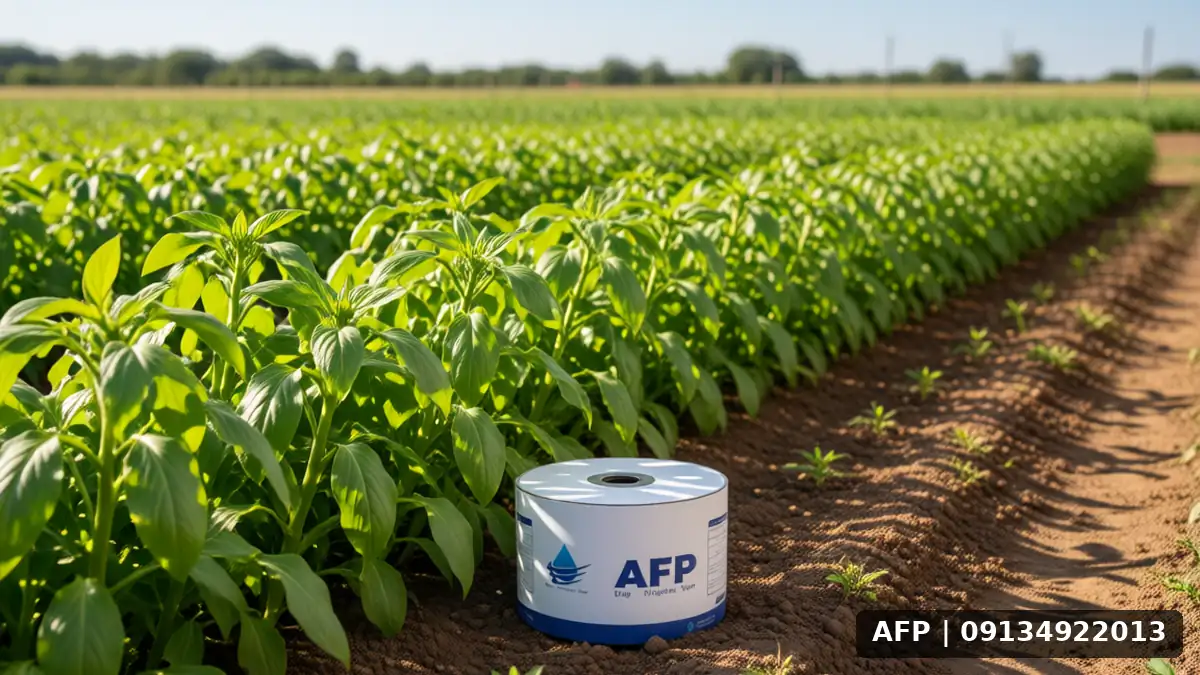
Introduction to Basil Cultivation Using Drip Irrigation and the Necessity of Taper Tape
Basil is an aromatic and medicinal plant that holds a special position in domestic and export markets due to its unique scent and flavor. In addition to its high nutritional value, it has widespread applications in the pharmaceutical and perfumery industries. To achieve maximum productivity and crop quality, it is essential to utilize precision irrigation systems such as taper tape. The use of this method not only helps reduce water consumption but also enables uniform root growth and prevents fungal diseases by maintaining uniform soil moisture. In this comprehensive guide, we will review all technical aspects of basil cultivation, with a focus on irrigation management. The main challenge in growing basil is maintaining soil moisture balance; the plant is sensitive to temporary dryness but is also damaged by excessive saturation of its roots. Taper tape establishes this delicate balance through intermittent and controlled water injection, protecting the farmer from moisture fluctuations. This is particularly important in semi-arid climates where water resources are limited. By applying the correct principles, harvest timing can be optimized, and the quality of essential oils in the leaves can be increased, which directly affects the final crop price. Furthermore, reducing manual handling of the growing bed during the production cycle minimizes labor requirements and enables the expansion of large-scale farms. In the following sections, we will examine each step in detail: bed preparation, irrigation system installation, precise scheduling of irrigation and fertilization, and the economic comparison of this method with other aromatic plants, to provide a complete overview of modern basil management.
Principles of High-Precision Basil Planting and Bed Preparation
Successful basil cultivation begins with proper bed preparation. This plant prefers well-drained, light soils rich in organic matter, with an ideal pH between 6.0 and 7.5. Before installing the irrigation system, weeds must be eradicated from the root zone, and the soil should be tilled and disced to ensure root aeration. Additionally, using healthy, disease-free seeds is the first step toward a successful crop. In mechanized cultivation, maintaining row spacing (approximately 40 to 50 cm) and plant spacing (10 to 15 cm) is essential to ensure adequate light exposure for leaves and prevent excessive crowding. Improper density can lead to high relative humidity under the leaves, creating favorable conditions for fungal rot development, which is difficult to control. Therefore, plant arrangement must be carefully adjusted according to the plant’s morphology. Furthermore, seed or transplant planting depth plays a key role in success. Deep planting may slow initial growth, while surface planting may cause seed damage or desiccation. It is recommended to maintain a planting depth of 2 to 3 cm to ensure appropriate moisture retention. In hot and arid regions, applying mulch (organic or clear plastic) helps significantly preserve soil moisture and suppress weed growth. This mulch acts as an adjunct to the drip irrigation system and stabilizes soil temperature.
- Soil Adjustment: Ensure proper drainage and eliminate root zone compaction through ripping if necessary.
- Drip Irrigation System Installation: Lay pipes immediately prior to planting to prevent damage to drip emitters and injection holes.
- Seed Quality Control: Select varieties compatible with low-water irrigation conditions and high light exposure; perform rooting trials if planting by cuttings.
- Chemical Preparation: Apply an appropriate amount of soil fumigants to control root-feeding pests before planting.
Determining the appropriate planting density directly affects the water demand of the drip tape system. As density increases, the distance between drippers must be reduced and the water volume per dripper decreased to prevent root saturation. For accurate calculation of water volume and required dripper count per unit area, refer to the guide for drip tape for one hectare how it can help farmers estimate costs and water consumption. These calculations must be adjusted based on the drip tape type, system inlet pressure, and lateral line diameter to ensure pressure uniformity throughout the farm.
The vital role of drip tape in moisture and nutrient management for basil
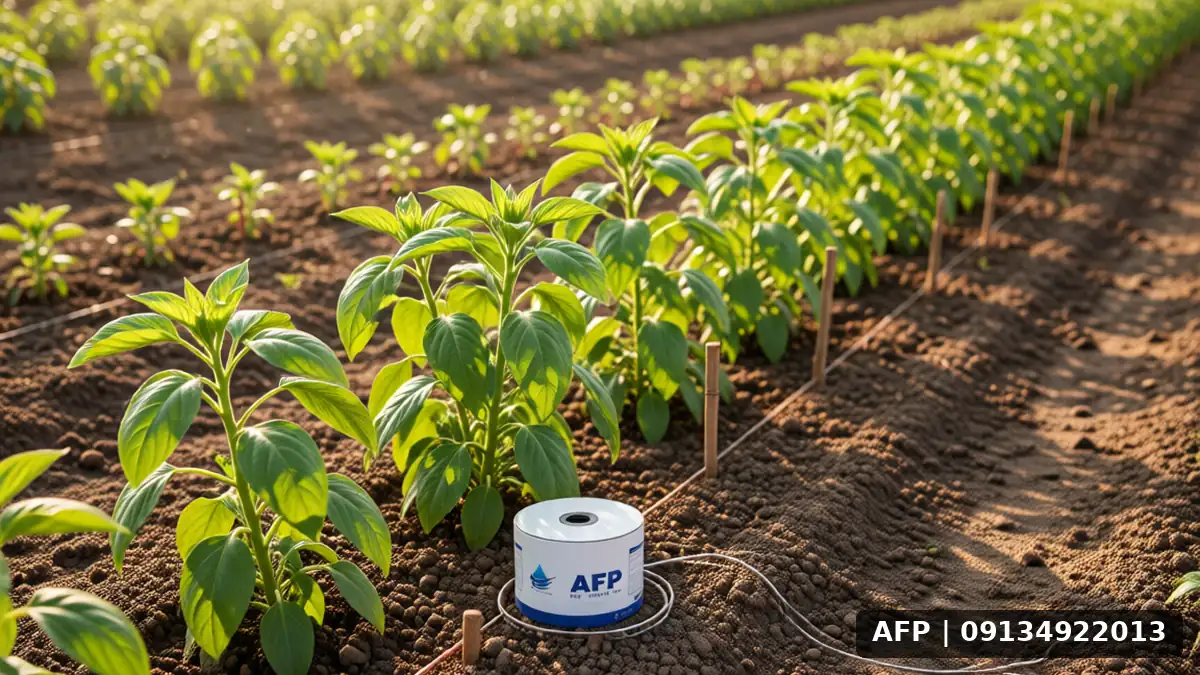
The drip tape system is the optimal choice for basil cultivation due to its uniform water distribution in the rooting zone. This system maintains moisture at the specific soil depth where roots are located. Since basil is sensitive to temporary drought and has shallow roots, maintaining surface and subsurface moisture via drip tape minimizes water stress risk. Conversely, flood irrigation causes root rot, reduces the aroma of seeds, and leads to severe water waste. To better understand the operating mechanisms of these systems and basic precision irrigation concepts, you can refer to the article on light-emitting tape for Romanesco Cauliflower Refer to this simple guide, which explains the technical details of irrigation networks in a straightforward manner. One key advantage of drip line systems is the ability to apply soluble nutrition. Basil is a plant that prefers split feeding and does not respond well to high-concentration fertilizer solutions. By injecting concentrated nutrient solutions through drip lines, nutrients can be placed directly in the root zone. This facilitates the rapid uptake of folic acid, iron, and copper, quickly correcting any nutritional deficiencies. Additionally, maintaining the pH of the nutrient solution is critical to prevent micronutrient precipitation in the emitters.
Irrigation scheduling for various growth stages of basil and detailed management tips
Proper irrigation scheduling is the key to producing highly aromatic crops. Basil has varying water needs at each growth stage. In the initial vegetative stage, water demand is low, and excess watering can cause excessive stem elongation. During the active vegetative stage, as leaf growth accelerates, water volume must be increased. However, before harvest, irrigation should be reduced in intensity and frequency to increase essential oil concentration and improve commercial quality. This shift in irrigation strategy directs the plant’s energy toward producing aromatic volatile compounds rather than vegetative growth. Besides total water volume, irrigation frequency is also crucial. Frequent, low-volume irrigation is preferred for basil over infrequent, high-volume irrigation, as it prevents the repeated drying and rewetting of the root zone.
- Establishment stage: Apply low-concentration, controlled water to promote strong root development and prevent transplant shock.
- Vegetative growth stage: Increase water volume and irrigation frequency to support rapid branch growth and maximize leaf production.
- Pre-harvest stage: Reduce moisture to concentrate volatile compounds and improve product aroma, typically 7 to 10 days before picking.
The best time to operate drip irrigation is early morning or late night to minimize surface evaporation. Due to climate fluctuations, the irrigation schedule must be reviewed weekly. In hot regions, daily irrigation may be required during the peak of summer, whereas in spring and autumn, the interval between irrigation cycles can increase to 2 to 3 days. Alongside water management, attention to plant nutrition is also critical. Basil is sensitive to nitrogen, and the balance of P and K must be maintained in the solution-fed irrigation water. This ensures that nutrients are rapidly absorbed by the fresh and active roots in the moist zone of the drip line. The use of organic nutrient solutions can also improve seed quality.
Farm management, drip irrigation system maintenance, and comparison with other aromatic plants
Monitoring the drip irrigation system, particularly in saline soil conditions, prevents salt deposition. Proper filtration and periodic flushing ensure the lifespan of emitters. Clogging of drip lines is a common issue that, without supervision, can lead to complete root desiccation of basil. It is recommended to use mesh filters with precise pore sizing and anti-scaling systems in the supply reservoir. In addition to basil, cultivation of other aromatic plants is also feasible in farms. For example, examining Rosemary harvest yield per hectare It can serve as a similar model for the economic management of medicinal plant cultivation, although rosemary’s growing conditions are more stringent than basil’s. Rosemary is more drought-tolerant, while basil requires consistent moisture. Understanding the subtle differences between these two plants is crucial for farm planning. Additionally, reviewing economic data for other crops can provide better insight into profitability. For example, the article lentil yield per hectare iraq can offer a comparison between the profitability of aromatic plants and grains in similar climates. Basil has become an attractive option for farmers due to its short planting cycle and the ability for multiple harvests per season. With proper management, several tons of fresh or dried commercial-quality basil per hectare can be produced. A final note regarding pest management: in basil, mealybugs and red spider mites are common, and their growth is accelerated in high-substrate-moisture conditions. Therefore, maintaining soil moisture should not lead to high canopy relative humidity; proper substrate ventilation is essential.
Answering frequently asked questions from farmers about planting basil with drip lines
Is surface irrigation allowed for basil planting? Yes, but crop yield and quality decrease significantly, and the risk of fungal diseases increases. Surface irrigation leads to severe moisture fluctuations, which are harmful to the delicate root system of basil.
What should the distance be between the drip line and the root? It is recommended that this distance be 5 to 10 centimeters so that water reaches the root zone directly. A greater distance causes water waste in the inactive band, while a shorter distance may lead to root suffocation.
What is the duration from planting to harvest for sweet basil? Depending on climate conditions, it takes between 60 to 90 days. In warmer regions, growth is faster, while in cold regions, this period may extend up to 120 days.
Can high-concentration chemical fertilizers be used for sweet basil? No, sweet basil is sensitive to salinity. Using nutrient solutions with high EC causes root burn and reduces essential oil quality. It is better to use mild concentrations with more frequent applications.
For a better understanding of cultivation scale and associated costs, reviewing data related to other plants, such as oat yield per hectare guide can provide a better economic perspective. These guides help farmers calculate the net profit of sweet basil compared to other crops by comparing production costs. It is concluded that sweet basil cultivation with drip irrigation is a sustainable investment that, with continuous monitoring and precise adjustments, yields a high-quality and profitable product. By implementing the principles mentioned in this text, it can be expected that water use efficiency will increase and the commercial quality of sweet basil will reach export-grade standards. Attention to fine details in bed preparation and irrigation scheduling is the main difference between an ordinary farm and a high-efficiency farm.