Drip Emitter Selection Based on Row Spacing: T-Band and Drip Irrigation Principles
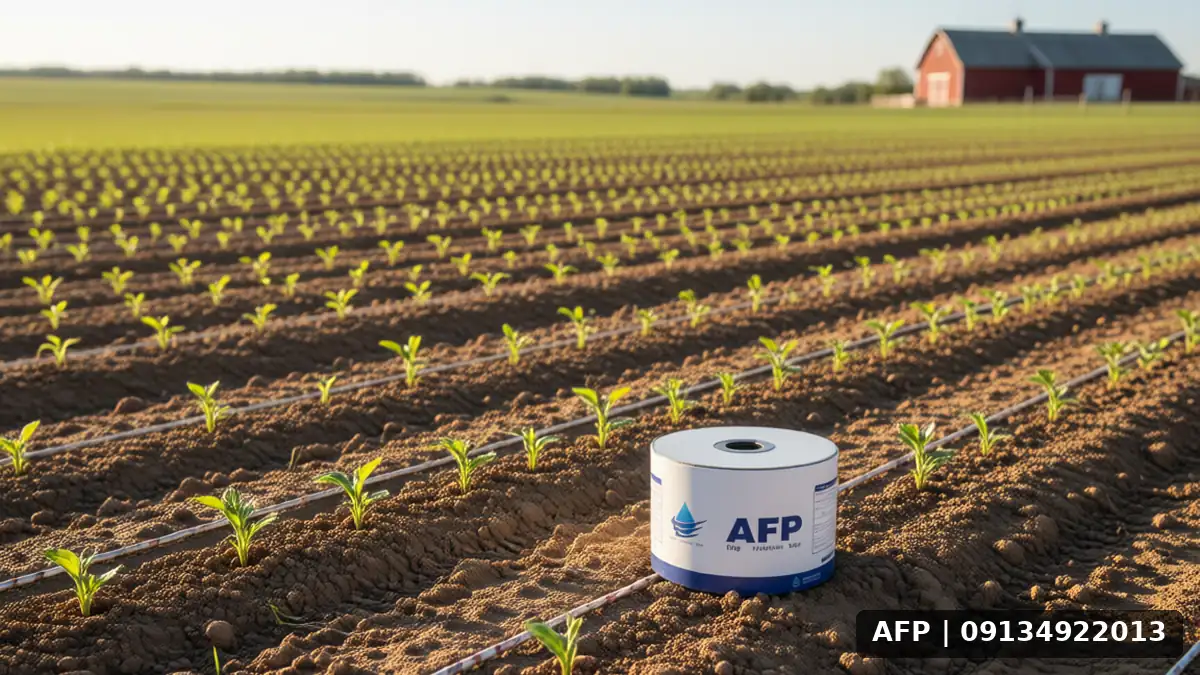
Why is row spacing critical when selecting drip emitters?
One of the most frequent questions among agricultural engineers and orchardists is the selection of drip emitters based on row spacing. This factor directly affects irrigation uniformity, system working pressure, and ultimately investment costs. If crop row spacing is incompatible with the diameter and length of the drip tape or line dripper, issues such as flow rate reduction at the pipe end, ponding around deep roots, or drying out in middle row sections may occur.
In drip irrigation systems, water flows from emitters to the soil under low pressure. Therefore, the water travel distance from the beginning to the end of the tape must be designed with precision to ensure pressure loss (Head Loss) remains within the allowable range. Row spacing determines the length of parallel tapes; the greater the row spacing, the more tapes are required, resulting in a more complex main and lateral network layout. Conversely, in dense planting with narrow row spacing, shorter tapes or closely spaced emitters can be used.
Impact of crop guard on selecting drip tape diameter
To correctly select drip emitters, the crop guard (distance between rows) must first be determined. Common guard widths in Iranian agriculture range from 30 to 120 centimeters. Each of these guards requires different technical specifications for the drip tape:
- Narrow guards (30 to 50 centimeters): This is typically suitable for vegetable crops with shallow root systems, such as tomatoes or cucumbers. In this case, the use of lines with a diameter of 10 or 12 millimeters and a drip emitter spacing of 10 to 20 centimeters is recommended to keep moisture concentrated in the root zone.
- Medium guards (60 to 90 centimeters): Suitable for many large crops such as corn and bananas. At this spacing, a diameter of 15 or 16 millimeters can be used. The line length should be such that the pressure drop at the end is less than 10 percent of the non-uniform flow rate.
- Large guards (100 centimeters and above): In orchards or wide-row grain crops, the row spacing is large. Here, it is essential to use multi-source drip emitters or lines with larger diameters (20 millimeters and above) with controlled flow rates. Linear systems with connectable plastic drip emitters can also be used.
For a better understanding of how line length affects output flow rate, you can refer to the guide Key points of drip line irrigation which explains the details more precisely.
Relationship of drip line length to pressure loss and flow rate
The general rule in drip irrigation is that the longer the drip line, the higher the pressure loss. If the row spacing is constant, the length of the line will not equal the row spacing, but rather the length of the row. However, row spacing determines the number of lines required per unit area. Nevertheless, a key point is that in system design, we usually run the line in a loop (Loop) or lay it out linearly (Line). If laid out linearly, the line length depends on the row length. However, if the system is designed based on water flow aggregation, row spacing determines the number of lateral lines.
In open-end lateral systems, the flow rate at the end of the line will be lower than at the beginning. To compensate for this imbalance, you can use lines with different diameters at the start and end of the row, or design the system as a closed-loop (Closed-end) where water enters the line from both ends. The choice between these two methods also depends on row spacing and field width. In narrow fields with large row spacing, a loop system may be difficult to install, but it provides much better uniformity.
Practical tips for installation based on row spacing
The following are several practical points for engineers and farmers that are directly related to planting distance and the type of dripper:
- Alignment of dripper holes with the seed row: It is important that the drip line is placed exactly in the center of the row at an appropriate depth (usually 15 to 20 centimeters below the soil surface for row crops, or level with the main roots). If row spacing is 80 centimeters, centering the line is critical to ensure water reaches all roots.
- Use of appropriate filters: As the total system length increases (which depends on the number of rows and their spacing), the likelihood of suspended particles entering the drip emitters increases. For spacings less than 100 cm, an 80 mesh filter is suitable; however, for larger systems with wider spacings, fine-mesh screen or disc filters are recommended.
- Consideration of terrain slope: If row spacing is aligned with the direction of the terrain slope, the pressure drop is due to the terrain gradient. Under these conditions, drip emitter flow rates must be selected so that the difference in flow rate between the top and bottom of the slope is less than 5%. This differs from the case of row spacing perpendicular to the slope (cross slope).
- Optimizing line length based on diameter: Manufacturer structural charts indicate that for a 10 mm line, the maximum length under a 20 percent pressure drop condition is approximately 100 meters. If your row spacing results in row lengths of 150 meters, you must either increase the line diameter to 15 or 16 mm or lay the line in a loop configuration with a mid-point calculation.
To learn about harvest standards for various crops, which directly relate to water requirements and system design, you can review the article on tomato yield per hectare, as tomatoes require precision irrigation systems with specific row spacings.
Impact of row spacing on efficiency and system management
Selecting the correct drip emitter based on row spacing is not just an engineering issue but also an economic and management one. For very narrow spacings (for example, 30 cm for safflower), the drip line cost per hectare increases due to higher linear meters. Conversely, for wider spacings (120 cm for potato), line consumption is lower, but the flow rate of each drip emitter must be higher to ensure adequate coverage.
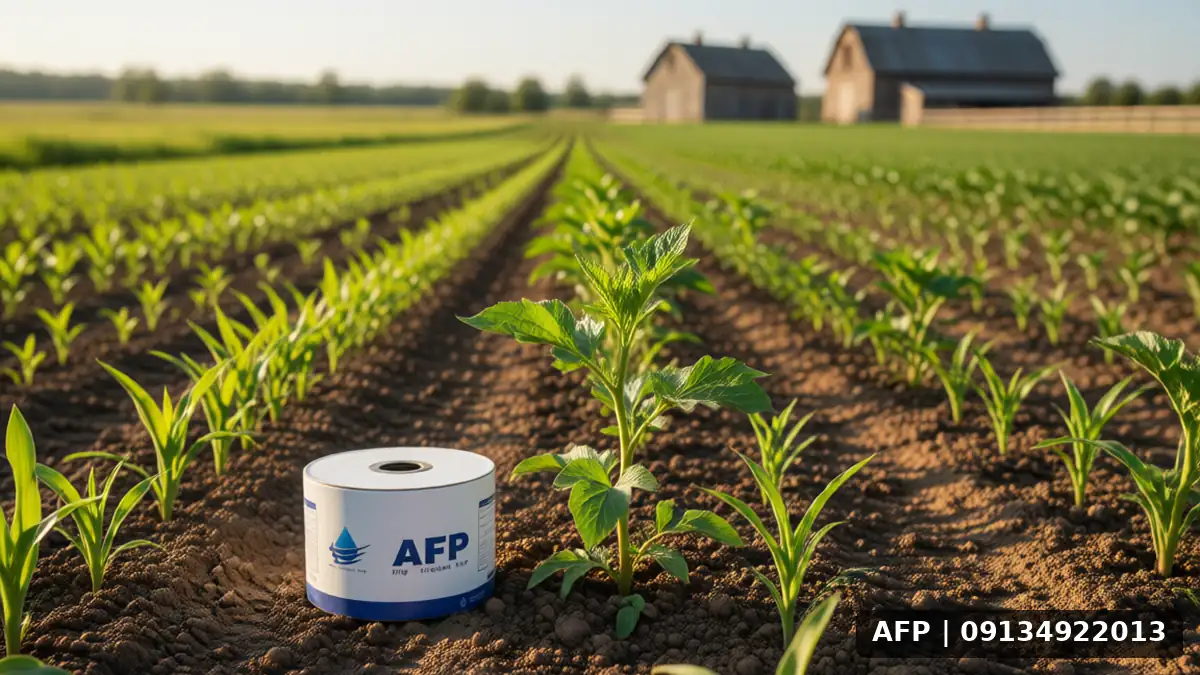
Additionally, maintaining the system over long distances is more complex. A failure at a single point on the tape line, due to the length of the tape, can result in insufficient irrigation for a significant portion of the row. Therefore, for long distances, the use of connector drips or tapes with easy repair capabilities is prioritized. To learn more about maintaining and extending the lifespan of these systems, consult the guide on Extending the Lifespan of Drop Tape .
Frequently Asked Questions (FAQ)
Does row spacing affect the selection of drip emitter flow rate?
Yes. If the row spacing is wide, the flow rate of each drip emitter must be increased to ensure sufficient moisture is supplied within the root zone. If the spacing is narrow, a lower flow rate and closer drip emitter spacing are more suitable.
How do I calculate the length of the tape line based on row spacing?
The length of the tape line usually depends on the length of the row, not its spacing. However, row spacing determines the number of tapes per hectare. When calculating pressure loss, consider the length and diameter of the tape, not the row spacing, unless the land is sloped.
Should we use drip tape or linear drip tubing for wide-row crops (e.g., 150 cm spacing)?
For wide rows, drip tape is cheaper and faster to install but has a shorter lifespan. Linear drip tubing with 16 or 20 mm PE hose has a longer lifespan and is more suitable for high-value crops like saffron or medicinal herbs with wide row spacing. In this case, selecting the drip emitter depends on flow rate and emitter spacing relative to the row distance.
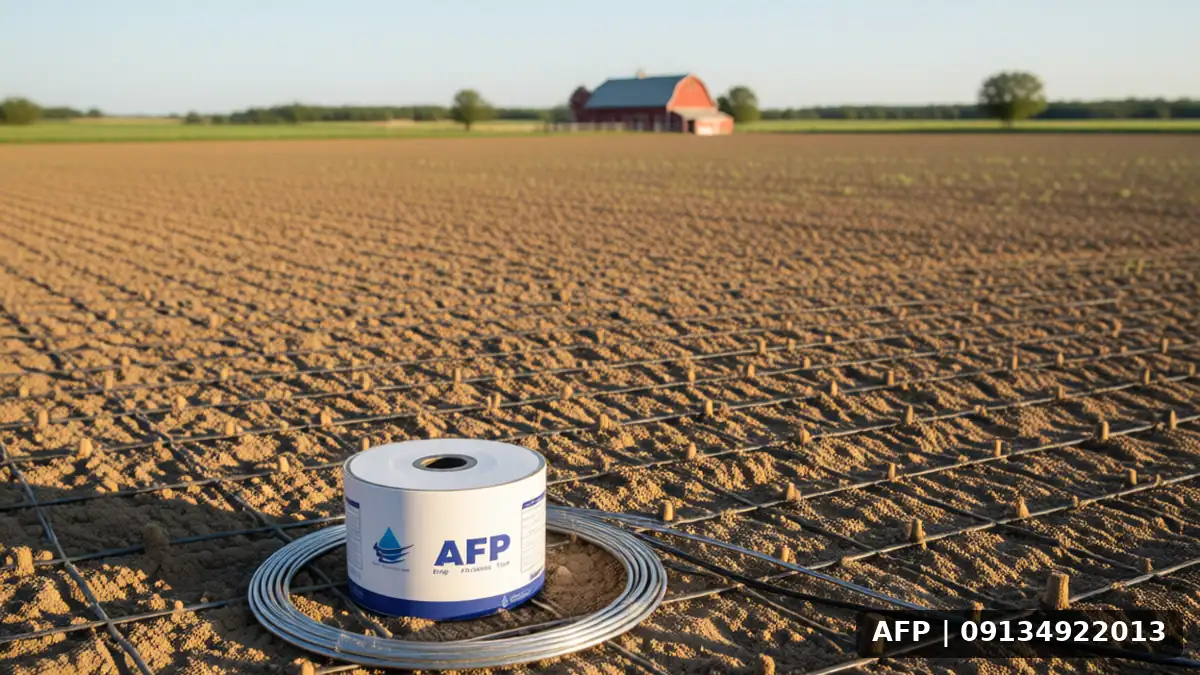
What is the impact of land slope on row spacing and drip emitter selection?
If row spacing is aligned with the slope direction, pressure will be higher at the bottom of the slope and lower at the top. Pressure-compensating emitters should be used, or the system should be designed to offset pressure drop caused by the gradient.
Conclusion
Selecting drip emitters based on row spacing goes beyond simply buying hose; it is an engineering process that involves balancing tape length, pipe diameter, flow rate, emitter spacing, and field conditions. For narrow rows, precision and density are critical; for wide rows, flow rate and irrigation coverage are key. By adhering to the technical and practical points mentioned, water waste can be prevented and the economic efficiency of the irrigation system can be maximized. Before purchasing, request technical specifications for drip tape or drip emitters from reputable manufacturers based on your crop row spacing, and consult irrigation specialists if necessary.
For further reading on managing plastic drip tape irrigation and installation tips, we recommend the guide ‘A Look at Drip Tape Management’.
Related articles: Related article Related article Related article Related article D8AFD8B1 Related article. basil seed quantity per hectare farming guide