Comprehensive Guide to Corn Planting with Drip Irrigation: Principles, Timing, and Practical Tips
Introduction to Corn Drip Irrigation
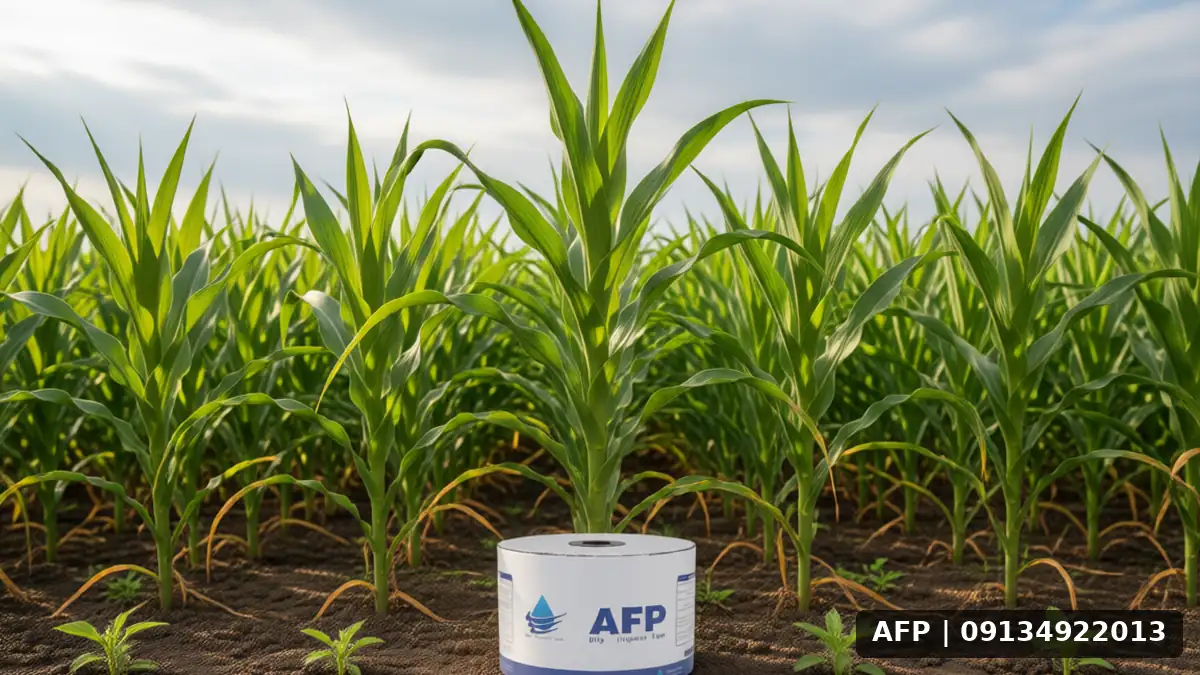
As one of the most important commercial grains in the world and in Iran, corn is a strong candidate for using modern irrigation systems like drip lines due to its high moisture requirements and sensitivity to water stress. Implementing drip irrigation in corn fields can reduce water consumption by up to 40% while facilitating uniform moisture distribution and fertigation. This guide examines the technical and practical principles of planting corn simultaneously with drip line installation, enabling farmers to achieve successful cultivation with minimal cost and maximum efficiency.
Selecting Drip Line and Pressure Regulator Types
The choice of drip line suitable for corn depends on the planting bed dimensions. Corn is typically planted with 60 to 80 centimeters spacing between plants and 70 to 90 centimeters spacing between rows. Therefore, 16 mm drip lines with an emitter spacing of 30 or 40 centimeters are the preferred choice. Using lines without pressure regulators reduces initial costs, whereas lines equipped with regulators ensure pressure stability. When purchasing, always pay attention to Key Points for Selecting Agricultural Drip Lines Ensure the tape’s durability against pests and sun exposure. Additionally, selecting the appropriate tape wall thickness impacts the system’s useful life; 100-micron tapes are suitable for a single cropping season, but 150 and 200-micron models are recommended for longer-term durability. Furthermore, the flow rate of each dripper must match the plant’s water requirement to prevent water accumulation around the roots. This is particularly important in silty clay soils, as their lower permeability causes water to pool on the surface earlier, leading to root moisture deficiency. Therefore, choosing a variety of flow rates in liters per hour can be the key to success. Farmers should adjust the flow rate table based on their soil texture and regional temperature. Also, the ability to replace clogged emitters is a key feature of high-quality tapes, allowing damaged sections to be replaced without exchanging the entire tape, thereby reducing maintenance costs. Consequently, when budgeting, pay serious attention to the raw material quality of the tape (typically LDPE or LLDPE) and the presence of UV inhibitors to prevent chemical degradation during the season.
Drip Tape Planting and Layout Methods
In modern systems, drip tape is installed simultaneously with planting and seeding operations on the prepared bed. This method reduces labor costs and increases the precision of positioning the tape directly within the root zone. There are two main methods: ridged planting and flat planting. In the ridged method, block-shaped beds are created, and the tape is placed at the crest of the ridge to direct moisture directly to the roots. The number of rows per block must be determined based on leaf width to ensure uniform irrigation coverage. Another important point is the angle of seed placement relative to the tape. The seed should be placed at a depth of approximately 5 to 7 cm and at an appropriate vertical distance from the tape so that the tape does not interfere with upright leaves after several weeks of growth. If the distance is inappropriate, shading of the tape by leaves will cause mold and render the tape inoperable. Therefore, using mechanized planting kits that standardly pass through the drip tape and sow the seed in a safe location relative to the tape is recommended. In regions with stony soil, the need to adjust the planting depth of the tape is higher because deep permeability is low. Additionally, bed leveling before planting is essential to prevent tangling of the tape as planting machinery passes over it. This land preparation operation is the foundation for the performance quality of the entire irrigation system. It should not be forgotten that drip tape is a technical tool and if placed on an irregular bed, it is prone to tearing and loss of water application accuracy. Therefore, precision in bed preparation significantly reduces subsequent costs.
Irrigation Schedule
Proper irrigation management in maize is highly sensitive. Maize is sensitive to water stress at three stages: 1. Flowering stage (7 days before to 7 days after), 2. Kernel filling stage, and 3. Rapid growth stage. A suggested schedule for semi-arid regions is as follows:
- Vegetative stage: 1 to 2 irrigations per week with low flow rates.
- Pre-flowering stage: Increase irrigation volume to field capacity.
- Flowering and kernel filling stages: Most frequent irrigation (every 2 to 3 days) to prevent kernel wrinkling.
Practical points and interdisciplinary management
Foliar Feeding (Fertigation)
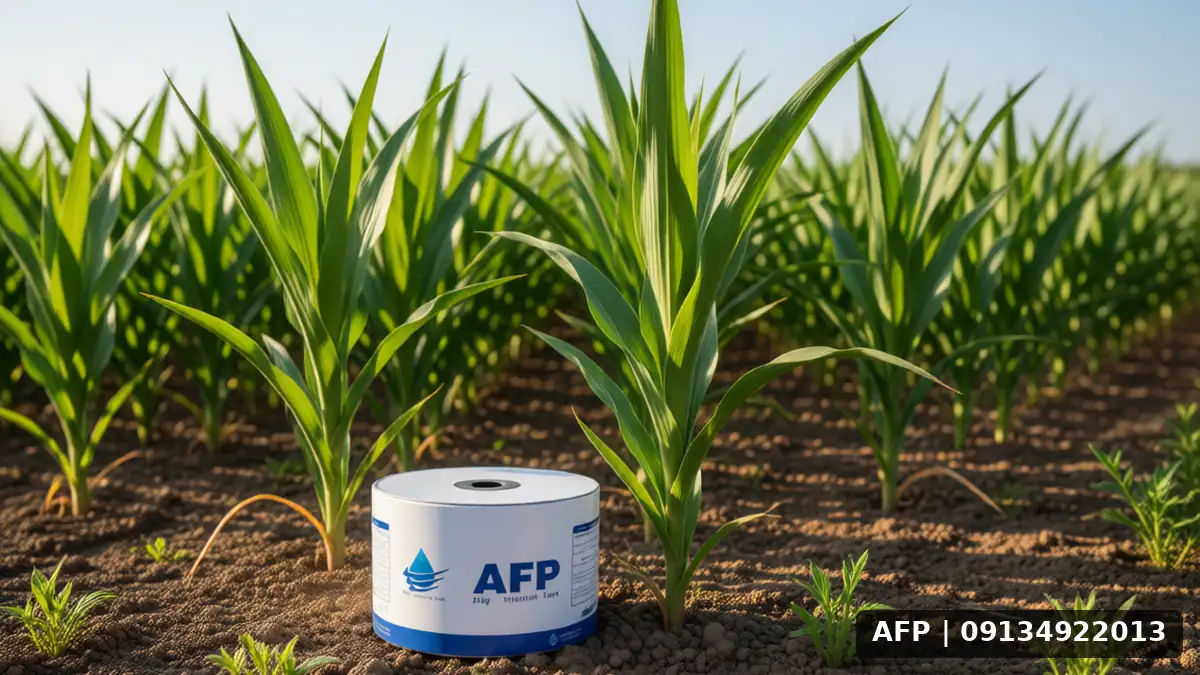
One of the main advantages of corn drip irrigation is the ability to deliver nutrients gradually. Supply nitrogenous fertilizers in small fractions throughout the season along with the irrigation water to prevent chemical leaching. Do not use alkaline fertilizers that do not dissolve at low pH levels. Nutrient management in a drip system is more complex than conventional methods because nutrients are delivered directly to the root zone, and an improper concentration can cause root burn. Therefore, the solubility of materials and the salt content of the water must be checked before pumping. The use of appropriate filters and regular flushing of the fertilizer tank prevents clogging of the drip line emitters. Additionally, the nitrogen, phosphorus, and potassium balance must be adjusted based on soil analysis to prevent the unnecessary accumulation of materials in the growing bed. This balance is the foundation of grain yield. In corn, high nitrogen uptake during the rapid growth phase increases grain weight, but excessive application leads to lodging and an increase in diseases. Thus, precise monitoring and proper application are key to success. Also, avoid combining fertilizers that chemically react with each other and cause precipitation. Before injecting into the system, perform a bulk test in the flush tank to prevent drip line clogging. This prevention reduces repair costs.
Monitoring Water Delivery Uniformity
Cut a section of the Yanets drip tape after a full irrigation cycle. Moisture should be evenly distributed from the emitter holes outward. If dry spots are visible between holes, it indicates a problem with pressure or the type of tape. Monitoring uniformity ensures system safety. Using moisture-sensitive paper is a simple method to measure the depth of water infiltration. Additionally, flushing the tape cycle prevents clogging in the emitters. This flushing is performed every 3 to 4 months by adding a small amount of vinegar or chlorine to the flush water. This process extends the lifespan of the tape and maintains system efficiency. Finally, keeping records and conducting periodic measurements helps prevent improper patterns in future years.
Frequently Asked Questions (FAQ)
- Is drip tape suitable for staked corn? Yes, provided the tape is durable under high working pressure, as the weight of the plants may stretch the tape. Additionally, staking or supports are necessary to keep corn leaves upright and prevent direct contact with the tape. These supports can be made of wood or fiberglass.
- What is the appropriate distance for the drip tape from the corn stalk? Typically, the tape should be placed within a radius of 15 to 20 cm from the main root axis to optimize the wetting circle. Closer distances increase the risk of root burn, while greater distances increase the risk of water loss. Optimizing this distance through field trials is recommended.
- Can the drip tape be reused in the second year? Some polymer tapes, especially thinner ones, cannot be reopened. If you use paper tapes or single-use items, recycling is not possible, but thicker PVC tapes can be re-opened. However, reopened tapes never return to their original quality and must be handled with greater caution. In any case, proper tape maintenance after planting is the key to successful re-opening.
Conclusion
Proper corn planting execution with drip irrigation requires precision in equipment selection, scheduling, and continuous monitoring. By adhering to spacing principles and nutritional management, higher yields and reduced water consumption can be expected. To better understand topics related to planting other crops such as seed rate of black cumin or other crops, studying supplementary resources is recommended. This integrated approach ensures maximum efficiency of drip lines and guarantees final product quality. Ultimately, success in corn cultivation with drip systems requires technical knowledge, practical experience, and a commitment to continuous monitoring. By following the principles outlined in this article, farmers can reduce potential risks and optimize their economic returns.
Related articles: Types of drip tape irrigation systems