Center Pivot Irrigation in Vegetable Cultivation: Key and Practical Tips
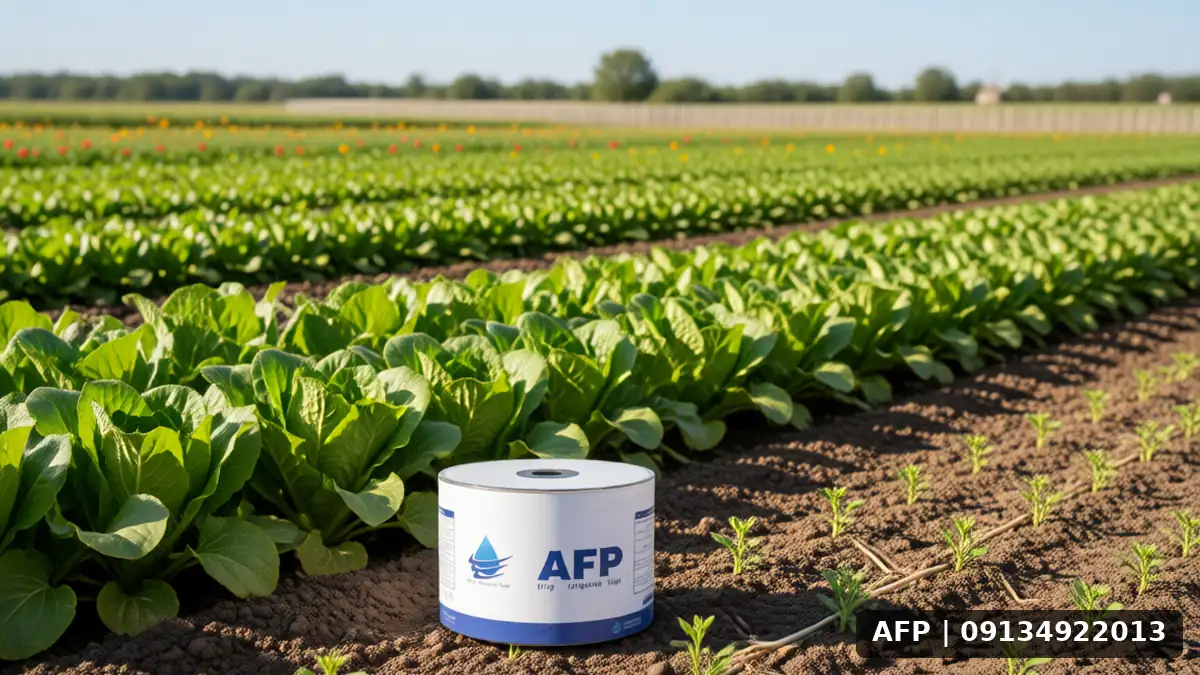
Introduction to the Importance of Centralized Irrigation in Modern Agriculture
In recent decades, agriculture has faced serious challenges regarding water resources. On the other hand, demand for fresh, high-quality vegetables is increasing daily. In this context, centralized irrigation has established a unique position as one of the most advanced pressurized irrigation methods in vegetable cultivation . This method, which delivers water directly to the plant root zone through precise and targeted washing, not only minimizes water waste but also facilitates uniform canopy growth and reduces environmental stress by creating ideal moisture conditions in the root zone. In this article, we aim to provide a comprehensive examination of the technical principles and practical tips for implementing centralized irrigation across different vegetable cultivation sectors, enabling farmers to make better decisions with a logical, data-driven perspective.
Technical Principles and Design of Centralized Irrigation Systems
To succeed with centralized irrigation, a deep understanding of the water distribution mechanism is essential. Unlike drip irrigation, which uses individual nozzles or multiple emitters, centralized irrigation typically utilizes thin, mobile lines or central systems that ensure complete crop coverage from a central point or via circular motion. In vegetable cultivation, where dense layouts and short inter-row distances are common, precise adjustment of pressure and flow rate is critical. A properly designed system must operate such that irrigation is performed with high uniformity along the entire row length or within a specific semicircle, preventing stress in some plants and excessive growth in others.
Selection of appropriate equipment for vegetables
Equipment selection should be based on the vegetable type, soil texture, and ambient temperature. Systems Optical photoelectric tubes in the spray channel and plastic can be used in some linear transmission systems, but in specialized radial irrigation, using low-pressure micro-sprinklers with limited and controlled throw is a better option. These sprinklers should be designed to minimize water return toward the soil and prevent over-wetting of foliage, as this increases the susceptibility of leafy vegetables to fungal diseases.
Key points in vegetable irrigation management
Proper management of the irrigation cycle is the heart of a successful crop. In vegetable cultivation, plant water requirements vary across different growth stages (germination, vegetative growth, flowering, and maturation). Radial irrigation allows the farmer to maintain soil moisture within the optimal range through short, targeted irrigation applications. The key point is that irrigation should not be based solely on fixed time intervals, but must be adjusted based on soil and atmospheric conditions (soil-water balance). Using soil moisture sensors to control this process eliminates human error and ensures optimal water use.
- Changing frequency by season: During hot months, irrigation frequency is higher but the volume per application is lower.
- Consider soil type: Sandy soils require frequent, low-volume irrigation, whereas clay soils are more practical with less frequent, higher-volume applications.
- Avoid salinization: If not properly adjusted, drip irrigation can cause salt accumulation at the soil surface. Therefore, occasional deeper irrigation is necessary to leach salts.
Furthermore, understanding the hydraulic requirements of each vegetable type is crucial. For example, if you are growing crops such as cauliflower or other leafy vegetables, their drought tolerance varies, and the irrigation schedule must be adjusted flexibly. Also, in fields where multiple cropping is possible, such as growing Horse grazing (in areas with suitable conditions) or even by-products such as beans As ground cover, central pivot irrigation planning must also account for these differing requirements.
Practical Solutions for Farmers: From Design to Correct Implementation
The practical implementation of central pivot irrigation requires attention to detail. The first step is the correct design of the planting layout. Row spacing must allow the movement path of central pivot systems (in the case of using moving center sprinklers) to proceed without damaging the plants. The second step involves balancing water pressure and the movement speed of the central pivot system. If the rotation or travel speed is too high, water will not be distributed uniformly, resulting in dry spots.
Optimizing Water and Energy Consumption
One hidden advantage of this system is the reduction in pumping energy consumption. If the system is properly optimized, the required pressure for sprinkling is supplied only within the necessary coverage radius, not for the entire farm. Farmers who are currently planting Fava beans or other water-dependent legumes, must ensure that the rapid growth of these plants requires continuous access to moisture. Severe fluctuations in moisture can cause fruit cracking and reduce commercial quality. Therefore, stability in the central pivot irrigation system directly affects onion bolting and the performance of other climate-stress-sensitive crops.
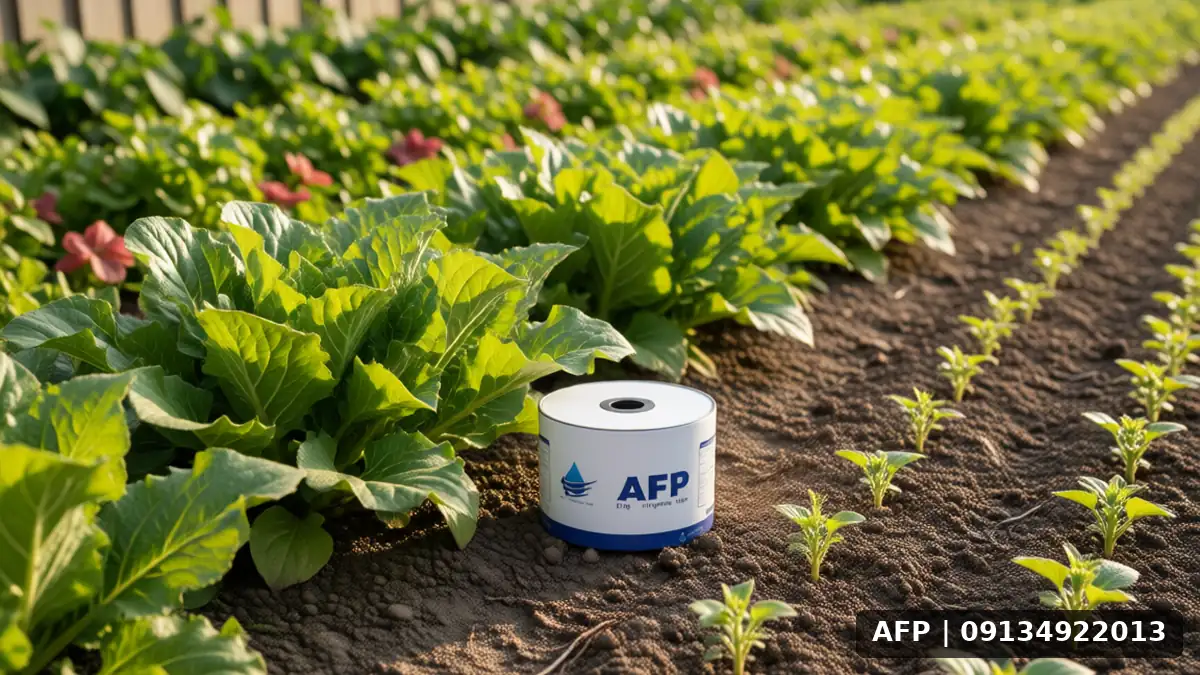
- Regular filter inspection: Filter clogging is the primary cause of sprinkler blockage and water deficiency at the end of the system.
- Inlet pressure control: Excessive pressure can cause water to spread where it is not needed and create gaps between coverage patterns.
- Learning from soil: Understand the soil profile. In sandy areas, irrigation depth is shallow; in loamy areas, better depth is achieved. This knowledge directly affects the timing of pivot irrigation.
Frequently Asked Questions (FAQ) about pivot irrigation in vegetable cropping
Is pivot irrigation suitable for all vegetables?
Yes, but with different settings. Root vegetables like fennel and turnip require a rooting depth that can be controlled by adjusting irrigation volume. Leafy vegetables like spinach require high surface moisture but leaves should not remain wet to prevent disease.
What is the difference between pivot irrigation and drip or tape irrigation?
Drip and tape irrigation use fixed emitters located along or within rows. Pivot irrigation typically uses a centralized or moving source that creates circular or radial coverage. In very large fields or those with specific geometric shapes, combining both methods (using drip for fixed sections and pivot for central sections) may be more optimal. Understanding concepts such as seed rate per hectare and yields of soybeans or similar crops helps adapt planting density to irrigation spacing.
What can be done in the absence of sufficient water sources?
A primary advantage of central pivot irrigation is its compatibility with low-volume water sources. By reducing flow rates and extending the duration of each cycle, water requirements can be met with lower energy consumption. Additionally, collecting rainwater in on-farm storage facilities for use during scarcity periods is a sustainable solution.
Summary and future outlook
Central pivot irrigation for vegetable crops is not merely a technical method but a philosophy of resource management. By adhering to the key points mentioned, from design to precise execution, farmers can simultaneously increase their economic returns and fulfill their environmental responsibility regarding shared water resources. The future of agriculture in Iran and other arid regions depends on the careful integration of modern irrigation technologies with local and climatic knowledge. Smart agriculture, where meteorological, soil, and plant science data inform real-time decision-making, will gradually replace traditional trial-and-error methods. On this path, familiarity with specific details such as micro-sprinkler conditions and similar principles in pivot methods is an essential foundation for the next generation of farmers.
Finally, it is recommended to assess your farm’s specific responses through a small pilot plot before widespread implementation. Spring and autumn are typically the best times for calibrating irrigation systems, when the balance between plant growth and soil moisture is most critical. By following these principles, a vegetable crop with high yield, good quality, and low water consumption is achievable.