Okra Seed Rate Per Hectare: A Comprehensive Guide and Optimization Strategy

Introduction
Okra is a key and popular vegetable in Iran, holding a special position in both commercial trade and domestic consumption. A common question among farmers is the precise seed rate required per hectare. Calculating this amount correctly has a direct impact on costs, plant growth, and ultimately yield. In this article, we examine in full detail the factors influencing the Okra seed rate per hectare and provide practical solutions for its management. A deep understanding of this process not only helps reduce initial costs but also improves final product quality by optimizing plant spacing. Therefore, paying attention to technical details of planting and irrigation is a vital step for any successful farmer seeking to maximize the economic efficiency of their farm.
Factors influencing the determination of seed rate
Determining the okra seed rate per hectare is not just a simple formula; it involves a set of variables that must be carefully considered. The main factors include the okra cultivar type, regional climatic conditions, seed quality, and planting methods. In addition, soil type and regional rainfall levels also affect the determination of suitable planting density. In lighter soils, denser planting is generally possible because root growth speed is faster in these soil types. On the other hand, in regions with very hot and dry summers, maintaining soil moisture is of paramount importance, which may require adjusting the planting spacing.
- Cultivar Type: Textured and seed-producing cultivars generally require lower seed density. Leafy cultivars with faster growth may need more space to balance stem and leaf development.
- Climate conditions: In hotter regions, tighter spacing can provide better shading and prevent seed shattering caused by high heat.
- Seed quality: Seed susceptibility and germination vigor directly affect the required seed count. Seeds with high germination rates mean less seed is needed to achieve the desired density.
For selecting a reliable cultivar based on scientific principles, it is recommended to study reputable sources such as the comprehensive squash planting guide, which shares commonalities with okra planting because both plants belong to the same family and have similar requirements.
Inter-row and intra-row spacing
One of the most important topics in determining the quantity of okra seed per hectareThe planting distances are adjusted accordingly. Standardly, the inter-row distance should be approximately 2 to 2.5 meters, and the intra-row distance should range from 50 to 80 centimeters depending on the variety. This spacing ensures that plants have sufficient room for root and stem growth and prevents competition for resources. Proper management of these distances is the key to achieving a uniform and high-quality crop. If the intra-row distance is too narrow, plants will suffer from shade overlap and become more susceptible to fungal diseases. Conversely, excessively wide spacing results in weak plants that fail to reach their production potential.
Alignment with drip and tape irrigation systems
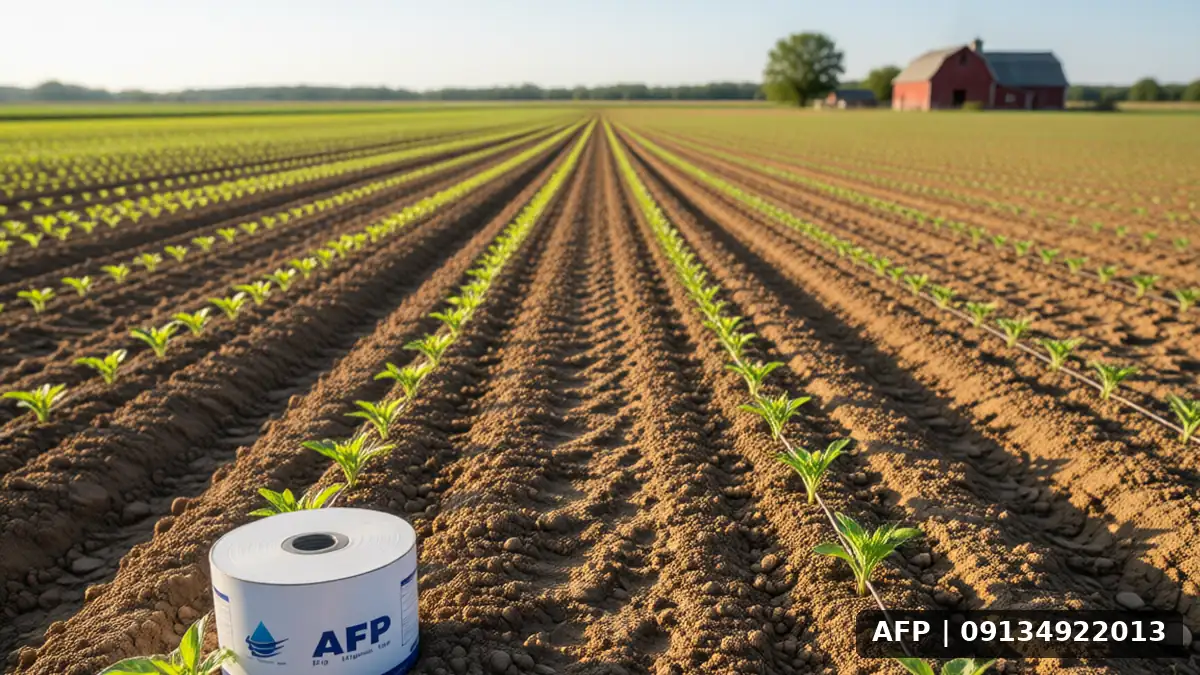
Using drip or tape irrigation systems for cotton cultivation, in addition to saving water, affects the plant layout and consequently the seed rate. In this method, the tape irrigation line is placed exactly at the spacing between cotton plants, ensuring uniform delivery of water and nutrients to the roots. Precise alignment of planting spacing with irrigation lines prevents unnecessary moisture accumulation between plants and creates an unfavorable environment for root diseases. This systematic approach to planting allows farmers to use seed more effectively and avoid the extra costs of excessive seed.
To optimize the operation of this system, studying the differences between drip lines may be beneficial. In some cases, calibration with the 90mm drip irrigation guide is also helpful for timing irrigation scheduling, as these systems have a regular irrigation pattern that can be adapted to sesame needs.
Practical calculation of seed quantity per hectare
For accurate calculation of sesame seed quantity per hectare, follow the steps below:
- Measure the area of the target land in meters.
- Determine the inter-row and intra-row spacing based on climatic conditions and variety type.
- Calculate the required number of plants: (land width / inter-row spacing) × (land length / intra-row spacing).
- Estimate the seed quantity based on the weight per seed and the germination rate.
On average, seed consumption for okra is approximately 25 to 40 kilograms per hectare, although this figure may vary depending on the cultivar. To compare with other crops, examining topics such as onion seed quantity per hectar can provide better insight into differences in planting densities. Additionally, understanding the factors affecting barley yield per hectare helps farmers apply resource management principles across various crops and restore knowledge transfer methods between different plantings. This systemic approach to farm management ensures that okra seed is viewed as an optimal investment rather than just an expense.
Key and practical tips
- Germination test: Perform a germination test before purchasing seed to determine the percentage of viability. Buying seed from reputable brands that provide seed testing reports reduces planting risk.
- Seedbed preparation: Use a soft and suitable seedbed for better root establishment. Deep plowing and surface harrowing promote better root penetration and faster water absorption.
- Manual or mechanized sowing: The choice of planting method affects spacing accuracy and, consequently, planting density. Mechanized planting with modern equipment creates greater uniformity.
Frequently Asked Questions (FAQ)
Q1: When is the best time to plant okra in Iran?
Usually from mid-spring to early summer. Depending on the region and air temperature, planting can continue until mid-summer, provided there is regular irrigation.
Q2: Is okra suitable for heavy soils?
Yes, but it is better if drainage is adequate. Okra germination is better in lighter beds, but it can be grown in heavy soils with proper irrigation management.
Q3: Does planting distance affect the number of seeds per plant?
Yes, denser planting can lead to resource competition and smaller grain size. In contrast, wider spacing generally produces larger, more uniform grains.
Q4: How much water does each melon plant require?
It depends on the climate and soil type, but generally, 10 to 15 liters of water per day per plant is sufficient. Using a drip irrigation system can optimize this consumption and prevent water waste.
Q5: How can I reduce seed costs by using wider spacing?
Increasing the intra-row spacing reduces the number of plants and, consequently, the amount of seed required. This method can be effective under certain climatic conditions, particularly in humid regions.
Conclusion
Precise determination Okra seed rate per hectare It is a multi-stage process requiring attention to detail regarding variety type, climatic conditions, planting distance, and irrigation method. By ensuring calculation accuracy and adhering to planting principles, farmers can optimize costs and achieve significant yields. Aligning planting with modern irrigation systems such as drip irrigation is highly efficient in terms of resource consumption and uniform plant growth. Farmers who adhere to these principles not only minimize crop loss but also deliver higher quality produce.
Related articles: Drip irrigation and its differences, types of drip irrigation, Onion seed rate per hectare, Factors affecting barley yield