Point-of-Irrigation in Lettuce Cultivation: Applications
Introduction: Why Is Node Drip Irrigation Critical for Lettuce?
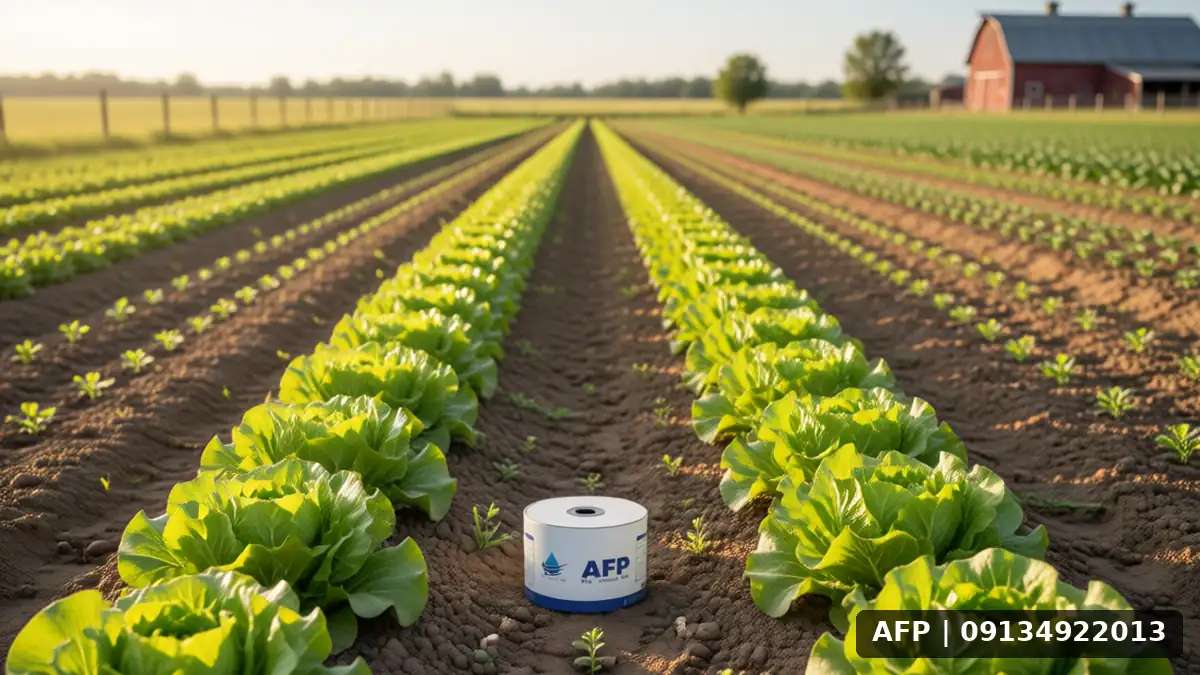
Lettuce is one of the most sensitive garden vegetables, requiring precise and continuous control of soil moisture in the root zone. In conventional irrigation systems, severe unevenness in water distribution often leads to problems such as fungal rot near the stem or severe water stress at the end of rows. However, node drip irrigation as the most advanced form of drip tape, enables more precise control and flow stability by creating a controlled pressure drop within the emitters. This technology is particularly suitable for high-density crops such as lettuce, where narrow row spacing increases the need for uniform drip flow. In this section of the guide, we focus on the practical application of this system in commercial orchards and greenhouses. If you are looking for information on seed spacing for lettuce, you can review the specialized article Lettuce Seed Quantity per Hectare to coordinate and align your planting plan with the irrigation system.
Mechanism of Nodes in Drip Tape
In standard drip tape without nodes, the drip flow rate is directly dependent on the system’s operating pressure. This means that if the pressure at the beginning of the line differs from the end, the amount of irrigation will not be uniform, resulting in reduced irrigation efficiency. In node models, however, a small internal diaphragm (node) prevents unwanted changes in flow rate across different pressure ranges. This technical feature, known as flow compensation, ensures that even with natural pressure drops along the line, the final drips are released at a constant flow rate. For farmers considering older system designs, understanding this difference is crucial. It is recommended to read the comprehensive guide on using drip tape to enhance your overall understanding of this technology.
Specialized applications of pressure-compensated dripline in lettuce orchards
In open fields with wide row spacings, maintaining uniform water flow is challenging. In such cases, pressure-compensated driplines with high and constant flow rates are the top choice for irrigation engineers. For a better understanding of general drip irrigation principles and comparisons with other methods, it is recommended to study the comprehensive guide on using driplines. However, for lettuce, which has shallow roots, focusing on narrow, pressure-compensated driplines is essential. Another important application is cultivation in plastic greenhouses. In these environments, high soil and air temperatures can cause system pressure fluctuations. Pressure-compensated systems with an exchange range of 70 to 130 percent neutralize these fluctuations, preventing localized dryness or waterlogging in the root zone. Impact on quality and head weight: The stability of water flow at emitters directly affects the uniformity of leafy vegetable growth. When all plants in a row receive the same flow rate, variations in head size are minimized, ensuring consistent market quality. This feature is critical for direct sales to supermarkets with strict grading standards.
Practical tips for installing and connecting pressure-compensated driplines
Correct installation accounts for 50 percent of irrigation success. For lettuce, the dripline is typically placed parallel to the planting row, inside the tray, at a depth of 5 to 10 centimeters. Since lettuce is sensitive to root moisture, the distance between the line and the main stem should be about 15 to 20 centimeters to prevent roots from interfering with the main emitters. When purchasing, look for quality indicators. Pressure-compensated lines should have appropriate clarity and thick emitters. If you have doubts about the type of water transfer pipes, refer to the article Flexible Tube 90: Comprehensive Guide, Applications, and Benefits in Irrigation Consult these details to make a better selection. Knot-taped tubes generally have a safe operating range of 1.2 to 1.5 bar, so tap settings must be adjusted within this range.
System Cost Management and Maintenance
Although knot-taped tubes are more expensive than simple tapes, long-term costs are reduced due to optimized water use and minimal maintenance needs. In simple systems, uneven pressures can cause clogging or breaker damage, but knots resolve this issue. To better understand the economic aspects of irrigation, study Maintenance Costs of Taped Tapes can provide a more complete view of your return on investment. Additionally, if you plan to irrigate other vegetables like radishes with this system, review the Comprehensive Guide to Radish Taped Tubes: Spacings, Benefits, and Key Points to identify similarities and differences.
To optimize agricultural processes, understanding the cross-compatibility between lettuce cultivation and other crops, particularly regarding water consumption, is essential. For example, if you use intercropping with sesame, awareness of Sesame seed rate per hectare It helps you calculate planting density and irrigation requirements accurately. This precise planning reduces the risk of chemical application and inappropriate irrigation across different seasons, ensuring higher returns on your investment in irrigation equipment. Additionally, paying attention to row spacing for crops like beans, which require similar drip irrigation, can standardize the overall pattern for designing your tape drip system across the farm.
Next, we examine more technical details, such as the impact of soil type on emitter performance. In clay soils with low permeability, the risk of drip holes clogging with fine particles increases. Therefore, using appropriate filters and scheduling reverse flushing of the tape line becomes a necessity. In contrast, in sandy soils, water moves quickly away from the root zone, requiring an increase in the number of emitters or a decrease in their spacing to keep moisture in the root area. These considerations ensure that selecting a grafted tape system is not just a commercial decision but a technical-climatic one that requires knowledge of farm conditions. Considering all these parameters, a professional farmer can harness the full potential of this technology and produce export-quality crops.
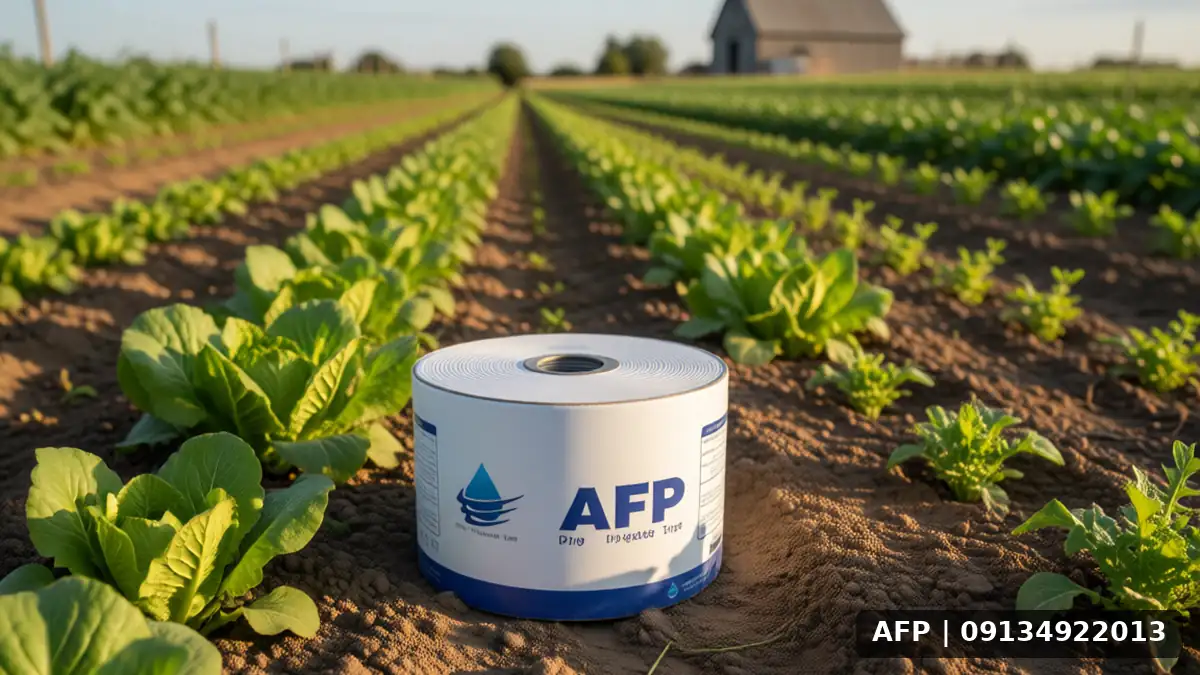
It is also important to note that the color of the drip tape can affect its lifespan when exposed to sunlight. Higher-quality tapes contain UV stabilizers that prevent chemical degradation of the plastic. For lettuce cultivation, which has a short cycle, this does not necessarily mean that the initial cost is more significant; however, for long-term crops where tapes are subjected to harsher conditions, this factor plays a central role in overall investment costs. Therefore, always purchase from reputable suppliers and ensure the product meets standards.
In conclusion of this section, it is recommended that for crops alternating with radish, you must refer to The Comprehensive Guide to Radish Drip Tape Usage: Spacing, Benefits, and Key Points . This guide provides a comparison of the root irrigation requirements for lettuce and radish, which is very useful for complex agricultural cycles. With this information, you will be able to design a balanced irrigation system that can adapt to seasonal changes and different crops.
Frequently Asked Questions (FAQ)
Is knot-tie drip tape suitable for all climates?
Yes, in tropical regions with high evaporation, this system is much more efficient than ordinary drip emitters due to the speed of water release. In cold regions, it performs well with adjusted irrigation schedules, but selecting tapes with an appropriate thickness for freeze resistance is recommended.
What is the ideal pressure for a lettuce node-drip tape?
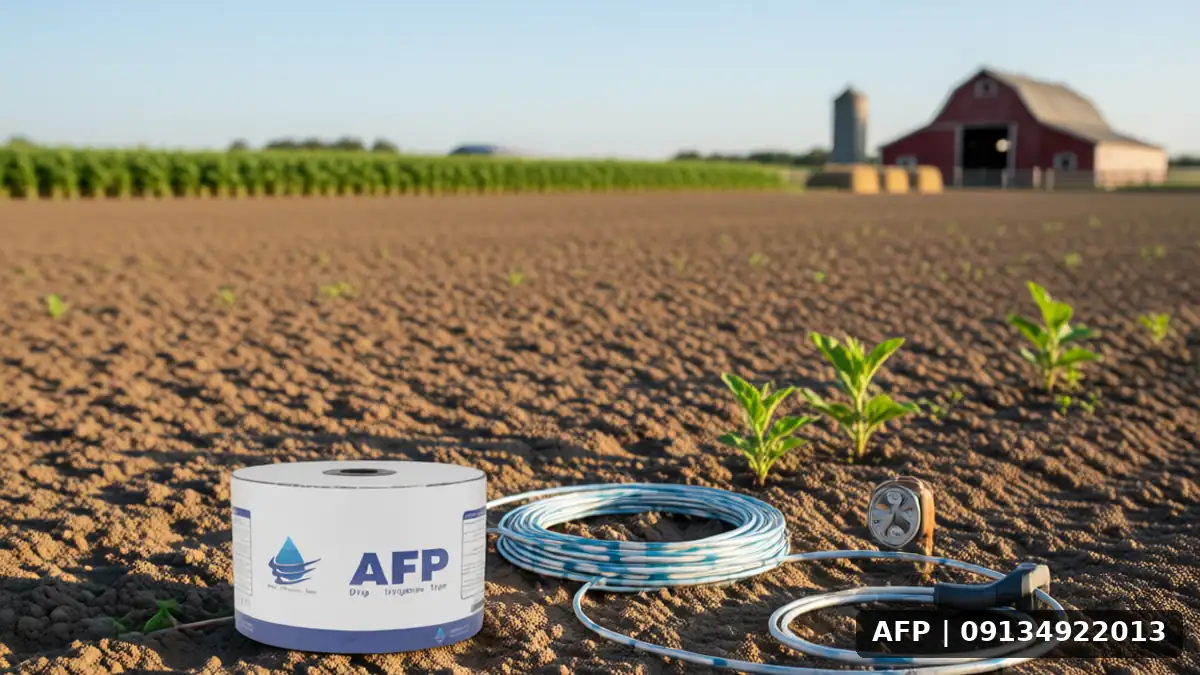
The range of 1 to 1.5 bar operating pressure is considered optimal for most node tapes with low flows (2 to 3 liters per hour). Pressures higher than this amount can cause faster wear of the diaphragms in the nodes.
What is the best spacing between drippers for lettuce?
Given the root depth of lettuce, spacings of 10 to 15 centimeters are usually optimal. In very dense plantings, select a 10-centimeter spacing to ensure full coverage of the wetted zone. In this case, ensure that the main pressure pipe has sufficient pressure to supply all the drippers.
Final Conclusion
Using node drip tape in lettuce cultivation is an investment in precision and sustainability. By understanding the flow-swapping mechanism and adhering to installation guidelines, you can effectively reduce water losses and produce a more uniform crop for the market. Awareness of basic principles and comparison with other methods such as Sesame seed quantity per hectare Can also help with long-term planning for your farm. Ultimately, the key to success lies in the correct combination of technical knowledge and the selection of quality equipment.