Smart Irrigation in Garlic Cropping: Key Benefits
Introduction: Why Garlic Requires Precise Water Management?
Growing garlic, particularly under the arid and semi-arid climatic conditions in Iran, presents a major challenge for farmers in managing water resources. Garlic is a biennial crop that is highly sensitive to soil moisture during the first stage (vegetative growth). Early-stage water stress can cause smaller cloves and reduced quality, while waterlogging increases the risk of root fungal diseases. In this context, Smart garlic irrigation is not just an option, but a necessity for achieving desirable yields.
Unlike surface irrigation, which often results in uneven moisture distribution, pressurized systems such as drip and tape irrigation enable the uniform distribution of water and nutrients in the rhizosphere (the zone of active roots). This approach is the foundation of modern garlic cultivation for commercial-grade quality.
Tape Irrigation: The Backbone of Garlic Water Management
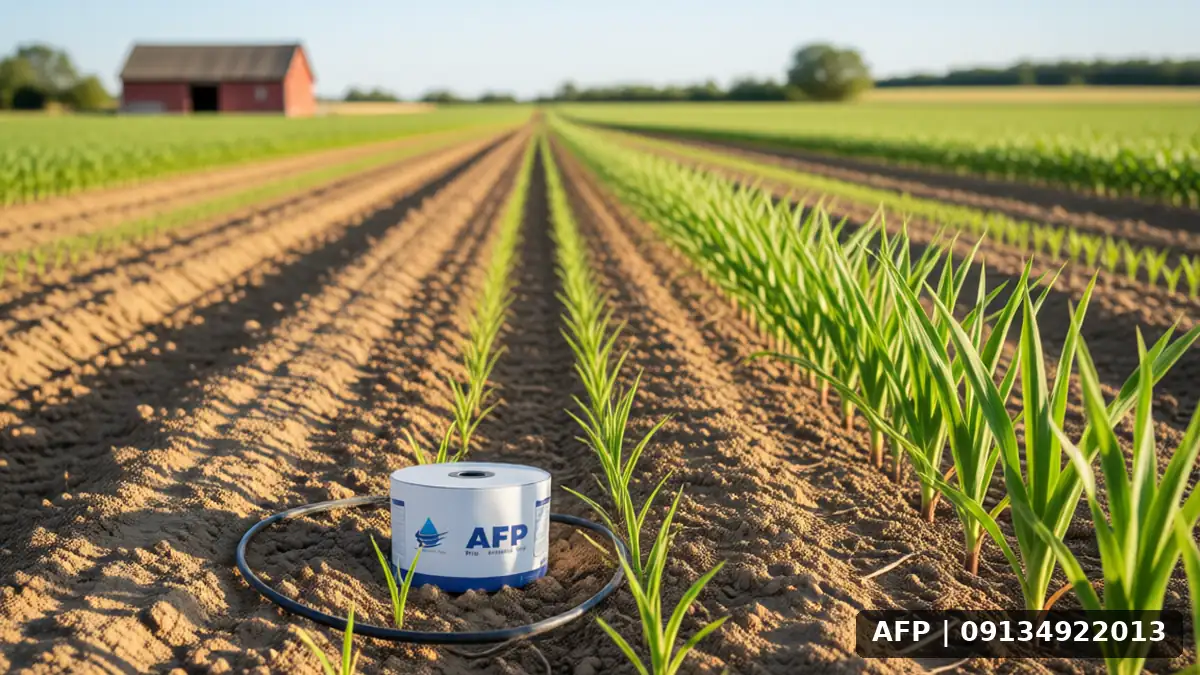
Among drip systems, tape irrigation is the dominant choice for garlic farms due to lower installation costs, faster operation, and better overlap with the garlic’s growing zone. Tape irrigation uses a thin pipe that releases water through very small holes, creating a wet strip along the planting row.
Key Advantages of Tape Irrigation in Garlic Cultivation
- Improved Water Efficiency: By reducing evaporation and leakage, up to 30 to 40 percent is saved compared to surface irrigation.
- Reduced Need for Frequent Drainage Operations: Stable moisture in the root zone reduces the need for repeated plowing to amend soil structure.
- Reduced Weeds: Since only a narrow strip of soil is moistened, weed seeds outside this strip do not germinate.
Selecting the appropriate tape drip with correct flow rate and tape spacing for the crop is vital. In this regard, studying key points when using tape drip can help you prevent the most costly mistakes in purchase and installation.
Smartification: From Timed to Data-Driven Irrigation
Smart irrigation goes beyond a set timer. This system uses soil moisture sensors, weather data, and even drone imagery for real-time decision-making. In garlic cultivation, the bulking stage (development of cloves) is precisely timed.
How the Smart System Works for Garlic
- Root Zone Moisture Monitoring: Sensors continuously monitor soil moisture at a depth of 15 to 30 centimeters.
- Water Balance Calculation: The system calculates the field’s actual water need by matching sensor data with water loss rates due to evaporation and transpiration.
- Automatic Valve Control: If moisture levels exceed the default threshold, the valves automatically open or close.
The major advantage of smart farming is the capability Fertigation . Garlic requires potassium and sulfur during early growth stages, and phosphorus and calcium during later stages. With a smart system, you can precisely mix the required doses of pesticides and fertilizers into the irrigation water, preventing fertilizer leaching to depths where roots cannot reach.
For a deeper understanding of the relationship between yield and proper water management per hectare, we recommend familiarizing yourself with the yield of asparagus per hectare to compare it with similar patterns in other water-sensitive crops.
In-depth examination of benefits for garlic farmers
We recommend looking for drip irrigation conditions in April before investing. Spring is a critical season for garlic. During this period, temperature fluctuations stress the plant. Smart irrigation, which adjusts flow rates, prevents root stress caused by sudden moisture changes.
Impact on garlic quality and shelf life
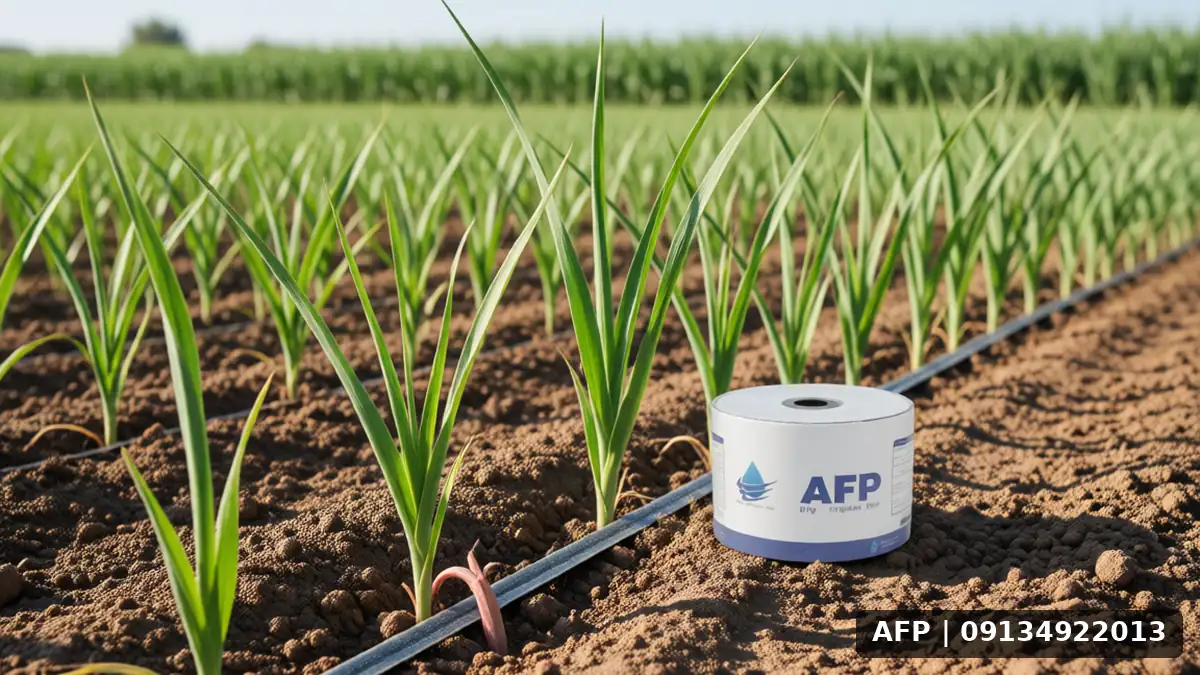
Final bulb quality depends on the uniformity of bulb size. In surface irrigation, plants near the irrigation channel grow larger than those farther away. With drip tape, uniform distribution ensures the bulbs become homogeneous. Homogeneity reduces waste during grading and packaging, allowing you to sell garlic in consistent commercial sizes at better prices.
Practical tips for installation and maintenance
Implementing smart irrigation for garlic requires attention to several key points:
- Row spacing: The standard spacing between garlic rows is usually 50 to 55 cm. When purchasing drip tape, ensure you use a type designed for this row spacing.
- Pre-irrigation: Before starting the planting season, run a full irrigation cycle with flush water to ensure filter cleanliness and uniform system pressure.
- System Backflushing: At the end of each irrigation cycle, keep the flush valves open for 5 minutes to remove sediment from inside the drip tape. This practice multiplies the effective lifespan of the tape.
The initial installation cost of drip tape is relatively low, but poor maintenance expenses can reduce the return on investment. Always Drip Tape Manufacturer or select equivalent brands with a quality guarantee. The material must be UV-resistant PVC or PE and is required to last at least two full growing seasons.
Frequently Asked Questions (FAQ)
Is smart irrigation cost-effective for small-scale farms?
Yes. Although there is an initial cost for smart irrigation valves, savings in pumping energy, drainage labor, and fertilizer costs typically offset the expenses in less than a year. Even for half-hectare farms, standard drip tape without AI is more cost-effective than conventional sprinkling due to its faster drainage rate.
What is the best time to install the drip tape for onions?
The best time to install is before leaching. Many farmers place the tape under the rows during leaching. If you have the drip system (drip tape) ready in advance, you can reduce the leaching time by up to 50 percent. If you are using a standard drip system, installation after leaching and before closing the rows is essential.
Can drip tape be used for injecting fungicides for onions?
No, using drip tape for water-soluble pesticides is limited. Most onion fungicides are designed for spraying, as they must reach the onion crowns and leaves. Injection through drip tape is only effective with liquid, root-absorbable fertilizers. For fungicides, apply the appropriate products after the leaching system.
Conclusion
Transition from surface irrigation to Smart onion irrigationa transformation in resource management. Drip tape, by providing uniform moisture in the root zone, is established, and smart automation ensures that water is available exactly when the plant needs it. For garlic farmers, this means larger, more uniform, and healthier yields.
Considering energy and labor costs, investing in these technologies is no longer a luxury but a survival strategy in competitive markets. Understanding the yield per hectare of garlic and similar crops helps you realize the true potential of your crop under optimal water conditions. Drip tape is the savior of garlic farms in a water-scarce world.
Related articles: Key points when using drip tape, Lettuce yield per hectare, Drip irrigation tape Erbil