Compatibility of 20 cm 1000 m Tape Drip Line Rolls with Drippers: Comprehensive Technical and Practical Guide
In modern irrigation systems, correct selection of ancillary equipment is as critical as the drip tape itself. Many farmers, when using 20 cm drip tape, 1000 m roll face challenges regarding pressure balance and compatibility with emitters. If your drip tape does not have inline emitters and requires separate standalone emitters, understanding the hydraulic principles of ‘drip tape-emitter compatibility’ is essential to prevent water waste and root rot. This article, focusing on technical and practical dimensions, demonstrates how to make the best use of this combination.
Hydraulic principles of compatibility for 20 cm drip tape
Due to its smaller diameter compared to 25 cm or 27 cm tapes, 20 cm drip tape experiences higher internal pressure loss along the 1000 m roll. This feature directly affects the performance of emitters connected to it. When using separate emitters, the inlet pressure to the emitter may differ between the start and end of the line. To maintain uniform irrigation, you must select emitters that have a self-regulating body These bodies compensate for minor pressure differences by creating controlled resistance and guarantee a constant discharge. Otherwise, simple emitters without a self-regulating body will result in over-irrigation at the start of the lines and dryness at the end of the roll.
Impact of the body on irrigation precision
The emitter is the heart of every drip system. In a 20 cm lateron with lateral drippers, the water flow map within the main pipe is critical. If drippers are installed at irregular intervals, or if the emitter orifice diameter is not proportional to the system pressure, flow turbulence occurs. Therefore, when verifying the compatibility of the 20 cm lateron with drippers, pay special attention to the emitter discharge rate (LPH). For 20 cm laterons, emitters with a discharge rate of 1.2 to 2.4 liters per hour are typically selected to prevent excessive pressure on the lateron walls.
[ [[IMAGE_1]] ]
Practical tips for connecting and installing drippers
Correct installation of drippers on a 20 cm lateron with a 1000 m roll requires meticulous precision. Weakness (porosity) or the use of inappropriate connectors can cause pressure leakage and reduce the overall efficiency of the system. Here are several practical tips to ensure full compatibility:
- Use of appropriate connectors: Use crimp or clamp connectors specifically designed for plastic laterons with a 20 mm diameter. General-purpose connectors may weaken the lateron wall at the point of dripper attachment.
- Permissible operating pressure: Most lateral drippers have an optimal operating range of 1 to 2 bar. Supplying pressure above this level without a pressure regulator can reduce the emitter’s service life and exert uneven pressure on the lateron.
- Stringing: Use in-line filters where possible before water reaches the drippers to prevent sediment particles from entering the emitters.
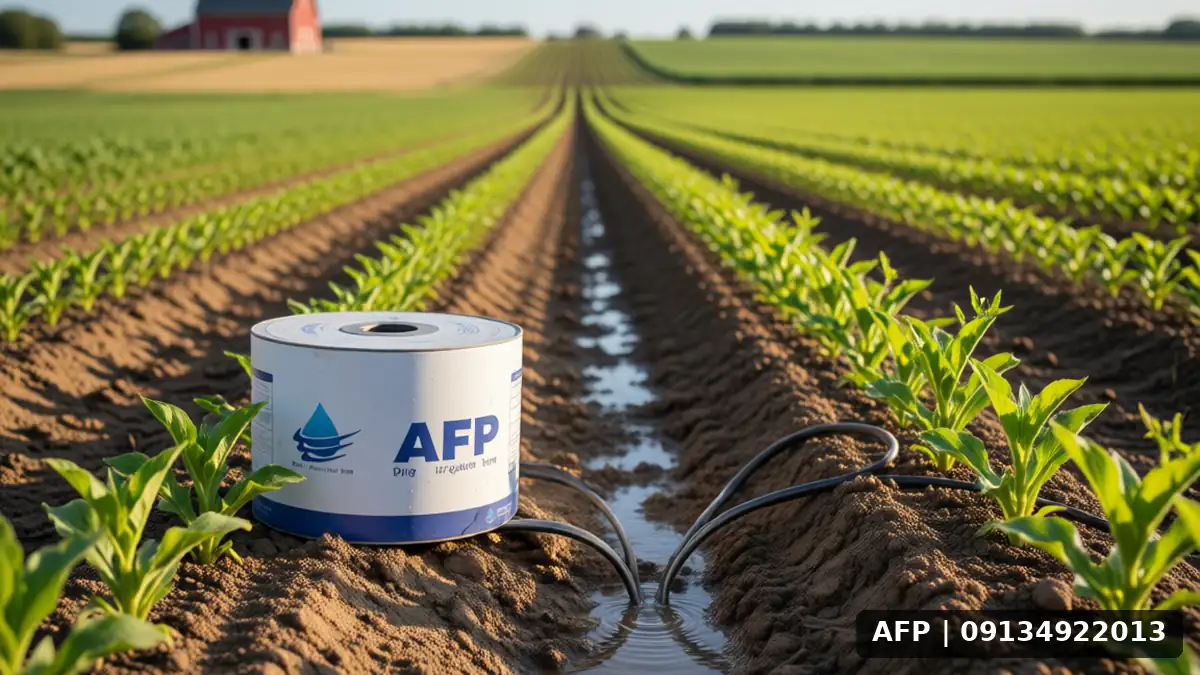
Additionally, when unrolling a 1,000 m roll, ensure that the drippers are correctly positioned on the upper or side orientation to prevent water from hitting the soil at inappropriate depths. For a better understanding of proper layout, refer to the tape installation guide to learn the principles of correct emitter placement.
Pressure Management in Laterals
Since a 1,000 m roll has a very high length, pressure drop at the end of the tape may reach 20 percent compared to the start. If you are using non-automatic pressure-compensating drippers, shorten the lateral lines or reduce the system’s initial pressure to keep the flow rate difference between the start and end of the line below 10 percent. This maintains irrigation quality and prevents tape wear in high-pressure areas.
[ [[IMAGE_2]] ]
Costing and Economic Advantages
One of the common questions from farmers is comparing the total system cost. Using 20 cm tape with laterals is usually cheaper than purchasing pre-assembled drip tapes with in-line emitters, but it requires more precise pressure management. For accurate calculation, compare the cost of drippers and fittings with the cost of the tape. This process requires understanding the mutual relationship between material costs and final crop yield. It is recommended that before purchasing, you use a cost drip tape per hectare to determine your final budget for each hectare of cultivation. This approach helps determine whether the savings in initial equipment costs are economically justified by the ongoing system management expenses.
Filter maintenance and flushing challenges
Drip tape compatibility with laterals is not limited to technical dimensions; it also requires a structured maintenance program. Laterals are prone to clogging by silt and sediment due to their small orifices and complex flow paths. In 1000-meter rolls, a single weakness in the filtration system can rapidly render dozens of emitters inoperative. Consequently, periodic flushing of sand and disk filters is a critical task. Additionally, visual inspection at the start of each irrigation cycle to identify clogged emitters is essential. For a complete understanding of the maintenance cycle, reviewing drip tape maintenance and management can serve as a valuable guide.
Performance charts for leading brands
To better understand pressure and flow compatibility, the table below provides a comparison of expected parameters for 20 cm tape with various emitters:
As you can see, self-regulating emitters are the best option for 1000 m rolls due to their widest allowable pressure range, where pressure drop along the line is costly.
[ [[IMAGE_3]] ]
Frequently Asked Questions (FAQ)
Is the 20 cm drip tape suitable for all land surfaces?
Not necessarily. 20 cm tapes are generally designed for low to moderate slope land with standard system pressure. In steep slopes, pressure drop at the end of the roll is critical, and even automatic pressure compensators may not fully offset it. In such cases, using drippers with higher flow rates or splitting the roll into two 500 m halves is recommended. For better selection based on land conditions, you can refer to the guide on sponge yield per hectare and how system type affects overall efficiency, although this source focuses more on pistachio crops, its hydraulic principles are applicable to other farms requiring precise water management.
Can I connect old drippers to a new drip tape?
Connecting worn or clogged drippers to new 20 cm drip tape poses a high risk of blocking main filters. Worn polymer particles from old drippers can easily pass through filters and clog the small orifices of healthy drippers. Always use new, standard drippers and exercise due diligence when purchasing equipment to avoid incompatible parts.
Final Summary
Ensuring compatibility between a 20-centimeter wide, 1000-meter roll 2-inch tube drip line and emitters is a multidimensional process requiring simultaneous attention to technical dimensions, system pressure, and field environmental conditions. By selecting self-regulating emitters, using secure connectors, and strictly following maintenance schedules, you can fully leverage the potential of this irrigation system. Remember that the key to successful drip irrigation is not just equipment purchase, but the intelligent management of pressure and flow. By following this guide and staying aware of specific crop challenges, optimize your field operations and prevent hidden costs caused by leaks or localized dryness.
Related Articles: Maintenance and Management of Tape Irrigation Lines, Related article Related article Related article Related article Related article D8A7DB8C Related article