Installation Steps for Plate-Type Drip Tape in Irrigation Systems: A Practical Technical Guide
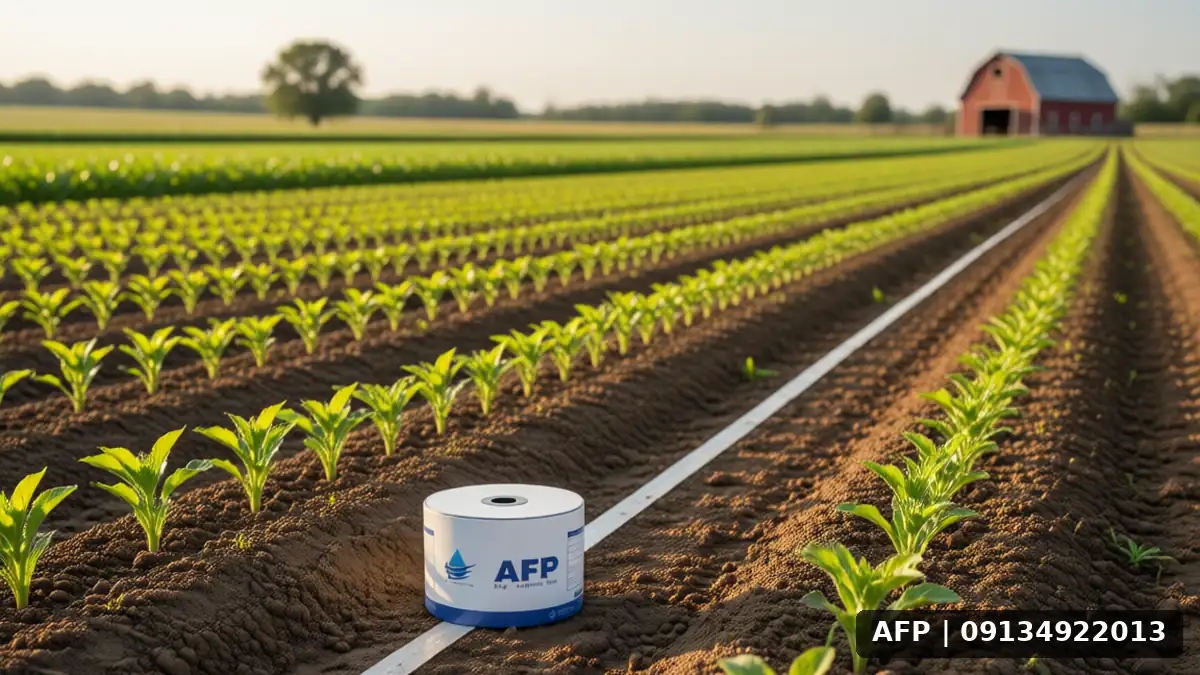
Drip irrigation, as one of the most efficient methods of water use in modern agriculture, holds a special place in commercial crops. Among the types of drip systems, plated drip tape has gained much popularity due to low costs, rapid installation, and compatibility with mechanized planting lines. This type of drip tape is usually supplied in roll form and features drip holes or micro-irrigation strips placed at regular intervals.
The Importance of Correctly Selecting Plated Drip Tape
Before beginning the testing and optimization process of the drip tape system, selecting the appropriate tape size based on crop type, planting distance, and soil conditions is critical. Plated tapes are generally available in thicknesses of 6 to 16 mm and with drip intervals of 10 to 20 cm. For crops such as tarragon or lettuce, which have shallow root systems, using tapes with smaller diameters and shorter drip intervals is recommended to prevent water loss.
Pre-Installation Steps and Field Preparation
- Leveling the field: The field must be completely level and free of large gravel. The presence of hard particles can cause the drip tape to tear or the drip holes to become blocked during tape pulling.
- Checking water source pressure: The water pressure entering the system must match the technical specifications of the drip tape. Excessive pressure can damage the thin walls of the tape, while low pressure prevents the water from reaching the end of the line and results in uneven distribution.
- Preparing initial connections: Connecting drip tape to main hoses or laterals requires the use of standard couplings. Use pressure reducers where necessary to ensure that local pressure at the end of the hoses does not exceed the permissible limit.
Connection methods for plaque-mounted drip tape
One of the main challenges in installing drip tape systems is how to connect it to the main pipeline network. Improper connection leads to water leakage and increased operational costs. To ensure a secure, leak-free connection, the use of specialized connectors is essential. In this regard, Agricultural drip tape connectors are available on the market in various types, such as threaded, socket, and faston connections. The choice of connector type depends on the drip tape diameter and the system’s working pressure.
Key Points in Connecting Drip Lines
- When using quick-connect couplers, ensure the drip line is pushed into the plastic fitting by at least 0.5 cm to prevent water leakage.
- Connectors must be made of UV-resistant material to withstand solar radiation.
- Before final installation, apply pressure of approximately 50% of the working pressure to identify and fix any leak points.
Laying and Arranging Drip Lines in the Field
After connections are prepared, the next step is laying the drip lines in the field. In mechanized methods, drip lines are pulled by lay-out trailers attached to a tractor. In manual or semi-mechanized methods, great attention must be paid to the alignment of the lines. The lines must be positioned directly beneath the root zone of the plants to ensure water reaches the root area directly.
The spacing between two drip lines must be coordinated with the planting row spacing. If the drip line is placed far from the planting row, irrigation efficiency decreases and water does not reach lateral roots. Conversely, if the drip line is too close to the main stem, it can cause root rot and fungal diseases.
Safety and Drip Line Integrity
- Strictly avoid operating heavy machinery over installed drip lines, as this will cause line rupture and water loss.
- After installation, cover connection points with soil or use a light metal band to protect them from plowing damage and mechanical injury.
- On sloping fields, supply higher pressure to upper drip lines to compensate for elevation pressure drop, ensuring uniform water delivery at both the start and end of the line.
Post-Installation Performance Optimization
After installation is complete, the system must be activated and tested. Understanding the relationship between crop area and water use is critical for calculating water requirements. For example, in fenugreen cultivation, fenugreek seed rate per hectare affects total water consumption, as planting density directly correlates with root coverage area and, consequently, plant tissue water demand.
Additionally, for vegetable crops such as melon, which is common in tropical regions, the factors affecting yield indicate that precise irrigation during critical stages of fertility and fruit growth plays a decisive role in increasing the harvest coefficient. Therefore, scheduling the regular flushing of the drip tape system to prevent the deposition of suspended particles and algal growth inside the tape is an inseparable part of system maintenance.
Frequently Asked Questions (FAQ)
Is plated drip tape reusable?
Plated drip tapes are generally single-use; after the end of the cropping season, their plastic material becomes vulnerable, and complete internal cleaning to prevent microbial blockages is difficult. For multi-season systems, the use of multi-loop drip tapes or recyclable drip hoses is recommended.
What is the best time to install drip tape, before or after planting?
The installation order depends on the planting method. In mechanized seed broadcasting, drip tape is usually laid in the soil or on the ground surface before sowing, after which seeding is performed so that the roots are in direct contact with the tape. In seedling planting, drip tape is installed after the seedlings have been planted and established in the soil to ensure that the seedlings do not damage the tape.
How can we prevent the holes in the drip tape from getting clogged?
The most important preventive measures against clogging are using appropriate filters (such as turbo or disc filters) before water enters the tape drip line, regularly flushing the system with appropriate chlorine or biocide, and avoiding irrigation with water containing high suspended solids.
Summary and final tips
Successful installation Plastic tape It requires precise planning, selection of high-quality equipment, and adherence to operational principles. From soil preparation to final hose connections, every detail can affect the final efficiency of the irrigation system. Given the diversity of crop plants, understanding the principles of irrigation corresponding to different crops is essential. For example, in bean cultivation, Soybean yield per hectare and also bean cultivation, directly depends on proper soil moisture management at different growth stages. Therefore, the farmer must adjust the timing and amount of irrigation through the tape drip based on a precise understanding of the water needs of their crop to prevent water wastage and achieve maximum yield. Adhering to these principles not only leads to water conservation but also guarantees the useful life of the irrigation system and the quality of the final product.
Related topics: Per-hare Yield of Elliptical Watermelon: Influencing Factors and Methods for Increase