Eggplant Yield per Hectare with Drip Tape: A Comprehensive Guide to Boosting Productivity and Optimizing Water Use
Introduction to the Key Role of Tape Drip in Industrial Eggplant Cultivation
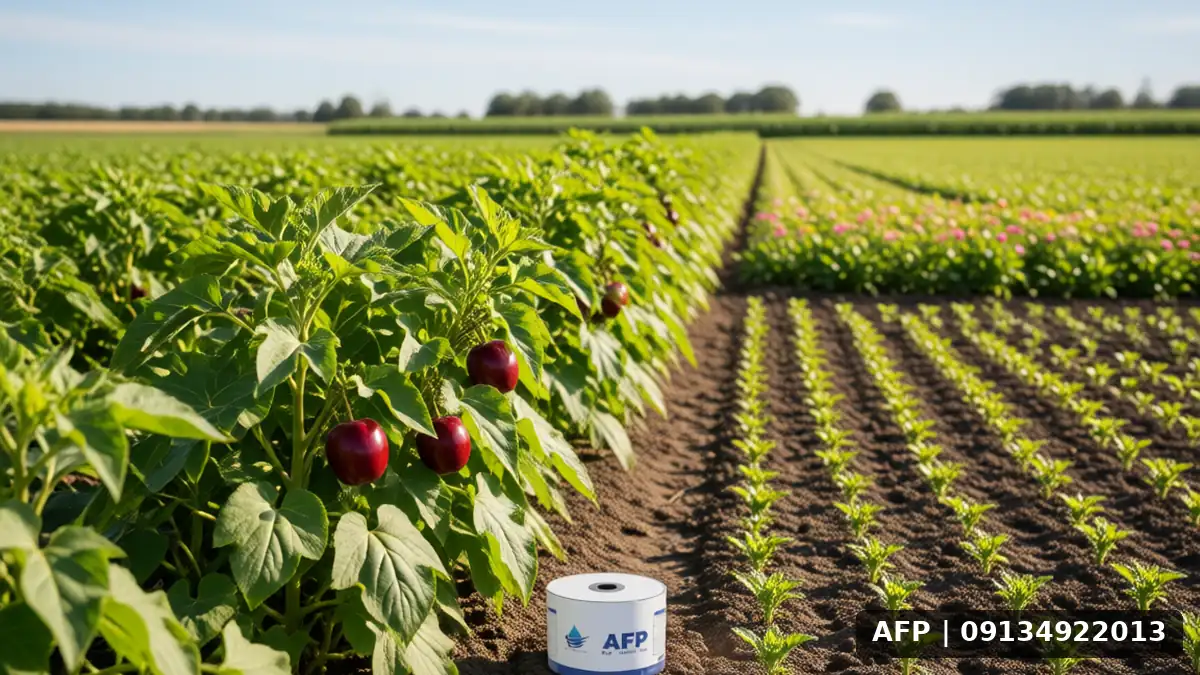
Eggplant, as one of the orchard crops most sensitive to environmental changes, requires precise management of water resources and uniform distribution of nutrients. In recent years, the main focus of researchers and professional farmers has been on optimizing eggplant yield per hectare using tape drip irrigation. This system, by injecting water directly adjacent to the roots, not only prevents water stress but also enables simultaneous fertilizer injection (Fertigation). In this section, we examine the operational mechanisms in detail to understand why this method is superior to conventional irrigation.
Technical Advantages of Tape Drip Compared to Hanging Drip
The main difference between tape drip and hanging drip emitters is the location of the water outlet. In tape drip, emitters are placed directly on the soil surface or on the crop plastic. This feature ensures that moisture is maintained uniformly at the soil surface and reduces evaporation caused by direct sunlight. Additionally, proximity to the active root zone facilitates faster uptake of nitrogen and micronutrients. To better understand the performance differences between various types of tape, you can review the types irrigation tapes performance article, which details the technical specifications of the various pipe types.
Main Determinants of Eggplant Yield per Hectare
Achieving optimal yield in eggplant results from the complex interaction between genetics, plant physiology, soil management, and irrigation systems. Even with the best drip tape, poor agronomic management reduces yield. In a standard furrow with double-row planting, yields of 35 to 60 tons per hectare are expected. However, these figures vary and depend on precise installation and maintenance of equipment.
Impact of Soil Type and Drainage on Drip Tape Performance
Fine-textured (clayey) soils have low permeability and retain water strongly, while fine-textured (sandy) soils drain quickly. In sandy soils, drip tape must be adjusted for more frequent irrigation at lower volumes to prevent soil saturation from becoming non-critical. Selecting the appropriate drip tape based on these parameters is critical. We recommend reading the selection of agricultural drip tape carefully before purchase to select suitable filtration for your local water quality.
Practical Strategies for Optimizing Irrigation and Nutrition
The best drip tape without precise planning is a wasted investment. Proper implementation includes three critical stages: installation, pressure adjustment, and coding planning.
Key Points in Tip Line Drip Tape Installation and Layout
The tapes should be placed exactly 10 to 15 centimeters from the planting site (plant crown). This distance is the ‘most critical’ point for root absorption. If the distance is greater, water will not reach the root zone; if it is smaller, it will cause stem rot. Additionally, using side-slit tape offers higher durability in Orum and Kermanshah warm seasons and similar regions for stress-resistant eggplants. To learn about the advantages of these tapes, review the text on the benefits of side-slit irrigation tape.
Pressure and Output Flow Rate Management
Constant and uniform pressure along the entire length of the tape is the main condition for uniform irrigation. For eggplants, a working pressure of 1 to 1.5 bar and an output flow rate of 1 to 2 liters per hour are ideal. Pressure fluctuations cause dry or wet spots along the row, which directly affects fruit growth uniformity. Using valves and pressure regulators at the tape inlet and outlet solves this problem.
- Pre-planting test: Before root coverage, always test each irrigation tape for 10 minutes to ensure there are no leaks or clogged emitters.
- Plastic mulching: Using black plastic mulch alongside tip line drip tape reduces weeds and maintains stable soil temperature, but you must ensure the tape is not exposed to intense light and does not tear.
Fertigation and improved yield
The main strength of drip tape in eggplant cultivation is the ability to inject nutrients directly into the root zone. Unlike spray irrigation, roots are located near concentrated moisture, allowing for optimal fertilizer uptake. In the early growth stages, emphasis is placed on nitrogen (for leaf and stem growth), but as fruiting begins, the balance shifts toward potassium and calcium to ensure the fruit skin remains thick and resilient. Reducing nitrogen in the final stages decreases internal fruit moisture and improves post-harvest shelf life. This precise nutritional management can increase the average weight per eggplant, which directly contributes to eggplant yield per hectare with drip tape adds to.
Answers to common farmer FAQs
1. Is drip tape suitable for all eggplant soil types?
Yes, but in very heavy clay soils, due to low permeability, increase the number of outlets (reduce the spacing between tapes) to ensure moisture reaches the root depth. In sandy soils, use tapes with a lower outlet frequency to prevent nutrient leaching.
2. What is the best time for drip tape flushing?
After each irrigation session, continue the water flow until air is expelled from the outlets. Additionally, flush the internal drip line with a 2% citric acid solution once a month to prevent salt precipitation.
3. How can we prevent drip tape clogging?
Using a mesh filter with 80 to 120 openings at the system inlet and injecting anti-settling coagulants at the beginning of the season are two key methods to prevent clogging.
4. Can drip tape be used as a supplementary method alongside drip irrigation?
For eggplants, this is generally not recommended unless you are transitioning from an old drip system to a new drip tape system. Drip tape alone provides full root zone coverage, and adding drip emitters doubles the cost and complexity.
Conclusion and Future Outlook
The use of drip lines is a major step in modern eggplant cultivation. By adhering to principles of selecting high-quality equipment, precise pressure regulation, and smart nutrient management, you can reduce water consumption by up to 40% while achieving export-standard quality and yield. Attention to minor details in installation and maintenance is the difference between a season with poor performance and a successful one. To expand your knowledge regarding the management of other orchard crops with similar root patterns, study the comprehensive squash (seeded pumpkin) planting guide which can be beneficial, as squash also follows similar soil moisture management principles to eggplant. Your success in achieving production goals depends on the precision in executing each of these steps.
Related articles: asparagus yield per hectare guide