Melon Yield per Hectare with Drip Irrigation: A Comprehensive Guide for Farmers
Introduction: Why is selecting the irrigation method for melons critical?
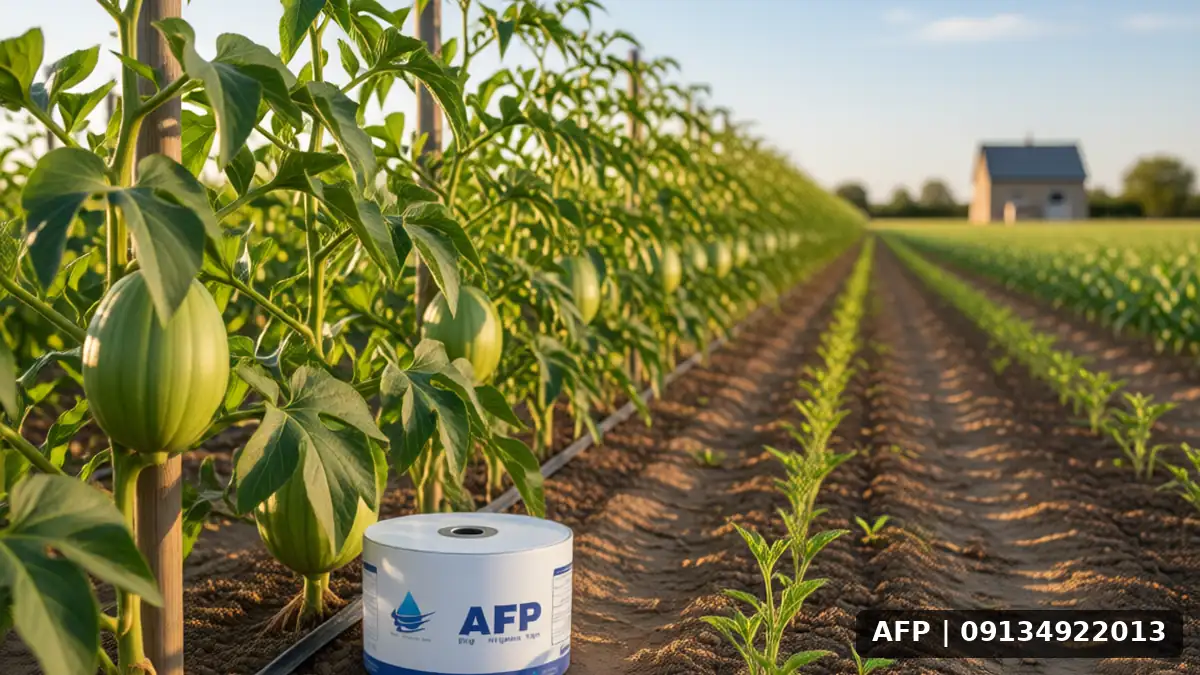
Melons, as crops sensitive to irrigation, require precise management of soil moisture and nutrition. Many farmers believe that seed quality is the sole factor in success, but in reality, Melon yield per hectare using drip tape depends directly on the irrigation system design and the uniform distribution of water in the root zone. Drip tape systems, with emitters placed at short intervals along the tube, create a wetted strip that controls water infiltration depth and prevents salinization around the line. This method not only reduces water consumption by up to 40% but also enhances final product quality by increasing fruit sugar content. The following section examines the technical details and management practices necessary to achieve ideal performance.
Key parameters in determining melon production volume
To achieve maximum yield, understanding the physical relationships between the crop and the irrigation system is essential. Melons are fast-growing, high-temperature-responsive crops. This section examines the factors that directly affect fruit weight and fruit count per plant. Proper management of these variables is the key difference between high-yield farms and those with average performance.
Planting spacing and input density
Appropriate plant density per hectare is the first step in managing efficiency. If the spacing between rows and plants is inappropriate, roots compete for water and nutrients, resulting in reduced quality and fruit discoloration. In drip tape systems, it is recommended that row spacing be such that the wetted strip covers deeper roots as well. To learn about density management in other crops, you can refer to the article on maize seed rate per hectare, which describes similar management parallels. General principles of density determination in greenhouses can also serve as a suitable model for open fields; therefore, studying the topic of irrigation tape for greenhouses will also be beneficial.
System performance and irrigation uniformity
Uniformity of water distribution (CU) is the most important technical index in drip tape systems. Melons are sensitive to moisture fluctuations; repeated drying or waterlogging causes fruit cracking and weight loss. Melon yield per hectare using drip tape reaches its maximum when the system operating pressure is constant and the drip tape is made of high-quality material to prevent clogging of small emitters. Regular monitoring of pressure and outlet flow is the key to preventing water waste and reducing operational costs.
Impact of nutrient management on melon performance under drip irrigation
One of the major advantages of drip tape is the capability of fertigation. Melons require significant amounts of potassium and phosphorus. Using a fertilizer injector, nutrients are placed precisely beneath the adventitious root zone. If sufficient potassium is not received during flowering and fruiting phases, fruit sugar content drops and fruit size remains small. Farmers seeking to increase yield must align the timing of fertilizer application with the irrigation profile. For comparison with other crops, refer to the article on factors increasing bean and eggplant crop yield per hectare It can provide insight into root-zone management for grain and fruit crops. It also examines the impact of nutrition on vegetative products such as Fava bean seed rate per hectare It can create a better understanding of the synergy between water and fertilizer.
The role of root penetration depth in the band system
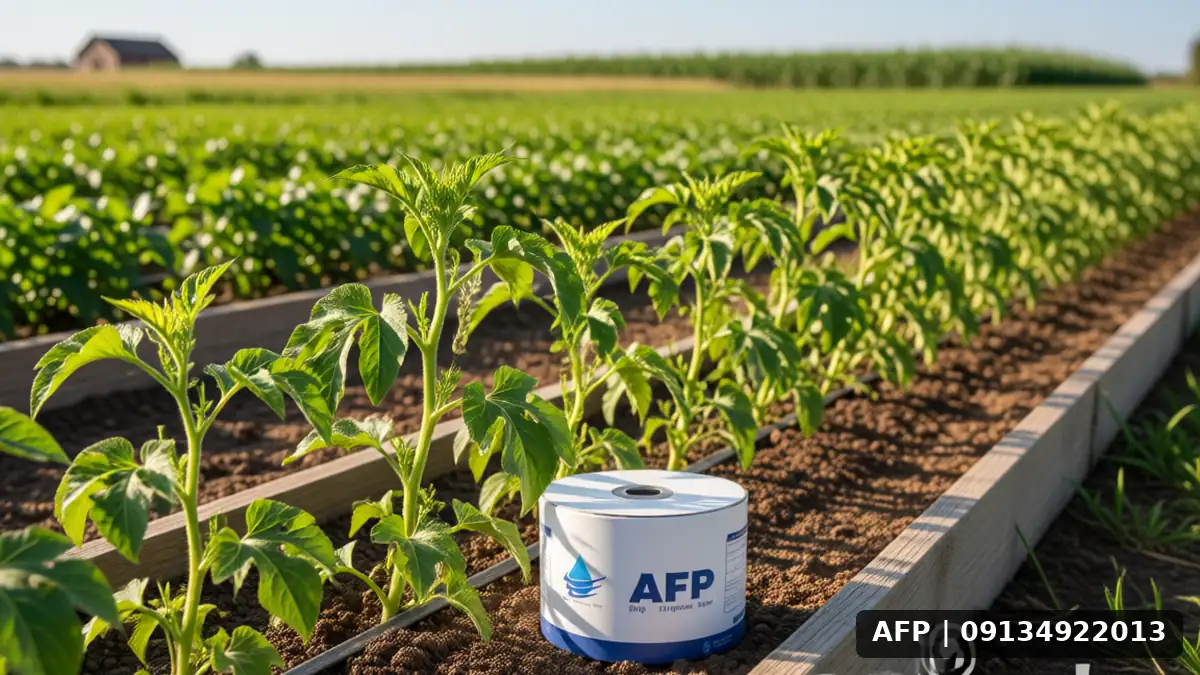
Contrary to common belief, band irrigation is not always superficial. During the hot months of the year, to prevent excessive root heating, it is sometimes necessary to use bands at slightly deeper depths or to combine band irrigation with deep drip emitters. Irrigation depth management directly affects the uptake of amino acids and growth-promoting vitamins, which are usually applied alongside soluble fertilizer. We have published a complete guide on our site Comparison of band and drip irrigation which precisely examines the technical differences between these two systems. Choosing the band type based on root depth makes a significant difference in final yield.
Practical tips for increasing crop efficiency
- Cartridge and filter check: Since the holes in band emitters are very small, any impurity in the water source can cause pressure fluctuation and reduced uniformity. Do not forget to regularly replace filter cartridges and use two-stage filtration.
- Soil cover: In the early stages of melon planting, mulch cover on the band reduces evaporation and stabilizes root temperature. This directly helps improve fruit quality and increase fruit weight per square meter, while reducing the need for re-wetting.
- Irrigation pulse management: At the beginning of the season, shorter and more frequent pulses are recommended. As the canopy grows, increase the duration of each pulse to encourage deeper roots and increase the plant’s drought resistance.
- Inlet pressure control: Pressure above 2 bar can cause band rupture or water scattering, while low pressure prevents water from reaching the end of long rows. To maintain uniformity, keep the bed slope less than 5 meters per 100 meters and use a pressure regulating valve.
Impact of climate on band type selection
In arid and hot regions such as the southern part of the country, cantaloupes develop shallower root systems, making a light drip line system (5 to 10 meters) more suitable. Conversely, in temperate regions, lines with greater emitter spacing can be used. To better understand the general principles of drip irrigation systems, studying the topic of sub-surface irrigation can be useful, as the physical principles of pressure and distribution are common to both growing media, and it can be considered an alternative or complementary option in specific high-porosity soil conditions.
Frequently Asked Questions (FAQ)
- Why does cantaloupe fruit crack? Fruit cracking usually results from severe moisture fluctuations. When water does not reach the roots uniformly and is then followed by heavy irrigation, the fruit skin grows faster than the flesh. Adhering to a regular drip line schedule solves this problem and prevents subsequent damage.
- Is drip line suitable for heavy soils? Yes, but the distance between emitters should be reduced to increase lateral water spread. In heavy soils, vertical infiltration is slower, and water needs to spread more on the surface so that roots can absorb nutrients uniformly.
- When is the best time to harvest cantaloupes in a precision irrigation system? Harvest usually occurs 90 to 120 days after planting. Cutting off irrigation 3 to 5 days before harvest increases the concentration of soluble solids and improves fruit flavor. This point is vital for maintaining export-grade quality.
- How can I prevent my drip lines from clogging? Using a two-stage filtration system (mesh and disc/cartridge) and regular washing of the water tank is essential. Winter maintenance of equipment also protects the useful life of the drip lines.
Conclusion and Summary
Achieving cantaloupe yield per hectare with drip line intentionally is an engineered process. Combining correct plant spacing, selecting the drip line type based on root depth penetration, and precise execution of a fertigation program is the key to achieving high volume with excellent quality. Remember that the irrigation system is not just a mechanical component, but the brain of your farm. By being precise about small details of filtration and pressure management, you reduce water costs and bring the risk of crop loss to near zero. We recommend consulting our guide on wheat irrigation and yield per hectare Also review this to gain a comprehensive understanding of the water economy on the farm and make better decisions for future crops.