Comprehensive Guide to Growing Marzesh Using Drip and Tape Irrigation
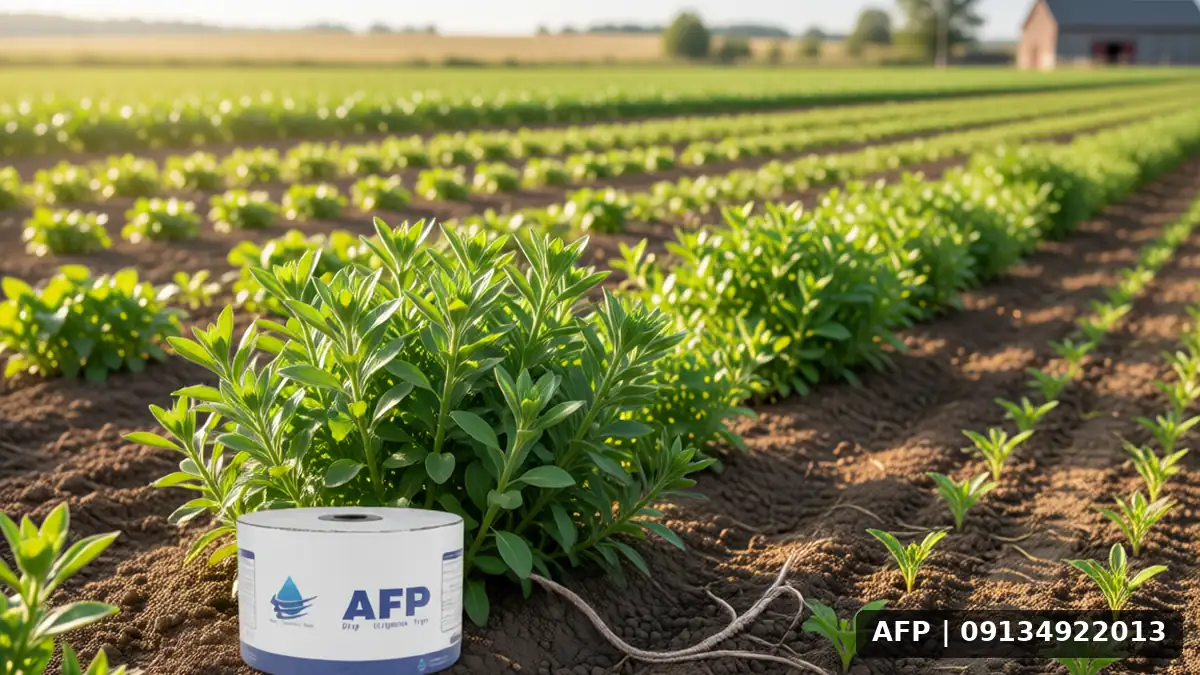
Cultivating moisture-sensitive crops like marjoram requires precision in water resource management. In recent years, the use of drip and tape irrigation systems has become essential for increasing efficiency and reducing final costs. Marjoram, a valuable crop used in the food and pharmaceutical industries, is sensitive to ambient temperature, soil type, and soil moisture levels. Consequently, a deep understanding of how this planting method interacts with tape irrigation can significantly impact yield quality and quantity. This guide examines the complete process of planting marjoram, focusing on maximizing water resource efficiency.
Fundamentals of Marjoram Planting with Drip Irrigation
To succeed in marjoram cultivation, selecting appropriate initial inputs and adhering to spacing principles is critical. Marjoram is typically planted with suitable row and intra-row spacing to ensure adequate space for root development and plant accessibility for localized irrigation. Tape irrigation is a popular option for marjoram farms due to its lower cost and ease of installation compared to drip hoses. Reviewing standard row spacing for root vegetables such as sugar beet can provide similar ideas for adjusting marjoram layout in the field. Since marjoram roots develop better in fine-textured soils, deep plowing and seeding at the appropriate depth are particularly important. Additionally, selecting high-grade, healthy seeds is the first step to ensuring uniform germination, which is impossible without sufficient moisture in the initial stages. Therefore, the coordination between seeding depth and the slope and angle of the tape line must be precise to ensure water is delivered exactly to the root zone and water waste is minimized.
A key consideration in this section is aligning the planting schedule with the start of the active irrigation period. Marze requires uniform moisture during the first weeks after planting to prevent seed damage or failed germination. The drip irrigation system allows moisture to reach the root zone directly without wetting the upper parts of the bush, which are susceptible to fungal infections. This feature makes drip irrigation a superior option compared to furrow or sprinkler irrigation for marze, as it keeps leaf surfaces dry and prevents the spread of fungal diseases such as rust and brown spot. Additionally, by maintaining moisture at the root level, leaching of nutrients from the upper soil layers is prevented, encouraging roots to penetrate deeper.
Irrigation Planning and Key Timings
Irrigation management for marze must be adjusted based on the plant’s growth stages. Each growth stage has a different water requirement. The table below presents an example of a proposed irrigation schedule using drip lines based on growth stages:
- Germination period: Frequent, low-volume irrigation (every 2 to 3 days).
- Vegetative growth period: Increase irrigation volume with reduced frequency (every 5 to 7 days).
- Flowering and fruiting period: Precise management based on tensiometric indices and soil conditions.
- Maturation period: Gradual reduction of irrigation to enhance the dry matter quality of plant active compounds.
To design this program, familiarity with drip line types is essential. Selecting a line with the appropriate diameter and drip hole spacing relative to Marigold seed planting depth is important. Guide to pre-purchase tips for drip line irrigation This can help you select a product suitable for your farm conditions. Additionally, paying attention to system operating pressure and selecting appropriate fittings helps prevent irregular water distribution. In sandy soil areas, irrigation frequency should be higher and volume lower, as the high drainage of these soils means roots cannot access moisture at great depths. Conversely, in clay soils, lower frequency and higher volume are recommended to ensure complete root zone wetting.
Impact of water on similar product quality
Although this article focuses on radishes, the general principles of drip irrigation are applicable to other products with similar root or leaf structures. For example, a comprehensive guide on using tape for radish cultivation demonstrates how moisture control leads to uniform growth; a critical point in radish farming for preventing root splitting and increasing yield. Uniform moisture control ensures that all plants in a row reach maturity at the same time, facilitating mechanized harvesting. This uniformity allows the farmer to harvest at the optimal time and prevent quality loss caused by uneven ripening.
Practical tips and technical troubleshooting
In radish planting operations, there are multiple challenges that drip irrigation can address or manage:
- Emitter clogging: Radishes are typically grown in fertile soils. If the soil contains a high amount of clay, there is a risk of droplet clogging. The use of appropriate filters and periodic flushing of irrigation lines is essential. Fine-mesh screen filters or disc filters are suitable options for this purpose.
- Flow pressure regulation: Irrigation pressure must be adjusted so that water droplets are distributed uniformly across the entire tape. Excessive pressure can cause soil erosion around the plants. The inlet pressure to the tape must be set according to the manufacturer’s nominal capacity to maintain uniform water distribution.
- Tape spacing and gluing system: Correctly connecting the drip line to the inlet manifold must be done precisely to prevent leaks. Using standard clamps and butt joints is essential to prevent leakage and stretching of the line at connection points.
When using drip lines, attention to the wall thickness and mechanical resistance of the line to soil pressure during stretching is important. Checking the ideal wall thickness of the drip irrigation line helps you estimate its durability over the growing season. Thicker lines offer greater resistance to physical damage and being bitten by animals or field equipment, but they have a higher initial cost. Therefore, choosing between a thin and thick line should be based on the expected lifespan and field conditions.
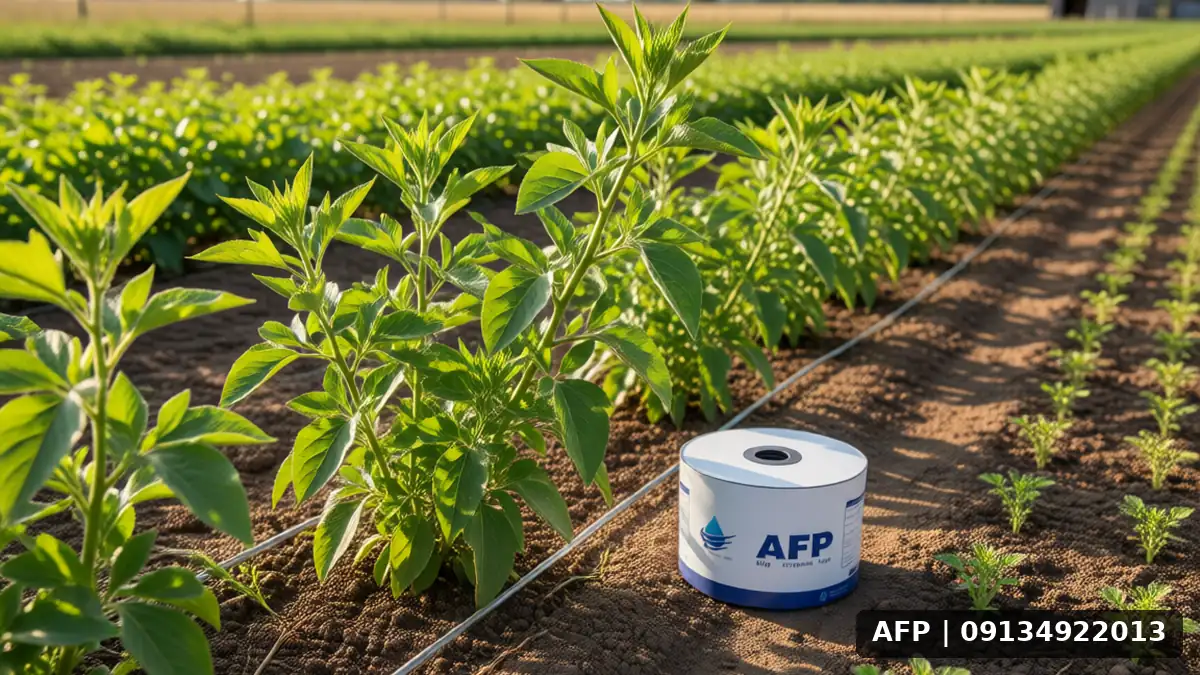
Additionally, combining drip irrigation with fertigation is one of the most powerful tools for supplying nutrients to the boundary. By dissolving nitrogen and potassium fertilizers in the irrigation water, fertilizer waste can be reduced and root uptake increased. This method is particularly effective in sandy soils with rapid drainage, as it prevents nutrient leaching to greater depths. Drip fertilization allows for precise management of plant nutrition, enabling the type and amount of fertilizer to be adjusted according to the plant’s needs at each growth stage. This not only reduces fertilizer costs but also prevents contamination of groundwater with nitrates and other chemicals.
Frequently Asked Questions (FAQ)
Can drip lines be used for the boundary, or is only drip hose suitable?
Yes, drip tape is an excellent option for crops with high planting density, such as mung bean, due to its lower cost and the ability to be buried in the soil. You only need to ensure that the tape is not damaged by growing roots. In some cases, the tapes can be placed at the root depth to prevent physical damage.
What is the best time for the first irrigation of mung bean?
The first irrigation should be performed immediately after sowing or seed emergence to provide sufficient moisture for germination. Sequential and light irrigations are recommended until germination (seedling emergence) is observed. The precise timing of this irrigation determines the final germination percentage.
How can I ensure water reaches the roots?
You can use simple soil science methods; take soil samples at root depth every 10 to 15 days and check their moisture content. Additionally, observing plant behavior (wilting) can indicate water deficiency. Using soil moisture meters provides higher accuracy.
Summary and final recommendations
Choosing a planting method for mung bean with drip irrigation is a long-term investment that is justified by increased yield, improved product quality, and the conservation of water resources as an environmental service. Adhering to planting spacing principles, proper pressure adjustment, and selecting the appropriate type of drip tape are the three main pillars of your success. By following these principles, you can achieve products of excellent quality with high water use efficiency.
To better understand general cropping contexts and resource management, it is recommended to study other crops as well. For example, studying mustard yield per hectare can provide insights into input management for similar crops. Additionally, examining barley yield per hectare, strategies for increasing productivity and sustainability in dry regions, offers valuable ideas for adapting irrigation methods to various climatic conditions. Farmers can compare these texts to select the best approach for their farm.
Ultimately, continuous learning and practical observation in the field are the key to fully understanding how the Marzhe plant responds to various irrigation treatments. Never automatically change your irrigation schedule without preliminary tests and always use specialized drip irrigation resources. Accurate recording of water consumption, rainfall levels, and plant growth will help you optimize future plans.
Related content: fava bean seed rate per hectare afghan farming, Spinach seed rate per hectare + influencing factors and methods to increase it, Barley yield per hectare: Strategies for increasing productivity and sustainability in dry regions, Mustard yield per hectare