Drip Irrigation in Lettuce Cultivation: Key Considerations
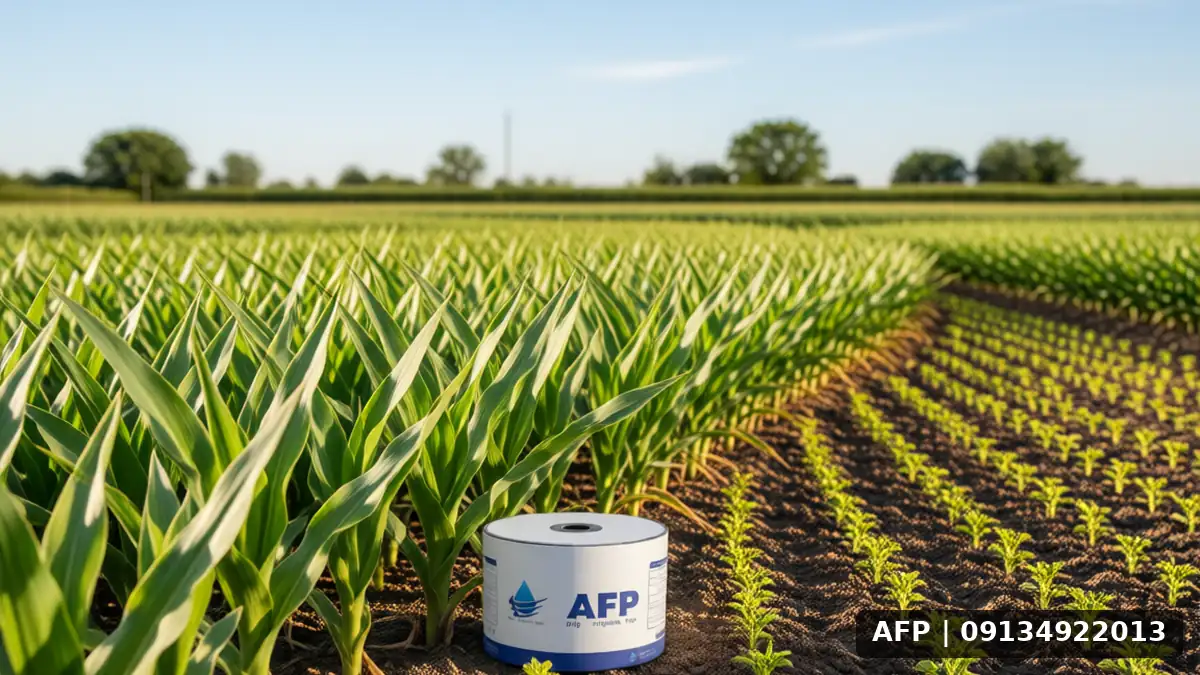
Cultivating lettuce is a quick-harvest market crop that is highly sensitive to soil moisture. In recent years, modern irrigation methods have replaced traditional ones, with one of the most commonly used being drip irrigation with inline emitters or pressure-compensating drip tape. This method is often referred to in technical literature as drip irrigation for lettuce and combines the advantages of drip tape with more precise water distribution to the root zone. The goal of this article is to provide an in-depth review of key considerations for using this system in lettuce cultivation, enabling farmers to make informed decisions that reduce costs and improve crop quality.
Lettuce plants have a shallow, spreading root system. Therefore, slow and uniform infiltration of water into the upper soil layer is critical. Drip tape with inline emitters, featuring plastic or biodegradable drip points along the line, causes water to enter the soil with controlled pressure and velocity rather than through uniform small pores. This can reduce the risk of clogging small drip outlets but requires more precise management.
Understanding the principles of drip irrigation in lettuce farms
Drip irrigation is a subset of drip irrigation systems. In this system, drip tape features specific emitters responsible for regulating flow, rather than having uniform small holes. For lettuce cultivation, these emitters are typically spaced at set intervals (for example, 10 or 15 centimeters) along the tape.
- Flow stability: The emitters ensure that water flow remains constant throughout the length of the tape, even on long lines.
- Reduced Clogging: Although the emitters have a smaller outlet area, in practice, the stronger flow makes them less susceptible to complete blockage by fine sediment (compared to very small drip emitters).
- Clarity Coding: Emitter tapes are typically marketed with specific coding that includes width, thickness, and emitter type (dissolvable or fixed).
For a better understanding of functional differences, one should consider the flow rate of the irrigation tape. In emitter tapes, calculating the flow rate is slightly more complex than in standard tapes and must be based on the number of emitters and the flow rate of each emitter. Farmers should match the total tape flow rate with the crop’s needs before purchasing.
Why does the crop need slow and uniform flow rates?
The crop roots seek uniform moisture. If water enters the soil in bursts or irregularly, it can cause lateral root drop-off or root rot in areas where water accumulates. The emitter system, with better pressure distribution, reduces the risk of water pooling at specific points. However, it must be noted that dissolvable emitters may be washed out after the first rainfall or heavy irrigation, turning the system into a standard drip line. Therefore, selecting the emitter type based on climatic conditions is very important.
[IMAGE_1]
Key Points for Installation and Setup of the Emitter System
Correct installation is the key to successful leafy green crops using a pressure-compensated system. Common installation errors can reduce overall farm yield by up to 30%. Below are the most important points to consider:
1. Flushing pipes before connection
To prevent fine sand and clay particles from entering the small emitters, always flush main and lateral pipes with clean water before connecting the drip lines. The presence of suspended particles can clog the emitters. This step is particularly essential when using well water or stored water.
2. Selecting the appropriate line diameter
Leafy greens are typically planted in rows spaced 30 to 40 centimeters apart. The drip lines must be positioned directly beneath the planting site or seedling tray. Using drip lines with a diameter of less than 16 millimeters over long lengths can cause pressure drops and reduced flow at terminal emitters. For leafy green farms, 20 or 22 millimeter lines with optimized emitters are usually the best choice.
3. Managing water pressure
Emitters are highly sensitive to pressure. Excessive pressure can cause emitters to open improperly and release water as a spray, increasing the risk of leaf rot. Low pressure can cause emitters to clog. The ideal pressure is typically between 1 and 1.5 bar. Using a pressure regulator on the main line helps maintain better pressure control.
If you are struggling to select equipment, studying the components of drip tape systems can improve your understanding of component compatibility.
Fertilization and moisture management in lettuce cultivation
Lettuce is a fertilizer-sensitive crop. Drip irrigation enables the precise application of liquid fertilizers. However, some fertilizers form precipitates at low pressures or specific temperatures, which can clog the drippers.
Which fertilizers are compatible with drippers?
- Phosphate and potassium fertilizers can generally be injected without issues.
- Avoid injecting ammonium nitrate at very low pressures, as it may crystallize.
- Always test the smallest dose of a new fertilizer before applying it across the entire field.
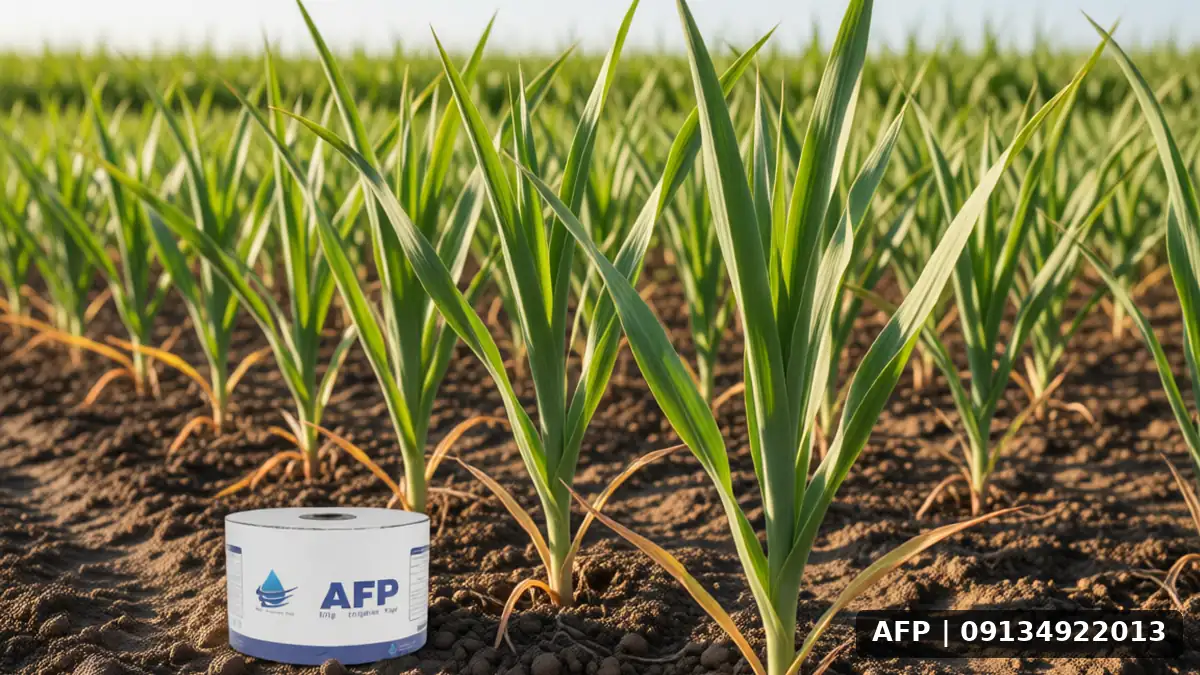
Another important consideration is irrigation scheduling. Lettuce requires stable moisture during rapid growth stages. Temporary water deficit causes stalks to become dry and thin, reducing market quality. Conversely, overwatering directly leads to root rot. Using soil moisture sensors can greatly help regulate irrigation timing in the drip system.
To better understand the water requirements of similar crops, you can refer to guides such as leaf lettuce yield per hectare as the water consumption pattern of leaf lettuce shares many similarities with that of leafy greens.
[IMAGE_2]
Common troubleshooting for drip systems
Common issues in drip irrigation of leaf lettuce include dry zones, leaks from emitters, and reduced flow rate.
Problem: Dry zone at the beginning of the line
Possible cause: Clogged filter, closed inlet valve, or kinked pipe. This issue may result from pressure drop at the beginning of the line, which is more critical in pressure-compensating systems.
Problem: Water exiting in spray form
Cause: Excessive pressure. This causes moisture to accumulate on leaves, increasing the risk of fungal diseases such as gray mold. Ensure a pressure regulator is used to control pressure on the line.
Problem: Clogged emitters
If water-soluble emitters were used, they may have dissolved after one irrigation cycle and need to be replaced. If fixed emitters are used, clogging is usually caused by calcium deposits or algae. Periodic flushing of the system with citric acid or peroxide can resolve the issue.
Economic Advantages and Challenges
The initial cost of drip irrigation in vegetables is higher than that of standard tape drip. However, this investment is economically justified in the long term because:
- Water efficiency: Reduced water loss and increased yield volume due to root stability.
- Reduced labor costs: Automation of irrigation and fertilization.
- Extended soil lifespan: Prevention of soil salinization through precise moisture control.
Farmers should conduct a cost-benefit analysis before investing. If the leaf crop is a short-season annual, the return on investment may be longer. However, in greenhouses with continuous cropping, this system is highly efficient. In this context, consulting a comprehensive drip irrigation guide for greenhouses can provide a clearer understanding of the system’s application in controlled environments.
[IMAGE_3]
Frequently Asked Questions (FAQ)
What is the difference between a type-tip lateral with nodes and a fixed drip emitter?
Emitter tubing is made of plastic with emitters integrated along the line and is generally not reusable after one season. Fixed drippers are separate components installed in PVC pipes, offering greater durability but requiring more time for installation.
Are dissolvable emitters suitable for lettuce?
It depends on conditions. If you have a short-season crop, dissolvable emitters are a cost-effective and logical option. However, if you are looking for a fixed field system for several years, use fixed emitters.
What is the recommended distance between the irrigation line and lettuce roots?
The line should be placed 2 to 3 cm away from the main root to prevent excessive root growth on the tubing, while remaining close enough for optimal water absorption.
How do we prevent clogging of emitters?
Use fine filters (e.g., 120 mesh), perform weekly system flushing in the reverse direction of water flow, and apply cleaning agents periodically.
Conclusion
Drip irrigation in celery farming is a powerful tool for increasing yield and reducing water consumption, but it requires high technical precision. Selecting the appropriate drip type, controlling water pressure, and properly managing fertigation are the three main pillars of success in this system. By observing these points and considering the field’s climatic conditions, the benefits of this emerging technology can be utilized. Farmers are recommended to conduct a small trial in a limited section of the farm before replacing the system, so that necessary optimizations can be applied on a large scale.
Related articles: Discharge rate of tape drip irrigation lines, Components of the D8A8D8A7 tape D8AADB8C drip irrigation system, bell pepper yield per hectare iraq