Drip Irrigation for Beet Cultivation: A Detailed On-Farm Cost Analysis
Introduction: Why is drip irrigation critical for sugar beet?
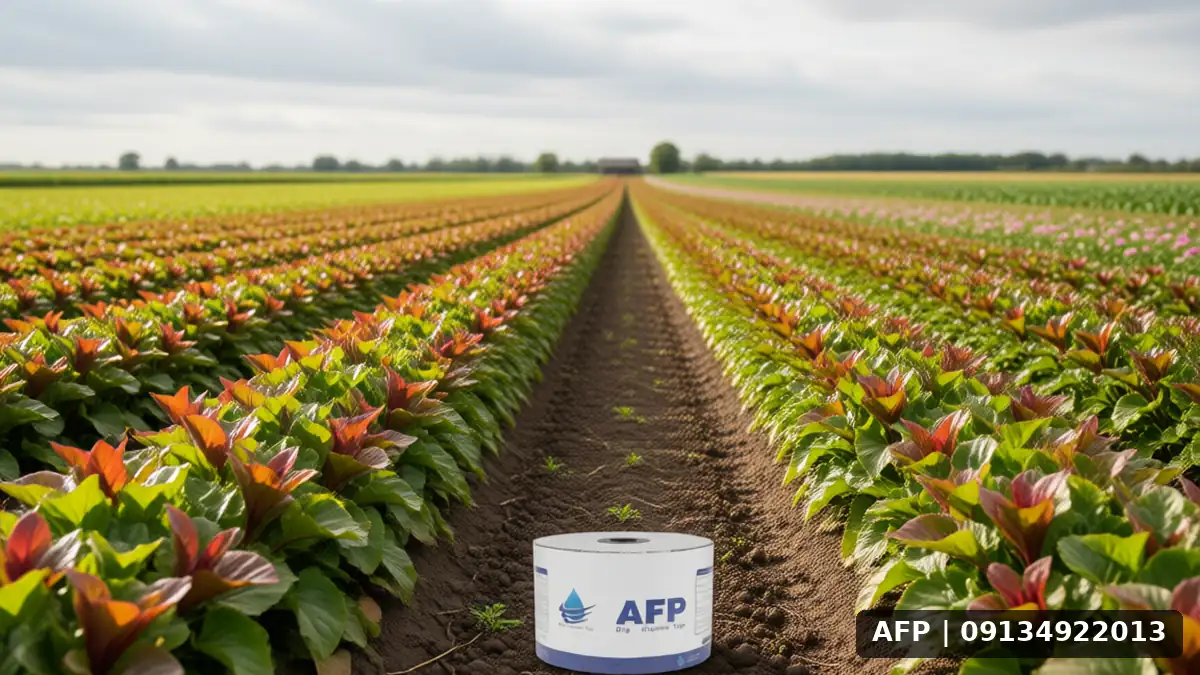
Sugar beet is one of the most sensitive crops to precise soil moisture management. Severe fluctuations in moisture not only affect root weight but also cause internal hollowness and root cracking during the sugar accumulation stage. Under these conditions, drip irrigation systems and strip types are considered ideal choices due to their uniform water distribution across the rhizosphere. However, the main question that always occupies farmers’ minds is the economic one: Is the initial investment in these systems justifiable given the ongoing costs? In this section of the article, focusing on farm costs, we examine the financial details of implementing this system to help you make more informed decisions. Additionally, a correct understanding of seed quantities and planting density is a prerequisite for accurately estimating irrigation costs; therefore, studying the topic of quinoa seed rate per hectare as a general density management model for other root crops can serve as a good guide.
Analysis of initial cost components of drip irrigation systems
Main equipment and infrastructure
The most expensive initial component is the purchase of the pipe network, filters, glasses, and drip or tape lines. For a beet farm with standard planting density, appropriate filters are required to prevent clogging of the drip emitters. Using channel-shaped or mesh filters is essential for suspended minerals. Additionally, selecting the correct size for main and lateral pipes based on the system’s operating pressure directly impacts the long-term costs. If your system requires more powerful pumps to meet the required pressure, electricity costs will also increase. Therefore, precise selection of pipe types and fittings must be done with high accuracy. To learn about the variety and application of auxiliary parts, you can refer to the ‘Types and Applications of Rainfall Pipes’ guide, which introduces products and compares costs.
Key points in selecting long-term durability
- Material and lifespan of durability components: Higher quality durability components are more expensive but offer greater resistance to chemicals.
- Pipe diameter: Choosing the optimal diameter prevents energy waste and reduces periodic repair costs.
- Fittings: Using industrial fittings instead of cheap polymer fittings reduces long-term maintenance costs. You can read the article on their details in Agricultural tape line fittings to learn about the types and prices.
Ongoing costs: Water, energy, and labor
One of the major advantages of drip irrigation is the significant reduction in water and energy costs. In conventional sprinkler systems, water losses due to evaporation and surface runoff are very high. In drip systems, water is delivered directly to the root zone, resulting in a 30 to 50 percent reduction in water costs. Additionally, system automation significantly reduces the labor required to operate valves and pumps. With precise scheduling, farmers can use low-consumption pumps during low-demand nighttime hours instead of high-consumption pumps, thereby optimizing electricity costs. Optimal water resource management is a core pillar of reducing operational costs, and awareness of precise irrigation principles requires studying specialized resources in this field. In this regard, the comprehensive guide to everything about biotic irrigation can be helpful.
It is worth noting that the cost of cleaning and periodic servicing of the drip system should also be included in calculations. Clogging of drippers can reduce system efficiency. To prevent this problem, the use of flushers and proper irrigation scheduling is critical. You can review the guide to Key points for Type A tape irrigationto avoid common problems and their hidden costs. These points include operating pressure, periodic flushing, and proper tape maintenance, which directly affect equipment lifespan and replacement costs.
Impact on yield and return on investment
The final farm cost is not limited to production expenses; it must also be adjusted for the increased yield weight of sugar beet per hectare. Drip irrigation systems reduce root stress, resulting in larger and more uniform roots. From an economic perspective, even a 10% increase in sugar beet weight can offset the additional costs of the irrigation system. For a better understanding of this concept, you can refer to the article Sugar Beet Seed Rate per Hectare and its relationship with planting density and costs. Optimal planting density combined with precise irrigation is the economic turning point for any farm. Additionally, comparing sugar beet yield with other root crops, such as pumpkin, where managing density and irrigation also plays a key role, can provide farmers with a clearer, more accessible perspective; therefore, reviewing Pumpkin Seed Rate per Hectare + Factors Affecting Density is recommended.
Practical Tips for Reducing Farm Costs
- Correct Pressure Design: Systems operating at excessive pressure consume more energy. Through initial calculations, reduce the operating pressure to the maximum necessary limit.
- Use of sustainable water sources: If you have access to depleted water resources, use drip irrigation systems to optimize their utilization.
- Periodic maintenance: Timely inspection of emitters and filter cleaning prevents costly future repairs.
- System integrity: Although using higher-quality components increases the initial cost, it reduces recurring maintenance expenses over the next three to five years.
Additionally, considering local factors such as soil type and land slope direction during system design can prevent extra costs arising from field modifications. To learn how to more accurately calculate irrigation parameters based on farm conditions, the guide to proper irrigation in various conditions can be a useful resource. This guide examines the impact of environmental variables on irrigation needs and associated costs.
Frequently Asked Questions (FAQ)
Is drip irrigation more suitable for light or heavy soils?
Drip systems are suitable for both soil types, but in heavy soils with lower permeability, greater attention must be paid to the number and spacing of emitters to prevent waterlogging. Additionally, water percolation depth is higher in light soils, requiring different adjustments.
How can I calculate the cost of foamming?
Foamming costs depend on the field area, pipe length, and the type of foamming selected. Estimate a fixed cost per square meter based on sugar beet planting rows (which are typically straight lines). The price of these components varies by brand and quality.
Can I maintain a drip system over multiple years?
Yes, with proper maintenance, drip systems—especially tape types—are generally designed for a single growing season, but main connections and pipes can be reused for several years. The key is proper flushing at the end of each season and correct storage of the tapes.
Summary: The Economics of Drip Irrigation in Beet Production
Investing in drip irrigation for beets is a complex but meaningful economic decision. Although the initial cost of equipment may appear concerning, reductions in water, energy, and labor costs, combined with increased crop yield, will offset these expenses in the long term. The key to success lies in precise design, the selection of high-quality equipment, and proper planning of crop and irrigation schedules. Experienced farmers confirm that managing risk under unstable weather conditions is extremely difficult without access to precision irrigation technologies. Therefore, a serious review of on-farm costs and comparison with improved crop outcomes will always favor drip systems. Ultimately, attention to minor details, such as the selection of emitters and fittings, can make a significant difference in final productivity.
Related articles: Vegetable Yield per Hectare: A Practical and Calculation Guide, Crop Yield per Hectare and Ways to Increase It