Pest and Disease Management in Corn Using Drip Irrigation: A Comprehensive Guide for Farmers
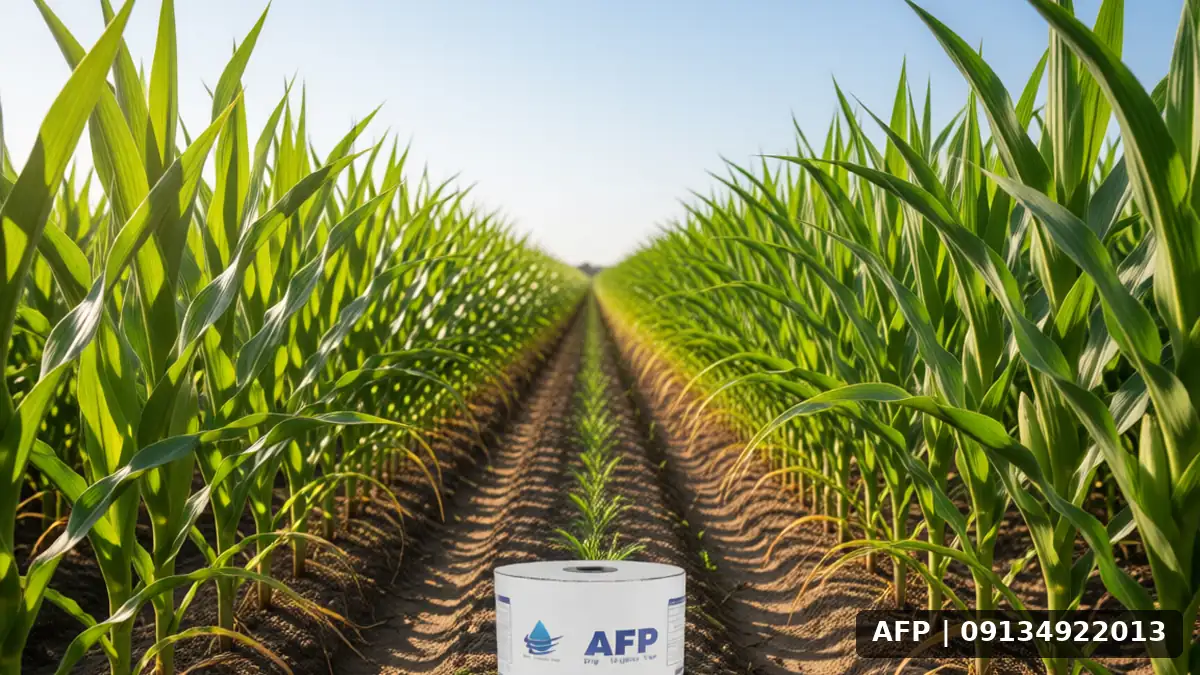
Modern agriculture is built on the optimal use of basic resources. Among various irrigation methods, drip irrigation plays a special role in managing plant health due to its high precision in water and nutrient distribution. However, many farmers are concerned about whether this method can exacerbate certain corn pests and diseases with drip irrigation or not? This article provides a detailed examination of the relationship between moisture management and the prevalence of pathogens in corn. Our goal is to offer a comprehensive solution that controls health challenges while simultaneously increasing yields.
Impact of Drip Irrigation on Soil Ecosystem and Diseases
Drip irrigation maintains localized moisture around the roots. This condition is suitable for better root growth, but if not properly regulated, it can create an ideal environment for the growth of soil-borne fungi. Diseases such as bacterial wilt and root rot in corn are directly related to the duration of moisture retention in the soil bed. Therefore, a deep understanding of water behavior in different soil types is the first step in prevention.
Risk of increased relative humidity around leaves
Unlike rain-based irrigation, drip emitters usually do not wet the foliage, which reduces the risk of leaf-rot diseases. However, if the system is not properly regulated, mismatched pressure can cause water droplets to splash below the soil surface or wet the sand around the stem. In this condition, fungal diseases of the stem and inflorescence increase. To prevent this issue, precise system design is of high importance. Additionally, selecting the correct mechanism for pressure regulation is key to success in this aspect.
For a better understanding of how losses are reduced by selecting the right equipment, you can read the Saffron yield per hectare to gain a better insight into economic efficiency and side effects.
Pest management under drip irrigation conditions
Pests such as root-knot nematodes and soil-borne fungi have different sensitivities to moisture conditions. Drip irrigation, by creating alternating dry and wet layers in the soil, can disrupt the life cycle of certain pests. However, high moisture in the topsoil layer facilitates the activity of earthworms and snails. Smart management of this balance requires continuous monitoring.
- Root-knot nematode: In soils that remain constantly wet, the movement of these pests is easier. Therefore, proper drainage and a smart irrigation cycle are critical. Using moisture sensors can be helpful.
- Soil-borne fungi: Sprinkler irrigation causes a decrease in the population of some beneficial fungi, whereas drip irrigation with precise care maintains soil microbial balance. Injecting organic matter can reinforce this balance.
The Role of Dripper Spacing in Pest Dispersal
Uniform distribution of drippers ensures that moisture spots do not merge, reducing the risk of leaf-spot diseases. If spacing is too wide, plants face relative water stress, which lowers their resistance to pests. Selecting the appropriate tape type is crucial. This choice should be based on the farm’s technical needs, not just price.
To choose the best option, you can review the technical differences in the article ‘Differences Between Sewn and Plate-Attached Drip Tape’ to select the suitable type for your land. Also, consider that the manufacturing quality of the drip tape directly impacts its durability and performance over time.
Practical Tips for Reducing Diseases and Pests
Active management in corn cropping with drip systems requires adherence to the following principles:
- Drainage control: Prevent water from accumulating around the roots. Heavy soils require more attention. If necessary, it is recommended to improve the soil profile by adding soil conditioners.
- Fertigation: Applying nitrogen through the irrigation system promotes faster plant tissue growth and increases resistance to yellow and orange leaf disorders. Balanced nutrition is the foundation of plant stability.
- Early detection: Observing brown spots on leaves or yellowing of lower leaves is an early sign of stress caused by excess moisture. A rapid response at this stage minimizes losses.
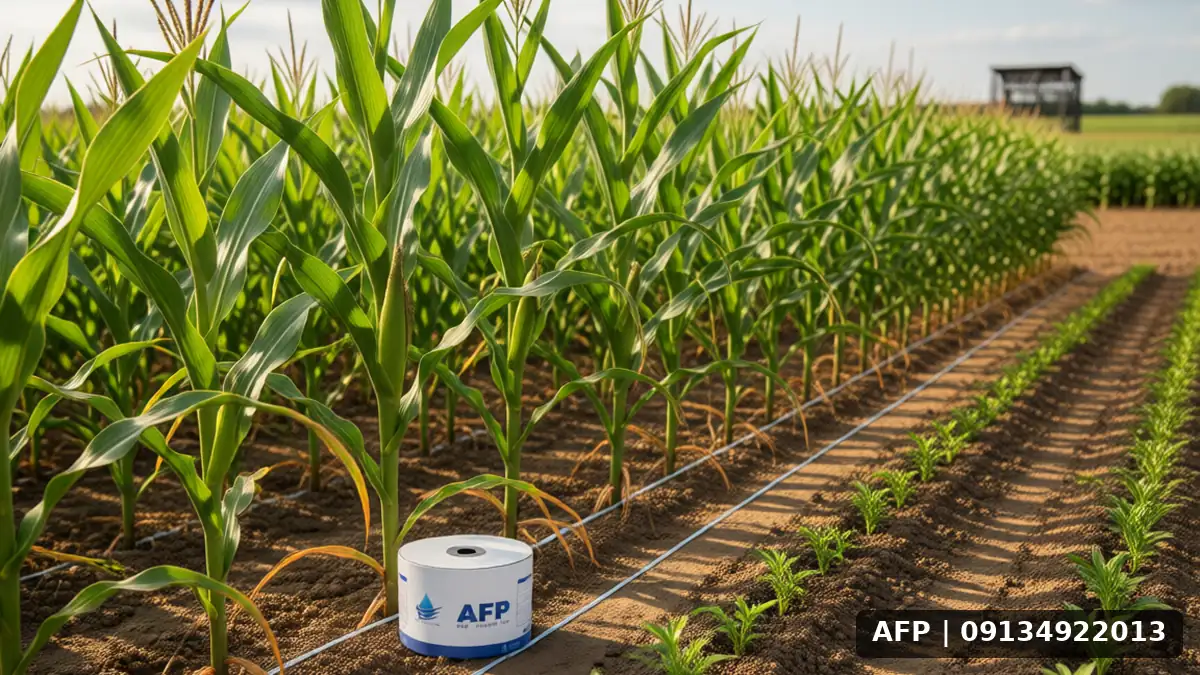
Additionally, the use of fine mesh screens or proper filtration is vital to prevent emitter clogging due to fertilizer sediment. Clogging causes uneven irrigation, leaving some areas dry and others wet, an imbalance that is a primary factor in pest infestation. System stability requires regular maintenance.
Interference with chemical spraying
In drip systems, some pesticides are washed out by water. Therefore, the timing of pesticide application must be scheduled so as not to interfere with the irrigation cycle, ensuring that soil-active pesticides remain in the soil. Coordination between the technical and plant protection teams is essential to minimize pesticide leaching due to excess water.
For information on how to calculate the exact application rate, study Lupin (Lupinus) yield per hectare can be a good guide for adjusting irrigation formulation and estimating additional costs.
Frequently Asked Questions (FAQ)
Does drip irrigation increase relative humidity in the field?
No, since water is applied directly to the soil, the relative air humidity in the field decreases, which reduces the risk of leaf diseases. However, local soil moisture increases. These two phenomena must be monitored separately.
When should the drip emitters be cleaned?
Before the planting season and after each irrigation cycle, always flush the system with clear water to prevent blockage of small orifices caused by fertilizer residue or algae. This procedure must be included as a standard guideline in the maintenance schedule.
Can the drip system be used for weed control?
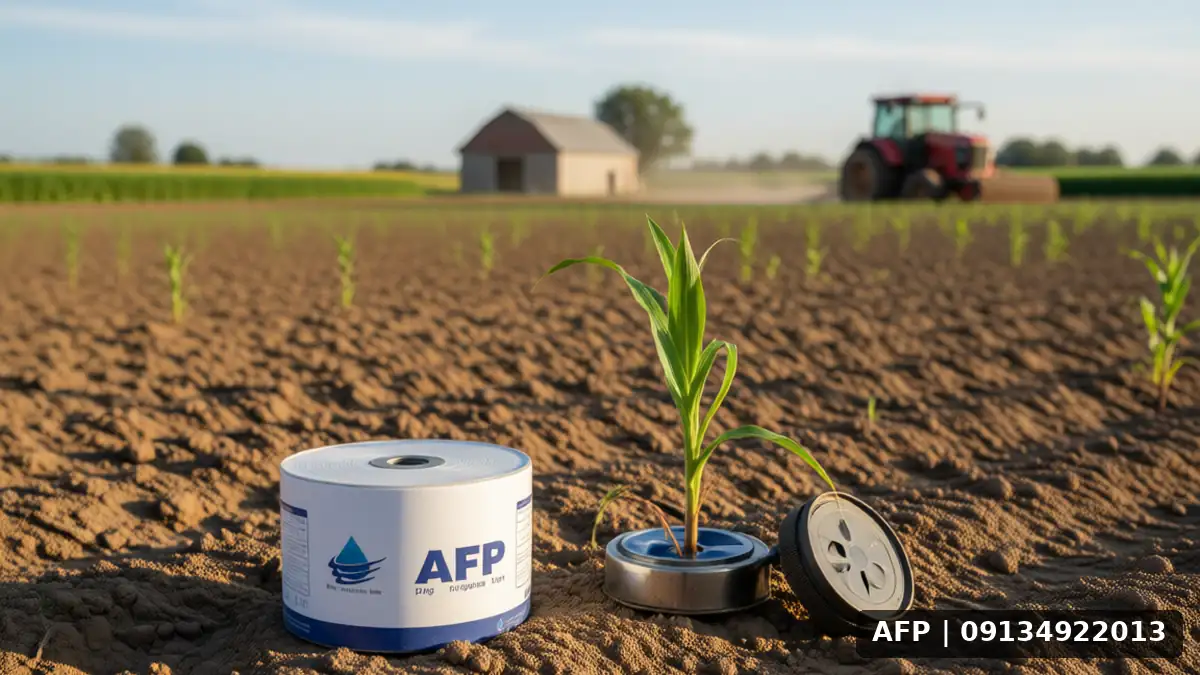
Indirectly, yes. By creating a dry zone between the drippers, weed growth is restricted. Additionally, the system can be used for pre-emergence localized application of herbicides. This method reduces herbicide usage and protects the environment.
What is the main difference of slab-tape drip irrigation for corn?
Slab-tape drip lines have a longer useful life against animal damage and surface boiling. This feature ensures that uniform water distribution is maintained over the long term and root stress is minimized. For more details, read the article Slab-tape water drip line Check this. Selecting durable materials is an investment in quality.
Conclusion
Managing pests and diseases in corn through drip irrigation goes beyond simply supplying water; it is a comprehensive strategy for controlling soil moisture, nutrient availability, and drainage. By carefully selecting the drip tape type, properly adjusting emitter spacing, and continuously monitoring plant health, you can prevent the spread of fungal and soil-borne diseases while maximizing yield and grain quality. A focus on prevention and the use of smart systems is the key to success in a changing climate. This approach is considered the most sustainable path for modern agriculture.
Related articles: Safflower yield per hectare, Castor bean yield per hectare