Soybean Yield Per Hectare with Tape Drip Irrigation: A Comprehensive Guide to Maximizing Output
Introduction: The Importance of Moisture Management in Soybean Production
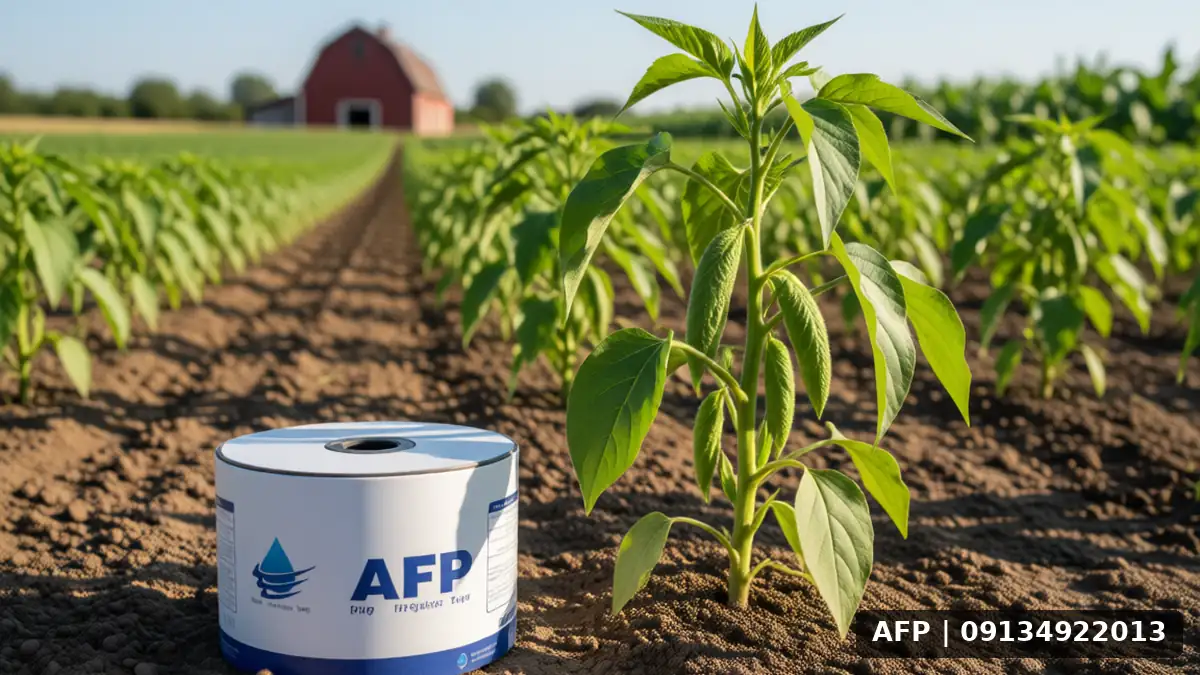
Soybean (Glycine max) is a crop sensitive to water stress that plays a key role in no-till cropping cycles and agricultural diversification. Many farmers, when looking for practical ways to increase soybean yield per hectare with drip tape are, often overlook the direct impact of uniform water distribution on final pod formation. Drip tape systems, due to their high water use efficiency and lower installation costs compared to conventional drip irrigation, are an attractive option for soybean fields. By being precisely positioned along the plant growth path, these systems ensure that moisture remains concentrated in the primary rooting zone, preventing water loss in unused areas.
In the following sections, we examine technical variables related to climate and soil to determine how the correct combination of emitter spacing and output flow rate reduces water stress and increases productivity. We will also address the simultaneous management of fertilizers with irrigation (Fertigation) in these systems and analyze practical solutions for achieving higher yield per unit area. Our goal is to provide a clear roadmap for farmers to achieve their crop yield increase targets with minimal cost and maximum efficiency.
Technical Analysis: Why Drip Tape Is Suitable for Soybean?
System Dynamics and Rooting Depth
Soybean root systems have variable depth and can penetrate deeper under certain conditions. Drip line irrigation, with its more surface-level water distribution, keeps the main root zone moist. The key point is that with drip irrigation, the wetted zone must align with the soybean plant row spacing to ensure optimal moisture uptake. This alignment allows the plant’s energy to be used for grain production rather than searching for water at different depths. When roots are in direct contact with water and soluble fertilizers, vegetative and generative growth rates increase and the flowering period is enhanced.
- Drip line spacing: A spacing of 50 to 60 centimeters is usually recommended for the shallow root layer of soybeans to ensure complete canopy coverage.
- Drip flow rate: Drip emitters with a flow rate of 2 to 3 liters per meter per hour are recommended for temperate climates, and 1.5 liters for heavier textured soils, to prevent waterlogging.
- Pressure variability: Modern drip lines largely compensate for pressure variability and guarantee uniform flow, which is critical for crop uniformity.
- Use of clear or dark mulching to conserve moisture and reduce evaporation from the soil surface during the hottest hours of the day.
Impact on irrigation coefficient and final yield
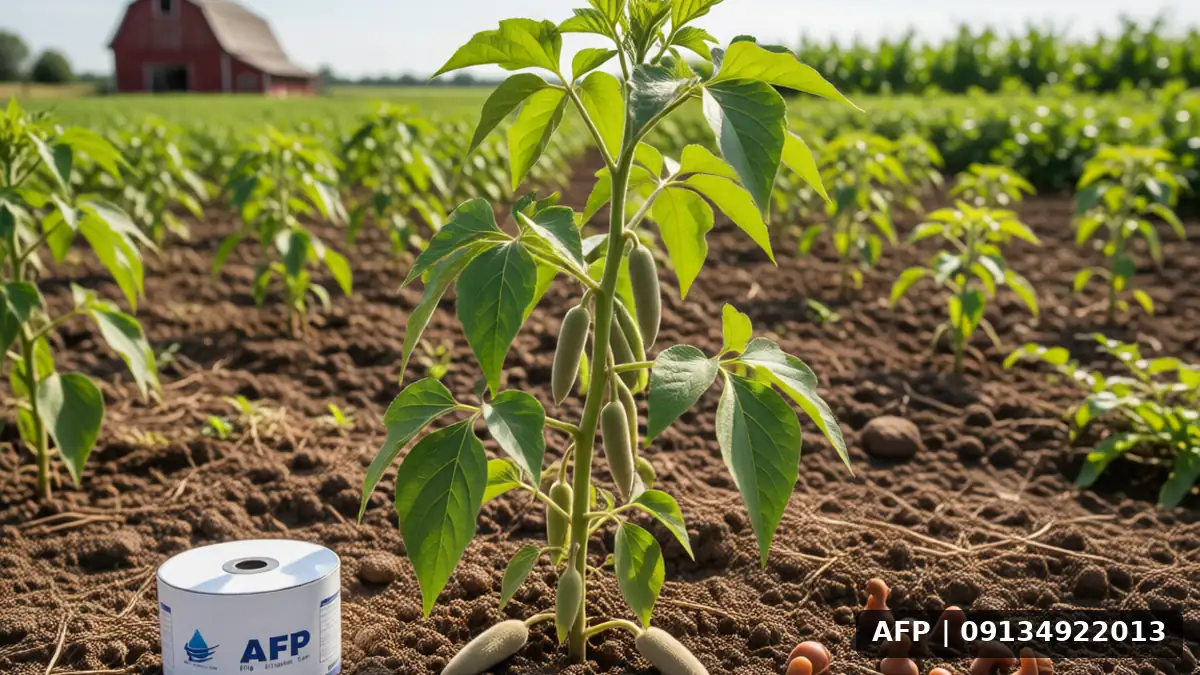
Field experiences have shown that reducing water stress during the soybean flowering and pod-filling stages directly affects thousand-grain weight and consequently Soybean yield per hectare with drip irrigation It exerts an effect. Water stress during this sensitive stage can damage the crop by up to 30%, whereas precise drip-line irrigation can reduce this loss to near zero. Additionally, maintaining soil moisture stability reduces the plant’s exposure to heat stress, as root cooling through transpiration is preserved.
Practical tips for implementing drip-line in soybean farms
Bed preparation and sowing
To operate the drip-line system effectively, the ground surface must not have abrupt slopes; if slopes exist, they should be leveled. Pre-sowing gradient measurement maintains adjacent lines and prevents water pooling at the end of the line. During sowing, plants must be planted exactly above the drip line so the taproot is situated within the wet zone. This sowing pattern maximizes the efficiency of every centimeter of water.
- Level the land as much as possible with gentle and uniform slopes for uniform pressure distribution.
- Select soybean seeds with high adaptability and resistance to soil-borne diseases.
- Sowing row spacing that aligns with drip line spacing (usually 10 to 15 centimeters above the line).
- Deeper seedbed preparation in arid climates to access residual soil moisture.
Irrigation and nutrition scheduling
A drip line system without precise moisture monitoring is just a hose. To maximize soybean yield per hectare with drip irrigation,the use of soil moisture sensors or evapotranspiration calculations is recommended. Accurate irrigation needs reduce energy costs and guarantee seed quality.
- Fertigation: Soybean is sensitive to nitrogen, but soluble nitrogen and potassium fertilizers can be used in drip systems to increase uptake efficiency. Distribution of the solution in the root zone prevents excessive salinity around the roots and facilitates nutrient absorption.
- Disease management: High soil surface moisture can create a breeding ground for rot. Therefore, frequent irrigation with small volumes, rather than infrequent irrigation with large volumes, reduces the risk of rust.
- Control of pest damage: Precision irrigation systems enable the application of bio-pesticides.
Common challenges and solutions
One of the main concerns for farmers is the clogging of tip tape emitters. Using disc filters with 100-200 mesh is critical, especially in drip and tape systems. For more details on filtration, you can refer to Comprehensive Filtration Article for Tape Systems Additionally, if the soil is heavy-textured, choosing tapes with lower flow rates and wider emitter spacing prevents incorrect wetting zone distribution. To better understand tape structures, Black Tape Selection Guide beneficial. Periodic flushing of lines with weak acids can also extend the useful life of the system.
Comparative analyses and factors affecting yield
When reviewing soybean yield per hectare with drip tape, non-irrigation factors must not be ignored. For example, seed selection and planting spacing can have a significant impact. To better understand planting spacing in nightshade-family plants like soybean, it is recommended to read the article on soybean seed quantity per hectare. Additionally, in combined systems, understanding how drip tape lines function on sloped terrain is important. Integrated management of irrigation, nutrition, and weed control are the main pillars for achieving target yield.
It should be noted that final grain management is not limited to irrigation; pest and disease control in combination with a precise drip tape system is key to achieving high yield. With proper moisture management, the plant directs more energy toward grain production. This comprehensive approach reduces crop risks and stabilizes profitability.
Frequently Asked Questions (FAQ)
1. Is drip tape suitable for heavy soils?
Yes, but with caution. In clay soils, low-emission drip tapes with wider emitter spacing should be used to prevent the lateral wetting zone from spreading and to reduce deep water percolation losses. Using flexible tubing in high-pressure points is also recommended.
2. How do we prevent clogging of the emitters?
Key measures include using the appropriate filters, regularly flushing the system before the growing season, and avoiding the injection of insoluble solid materials into the fertigation system. Installing a turbidity meter can also provide early warning of clogging.
3. Is drip tape compatible with all types of soybean seed?
The drip tape system is an independent variable from seed type, but its performance is observed to be optimized with water stress-resistant seed varieties, as these plants achieve higher yield efficiency from applied water under conditions of relative water deficit.
Conclusion and Final Recommendations
Finally, the increase Soybean yield per hectare under drip irrigation The result is a complex system where water quality, land leveling, proper drip line selection, and nutritional treatments all play a role. By following this guide and considering your specific climatic and local conditions, you can optimize water consumption and maximize production. For further comparisons with other crops, studying articles related to other plants via internal links will be useful. Modern agriculture is moving in a direction where data and technology play a central role.
The future of sustainable agriculture requires such precise and efficient systems that benefit both the farmer’s economy and the country’s water resources. Investment in irrigation infrastructure will yield long-term returns in increased productivity and reduced irrigation water use.
Related articles: Barley and spring yield per hectare, Bean seed quantity per hectare