Per-Hectare Cost of Onion Cultivation Using Drip Tape: A Comprehensive Economic and Technical Guide
Introduction to the importance of drip tape irrigation in onion cultivation
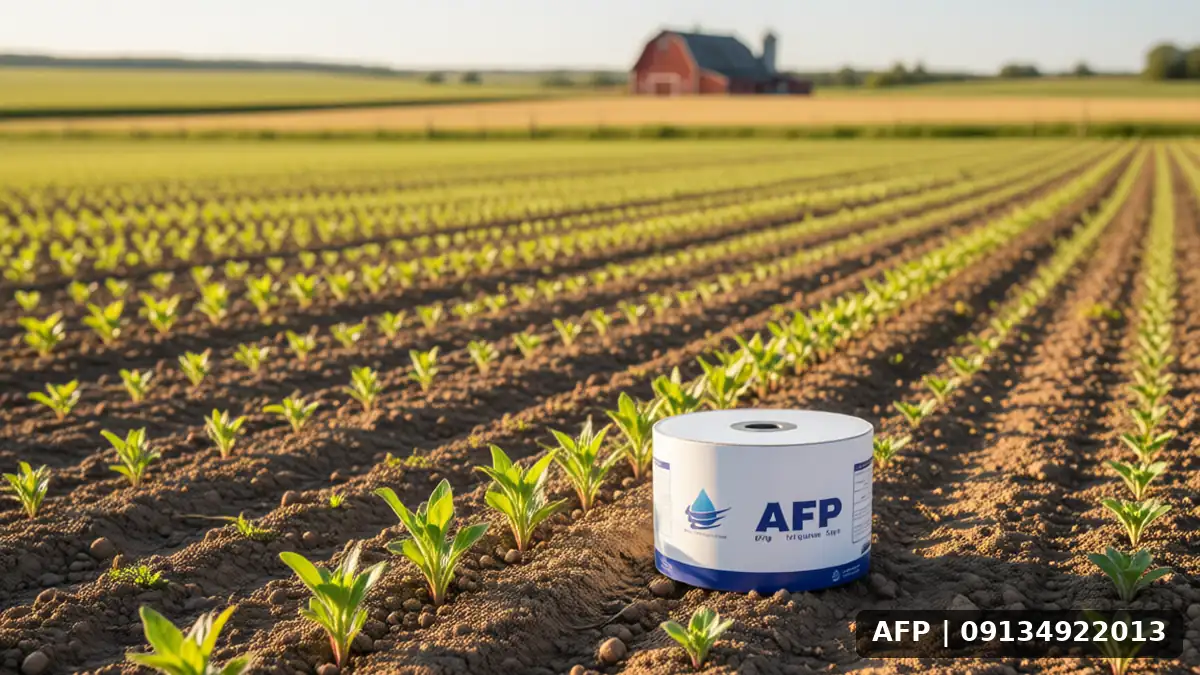
Onion is one of the key agricultural crops whose proper growth requires precise management of water and soil resources. In recent years, the use of drip irrigation systems, particularly Types of drip tape lines has found a special position as an efficient and low-cost method for reducing water consumption and increasing crop yield. The main objective of writing this article is to examine in detail the “cost of onion cultivation with drip tape per hectare” so that farmers can make better economic decisions with awareness of the required amounts. The correct understanding of these variables can reduce financial risks and improve the economic efficiency of onion cultivation. In the following, we will examine in detail the various stages of onion cultivation with drip tape.
Cost calculation is not limited to the purchase of irrigation equipment; it also includes land preparation, seed, fertilizer, and planting operation costs. Understanding these variables correctly can reduce financial risks and improve the economic efficiency of onion cultivation. In the following, we will examine in detail the various stages of onion cultivation with drip tape.
Factors affecting the cost of onion cultivation with drip tape per hectare
Cost of initial irrigation system equipment
The largest part of the initial investment in drip tape cultivation is the cost of purchasing and installing irrigation systems. This includes main pipes, auxiliary materials, filters, control valves, and the drip tape lines themselves. The price of these items depends on the thickness of the tape, the distance between drippers (Spacing), and the total length of the required lines. For example, if the row spacing in onion cultivation is 50 centimeters, the installation of two drip tape lines per row is required. Although using high-quality tapes with a longer useful life has a higher initial cost, it reduces replacement costs in the long term. In this regard, a study on Drip Tape Production Line: Comprehensive Guide from 0 to 100 It can help in better understanding the quality and technical specifications of these products.
Cost of seeds and land preparation
The cost of onion seeds depends on seed quality, chosen varieties, and the number of seeds per hectare. Generally, around 15 to 25 kilograms of seeds are needed per hectare for onion cultivation. Land preparation also includes plowing, harrowing, and soil pH adjustment. Onions require well-draining soil with a neutral to slightly alkaline pH. If the soil requires improvement, costs for lime or gypsum amendments are added. In addition, the cost of tractors and machinery for land preparation and seed sowing using modern equipment should also be considered.
Cost of fertilizers and pesticides
Onions are a crop that requires adequate nutrition. The cost of nitrogen, phosphorus, and potassium fertilizers varies depending on the fertilization program and soil type. The use of drip tape irrigation allows fertilizers to be injected with the irrigation water (Fertigation), which promotes better nutrient absorption and reduces waste. Furthermore, the cost of fungicides and acaricides to control common diseases such as onion neck rot or yellows is part of the operational budget. Attention to early pest management can prevent alternative and recurring costs.
Practical tips for reducing onion cultivation costs with drip tape
Optimizing drip spacing and flow rate
Selecting a drip tape with appropriate drip spacing is critical. For onions, a spacing of 15 to 20 cm is generally recommended. If the tape’s flow rate is too high, it increases the cost of a more powerful pump and energy consumption; if it is too low, irrigation will not be uniform, which can lead to reduced yields. Proper system design, in consultation with an irrigation engineer, can prevent excessive pressure at the ends of lines and extend the system’s lifespan. Understanding crop yield per hectare helps you balance irrigation investment against expected revenue.
Using sustainable energy sources
One advantage of drip tape is its low energy consumption for pumping, due to its lower operating pressure. Solar panels or low-consumption motors can be used to power the system, reducing electricity or fuel costs. Additionally, in areas with stable water resources, constructing reservoirs or ponds at an appropriate depth can minimize auxiliary costs.
Precise management of planting and harvesting schedules
Planting onions at the right times of the season reduces the need for temperature control and decreases disease incidence. In warm regions, autumn planting and spring harvest can lower the heating costs of greenhouses (if greenhouses are required). Timing the harvest to coincide with favorable market conditions can increase selling prices, which helps offset production costs. Reading articles such as the required amount of green bean seeds per hectare as a planting guide can be inspirational regarding general principles of managing planting density that are also applicable to onions.
Economic comparison: Drip tape vs. sprinkler and surface irrigation
Water consumption savings
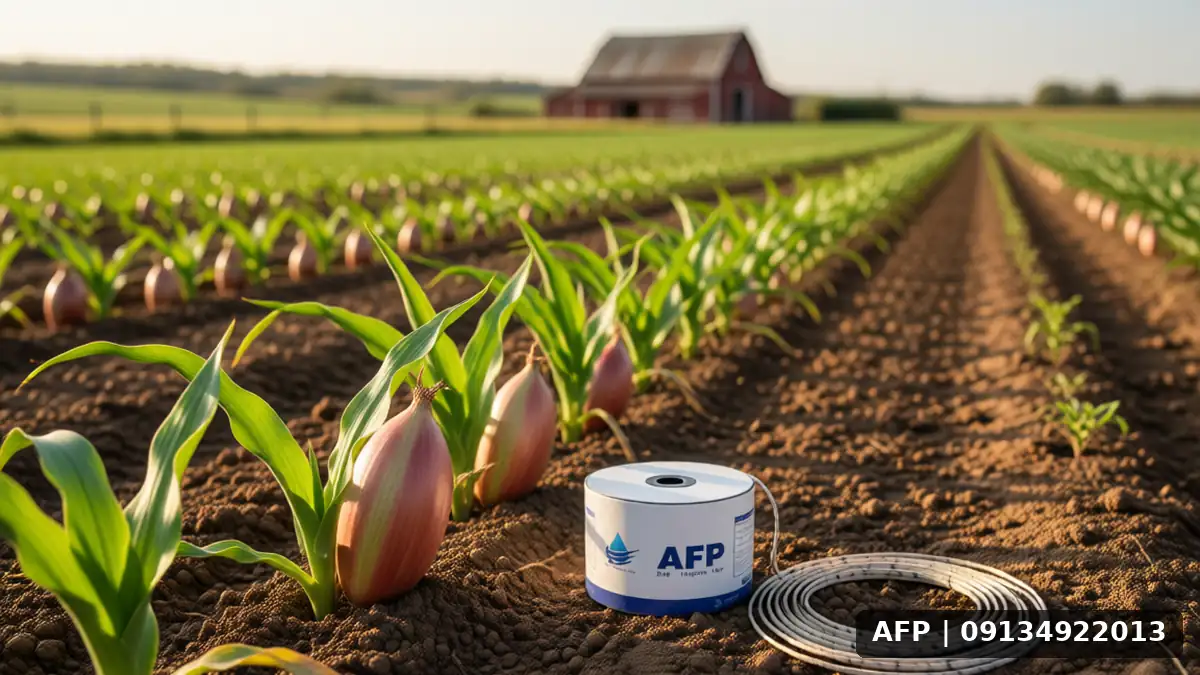
Drip tape irrigation can reduce water usage by 30 to 50 percent compared to surface irrigation. This saving directly leads to reduced water costs (pumping electricity, water rights). In arid regions, this advantage is doubly important. Additionally, reduced water stress increases yield and onion bulb weight, which overall increases profit margins.
Reduced labor costs
Installation and startup of drip tape require less manual labor compared to surface irrigation. Surface irrigation requires continuous adjustment of pipes and channels, which is time-consuming. In a drip tape system, after initial installation, irrigation can be performed automatically or semi-automatically. This reduces seasonal worker wage costs. For farmers using limited regional water resources, study Amount of seeds and cucumber per hectare can serve as an example of precise planting space management, which is also applicable to onions.
Improved crop quality
Standardizing onion size and reducing defects caused by water stress leads to a higher Grade A classification and increased selling price. Drip tape enables precise fertilizer dosing, resulting in uniform root and onion head development. This higher quality directly impacts profitability.
Frequently Asked Questions (FAQ)
What is the approximate cost of drip tape per hectare?
The exact cost depends on the length of drip tape required, its thickness, and its lifespan. As a general estimate, for one hectare with two rows of drip tape per planting row, several kilometers may be needed. The price per meter of drip tape and installation labor are the final cost determinants. It is recommended to use reputable brands with quality guarantees.
Is drip tape suitable for all climates?
Yes, drip tape is suitable for most climates; however, in very cold regions, attention must be paid to freezing of the tape in winter, and the system must be drained. In hot regions, selecting tape with higher UV resistance is essential. Studying the guide ‘شريط الري بالتنقيط في التكريت’ can provide similar climatic tips.
Does the use of drip tape increase operational costs?
In the short term, there is an initial installation cost; however, in the long term, operational costs generally decrease due to reduced water, fertilizer, and labor consumption. Return on investment typically occurs within two to three cropping seasons.
Final Conclusion
Calculating the “cost of onion cultivation with drip tape per hectare” is a dynamic process involving both fixed components (including land) and variable components (fertilizer, pesticides, and water). The drip tape system can become an optimal investment by conserving water resources and increasing yield. The keys to success are selecting high-quality equipment, precisely managing irrigation and fertilization schedules, and maintaining market awareness. Farmers who adhere to these principles will enjoy better market competitiveness and more sustainable profitability. It is always recommended to conduct a detailed technical design and consult with experts before beginning.