Comprehensive Guide to Faba Bean Cultivation with Drip Irrigation: Principles, Calendar, and Practical Tips
Introduction to the importance of drip irrigation in pea cultivation
Pea is one of the most important rainfed and irrigated pulses in Iran, playing a key role in improving soil fertility and crop rotation cycles in addition to its high nutritional value. As a legume, it reduces the need for chemical fertilizers through soil nitrogen fixation, offering significant economic and environmental benefits. Given the severe water resource constraints in Iran and the prediction of drought in many regions, modern irrigation systems such as tape laterals and drip irrigation have become essential and unavoidable tools for effective pea cultivation.
Drip irrigation, by delivering water in small, frequent amounts directly to the root zone, not only maintains optimal and uniform moisture but also prevents stem rot and the spread of fungal diseases common in surface irrigation. Furthermore, this method prevents weed growth between rows because surface moisture is limited to the root zone. In this comprehensive guide, we examine the technical details of pea planting combined with drip irrigation so that farmers can maximize efficiency with full awareness.
Planting Methods for Peas in Drip Systems
Selecting the correct planting pattern is half the battle for success in pea drip irrigation. Planting patterns are determined primarily based on row spacing, variety type, and irrigation system layout. Understanding this relationship is key to optimizing water consumption and preventing root stress.
Double-row planting on tape laterals
In this method, peas are planted in two rows with the tape lateral placed exactly between them. This method is recommended for spreading varieties that require more space. The planting distance on single-row tape laterals is usually 45 to 50 centimeters, and on double-row tape laterals, 90 to 100 centimeters. Using single-row tape laterals allows water to be delivered with appropriate intensity and optimizes root zone coverage. To choose the most suitable type of tape and understand their technical differences, you can study the article on differences between double-row and single-row tape laterals carefully.
Single-row planting and linear layout
In this method, plants are arranged in a single row, and the tape lateral is installed aligned with them or slightly staggered. Single-row planting provides more space for mechanized operations and is implemented in pea fields with a 60-centimeter planting distance. Staggered planting layouts should be synchronized with the irrigation system recovery cycle to prevent emitter clogging. This method also aids in better light and air circulation management.
Irrigation Schedule Based on Growth Stages
Like other pulses, peas have varying sensitivities during growth stages. The drip irrigation schedule for peas should be adjusted according to the water requirements of each stage. Mismatching irrigation timing with growth stages can lead to flower drop, reduced pod filling, or even growth arrest.
- Seedling Stage (1 to 3 weeks): At this stage, roots are still weak. Low-flow tape lateral irrigation every 2 to 3 days is recommended to keep the soil moist and ensure uniform seedling emergence. This period is critical for plant establishment.
- Vegetative growth stage (4 to 6 weeks): With rapid stem and leaf growth, water demand increases. The irrigation duration increases from 30 to 45 minutes. The interval between irrigations decreases to 3 to 4 days. Water consumption is high during this stage.
- Flowering and pod formation stage (7 to 10 weeks): This is the most sensitive stage. Water stress at this time causes flower drop and a severe reduction in yield. Precise and regular drip irrigation keeps soil moisture stable. It is recommended to flush the system after each irrigation cycle to prevent sediment buildup in the emitters.
- Maturity stage (week 11 onwards): Water consumption decreases. Irrigation becomes less frequent (every 5 to 7 days) and is completely stopped in the final week to allow the seeds to dry. This facilitates easier harvesting and reduces post-harvest diseases.
To accurately calculate flow rate and emitter count, you can review the purchase guide for shower-head pricing as part of the piping system. Additionally, selecting appropriate valves for pressure and flow control plays a crucial role in the system’s longevity.
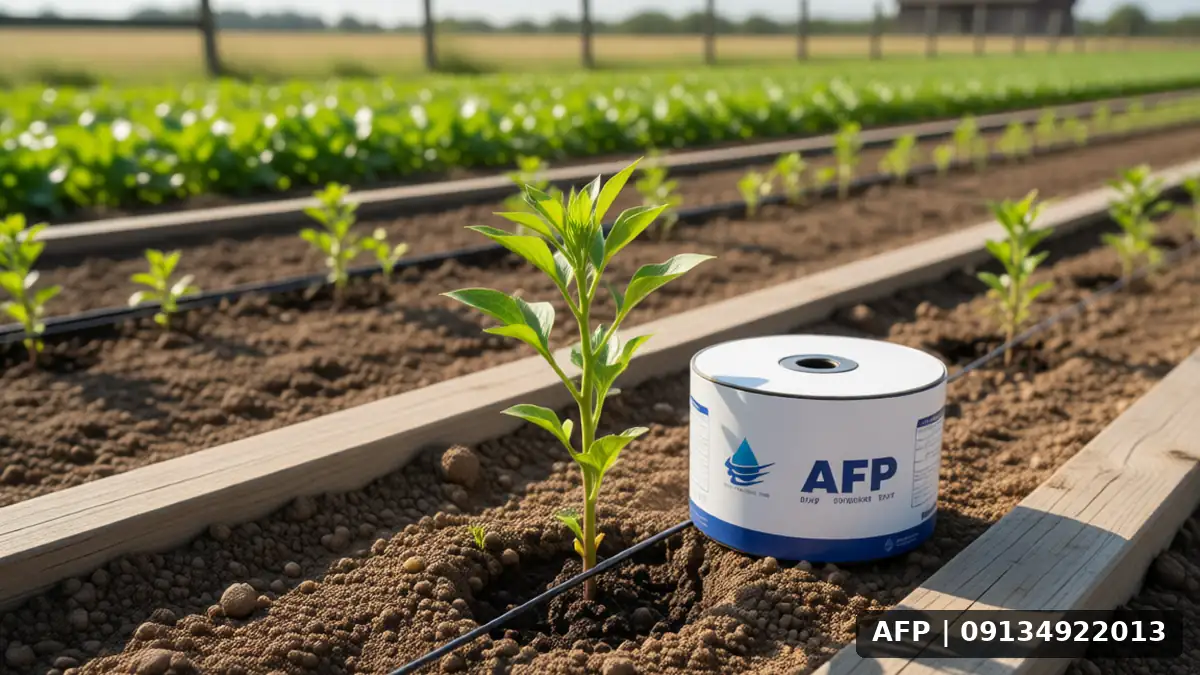
Practical tips and additional notes
For successful lentil cultivation with drip irrigation, adherence to the following points is vital, and any deviation from these principles can be costly:
- Soil management: Lentil soil should not become water-saturated. Drip irrigation, with its low water consumption, prevents salinization and waterlogging. Before installing the system, ensure the health of the drip line. We recommend checking tips for buying drip irrigation lines to prevent future clogging and maintain system efficiency.
- Sowing: The usual sowing depth for lentil seeds is 5 to 7 cm. Seeds should be placed at the proper depth to prevent frost damage and excessive sun exposure. For precise seed rate information, refer to the green bean seed rate per hectare + planting guide, which is technically similar to lentil, and adjust settings for lentil based on those principles.
- System monitoring: Each irrigation cycle should be accompanied by visual monitoring of water coverage. If some areas remain dry, adjust the emitter flow rates. Additionally, checking the clarity of water entering the system is essential to prevent sediment deposition.
Frequently Asked Questions (FAQ)
1. What is the appropriate distance between the drip tape and the mung bean roots?
It is recommended that the drip tape be placed exactly between two rows (in two-row planting) or 15 to 20 cm lateral to the root (in single-row planting) so that the root has direct contact with water. This standard distance optimizes water uptake and oxygen supply to the roots.
2. Is mung bean sensitive to drip irrigation?
Mung bean is sensitive to flooding, but it benefits from uniform moisture. Drippers with a flow rate of 160 or 200 liters per hour are ideal for warm and dry regions. In colder regions, lower flow rates with higher frequency are more effective.
Conclusion
The use of drip irrigation in mung bean cultivation is a cost-effective and high-yield method that allows farmers to increase product quality and quantity while reducing water consumption. Adhering to an irrigation schedule based on growth stages and selecting an appropriate planting pattern are the two main pillars of success. By following this guide and using appropriate equipment such as durable drip tapes, you can achieve maximum efficiency in your mung bean fields. Attention to small details in installation and system monitoring makes the difference between failure and success in a drought season.
Related articles: Differences in drip irrigation system piping, Quantity of adzuki bean seed per hectare, How many fennel seedlings per hectare