Comprehensive Guide to Drip Irrigation Soybean Cultivation: Principles, Schedules, and Practical Tips
Introduction to the Importance of Drip Irrigation in Soybean Cultivation
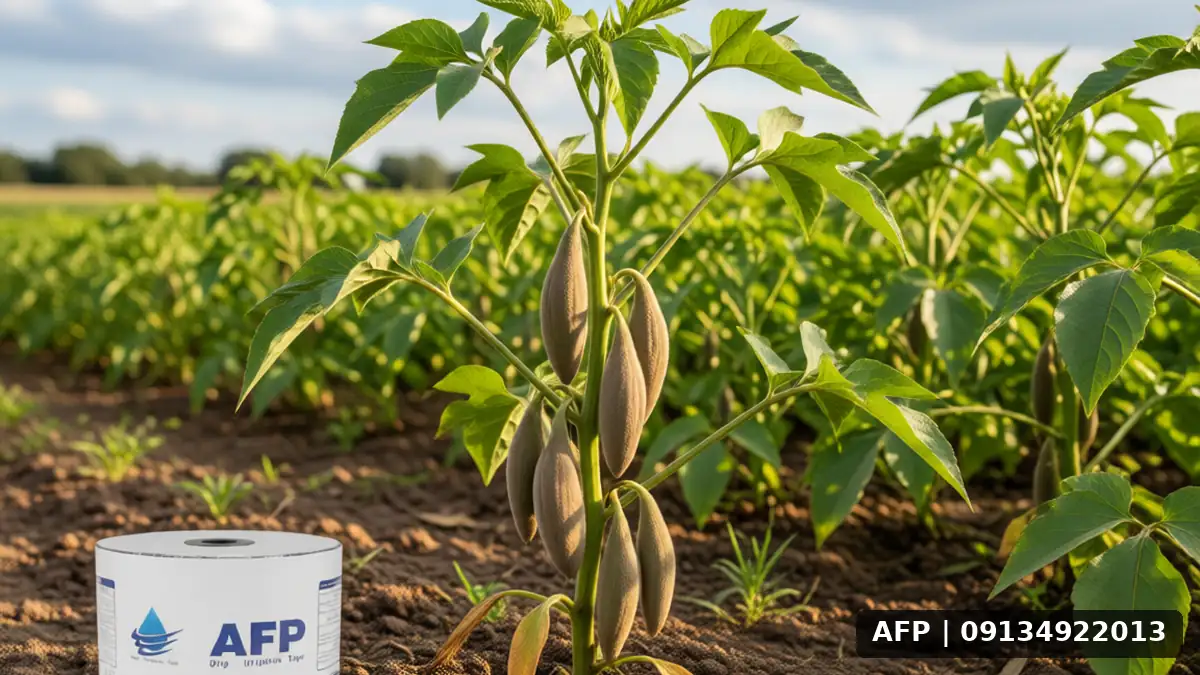
Soybean is one of the rich oils and legumes with high economic value that requires precise soil moisture management for optimal growth. In arid and semi-arid conditions, Soybean cultivation with drip irrigation or drip tape is an effective solution for reducing water losses and increasing yield. This method is the most direct way to deliver water and nutrients to the plant roots, allowing the plant to use its energy for biomass and seed production rather than just searching for water.
In this article, we provide a step-by-step guide on how to design and implement an effective drip irrigation system for soybean, from planting to harvest. From selecting the right pipe to scheduling irrigation, we will cover everything to help you achieve a uniform and healthy crop.
Key Benefits of Using Drip Tape in Soybean Cultivation
Drip irrigation systems, especially drip tape, have unique features that are highly suitable for soybean. Below, we examine the most important benefits:
- Water conservation: Drip irrigation wets only the root zone, minimizing surface evaporation.
- Weed reduction: Since only the irrigation lines are moist, the dry sections between lines do not provide a suitable environment for weed growth.
- Improved plant nutrition: Direct injection of water-soluble fertilizers (Fertigation) to the roots enhances the uptake of nutrients such as nitrogen and phosphorus.
- Reduced labor costs: After initial installation, the need for frequent human intervention for irrigation is significantly reduced.
Technical principles of planting and pipe spacing
Pipe burial depth
For soybean, which has shallower roots than many other crop varieties, do not bury the pipes too deep. The recommended depth is 10 to 15 centimeters. Excessive depth prevents young roots from accessing water. If using Maintaining drip lines in hot conditions in arid regions, always use shade cloth or appropriate covering during summer to protect the pipes from severe dryness and direct sunlight.
Distance of irrigation lines from planting rows
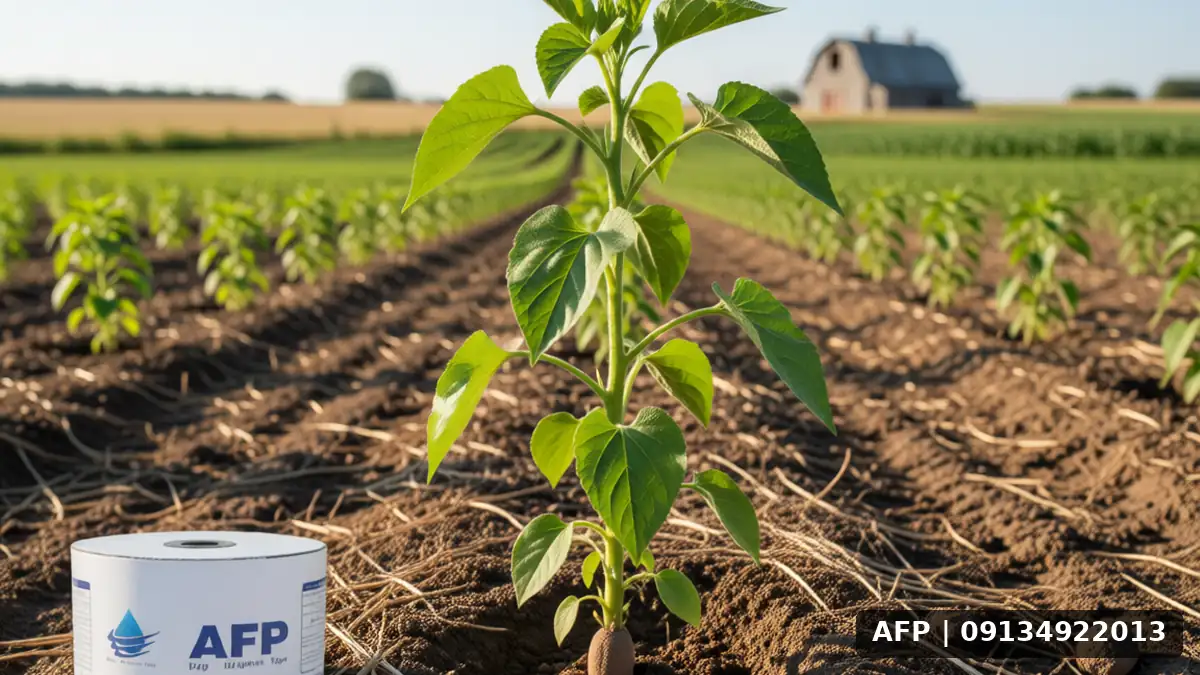
The most critical technical point is determining the distance between the pipe and the plant. The standard distance for soybean is usually 10 to 15 centimeters. A distance of less than 10 centimeters causes excessive wetness at the root zone and increases the risk of root fungal diseases. A distance greater than 15 centimeters results in insufficient moisture access for the main roots. Always mark the irrigation lines before planting, and then sow the seeds in the dry paths (between the drip lines).
Network design and system pressure
Selecting the appropriate working pressure is crucial. For standard drip tape, the ideal pressure is usually between 1 to 2 bar. Excessive pressure causes leaks and pipe failures, while low pressure results in uneven water distribution along the length of the tape. To verify the installation, refer to the article on crop yield per hectare to consider the total plant requirement against the drip line output volume.
Soybean Irrigation Planning (Irrigation Schedule)
For a precise irrigation schedule, it is essential to understand the growth stages of soybeans. Soybeans are sensitive to water stress, particularly during flowering and pod development.
Emergence to Canopy Stage
- From planting to canopy closure: During this stage, the roots are not yet fully developed. Frequent light irrigation is recommended (every 2 to 3 days in arid climates) to keep the soil moist but not saturated. This helps roots grow rapidly toward the irrigation line.
- Monitor soil temperature: If soil temperatures are low, reduce irrigation. Cold soil causes plants to absorb less moisture.
Vegetative Stage
When the plant reaches the V4 (4-node) stage, water demand increases significantly. Irrigate every 3 to 5 days. At this stage, balancing soil moisture and aeration is crucial. If moisture is excessively high, it may lead to leaf fungal diseases.
Reproductive Stage (Flowering and Pod Formation)
This is the most critical stage for yield. Water stress during this period directly affects seed weight. Regular and uniform irrigation is key to success. Avoid drastic changes in soil moisture.
Maturity Stage
As the plant senesces and pod stalks begin to dry, gradually reduce irrigation. In many soybean cropping systems, final irrigation is stopped 10 to 14 days before harvest to allow seeds to dry and maintain oil quality.
Practical Tips for Maximum Efficiency
In addition to general principles, proper sowing and irrigation require attention to fine details. One key factor is seed quality and planting density. Although this section focuses on soybean, the general principle of seed quantity per hectare is important for all grain types. Soybean is usually sown at a high density of over 100 plants per square meter (depending on the variety). Excessive density causes intense competition among plants and weakens the root system; in this case, drip irrigation must be adjusted more precisely to ensure water reaches all plants.
Furthermore, chemical management is highly sensitive. During sowing, always pay attention to pesticides and basal fertilizers. For a better understanding of how fertilizers are mixed in drip systems, reading the guide for Isfahan seed quantity per hectare (which is an example of fertilizer and seed usage in local methods) can be inspiring for how material concentrations are adapted to the regional climate. For soybean, the use of microbial fertilizers (Rhizobium) at sowing is recommended. These bacteria remain in the soil and are absorbed by the roots; therefore, the irrigation system should not have excessively high flushing rates.
Resolving common problems in soybean drip systems
One common problem is the precipitation of mineral deposits in the drip tape. This occurs when the water pH is conducive to the precipitation of lime and calcium. To prevent this, use proper water solubilization before it enters the tapes or ensure precise filtration. Additionally, if other crops such as corn or wheat are grown in your region, similar principles apply to the systems; for example, regarding wheat, the study on wheat drip tape spacing shows that the spacing pattern is also applicable to soybean (with wider spacing due to lateral growth).
Another reason for tape damage is seed drop through the small emitter holes during planting. Always use tape protectors or install the line before sowing to prevent soybean seeds from entering the tape and causing blockages.
Frequently Asked Questions (FAQ)
Can I use a drip system for intercropping soybean and maize?
Yes, it is possible if the spacing between maize and soybean rows is managed. Drip systems allow you to direct water from a single main valve to two laterals with different pressure requirements. However, ensure that appropriate filters are used for each branch.
What should be done if a drip tape is cut in the middle?
Always keep two spare drip tapes in the field. In case of a rupture, cut the tape and securely wrap a temporary coupling (coupler) with electrical tape. In the following season, purchase a new tape. Repairing a drip tape is generally not cost-effective, except for fixed drip line systems.
Does low-quality water negatively affect soybean crops under drip irrigation?
Yes. Water with high EC (salinity) can cause leaf edge burn because the pressurized liquid inside the tubes is expelled through the emitters and the salts are left behind at the edges as the water evaporates. In this case, using soil-conditioning fertilizers and regular leaching is essential.
Summary
Sowing soybeans with drip irrigation is a sound solution for modern farmers. By paying attention to tube spacing, adjusting pressure correctly, and implementing an irrigation program suited to growth stages, you can both save water and increase seed yield. Remember that no system is complete without regular adjustments. Check the output of the lines every few days and test the soil texture. Successful farming is the result of a combination of knowledge, precision, and the use of appropriate technology. We hope this guide helps you plan your next planting season with greater confidence.
Related articles: Related article Related article Related article D8AFD8B1 Related article