Drop Tape Spacing in Lettuce Farming: Recommended Standards
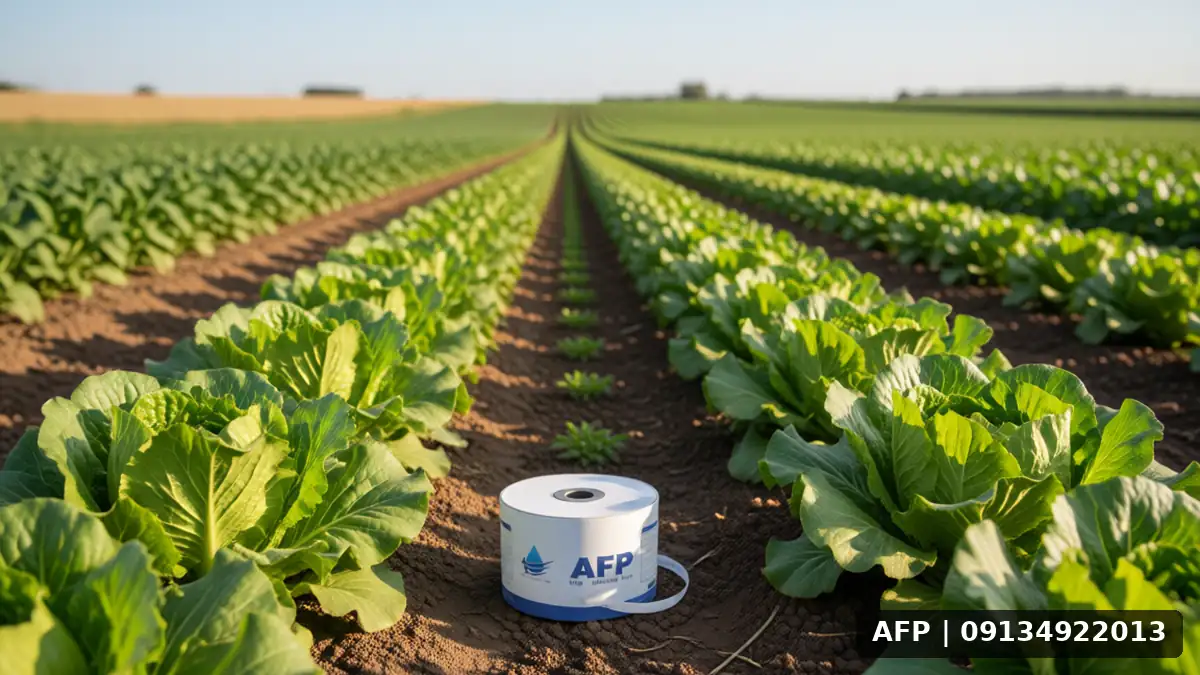
Choosing an appropriate irrigation system for green-leafy vegetables like lettuce has always been a significant challenge in modern agriculture. Lettuce is a crop with a shallow root system that requires uniform moisture, yet it is highly sensitive to root rot and soil-borne fungal diseases. In this regard, using tape drip is considered an ideal option due to its mobility, lower cost compared to fixed drip lines, and precise irrigation capabilities. However, the key question is: at what distance from the row center should the tape drip be installed, and with what specific wall thickness and diameter, to achieve the best results?
Principles of row layout in lettuce cultivation
To determine the appropriate tape drip spacing, one must first consider the overall row layout. In lettuce cultivation, planting in single rows or double rows is common. The standard row-to-row distance in many regions is between 50 and 60 centimeters. This distance allows the farmer to place the tape drip directly under the root zone. If the row spacing is too narrow, the risk of wet zone overlap and increased soil-borne diseases rises. Conversely, if the spacing is too wide, material costs increase, and parts of the soil profile remain dry.
The role of tape drip diameter and thickness in water distribution
Uniform water distribution from the emitters directly affects the leaf health of lettuce. Tape drip lines with various diameters (typically 16 to 22 millimeters) and wall thicknesses (between 0.2 and 0.5 millimeters) are available on the market. For lettuce, which has delicate roots, it is recommended to use emitters with a spacing of 10 to 15 millimeters. This spacing ensures that water is discharged as a wide band from the tape, maintaining moisture at a deeper root level. From components of tape drip and drip systems Proper quality can extend the system’s useful life.
Recommended standard for drip tape spacing from the lettuce row
The precise answer to this question, which many farmers ask, depends on the lettuce variety (such as leaf lettuce, celery, or iceberg). Generally, the best approach is to place the drip tape concurrently with the planting row. This means the center of the row, directly under the seedling planting spot.
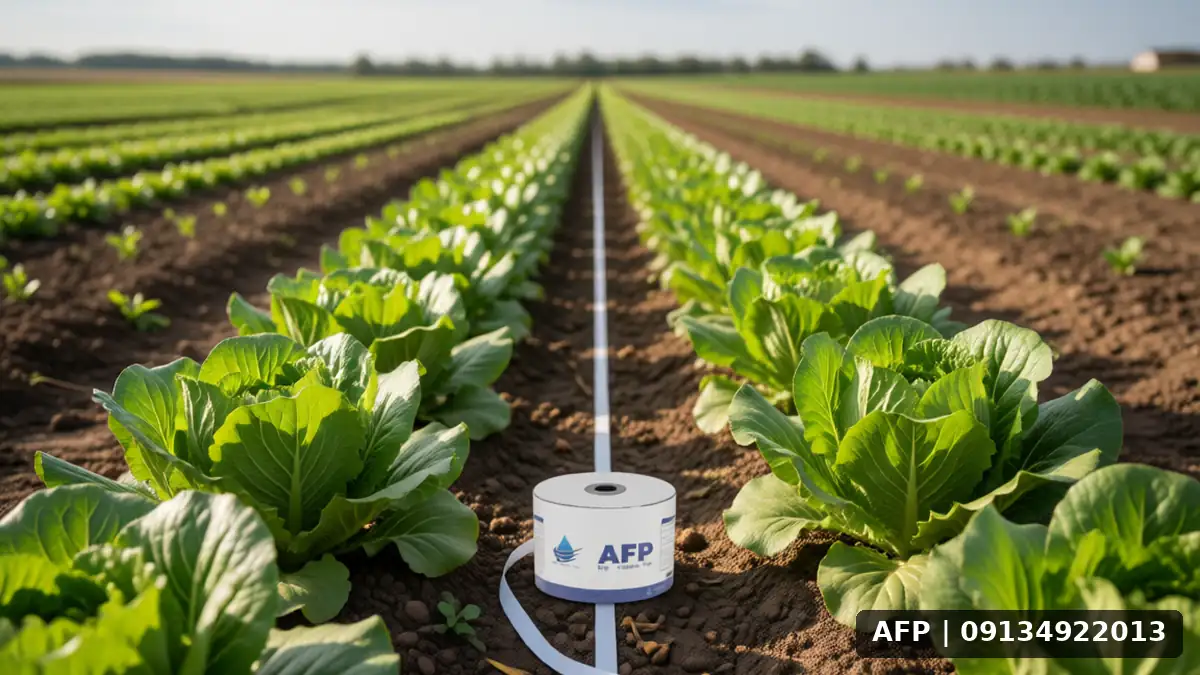
- In single-row cultivation: The distance of the drip tape from the edge of the row should be approximately 5 to 10 centimeters inward toward the aisle. This distance ensures water reaches the root zone directly without wetting the lower leaves that are in contact with the soil, which could cause gray mold.
- In two-row cultivation (single tape): If you use a single drip tape between two rows, the distance from the center of the space between the two rows to each row should be equal. For example, if the row spacing is 60 centimeters, the drip tape should be placed at a distance of 30 centimeters from each row.
Note that the drip tape must be flat and free of wrinkles. Wrinkles clog emitters and cause asymmetric water discharge. To ensure the tape is flat, the use of adjustable valves in the distribution system is recommended. Additionally, you can review information on how to enhance drip tape efficiency and performance through system improvement techniques.
Impact of Soil Type on Drip Tape Spacing
Soil nature plays a crucial role in the lateral movement of water. In sandy soils, water moves downward more quickly and less laterally. Therefore, for this soil type, the drip tape should be placed slightly closer to the row (approximately 5 cm) to ensure the wetting zone is fully under the root system. In loamy and clay soils, water spreads more slowly and over a wider area; in this case, the spacing can be increased to 10-15 cm to reduce water stress and pressure on surface roots.
Practical Installation and Maintenance Tips for Drip Tape in Lettuce Cultivation
Correct installation of drip tape is not limited to spacing; proper connections from the pressure source to the start of the tape and the connections between boxes (couplings) are critical.
- Initial pressure test: Before planting, test the system at 100% of peak pressure to ensure there are no connection leaks. The appropriate operating pressure for lettuce is typically between 1 and 2 bar.
- Seedling planting: When transplanting lettuce seedlings, ensure that the roots do not contact the drip tape. Although root contact with drip tape can aid water absorption, if the tape is cut or subjected to sudden pressure, it may fracture and damage delicate roots. Maintaining an appropriate separation is essential to protect this area.
- Mulching: Applying plastic mulch over the drip tape maintains soil temperature, reduces weed growth, and prevents the surface of the tape from drying out due to direct sunlight. This practice significantly extends the service life of the drip tape.
Additionally, filter maintenance and the use of alum to reduce calcium deposits in drip lines are equally important. If you have high water hardness in your region, be sure to consult with a technical advisor. Familiarity with irrigation conditions using edge emitters can help you better understand hybrid systems.
Water stress management and lettuce growth
Lettuce is a fast-growing crop (typically 30 to 45 days). During this short period, frequent irrigation with low flow rates is preferable to infrequent, high-volume irrigation. Drip tape spacing must be adjusted to ensure roots remain within the permanent wet zone. If the spacing is too wide, it takes longer to wet the entire soil volume per irrigation cycle, which increases water stress between irrigations. This stress causes leaf firmness and reduces marketable yield weight.
Frequently Asked Questions (FAQ)
Can drip tape be placed on the soil surface?
No, under no circumstances. Drip tape must be placed subsurface at root zone depth (typically 10 to 15 cm). Surface placement causes tape degradation from UV exposure and significantly increases evaporation. Environmentally, surface leaks promote the growth of invasive weeds.
What is the drip tape spacing for greenhouse crops?
In greenhouses with climate control, spacing is typically 5 to 10 cm from the center of the pot or seedling. In hexagonal containers, the drip tape must pass through the central gap of the container’s bottom and must not adhere to the vertical walls.
Is drip tape reusable?
Yes, in subsequent years, if the system remains under stress and does not tear, it can be collected, washed, and reused. However, due to low flexibility and the risk of tearing, it is recommended to replace the drip tape annually or every two years. Proper maintenance of the differences between polyethylene and plastic drip tapes can help in better selecting the appropriate model.
Conclusion
Optimizing drip tape spacing in lettuce cultivation is a combination of soil science, climatology, and irrigation engineering. Adhering to standard spacing (5 to 15 centimeters from the row center, depending on soil type), using wide-weft netting, and mulch coverage are the three main pillars of success. With attention to installation details and pressure management, one can benefit from minimal water loss, healthy roots, and high-quality produce at the end of the season. It is essential to pay attention to the following principles for greater efficiency of drip systems:
- Uniform pressure throughout the irrigation block.
- Prevent twisting and kinking of the drip tape during unrolling.
- Use appropriate support for drip tape in sloped areas.
It is hoped that this guide will help you make more principle-based decisions in lettuce irrigation systems and reduce your operational costs. Always adapt hydraulic calculations to local conditions before implementing drip tape.
Related articles: beet seed amount per hectare guide, 90mm plastic pipe irrigation guide