Row Spacing for Ajwain in Drip Irrigation: Recommended Standards
Introduction: The Importance of Accuracy in Selecting the Tip Line Spacing for Coriander
Coriander (Coriander or seed and leaf) is a crop that, due to the specific sensitivity of its roots to waterlogging and drought stress, requires precise management of water resources. In drip irrigation systems, particularly when using tip lines, Coriander Tip Line Spacing plays a vital role in determining the root zone loading and the uniform distribution of moisture in the soil profile. Improper spacing can lead to stunted plant growth in the center of the row or root suffocation due to excessive moisture. Therefore, understanding row layout principles and technical tip line settings for coriander cultivation is the first step toward a sustainable and highly profitable agricultural enterprise.
Row Layout Principles in Coriander Cultivation
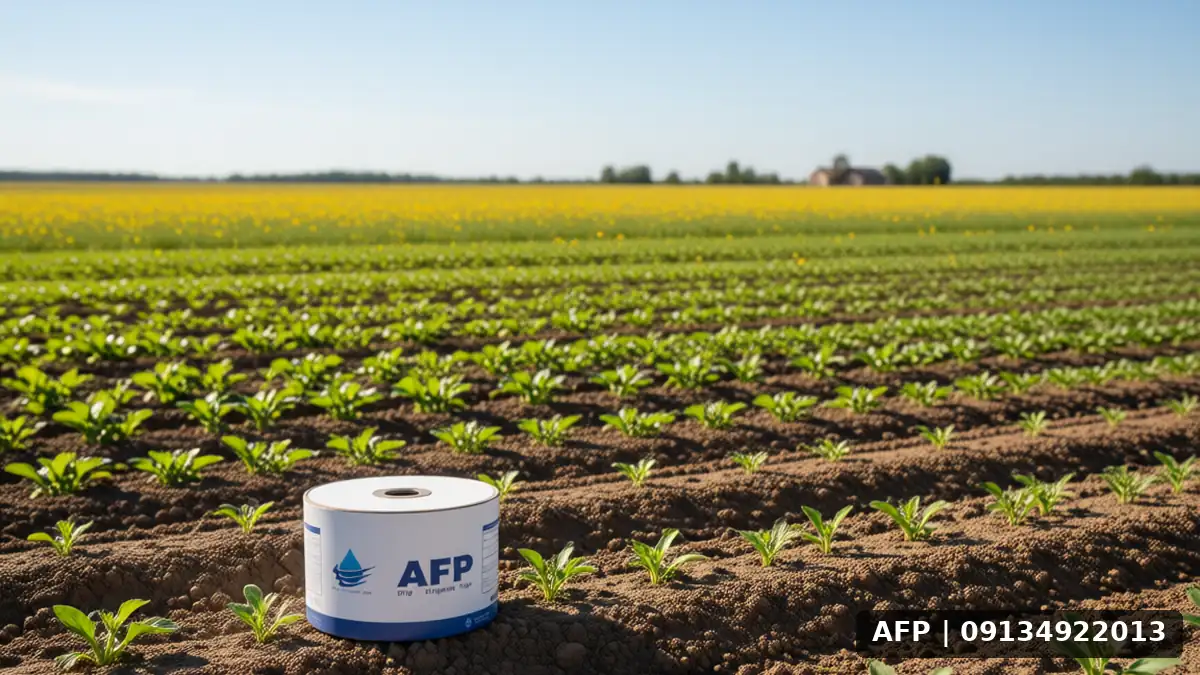
To optimize space and light in coriander cultivation, row layout is of great importance. Coriander is usually planted in narrow rows to achieve the desired seed density per hectare. The standard in many temperate regions of Iran is planting coriander in rows spaced 35 to 40 centimeters apart. This spacing allows the tip line to be placed directly under the planting line, delivering moisture directly to the root activity zone.
- Row Spacing: Typically 35 to 45 centimeters, depending on climate and soil type.
- Tape depth placement: 5 to 8 cm below the soil surface to prevent evaporation.
- Number of rows in the box: Adjust to ensure the box width aligns with standard spacings.
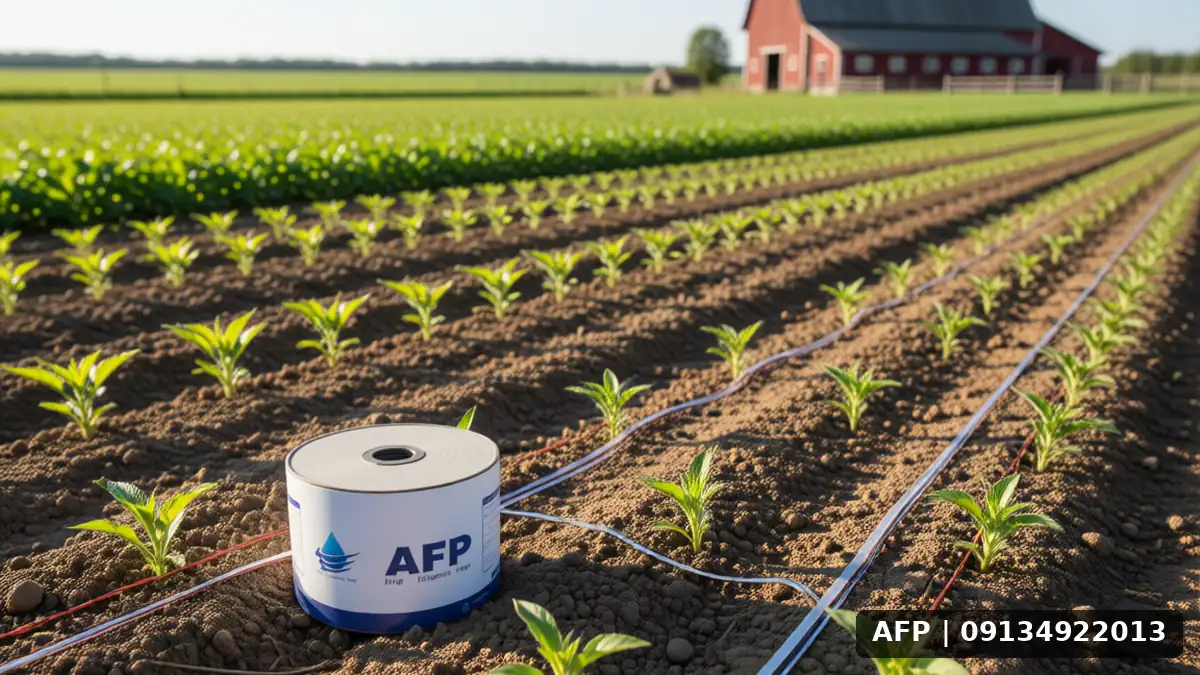
In this structure, the drip tape must be installed so that its center is exactly aligned with the planting line. If the fennel drip tape spacing does not match the seed planting spacing, some roots will remain dry while others become saturated, causing uneven growth and reduced seed quality.
Impact of drip tape spacing on root establishment and seed quality
Fennel roots are fine roots that dry out quickly but have low resistance to soil compaction. When using drip tape, the wetted pattern radius is determined by the operating pressure and emitter spacing. If the tape spacing is less than the optimal distance, the wetted zones overlap, leading to root compaction and the growth of soil-borne fungi. Conversely, if the tape spacing exceeds the required distance, the middle section of the row remains dry, halting plant growth.
Tip line spacing standards based on soil type
If you would like more information on selecting the most suitable tape for your specific field conditions, you can read the comprehensive guide on selecting appropriate drip irrigation tape. Additionally, understanding the manufacturing process of these tapes helps ensure product quality and durability; the article ‘Tape Line Production: A Comprehensive Guide from 0 to 100 Production and Quality Control Technical Details’ covers this.
Practical tips for optimizing fenugreek tape irrigation spacing
Proper implementation of theoretical principles in the field requires attention to minor technical details. Many farmers face challenges such as land curvature and seed quality when determining final spacing. Below, we examine the most critical points to consider when designing a fenugreek drip irrigation system.
- Coordination with the planting machine: Before purchasing tape, check the row spacing of the drill planter. The drip tape must be positioned exactly in the rows where seeds are planted. Ignoring this detail will cause a mismatch between irrigation and planting.
- Calculating root load based on soil depth: Fenugreek typically achieves optimal growth at a depth of 15 to 20 cm. Lay the tapes so that maximum water is concentrated at this depth.
- Flow uniformity distribution: In fields with high slopes, suppliers recommend tapes with pressure-compensating ports to prevent lower pressure at the top of the slope and higher pressure at the bottom. This directly affects the uniformity of irrigation distribution spacing.
- Response to weather conditions: In very arid regions, using narrower tape spacing and increasing the number of tapes per row is an effective strategy for maintaining soil moisture.
To better understand the impact of selecting the appropriate system on final performance, it is helpful to study other grain crops grown using a similar system. For example, the guide on wheat drip tape spacing and irrigation methods shares many similarities with fenugreek regarding moisture management, although fenugreek is more sensitive to being disturbed. Additionally, if your farm includes intercropping, understanding the water needs of other plants such as spinach, which is often grown in rotation with fenugreek, can help in adjusting the spacing.
Frequently Asked Questions (FAQ)
Can two drip tapes be used in one row?
Yes, in very light soils or conditions where the plant’s water requirement is very high, two parallel tapes are used per row, positioned 5 to 8 cm from the seeding line. This ensures more complete root zone coverage and reduces drought stress to zero. However, the initial cost of the system in this configuration is doubled.
When should the drip tape spacing be increased?
If your field has heavy clay soil or experiences heavy rainfall, increase the tape spacing to prevent root matting. Additionally, if you notice quality decline in plants at the center of the row, the tape spacing is likely too narrow for the desired width.
What is the role of drip hose versus drip tape in fenugreek cultivation?
Drip tape is typically installed repeatedly (open loop) on long rows and is ideal for row-cropped plants like fenugreek. Drip hose is often used for high-yield crops planted in wide rows. For fenugreek, drip tape is more cost-effective and easier to install.
If you are looking for alternative solutions for on-farm irrigation management, the article Rain pipes: types and applications examines the limitations and benefits of rain systems compared to drip systems. However, for precision in fenugreek farming, drip systems and drip tape remain the superior options.
Conclusion and final recommendations
Selecting the tape line spacing for fennel is a multi-variable process involving soil type, regional climate, optimal rooting depth, and the type of planting equipment used. In summary, maintaining a 35 to 40 cm interval for most clay soils, positioning the tape at a depth of 5 to 8 cm, and ensuring complete alignment of the tape interval with the machine’s planting row spacing are the three main pillars of success. By adhering to these principles, you can ensure optimal root moisture, reduced drought stress, and a significant increase in fennel seed yield. Proper irrigation management is not only a technical technique but an art of achieving a product of export or high consumer quality. Always combine field data with specialized advice to optimize your farm irrigation system for each season.
Related articles: alfalfa seed rate per hectare guide, quinoa tuhmi dar ghektar