Tee Line Spacing in Okra Cultivation: Recommended Standards
Introduction to the Importance of Drip Tape Spacing in Okra Cultivation
Okra is one of the high-demand and high-value vegetables in Iranian agriculture. Due to its high sensitivity to water stress and need for uniform root zone moisture, cultivation requires precise water resource management. In modern drip irrigation systems, the use of drip tape (Microstrip) has become the primary method for water and nutrient distribution. However, determining the drip tape spacing for okra in a manner that is both co-located with plant layout and aligned with root absorption capacity presents a significant technical challenge for farmers and agricultural engineers. This spacing not only affects equipment installation costs but also directly impacts water use efficiency and final crop quality.
Incorrect spacing can lead to water loss into inactive soil depths, reduced greenhouse performance, physiological stress in plants, or the outbreak of root fungal diseases. Conversely, excessive proximity of the drip tape to the plant canopy can cause relative stem scorching under direct sunlight. This article, based on principles of plant physiology and hydraulics, details recommended standards for line layout, appropriate drip tape diameter selection, and safe spacing in okra fields, enabling farmers to optimize their irrigation systems with greater confidence.
Scientific Principles of Determining Drip Tape Spacing
Determining crop pattern and line arrangement
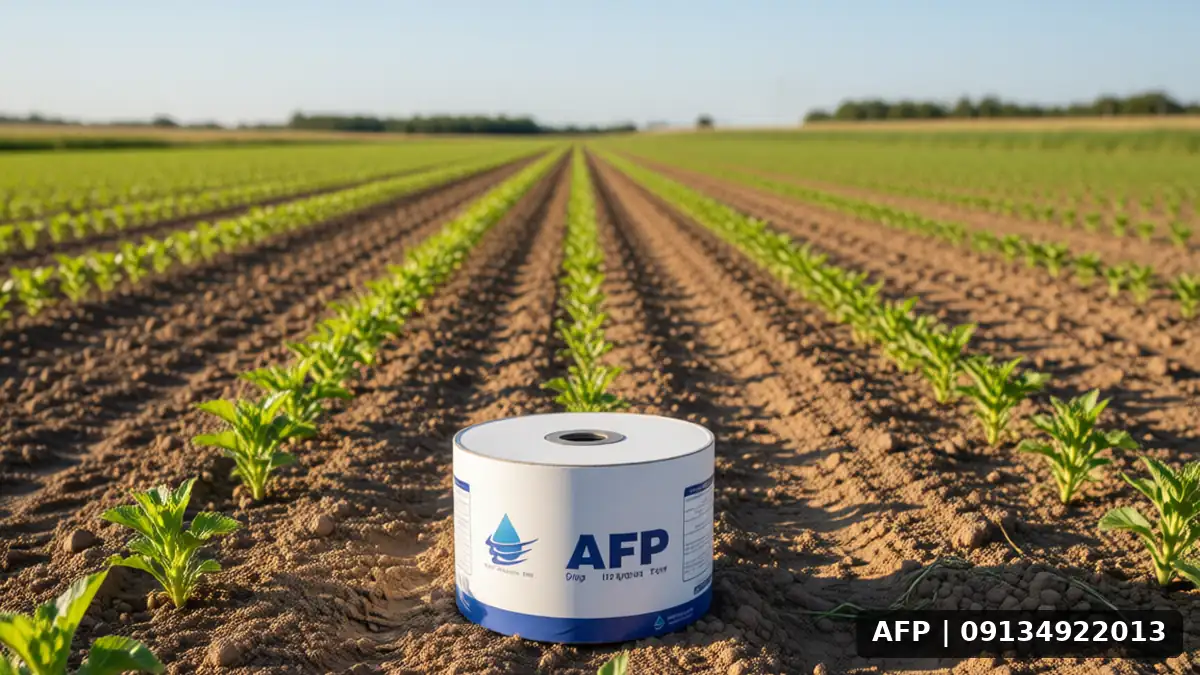
Before installing any irrigation hardware, the melon crop pattern (row layout) must be precisely defined. Typically, in melon cultivation, the distance between adjacent rows is set at 50 to 60 centimeters, and the distance between main lines is set at 90 to 110 centimeters. Tape drip line spacing The tape drip line must be placed exactly at the plant planting location or in its immediate vicinity to ensure water reaches the active root zone directly. If the tape is too far from the ridge, lateral roots must expend more energy to find water, which negatively impacts fruit size and count per plant. Conversely, if the tape is too close, heat accumulated in the soil during warm seasons can damage main roots. Therefore, finding the balance between distance and soil temperature is the key to successful cultivation.
Impact of tape diameter and discharge rate on spacing
Drip tapes with different diameters (6 mm, 8 mm, 13 mm, and 16 mm) have varying flow rates. For okra, which is highly sensitive to water stress, using an 8 mm drip tape with a flow rate of 1.4 to 1.6 liters per hour is generally considered the optimal option. At this flow rate, the soil wetting radius is estimated at 30 to 40 cm. Therefore, if the crop row spacing exceeds 80 cm, two drip tapes per row or an increased flow rate is required, which is more costly and pressurized and may cause improper water drainage. In denser planting with one-meter row spacing, a single 8 mm drip tape is sufficient and ensures uniform distribution. Additionally, soil type (loamy, clayey, or sandy) affects the lateral infiltration of water around the drip tape; in sandy soils, the distance between the tape and the plant can be slightly larger because lateral water infiltration is more limited, whereas in clayey soils, a shorter distance is recommended to prevent premature saturation.
Recommended standards for drip tape spacing
Based on field experiences and research studies, for okra cultivation under Iranian climatic conditions, the following standards are proposed as the optimal setup:
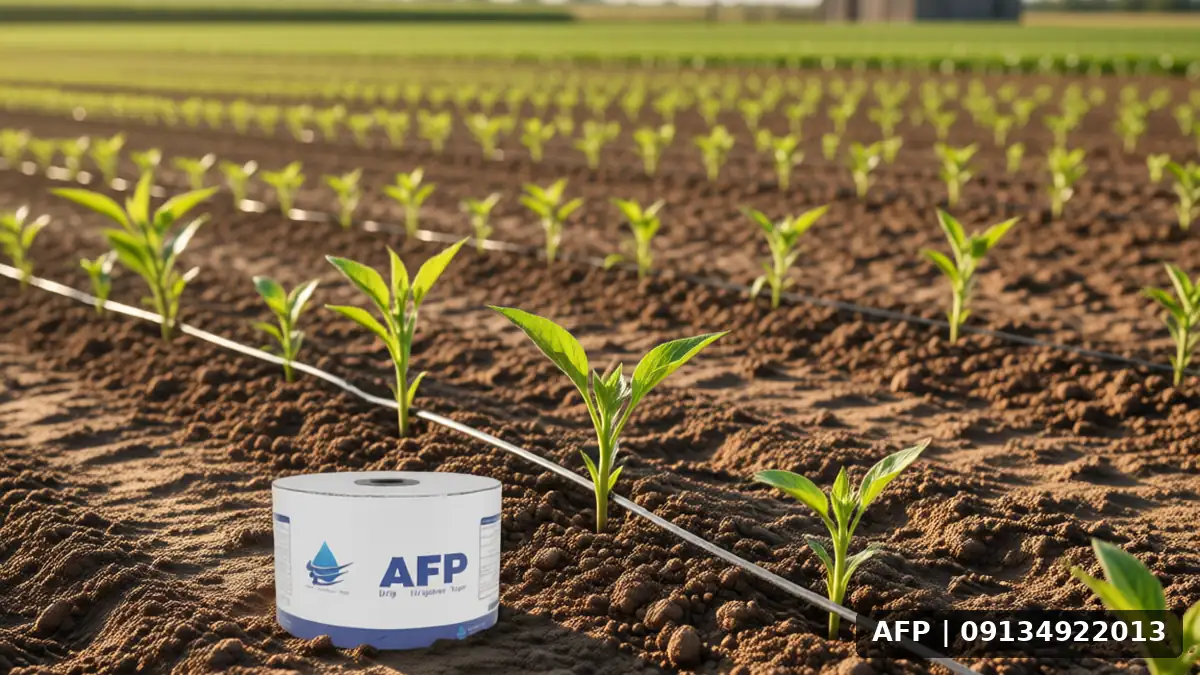
- Distance between drip tape and plant: 5 to 10 cm. This safe distance prevents damage to the tape by agricultural tools and protects it from direct, intense solar heat. This spacing allows surface roots to easily access moisture from the tape without direct contact with the tape wall.
- Number of drip tapes per row: For row spacings of one meter, a single drip tape line in the center (between two rows) is sufficient. If the row spacing increases to 1.5 meters, two drip tape lines per planting unit are required to ensure complete root zone moisture coverage. This dual-line configuration distributes water more uniformly and prevents drying in the central sections of the rows.
- Drip tape installation angle: The drip tape should be laid horizontally at a depth of 10 to 15 cm to prevent light exposure and surface drying. This depth targets the primary root system of cotton, which is deeper than the superficial fibrous roots. Shallower placement causes evaporation, while deeper placement prevents root access to the water.
Practical installation and management tips
Soil bed preparation
Before planting cotton and installing the drip tape, the soil bed must be thoroughly pulverized and free of large stones and coarse sand. Stones can puncture the drip tape and cause water leakage along incorrect paths. Additionally, using an appropriate filter before water enters the drip tape is critical to prevent clogging of the small emitters. Initial system calibration must be performed with all valves open to ensure each drip tape operates at the standard flow rate and to eliminate flow rate inconsistencies between lines. This step is fundamental for maintaining uniformity in subsequent production stages.
Water pressure control
Cotton drip tape operates at low pressures (typically 1 to 2 bar). Increasing pressure leads to excessive wetted zone expansion and water waste outside the root zone. Decreasing pressure prevents water from reaching the end of the line, resulting in non-uniform distribution. It is recommended to use pressure regulators at the ends of lateral lines to compensate for pressure drop. Monitoring pressure at regular intervals, particularly during summer peak demand, prevents system performance decline and extends equipment lifespan.
Comparison with Other Vegetables
Determining drip tape spacing for okra is similar to other crops such as peppers, tomatoes, and licorice. For example, the spacing between lines in drip tape for peppers is slightly wider (1.2 meters), reflecting the different root zone requirements of these plants. In okra, due to its rapid growth and high tuber volume, precision in the one-meter line spacing is critical. Understanding these differences helps farmers adjust the drip tape layout progressively when practicing intercropping or switching crops.
Frequently Asked Questions (FAQ)
Can drip tape be placed on the soil surface?
No, this is not recommended. Placing drip tape on the soil surface causes excessive heat, premature degradation of the tape, and damage to the plants. Always bury the tape at a depth of 10 to 15 centimeters to protect it from sudden temperature fluctuations.
What is the exact drip tape spacing for okra?
The distance between the drip tape and the okra planting point is 5 to 10 centimeters, and the distance between two drip tape lines matches the planting line spacing (usually one meter). Deviation from these dimensions can negatively impact the economic yield of the farm.
How do we prevent drip tape clogging?
Using a 100-120 mesh filter, flushing with clean water before and after each irrigation cycle, and avoiding the use of turbid water without proper treatment are among the most important strategies. Additionally, installing a flush line at the end of each drip tape prevents sediment buildup within the tape.
Can drip tape be used for other potato crops?
Yes, similar principles apply to crops like melon with the difference that for melon, the row spacing is slightly wider and the drip tape flow rate is higher. The flexibility of drip tape makes it an ideal option for vegetable crop rotation.
Summary and Final Recommendation
Successful okra cultivation with drip tape requires strict adherence to standard spacing. Maintaining a 5 to 10 cm distance from the plant and aligning the drip tape with the planting rows ensures uniform water and nutrient distribution. Farmers are advised to draw a precise field map before installation and use high-quality equipment. For more information on general irrigation system principles, study Clover yield per hectare can provide a better understanding of overall vegetable farm management. Ultimately, continuous monitoring and periodic adjustments of the irrigation system are key to achieving the highest okra performance. Investing in installation accuracy leads to undeniable long-term water savings. Additionally, awareness of standards for other crops through specialized guides such as drip irrigation can foster a comprehensive understanding of modern agricultural methodologies.
Related articles: onion yield per hectare iraq