T-Row Band Spacing in Garlic Cultivation: Recommended Standards
Introduction to the importance of refining drip tape spacing in garlic cultivation
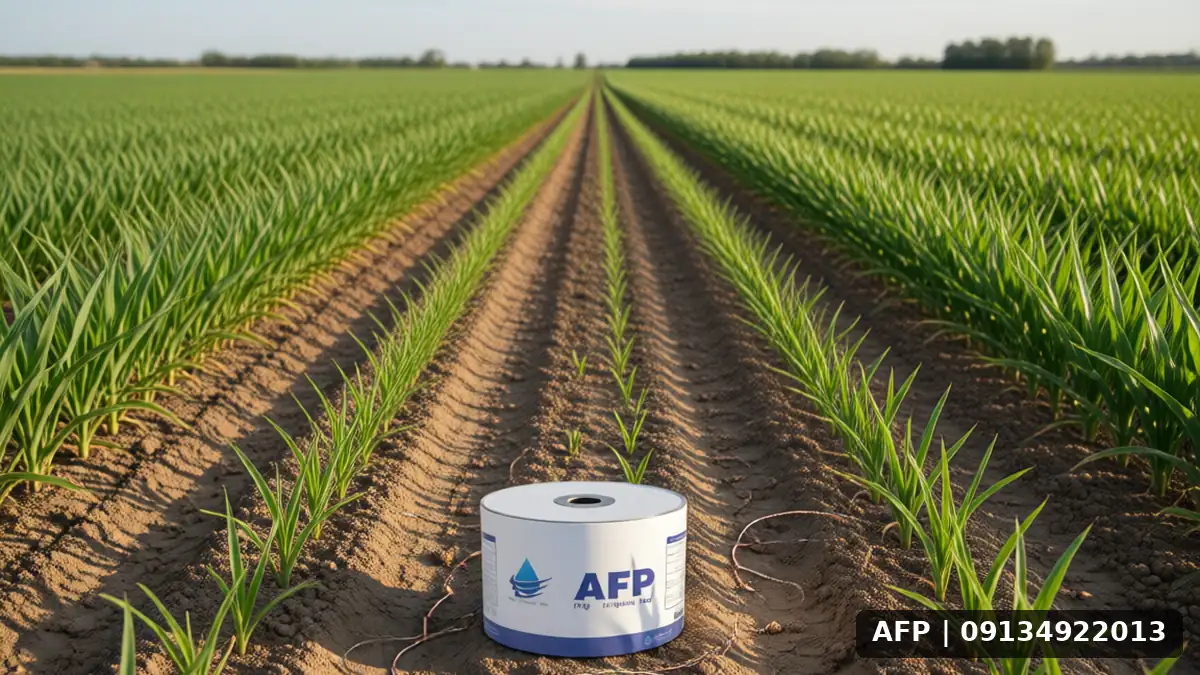
Garlic cultivation is one of the most sensitive crops regarding soil moisture management. In drip tape irrigation systems, determining drip tape spacing in garlic cultivation plays a vital role in determining yield and preventing root fungal diseases. Many farmers rely solely on intuition, but technical data shows that moisture stability in the root zone depends directly on the vertical and horizontal distance of the tape from the soil surface and the row center. This stability not only affects vegetative growth but also directly impacts the development and field maturity of the garlic, which is the primary economic driver of this crop. If moisture is not distributed correctly, the farmer faces two serious problems: either drought stress causing flower drop or waterlogging leading to technical rots.
In this article, while reviewing technical standards, we address the correct row layout in garlic fields. Our goal is to provide a practical roadmap for reducing water consumption and increasing garlic yield. Additionally, analyzing operational costs and optimizing human resources play a central role in this process. If you are looking for a deeper understanding of various pipes and filters, you can gain more familiarity by studying types of drip irrigation tapes to become more familiar. Understanding this equipment helps you better interpret technical texts and improve the precision of your operations.
Technical standards for drip tape spacing in garlic cultivation
The impact of planting depth on spacing selection
Garlic is generally planted at depths of 3 to 5 centimeters. The distance of the drip line from the center of the row must be adjusted so that moisture is maximized at the head of the wetted zone (the point closest to the roots). If the drip line is too far from the row wall (bed), the center of the row will experience water stress. Conversely, if the line is too close to the surface, excess moisture can cause fungal diseases in the plant crown area. Therefore, finding the equilibrium point between planting depth and horizontal drip line spacing is the key to successful irrigation management. This balance must also be harmonized with soil type, as heavy and light soils exhibit different behaviors regarding water infiltration.
- Horizontal distance from the wall: It is recommended that the drip line be placed exactly 10 to 15 centimeters from the concrete or earthen wall of the row.
- Line pressure: For lines with a diameter of 16 millimeters, an operating pressure of approximately 1 to 2 bars is suitable to maintain uniform flow. Pressure fluctuations should be kept to a minimum.
- Dripper flow rate: Given the low but regular water requirements of garlic, dripper lines with a flow rate of 2 liters per hour are preferred. Higher flow rates can be hazardous.
For more precise information on calculating the flow rate and appropriate diameter of lateral pipes, you can refer to the correct drip tape installation guide to consult. This guide details the nuances of installing caps and connections, neglecting which can lead to water leakage.
Row Layout Patterns in Onion Farms
Onion row layouts are typically either double-row (two onions per row) or single-row with a ridge. In the double-row model, the distance between ridges must be at least 50 to 60 cm to provide adequate space for tape passage and air circulation. If planted sub-surface, the drip tape must be no more than 3 cm below the soil surface to ensure moisture reaches the root crowns directly without causing rot. Adhering to these distances ensures optimal air circulation in the field and prevents excessive moisture accumulation. Additionally, row orientation should consider the prevailing wind direction of the area to ensure uniform plant coverage.
Optimizing row layout directly impacts the cost-effectiveness of fiber drip tape. Here is a guide table for matching distances to soil conditions:
Practical and operational tips in sugar beet irrigation management
Pest and root disease management
One common error in garlic cultivation is waterlogging the root zone due to over-irrigation. Drip tape with proper flow rate allows for precise moisture control. When using a drip system, always check the distance from the end of the tape to the last droplet to ensure uniform distribution. If slowing is observed at the end of the line, check the ground slope or drip tape quality. Knowing the types of drip tape and their performance can help select the suitable model for slippery and rocky soil. Also, chemical herbicides should be applied with caution to avoid damaging plant roots near the drip line.
Irrigation and Fertilization Integration
Garlic requires nitrate-based fertilizer during the vegetative growth phase. Using drip tape enables fertigation. When mixing fertilizer and water, always use an 80 mesh multi-cell filter to minimize clogging of the emitters. It is also recommended to monitor root depth using a rhizotron before each irrigation cycle. Drip fertigation ensures nutrients deposit exactly in the root zone, reducing fertilizer waste. Finally, to see statistics on the performance of other crops under this same system, you can Guide to increasing barley yield also review. This comparison helps better understand the potential of drip systems across different crops.
Auxiliary equipment and pressurization
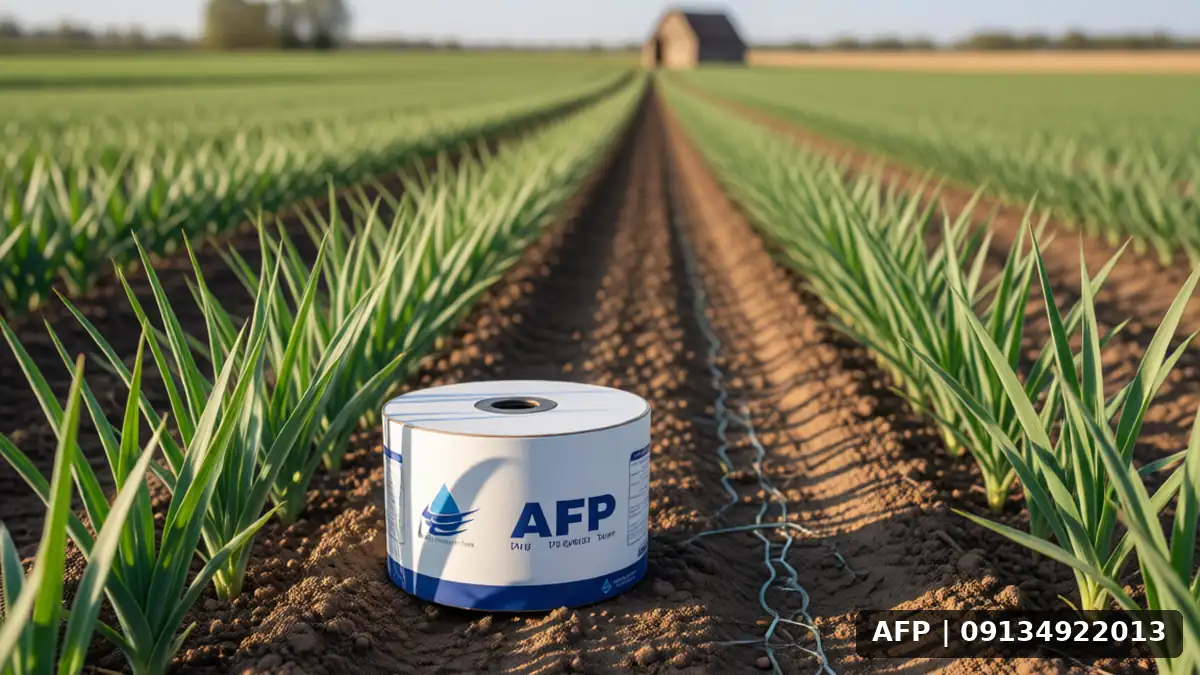
Using a pressure regulator at the beginning of the line guarantees consistent drip flow even during the hot hours of the day. Pressure fluctuations exceeding 15% can lead to asymmetric moisture distribution and drying in some sections of the bed. Additionally, proper filters to prevent suspended particles from entering the system must be maintained regularly. Periodic maintenance of this equipment protects the overall irrigation system’s efficiency and extends the useful life of the belts. Maintenance costs should be included in the farm’s economic modeling.
Frequently Asked Questions (FAQ)
What is the best type of drip belt for cotton?
Layered belts with inline drippers and a diameter of 16 or 19 mm are ideal for cotton. These belts have a high service life and are more resistant to mechanical stress during planting. Belts with an anti-UV layer are recommended for long-lasting performance throughout the season. The quality of the PVC pipe and connections should also be top-notch to prevent sudden breakages.
What should the distance between the drip belt and the concrete wall be?
For cotton planted in bed-irrigated plots, a distance of 10 to 15 cm from the downstream concrete wall is standard. This distance ensures that the main root zone (typically 15 cm below the surface) is fully moistened. In the presence of root-knot nematodes or other root-borne infestations, this distance may be adjusted slightly.
Can drip belts with a flow rate of 3 liters be used for cotton?
Using a flow rate of 3 liters for cotton increases the risk of desert rot, unless the irrigation intervals are very short. For safety, a flow rate of 2 liters with a longer irrigation time is a more appropriate choice. Monitoring soil moisture after this irrigation can help optimize subsequent intervals.
What is the effect of land slope on tape spacing?
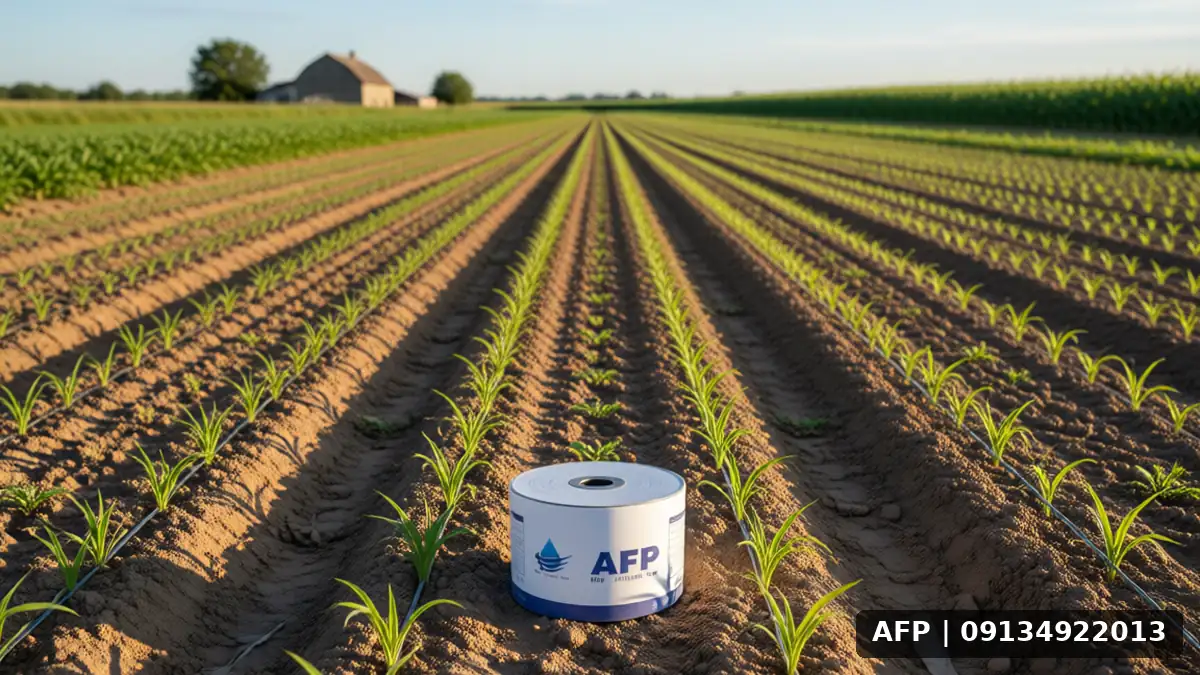
In sloped fields, flow rate is higher on the lowest line. To compensate, use pressure compensating drippers or keep the slope under 1 percent. Precise land leveling before tape installation is the first step to success. Using laser leveling in large farms increases accuracy.
Summary and final recommendation
Compliance Drip tape spacing in garlic cultivation It may seem like a simple parameter, but it has a direct impact on root quality, resistance to fungal diseases, and finally garlic weight. Avoiding guesswork and using soil data to adjust tape depth and spacing is a smart investment. Given the importance of installation precision, we recommend running a test line and evaluating its performance using subsurface soil moisture monitoring before the start of the planting season. This approach not only reduces water consumption but also minimizes the risk of yield loss. Additionally, documenting data each season is essential for future improvement.
Finally, to learn about similar spacing for other crops such as forage corn, you can refer to the guide for Drip tape spacing for corn Read it to gain a comprehensive understanding of drip tape systems in different crops. This comparative study helps farmers leverage their own experiences to optimize garlic cultivation and increase overall farm yield.